
Introduction
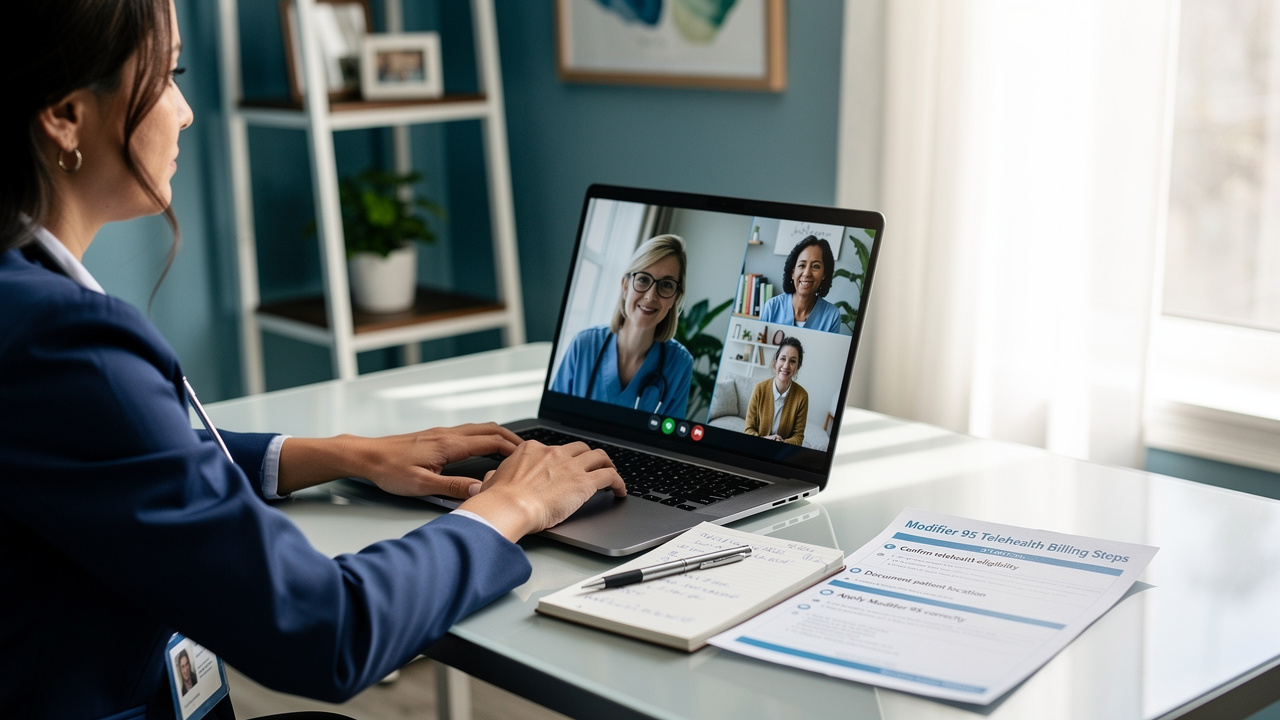
The rise of telehealth has significantly altered the interaction between healthcare providers and patients, necessitating precise navigation of billing complexities. Among the critical components of this process is Modifier 95, which signifies that a service was delivered through synchronous telemedicine. Effectively applying Modifier 95 enhances compliance and empowers healthcare providers to optimize revenue cycle management, especially in behavioral and mental health practices.
Navigating the complexities of billing can lead to significant challenges for healthcare providers, and failure to apply Modifier 95 correctly may result in financial setbacks.
Understand the Role of Modifier 95 in Telehealth Billing
The 95 modifier plays a pivotal role in ensuring accurate billing for telemedicine services. It signifies that a procedure was conducted through synchronous telemedicine, utilizing real-time audio and video communication. This modifier is crucial for guaranteeing that requests are handled accurately and that providers receive appropriate compensation for their work. Adding the 95 modifier to relevant CPT codes signals to payers that the service was delivered via telehealth. This is vital as telehealth has become a primary mode of patient interaction.
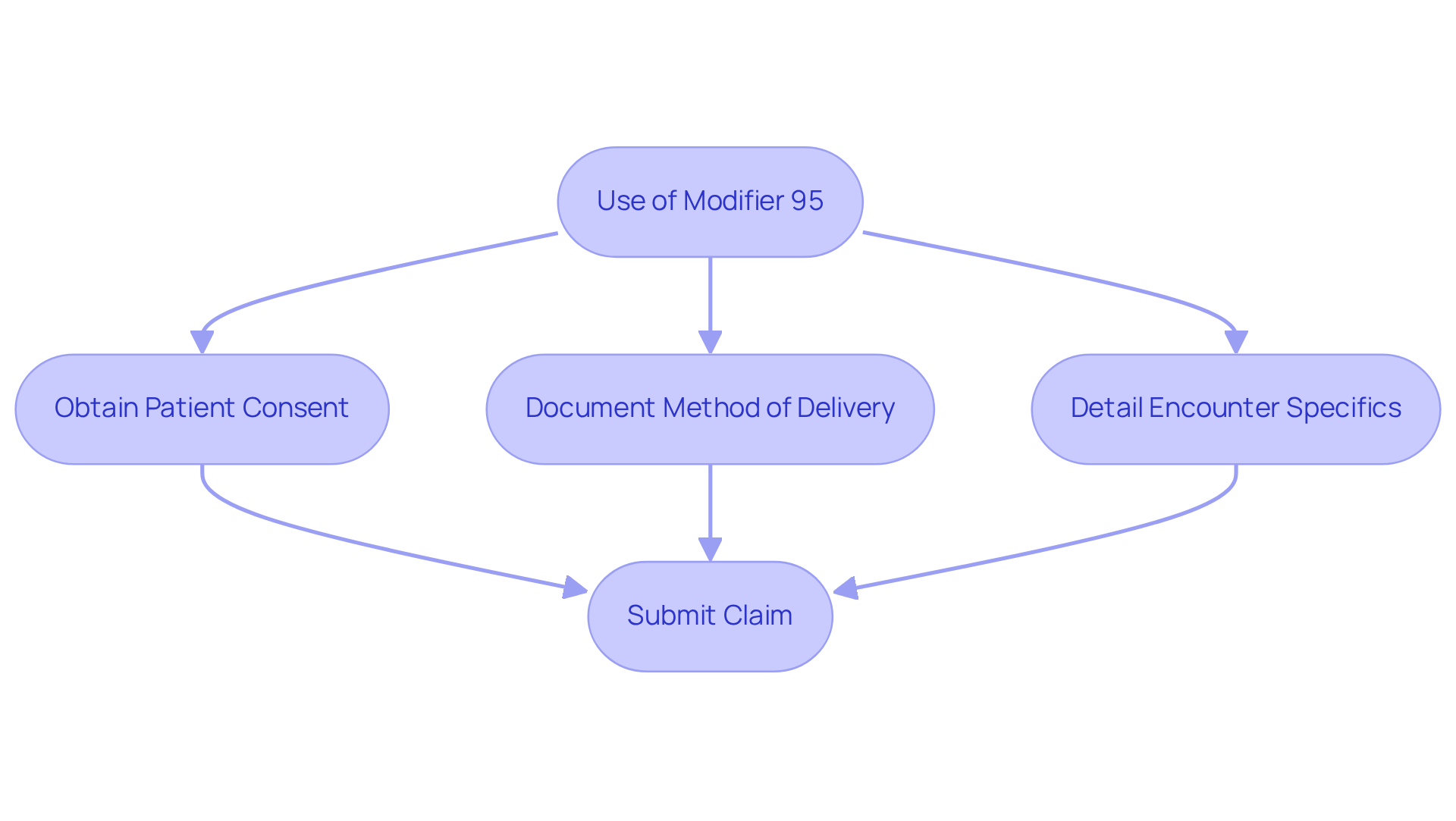
In the context of patient statements and reimbursement management, understanding the nuances of the 95 modifier helps practices prevent submission denials and ensures compliance with payer policies. For instance, precise documentation when utilizing the 95 modifier is essential; submissions must include:
- Patient consent
- The method of delivery
- Specifics about the encounter to meet payer requirements
Without a comprehensive approach, practices risk facing billing inaccuracies and prolonged payment cycles. This method not only enhances billing accuracy but also aids in resolving underpayments and managing aging accounts effectively.
Case studies have shown that practices employing the 95 modifier correctly can reduce claim denials by 20-30% and facilitate quicker reimbursements, improving revenue cycle performance by 15-25% within 30 to 90 days. As remote healthcare continues to be a permanent fixture in healthcare delivery, mastering the 95 modifier is essential for practices aiming to thrive in the evolving landscape of remote healthcare.
Apply Modifier 95 Correctly for Virtual Visits
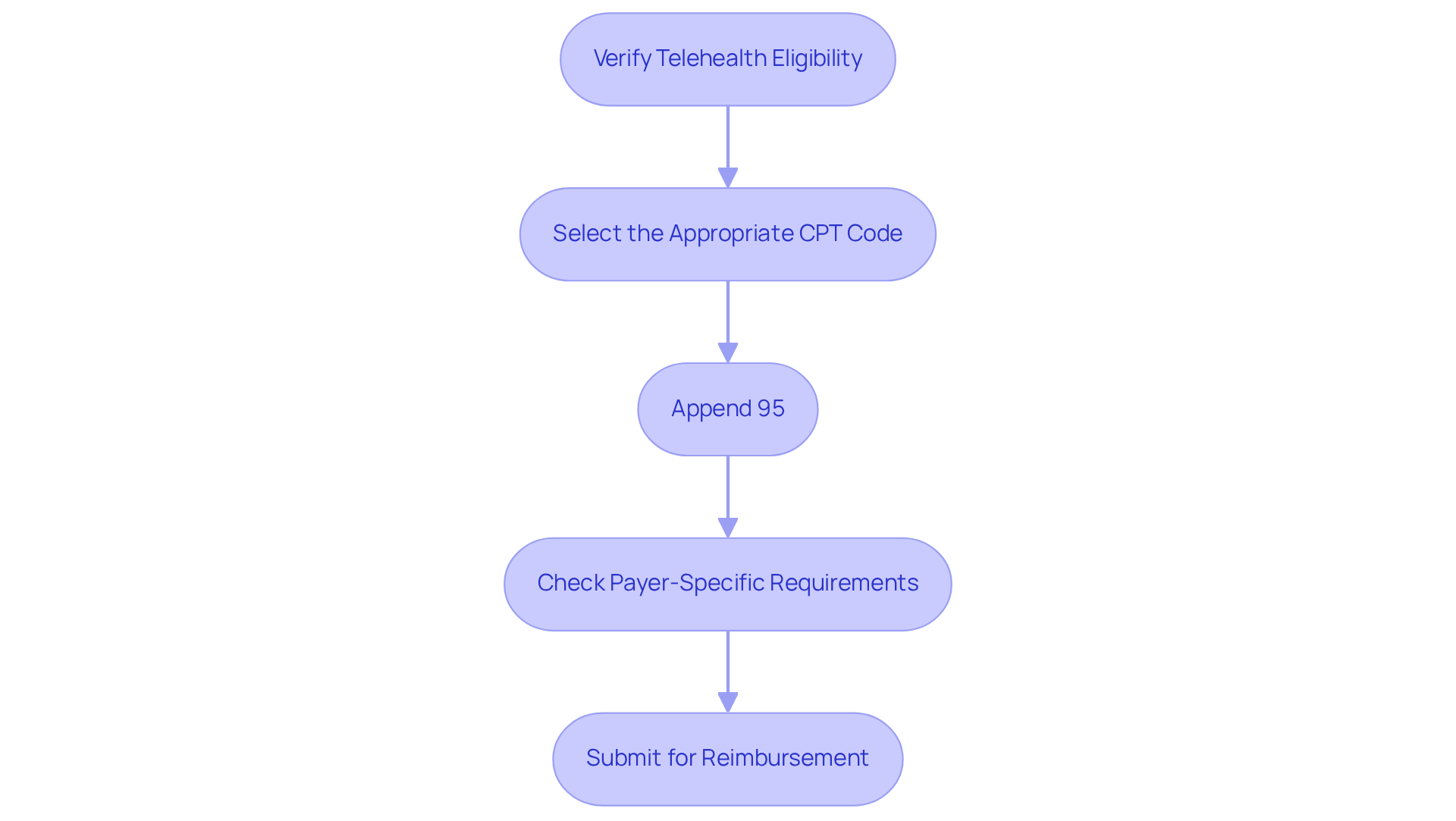
To effectively apply the modifier for virtual visit 95, healthcare providers must navigate a series of critical steps that ensure compliance and optimize reimbursement.
- Verify Telehealth Eligibility: Confirm that the offering qualifies as a telehealth visit according to payer guidelines.
- Select the Appropriate CPT Code: Choose the correct CPT code that corresponds to the care provided.
- Append 95: Add 95 to the CPT code to indicate that the service was delivered via real-time audio and video communication.
- Check Payer-Specific Requirements: Different payers may have unique requirements regarding the use of Modifier 95, so it’s crucial to verify these before submission.
Following these steps can help providers reduce the risk of denials by 20-30%. This ensures appropriate reimbursement rates and can lead to quicker payments, potentially within 15-25% over 30-90 days. Accurate documentation is essential for compliance and effective reimbursement support, as noted by industry specialists. This method not only simplifies the billing process but also acts as a modifier for virtual visit challenges such as underpayments and delayed reimbursements, ultimately enabling healthcare providers to concentrate more on patient care.
Furthermore, utilizing the services provided by Healthcare Partners Consulting & Billing, LLC (HPC) can further improve the management of patient statements and submissions, ensuring a comprehensive revenue cycle management customized to the requirements of behavioral and mental health practices. Ultimately, this structured approach not only streamlines billing but also empowers providers to prioritize patient care over administrative burdens.
Avoid Common Mistakes with Modifier 95 in Telehealth Claims
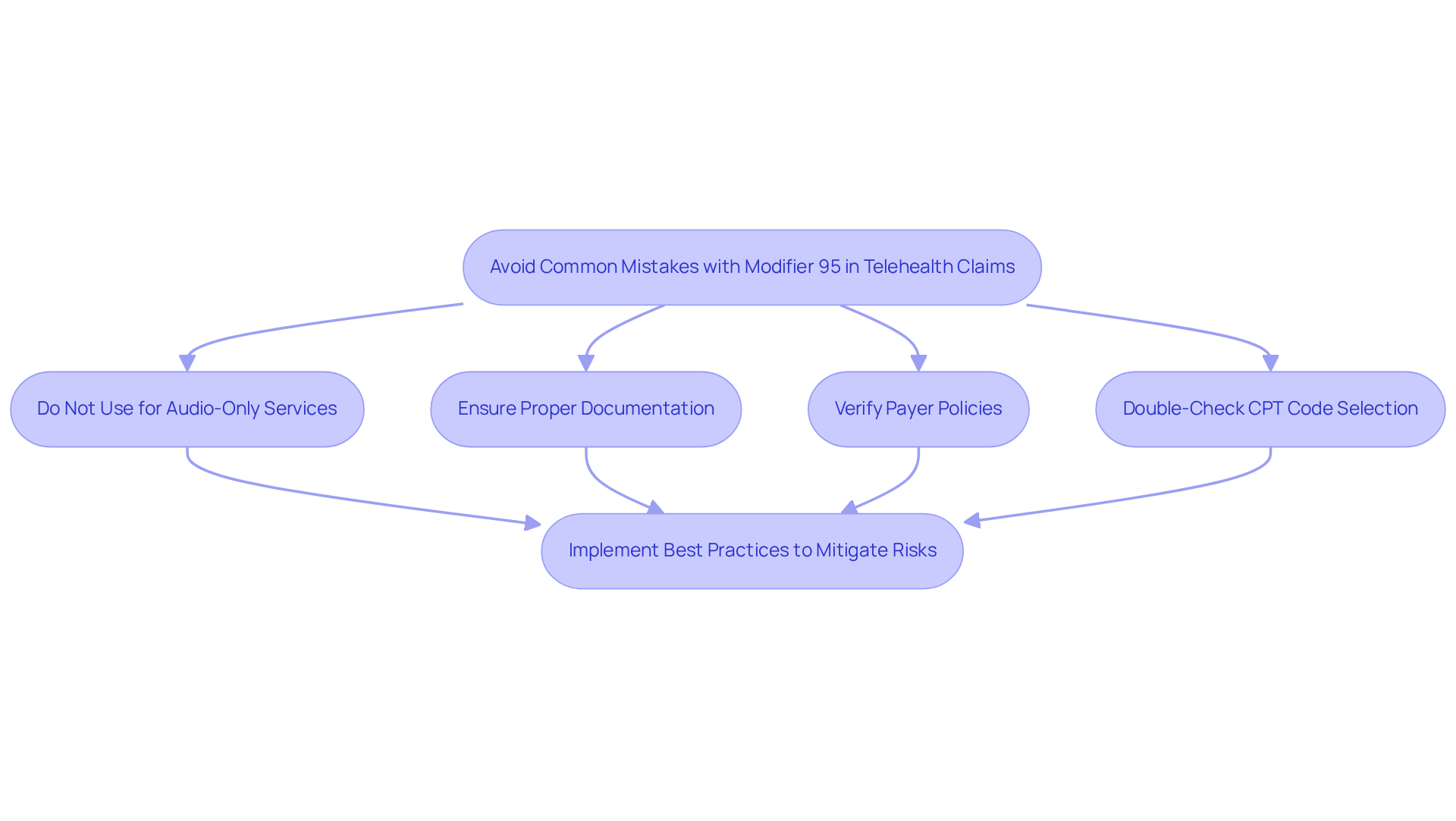
To optimize telehealth claims using Modifier 95, it is crucial to avoid common pitfalls:
- Do Not Use for Audio-Only Services: Claim denials can occur if Modifier 95 is misapplied to audio-only services. This code is designated for synchronous audio-video interactions, and using it incorrectly can lead to claim denials.
- Ensure Proper Documentation: Thorough documentation of the telehealth encounter is essential. This includes recording patient consent, the technology used, and clinical notes. Incomplete documentation can hinder reimbursement and expose practices to audits.
- Verify Payer Policies: Different payers have varying rules regarding the 95 code. Consistently reviewing these policies is essential to prevent mistakes that could result in denial of benefits. Failure to verify payer-specific guidelines can lead to substantial financial repercussions.
- Double-Check CPT Code Selection: Select the CPT code that aligns with the service provided and is appropriate for the use of Modifier 95. Incorrect CPT codes can trigger denials and payment discrepancies.
Implementing these best practices not only mitigates denial risks but also enhances the financial health of the practice.
Ensure Proper Documentation and Compliance for Telehealth Billing
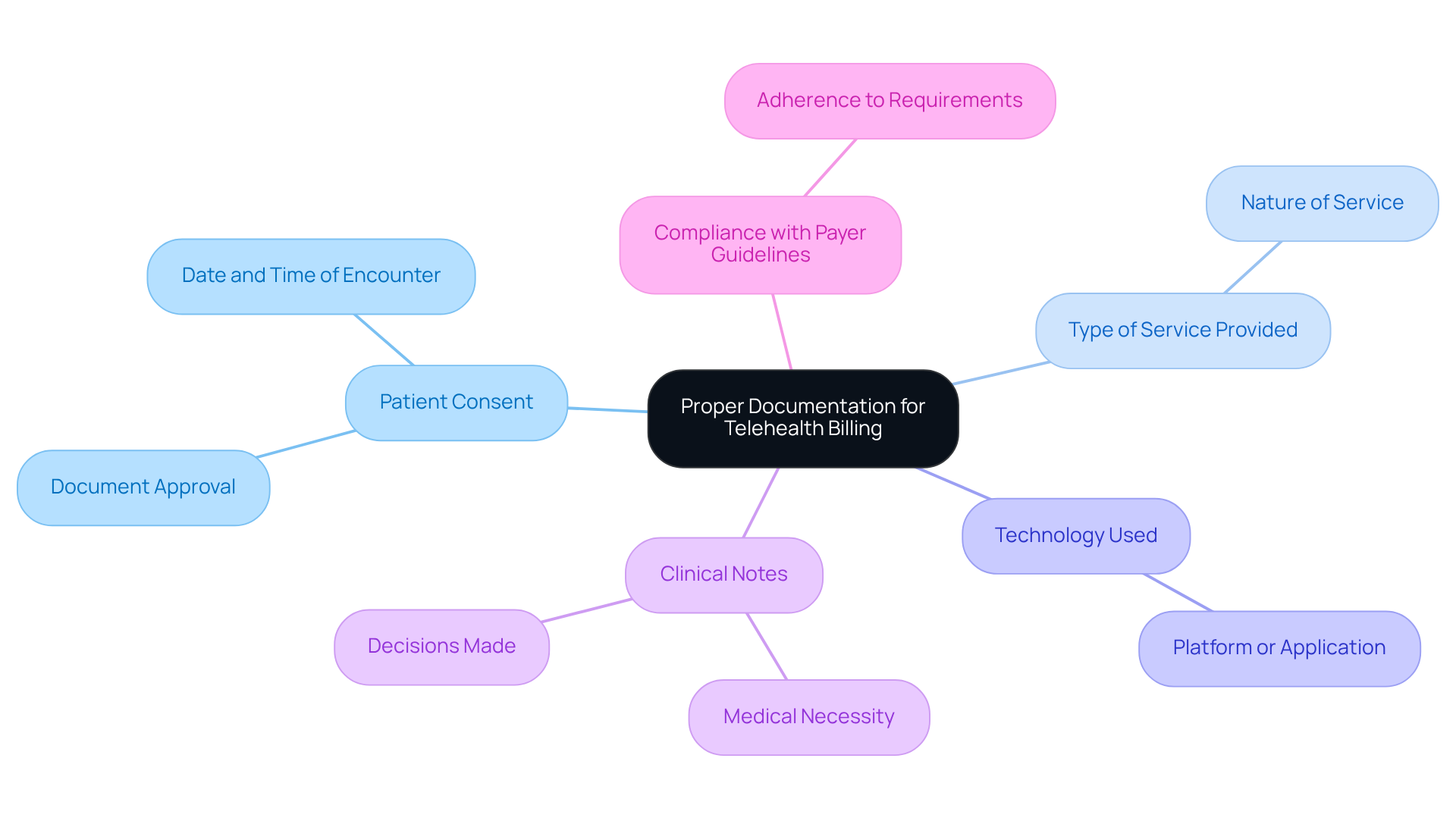
Inadequate documentation in remote healthcare billing can lead to significant financial repercussions for providers. Proper documentation is essential, especially when utilizing the modifier for virtual visit. Key elements to include are:
- Patient Consent: Document the patient’s approval for the virtual visit, noting the date and time of the encounter.
- Type of Service Provided: Clearly specify the nature of the service delivered during the virtual interaction.
- Technology Used: Indicate the technology employed for the telehealth session, such as the specific platform or application.
- Clinical Notes: Maintain comprehensive clinical notes that reflect the medical necessity of the visit and any decisions made during the encounter.
- Compliance with Payer Guidelines: Ensure that all documentation adheres to payer-specific requirements to support the use of the modifier for virtual visit.
Implementing these documentation practices helps healthcare providers mitigate the risk of claim denials, which can be as high as 20-30%. Additionally, accurate documentation can lead to faster reimbursement, with improvements of 15-25% within 30-90 days. Ultimately, the commitment to thorough documentation not only safeguards against denials but also fortifies the financial health of healthcare practices.
Conclusion
Navigating the complexities of telehealth billing presents significant challenges for healthcare providers. Effectively applying Modifier 95 is crucial, as it ensures compliance with payer requirements and enhances the accuracy of claims. This focus allows providers to prioritize patient care over administrative burdens. By mastering Modifier 95, practices can not only enhance their billing accuracy but also secure appropriate compensation for their services.
Key practices for utilizing Modifier 95 include:
- Verifying telehealth eligibility
- Selecting the correct CPT codes
- Maintaining thorough documentation
Avoiding common mistakes, such as misapplying the modifier to audio-only services or failing to adhere to payer-specific guidelines, is essential for minimizing claim denials and optimizing reimbursement rates. A structured approach to telehealth billing can lead to improved financial health for practices, particularly in the behavioral and mental health sectors.
As telehealth continues to evolve, embracing these best practices can transform the financial viability of healthcare practices in a digital landscape. Healthcare providers are encouraged to consider partnering with experts like Healthcare Partners Consulting & Billing, LLC (HPC) to streamline their revenue cycle management. For further assistance, reaching out to HPC at info@hpcbilling.com or calling 888-517-4992 can provide valuable support in navigating these challenges.
Frequently Asked Questions
What is the role of the 95 modifier in telehealth billing?
The 95 modifier is used to indicate that a procedure was conducted through synchronous telemedicine, utilizing real-time audio and video communication. It ensures accurate billing for telemedicine services and helps providers receive appropriate compensation.
Why is the 95 modifier important for telehealth services?
The 95 modifier is crucial for signaling to payers that a service was delivered via telehealth, which is essential as telehealth has become a primary mode of patient interaction. It helps prevent submission denials and ensures compliance with payer policies.
What documentation is required when using the 95 modifier?
When utilizing the 95 modifier, submissions must include patient consent, the method of delivery, and specifics about the encounter to meet payer requirements.
What are the risks of not using the 95 modifier correctly?
Without a comprehensive approach to using the 95 modifier, practices risk billing inaccuracies and prolonged payment cycles, which can lead to claim denials and delayed reimbursements.
How can the correct use of the 95 modifier impact claim denials and reimbursements?
Practices that employ the 95 modifier correctly can reduce claim denials by 20-30% and facilitate quicker reimbursements, improving revenue cycle performance by 15-25% within 30 to 90 days.
Why is mastering the 95 modifier essential for healthcare practices?
Mastering the 95 modifier is essential for practices aiming to thrive in the evolving landscape of remote healthcare, as it enhances billing accuracy and aids in managing aging accounts effectively.