

Introduction
Mastering EMS billing is essential for mental health clinics aiming for financial stability and operational efficiency. By implementing best practices in revenue cycle management, these clinics can enhance their billing processes and empower healthcare providers to focus more on patient care rather than administrative burdens. Clinics face significant challenges in navigating compliance and adapting to changing regulations; to thrive, they must adopt robust strategies for optimizing EMS billing.
Understand EMS Revenue Cycle Management
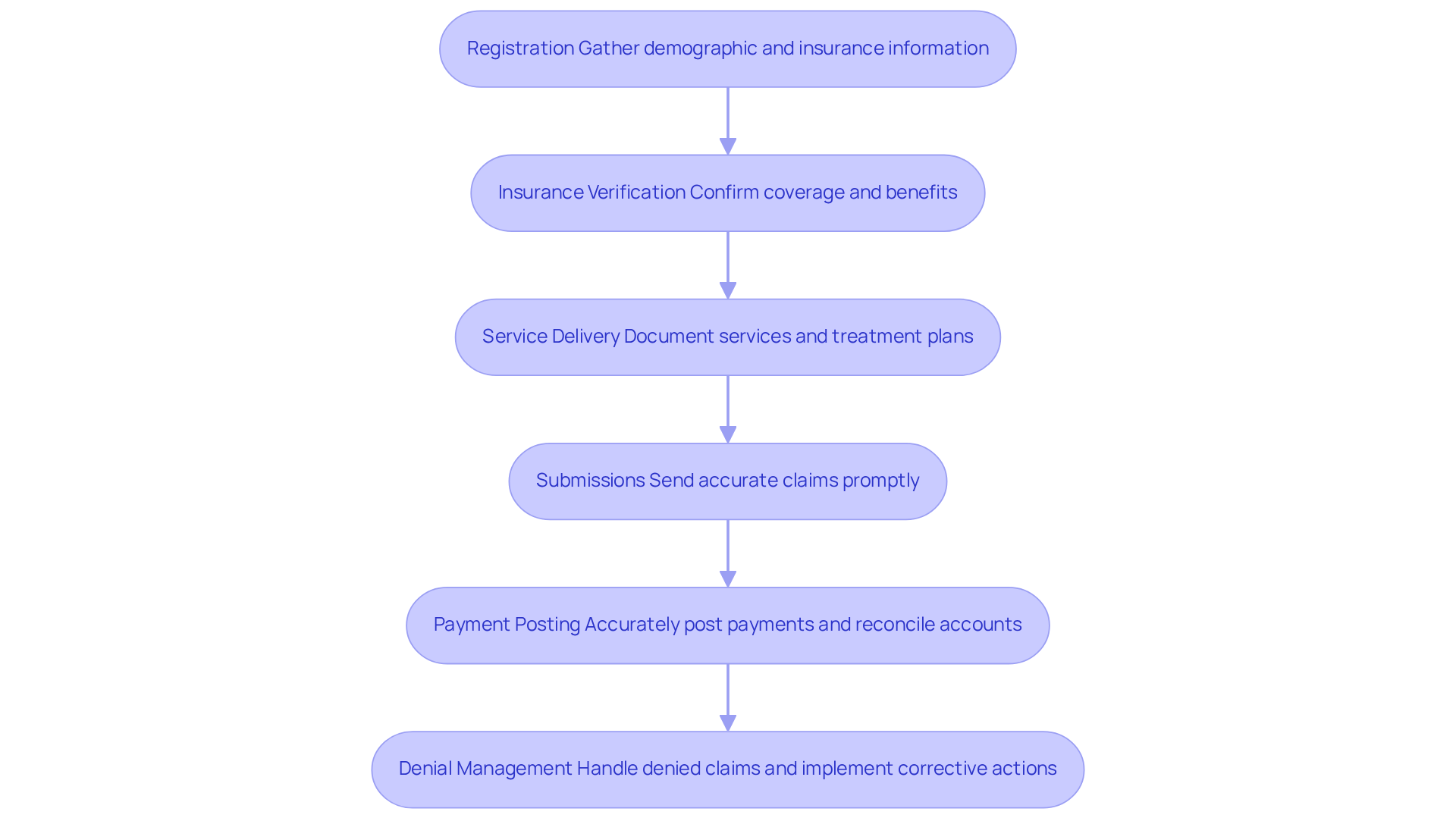
Understanding Revenue Cycle Management (RCM) is essential for the financial stability of mental health clinics, encompassing all administrative and clinical functions that contribute to the capture, management, and collection of service revenue. A thorough understanding of RCM directly influences financial health and operational efficiency. Key components include:
- Registration: Accurate information about individuals is crucial for billing. Gathering all demographic and insurance information at the initial point of contact reduces errors and improves accuracy of submissions.
- Insurance Verification: Confirming insurance coverage and benefits before services are rendered is critical to prevent denials and delays in payment, which can severely disrupt cash flow.
- Service Delivery: Detailed documentation of services provided, including notes on patient interactions and treatment plans, is essential for accurate billing and compliance with payer requirements.
- Submissions: Sending accurate submissions promptly is essential for timely reimbursement. Utilizing electronic submission of requests can streamline this process, enhancing first-pass acceptance rates, which should ideally be 95% or higher. Transparent reporting on status also improves openness and responsibility.
- Payment Posting: Accurate posting of payments and reconciliation of accounts helps maintain financial accuracy and transparency, ensuring that all revenue is accounted for.
- Denial Management: Establishing a systematic approach to handle denied claims is crucial. This includes identifying common denial reasons and implementing corrective actions, as approximately 63% of behavioral health denials are recoverable when properly appealed.
By effectively managing these components, clinics can secure their financial stability and enhance patient care. With 39 years of experience and as a veteran-owned business, Healthcare Partners Consulting offers personalized consultations to analyze your current workflow and identify services that will enhance your operational efficiency, allowing you to prioritize patient care.
Implement Strategies for Billing Optimization
Inefficient billing processes in mental health clinics can lead to significant financial losses and hinder patient care. To optimize these processes, consider the following strategies:
- Standardize Documentation: Develop standardized templates for clinical documentation. This method minimizes errors and speeds up invoicing. As a result, clinics can see a 20-30% decrease in claim denials.
- Train Staff Regularly: Continuous training for coding personnel on updates, payer requirements, and best practices is essential. A knowledgeable team is better prepared to manage financial processes efficiently, which can lead to quicker reimbursements of 15-25% within 30-90 days.
- Utilize an EMS billing service: Invest in specialized billing software that automates submission processes, tracks payments, and generates reports. Automation minimizes manual errors and enhances overall efficiency, contributing to improved revenue cycle performance.
- Monitor Key Performance Indicators (KPIs): Regularly track KPIs such as denial rates, days in accounts receivable, and collection rates. Analyzing these metrics helps identify areas for improvement, ensuring that practices can make scorecard-driven adjustments to enhance operational rigor.
- Engage with Payers: Build robust connections with insurance payers to enable smoother processing of reimbursements. Regular communication can help resolve issues quickly and improve reimbursement rates, which is crucial in a landscape where 169 million individuals live in Mental Health Professional Shortage Areas.
- Implement Pre-Authorization Processes: Ensure that pre-authorizations are obtained for services that require them. This proactive approach can prevent claim denials and delays in payment, ultimately supporting the clinic’s financial sustainability.
Ultimately, utilizing an EMS billing service to address these billing challenges is essential for the sustainability and growth of mental health practices.

Ensure Compliance and Prevent Billing Errors
Adherence to financial practices is crucial for mental health clinics to navigate the complexities of healthcare regulations and reduce invoicing errors. To maintain adherence and optimize revenue, consider the following best practices:
- Stay Updated on Regulations: Regularly review changes in healthcare regulations, including HIPAA, Medicare, and Medicaid guidelines. This vigilance guarantees that your invoicing practices remain compliant and current.
- Conduct Regular Audits: Implement routine audits of billing processes and documentation to identify and rectify errors before they result in refusals or penalties. Regular audits not only identify errors but also enhance revenue cycle performance by reducing rejections by 20-30%.
- Use Correct Coding: Ensure that all services are billed using the correct CPT and ICD-10 codes. Incorrect coding often leads to claim rejections, complicating the billing process.
- Document Medical Necessity: Clearly document the medical necessity of services provided. This documentation is essential for justifying claims to payers and preventing denials. Each billed service must be medically necessary and prepared for audit review.
- Implement a Compliance Program: Establish a compliance program that includes training, monitoring, and reporting mechanisms. This promotes a culture of adherence within the clinic, ensuring that all staff are informed of and comply with financial regulations.
- Engage Legal Counsel: Consult with legal experts specializing in healthcare compliance to ensure that your invoicing practices align with current laws and regulations. Taking this proactive approach helps avoid costly penalties and strengthens operational integrity.
By prioritizing compliance and implementing these practices, mental health clinics can safeguard their revenue and enhance their operational integrity. Ultimately, a commitment to compliance not only protects revenue but also fortifies the clinic’s reputation and operational integrity.

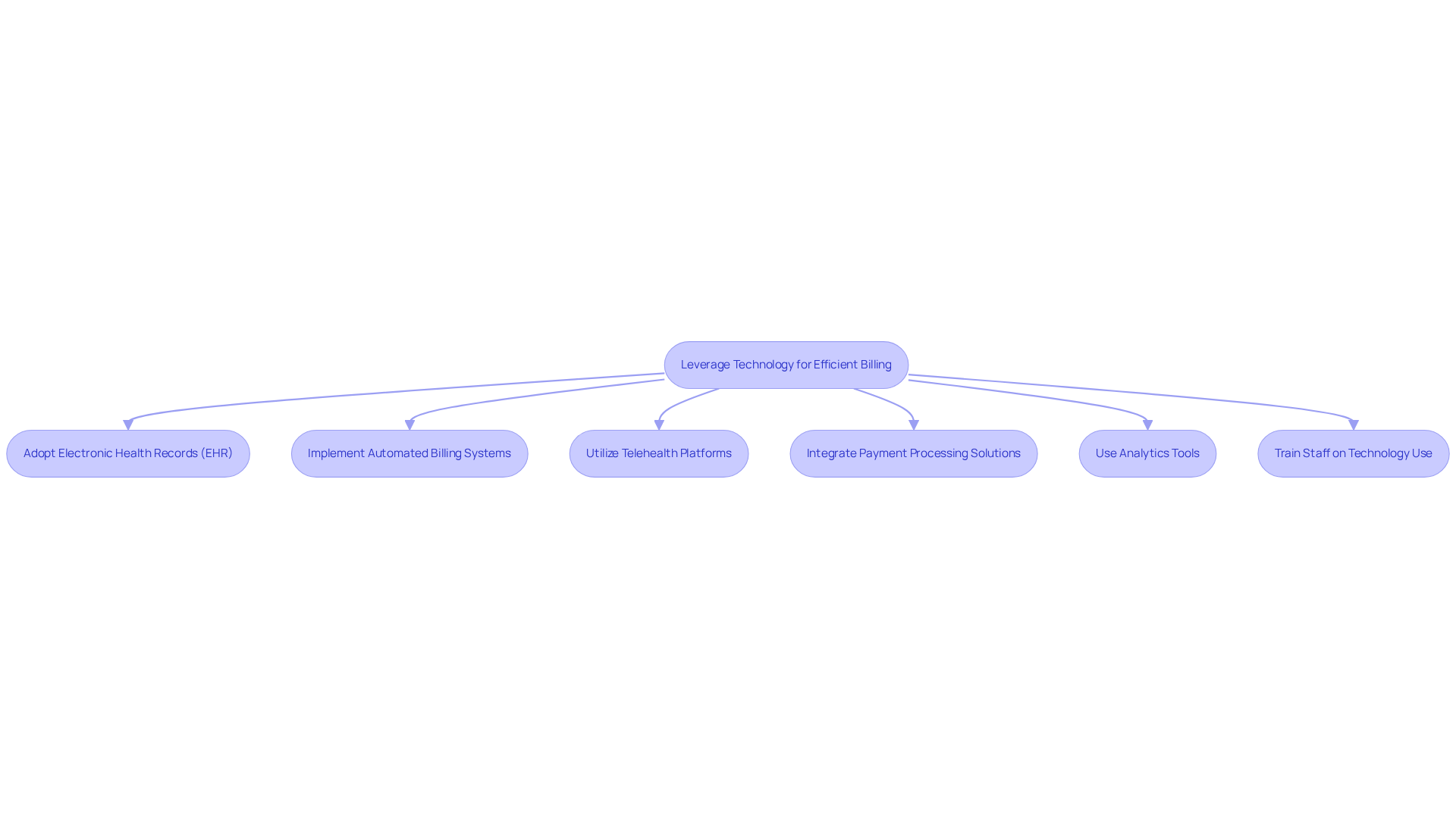
Leverage Technology for Efficient Billing
Without the integration of technology, mental health clinics risk inefficiencies in their invoicing processes, particularly in managing client statements and claims with an ems billing service. Here are some effective strategies to leverage technology:
- Adopt Electronic Health Records (EHR): Utilize EHR systems that integrate financial functionalities, streamlining documentation and ensuring that payment information is readily accessible. This integration directly addresses the complexities of managing patient statements and evolving payment requirements.
- Implement Automated Billing Systems: Automated billing systems can handle submission of requests, payment tracking, and reporting, minimizing manual errors and speeding up the billing cycle. Practices that utilize an ems billing service can experience denial reductions of 20-30% and quicker reimbursements, with 15-25% of submissions being processed in 30-90 days. Utilizing an ems billing service is critical for mitigating underpayments and unprocessed claims, thereby safeguarding the integrity of your practice’s revenue cycle.
- Utilize Telehealth Platforms: Ensure your payment system accommodates telehealth-specific codes and requirements, which is increasingly vital in today’s healthcare landscape. This adaptation is essential as telehealth continues to grow in importance.
- Integrate Payment Processing Solutions: Implement integrated payment processing solutions that allow patients to pay online, improving cash flow and enhancing patient satisfaction. This can also assist in reducing the administrative burdens related to invoicing.
- Use Analytics Tools: Leverage analytics tools to monitor financial performance and identify trends. Data-driven insights can assist clinics in making informed choices to optimize their invoicing processes and enhance operational rigor, particularly in managing aging claims and improving overall efficiency.
- Train Staff on Technology Use: Ensure all staff members are trained on the technology being used. Proper training maximizes the benefits of technology and minimizes errors. This is especially crucial as staff training for clinical and revenue teams is vital to enhance revenue integrity.
Failing to adopt these technologies may lead to continued inefficiencies in the ems billing service processes, ultimately detracting from the quality of patient care. Practices that adopt these technologies can enhance their revenue cycle performance significantly, ensuring clean claims and fast follow-up, which are critical for successful practice management.
Conclusion
Optimizing EMS billing practices is essential for mental health clinics striving for financial health and operational efficiency. By focusing on comprehensive revenue cycle management, clinics empower their healthcare providers to concentrate on patient care rather than administrative burdens. This approach improves billing accuracy and ensures compliance with regulatory standards. As a result, it leads to better patient outcomes.
Key strategies discussed include:
- Standardizing documentation
- Training staff regularly
- Leveraging technology to streamline billing processes
Implementing these best practices can significantly reduce claim denials and improve reimbursement timelines, which are essential for maintaining the financial stability of mental health practices. Additionally, prioritizing compliance through regular audits and correct coding safeguards revenue and enhances the clinic’s reputation.
In a landscape where mental health services are increasingly vital, adopting these best practices is not just beneficial but necessary. Clinics aiming to improve operational efficiency and prioritize patient care should consider this. For those seeking to enhance their operational efficiency and focus on patient care, engaging with a specialized EMS billing service like Healthcare Partners Consulting & Billing, LLC (HPC) can be a transformative step. This ensures clinics are prepared to handle healthcare billing complexities while keeping patient needs at the forefront. For further assistance, reach out to HPC at info@hpcbilling.com or call 888-517-4992.
Frequently Asked Questions
What is Revenue Cycle Management (RCM) and why is it important for mental health clinics?
Revenue Cycle Management (RCM) encompasses all administrative and clinical functions that contribute to the capture, management, and collection of service revenue. It is essential for the financial stability of mental health clinics as it directly influences their financial health and operational efficiency.
What are the key components of RCM?
The key components of RCM include: – Registration: Gathering accurate demographic and insurance information at the initial contact. – Insurance Verification: Confirming insurance coverage and benefits before services are rendered. – Service Delivery: Documenting services provided, including patient interactions and treatment plans. – Submissions: Sending accurate billing submissions promptly for timely reimbursement. – Payment Posting: Accurately posting payments and reconciling accounts. – Denial Management: Systematically handling denied claims and implementing corrective actions.
How does accurate registration impact the billing process?
Accurate registration ensures that all demographic and insurance information is collected at the initial point of contact, which reduces errors and improves the accuracy of billing submissions.
Why is insurance verification critical before service delivery?
Insurance verification is critical to confirm coverage and benefits before services are rendered, preventing denials and delays in payment that can disrupt cash flow.
What role does documentation play in RCM?
Detailed documentation of services provided, including notes on patient interactions and treatment plans, is essential for accurate billing and compliance with payer requirements.
How can timely submissions affect reimbursement?
Sending accurate submissions promptly is essential for timely reimbursement. Utilizing electronic submissions can streamline the process and enhance first-pass acceptance rates, ideally aiming for 95% or higher.
What is the importance of payment posting and account reconciliation?
Accurate posting of payments and reconciliation of accounts helps maintain financial accuracy and transparency, ensuring that all revenue is accounted for.
What should clinics do to manage denied claims effectively?
Clinics should establish a systematic approach to handle denied claims, including identifying common denial reasons and implementing corrective actions, as approximately 63% of behavioral health denials are recoverable when properly appealed.
How can Healthcare Partners Consulting assist mental health clinics?
Healthcare Partners Consulting offers personalized consultations to analyze current workflows and identify services that enhance operational efficiency, allowing clinics to prioritize patient care.