
Introduction
In the realm of healthcare, the ability to manage medical practices effectively is paramount to prioritizing patient care. By implementing best practices in reporting, organizations can enhance operational efficiency and improve financial performance, ensuring that patient outcomes are optimized. Many practices find themselves overwhelmed by the intricacies of data management, hindering their ability to focus on patient care. This raises an important question: how can healthcare providers streamline their reporting processes to empower their teams and optimize care delivery? This article will outline four essential best practices that can transform medical practice management reports into effective tools for informed decision-making and ongoing improvement.
Identify Core Components of Effective Reporting
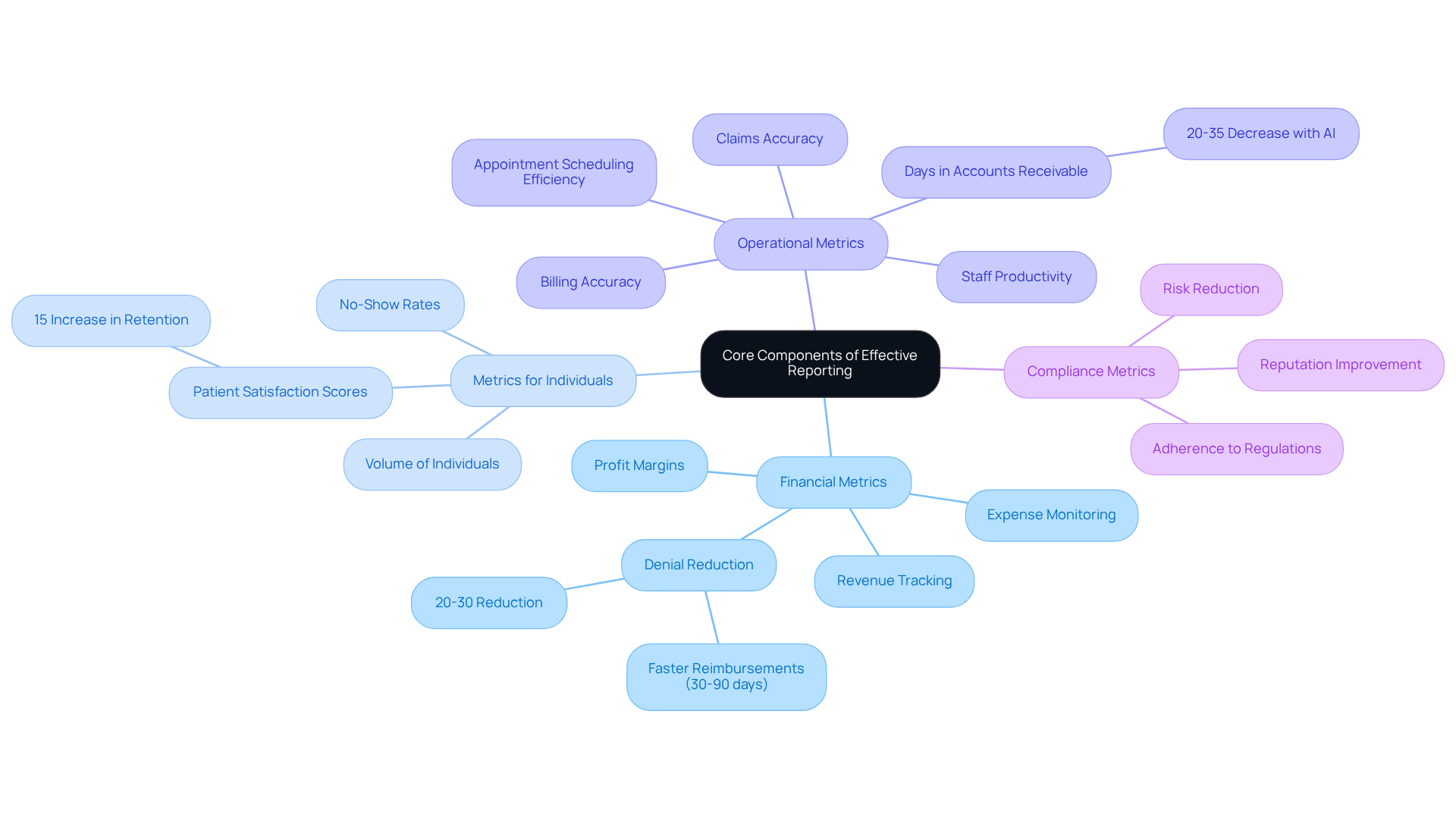
To enhance operational efficiency and financial performance, medical practice management reports must incorporate essential components that provide a holistic view of organizational performance. Key components include:
- Financial Metrics: Track revenue, expenses, and profit margins to assess financial health. Recent data indicates that focusing on these metrics can lead to denial reductions of 20-30%. Additionally, organizations can expect quicker reimbursements within 30-90 days, significantly enhancing cash flow. For instance, a mental health clinic that implemented these metrics reported a 25% reduction in denials and improved cash flow within two months. Furthermore, Healthcare Partners Consulting & Billing, LLC (HPC) offers a quick quiz to help organizations assess their profitability score, identify hidden revenue leaks, and receive personalized recommendations for enhancing efficiency and billing accuracy.
- Metrics for Individuals: Monitor the volume of individuals, no-show rates, and satisfaction scores to evaluate service delivery. Comprehending these metrics assists practices in enhancing engagement and retention of individuals. A recent survey found that clinics with high patient satisfaction scores also experienced a 15% increase in patient retention.
- Operational Metrics: Evaluate appointment scheduling efficiency, staff productivity, and billing accuracy to identify areas for improvement. Implementing scorecard-driven adjustments linked to claims accuracy and days in accounts receivable can demonstrate efficiency and enhance overall performance. Given the anticipated shortage of up to 3.2 million healthcare workers by 2026, organizations face increasing pressure to optimize their performance metrics. HPC provides customized administrative support services, including scheduling and document management, to streamline these operations. Moreover, HPC integrates seamlessly with EHR and management platforms like TherapyNotes and SimplePractice, enhancing workflow efficiency.
- Compliance Metrics: Ensure adherence to healthcare regulations and standards, which is essential for maintaining integrity in operations. Compliance metrics assist in reducing risks linked to regulatory penalties and improving the reputation of the organization.
By integrating these components, organizations can generate medical practice management reports that reflect current performance while also highlighting areas for potential growth and improvement. Failing to integrate these components may lead to missed opportunities for growth and operational inefficiencies. With HPC’s expertise in revenue cycle management tailored primarily to behavioral and mental health facilities, clinic owners can concentrate more on care while HPC manages the administrative responsibilities. Client testimonials from practitioners like Dr. Sarah Mitchell and Dr. Michael Rodriguez highlight significant revenue increases and reductions in administrative burdens, showcasing the effectiveness of HPC’s services.
Leverage Technology for Streamlined Reporting
In an era where efficiency is paramount, the integration of technology into reporting processes presents both challenges and opportunities. Here are some best practices:
- Utilize Practice Management Software: Implement software that integrates scheduling, billing, and reporting functions to automate data collection and report generation. Healthcare Partners Consulting & Billing, LLC (HPC) provides customized solutions that integrate effortlessly with platforms like TherapyNotes and SimplePractice, resulting in a decrease in administrative tasks by about 50%, enabling staff to concentrate on care.
- Adopt Electronic Health Records (EHR): EHR systems streamline documentation, ensuring that all individual data is readily available for reporting purposes. This accessibility can improve the speed of data retrieval and enhance the accuracy of medical practice management reports, especially when utilizing systems that align with HPC’s expertise in behavioral and mental health.
- Data Visualization Tools: Use tools that transform complex data into visual formats, making it easier to interpret and share insights with stakeholders. Effective data visualization can lead to enhanced decision-making and improved communication within the organization, empowering healthcare providers to concentrate on delivering quality care.
- Leverage automated reporting features within your software to generate medical practice management reports without manual input. This reduces errors and saves time, contributing to faster reimbursement cycles, which can improve cash flow by 15-25% within 30-90 days, as supported by recent findings.
This shift not only enhances efficiency but also allows healthcare providers to focus on patient care. Ultimately, embracing these technological advancements can redefine how healthcare organizations operate, ensuring that patient care remains the top priority. With 39 years of experience and a veteran-owned status, Healthcare Partners Consulting is committed to optimizing administrative and billing services for improved care and operational efficiency.

Analyze Data for Informed Decision-Making
In medical management, effective data analysis is essential for informed decision-making, as highlighted in medical practice management reports. Here are key strategies to enhance your practice’s performance:
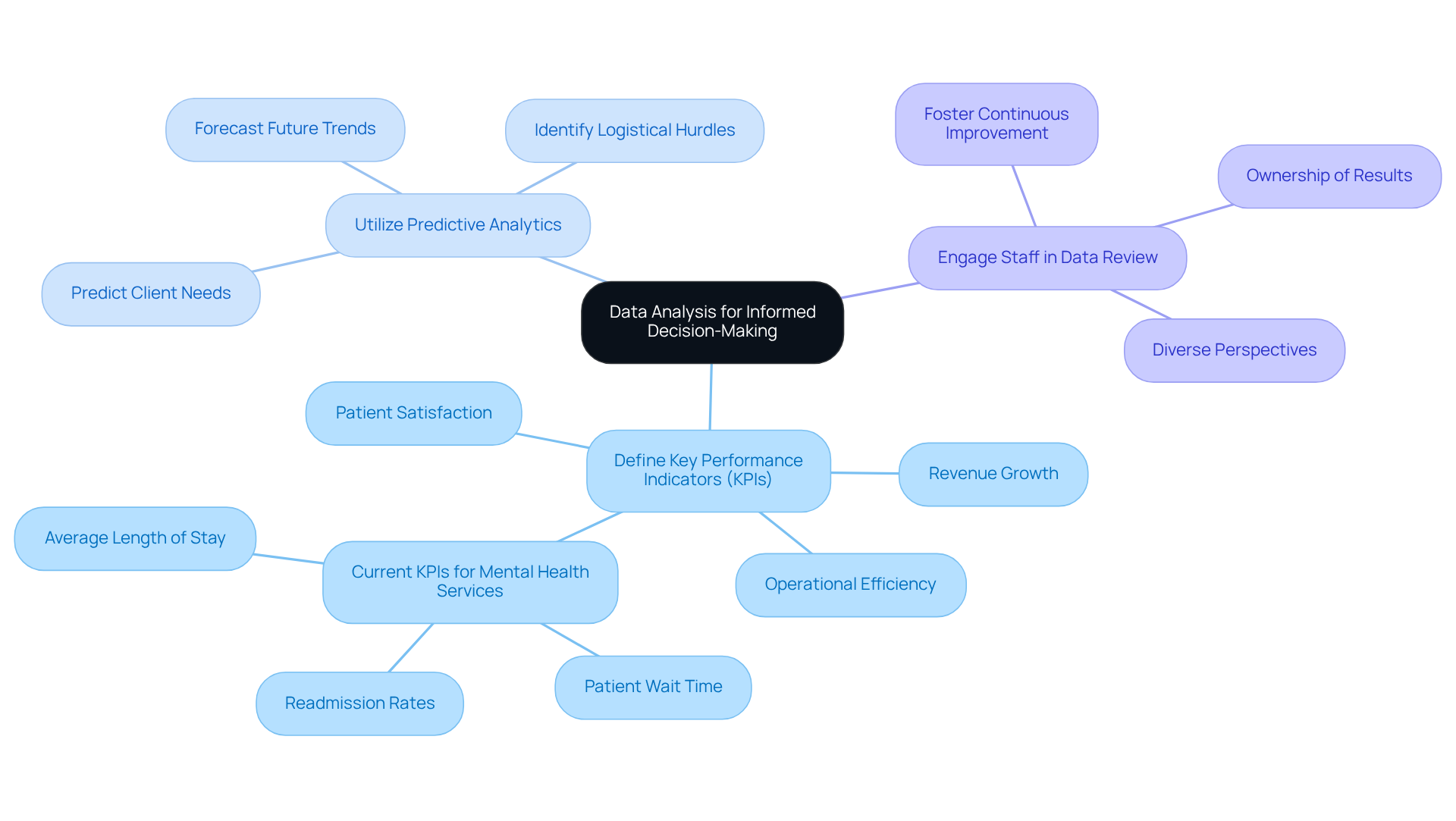
- Define Key Performance Indicators (KPIs): Establish KPIs that align with your practice’s objectives, such as patient satisfaction, revenue growth, and operational efficiency. Current KPIs for mental health services in 2026 include metrics such as patient wait time, readmission rates, and the average length of stay, which are crucial for evaluating care quality and effectiveness. Currently, 68% of physicians use AI tools, highlighting a trend in technology adoption that enhances KPI tracking. Regularly review medical practice management reports by scheduling consistent evaluations to identify trends and areas needing improvement. This method enables timely adjustments and encourages a proactive approach to challenges in operations.
- Utilize Predictive Analytics: Implement predictive analytics to forecast future trends based on historical data. This method aids in predicting client needs and logistical hurdles, allowing organizations to adjust rapidly and efficiently.
- Engage Staff in Data Review: Involving staff in the analysis process allows for diverse perspectives and fosters a culture of continuous improvement. When team members are involved, they interpret data better and take ownership of the results.
Additionally, explore personalized consultations from Healthcare Partners Consulting & Billing, LLC (HPC). A quick assessment can help you identify hidden revenue leaks and provide tailored recommendations to improve efficiency and billing accuracy. HPC offers customized administrative support services, including scheduling, document management, and insurance claims assistance, to keep your office running smoothly. For instance, organizations that focus on scorecard-driven adjustments tied to claims accuracy and denial rates can achieve denial reductions of 20-30% and expedite reimbursements by 15-25% within 30-90 days, significantly improving revenue cycle performance. By leveraging data analysis and expert consultations, organizations can significantly enhance both patient care and operational efficiency.
Implement Continuous Improvement in Reporting Practices
To enhance the effectiveness of reporting methods, healthcare providers must embrace a continuous improvement approach. Here are actionable steps:
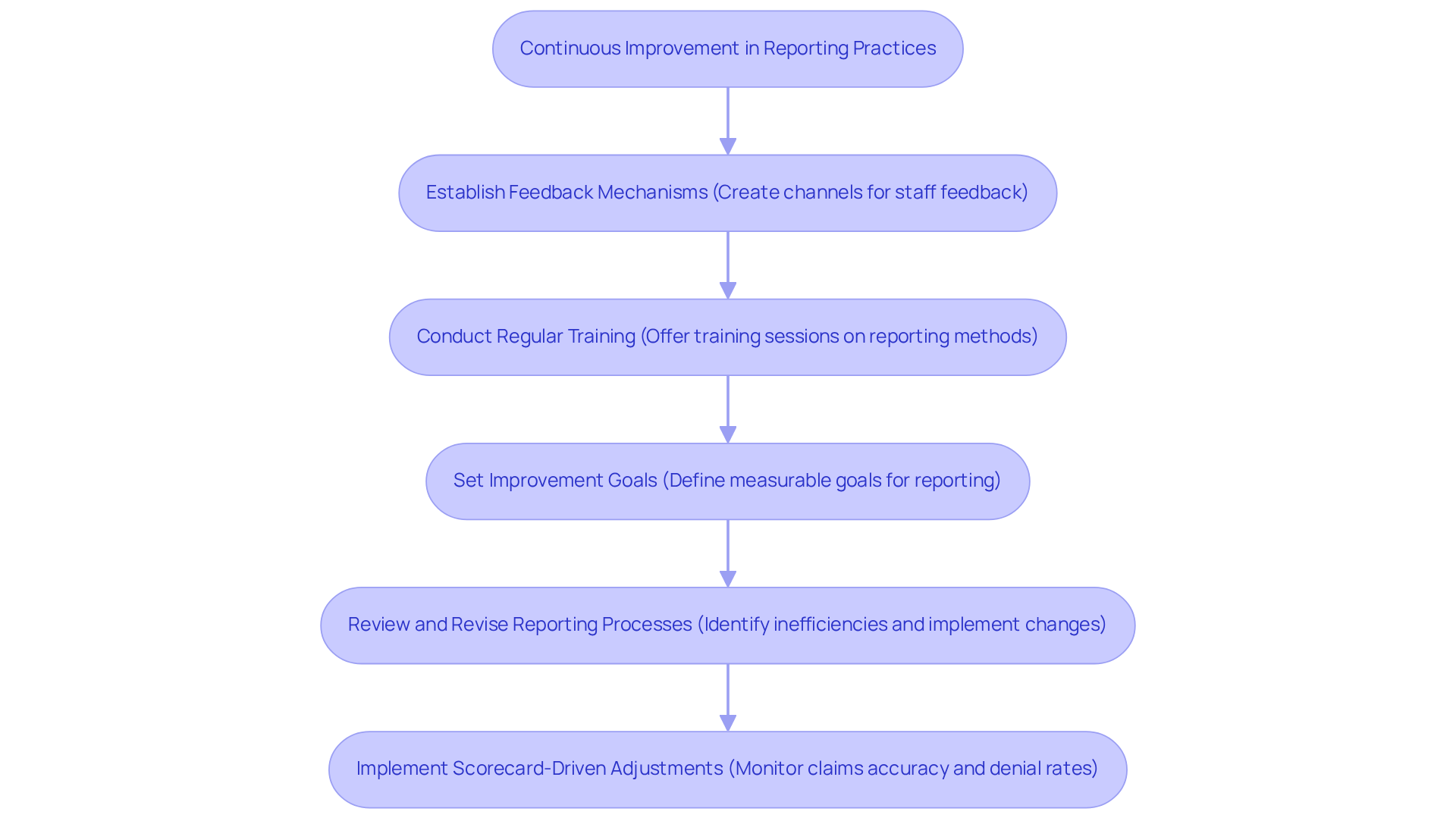
- Establish Feedback Mechanisms: Create channels for staff to provide feedback on reporting processes and outcomes, fostering a culture of open communication. This fosters enhanced engagement; research shows that organizations with robust feedback systems experience a 20-30% reduction in denial rates.
- Conduct Regular Training: Offer training sessions to keep staff updated on optimal methods and new technologies related to reporting. Continuous education is crucial, as it empowers staff to utilize the latest tools effectively, contributing to faster reimbursement cycles of 15-25% within 30-90 days.
- Set Improvement Goals: Define specific, measurable goals for reporting practices and regularly assess progress towards these goals. Establishing clear objectives helps in tracking performance and identifying areas for enhancement.
- Review and Revise Reporting Processes: Periodically review reporting processes to identify inefficiencies and implement changes that enhance effectiveness. Employing scorecard-driven adjustments can greatly enhance claims accuracy and decrease days in accounts receivable, ensuring rigorous operations. This is particularly important for addressing underpayments, unprocessed claims, and aging claims, which are critical aspects of effective claims management.
For example, a healthcare organization that implemented scorecard-driven adjustments reported a significant improvement in claims accuracy and a decrease in denial rates, demonstrating the effectiveness of continuous improvement strategies in enhancing operational performance.
This commitment to continuous improvement positions organizations to thrive amidst evolving healthcare challenges. As a veteran-owned company with 39 years of experience, Healthcare Partners Consulting & Billing, LLC (HPC) emphasizes a compliance-first approach, ensuring that practices can thrive in a competitive environment.
Conclusion
Many healthcare organizations face challenges in achieving operational efficiency and financial performance due to inadequate reporting practices. Effective medical practice management reports are crucial for addressing these challenges. By focusing on core components such as:
- Financial metrics
- Individual metrics
- Operational metrics
- Compliance metrics
practices can gain a comprehensive understanding of their performance. This holistic approach not only identifies areas for improvement but also empowers healthcare providers to concentrate on delivering quality patient care, free from administrative burdens.
Integrating technology is key to streamlining reporting processes. Utilizing practice management software, adopting electronic health records, and leveraging data visualization tools can significantly enhance the accuracy and efficiency of reporting. These advancements allow healthcare providers to focus more on patient care while ensuring that their operational needs are met. Implementing data analysis strategies, such as defining key performance indicators and involving staff in data reviews, cultivates a culture of continuous improvement essential for informed decision-making.
By adopting best practices, healthcare organizations can transform their operational efficiency and enhance patient care. Prioritizing compliance, leveraging technology, and committing to continuous improvement are vital steps for practices aiming to thrive in a competitive landscape. By reaching out to Healthcare Partners Consulting & Billing, LLC, organizations can discover tailored solutions that significantly enhance their operational performance and patient care outcomes. Contact HPC at info@hpcbilling.com or call 888-517-4992 to explore how to enhance your practice’s performance today.
Frequently Asked Questions
What are the core components of effective medical practice management reporting?
The core components include financial metrics, metrics for individuals, operational metrics, and compliance metrics. These components provide a holistic view of organizational performance and enhance operational efficiency and financial performance.
How do financial metrics impact a medical practice?
Financial metrics track revenue, expenses, and profit margins, which are essential for assessing financial health. Focusing on these metrics can lead to a 20-30% reduction in denials and quicker reimbursements within 30-90 days, significantly improving cash flow.
What specific benefits did a mental health clinic experience by implementing financial metrics?
The mental health clinic reported a 25% reduction in denials and improved cash flow within two months after implementing financial metrics.
What metrics should be monitored to evaluate service delivery?
Practices should monitor the volume of individuals, no-show rates, and satisfaction scores to evaluate service delivery. Understanding these metrics can enhance engagement and retention of individuals.
How does patient satisfaction relate to patient retention?
A recent survey found that clinics with high patient satisfaction scores experienced a 15% increase in patient retention.
What operational metrics should be evaluated for improvement?
Appointment scheduling efficiency, staff productivity, and billing accuracy should be evaluated to identify areas for improvement. Scorecard-driven adjustments linked to claims accuracy and days in accounts receivable can enhance overall performance.
Why are compliance metrics important for healthcare organizations?
Compliance metrics ensure adherence to healthcare regulations and standards, which is essential for maintaining operational integrity. They help reduce risks associated with regulatory penalties and improve the organization’s reputation.
What services does Healthcare Partners Consulting & Billing, LLC (HPC) provide to enhance operational efficiency?
HPC offers customized administrative support services, including scheduling and document management, and integrates with EHR and management platforms like TherapyNotes and SimplePractice to streamline operations.
What can happen if organizations fail to integrate the core components of reporting?
Failing to integrate these components may lead to missed opportunities for growth and operational inefficiencies.
How does HPC support clinic owners in managing administrative responsibilities?
HPC specializes in revenue cycle management tailored to behavioral and mental health facilities, allowing clinic owners to focus more on care while HPC manages administrative tasks.