

Introduction
Practices in behavioral health often struggle to balance diverse patient needs with the demands of operational efficiency. Implementing effective management practices enables organizations to enhance patient care while streamlining operations, which is vital for financial sustainability. Identifying specific strategies is crucial for practices to navigate this balance effectively.
Diversify Service Offerings to Enhance Patient Care
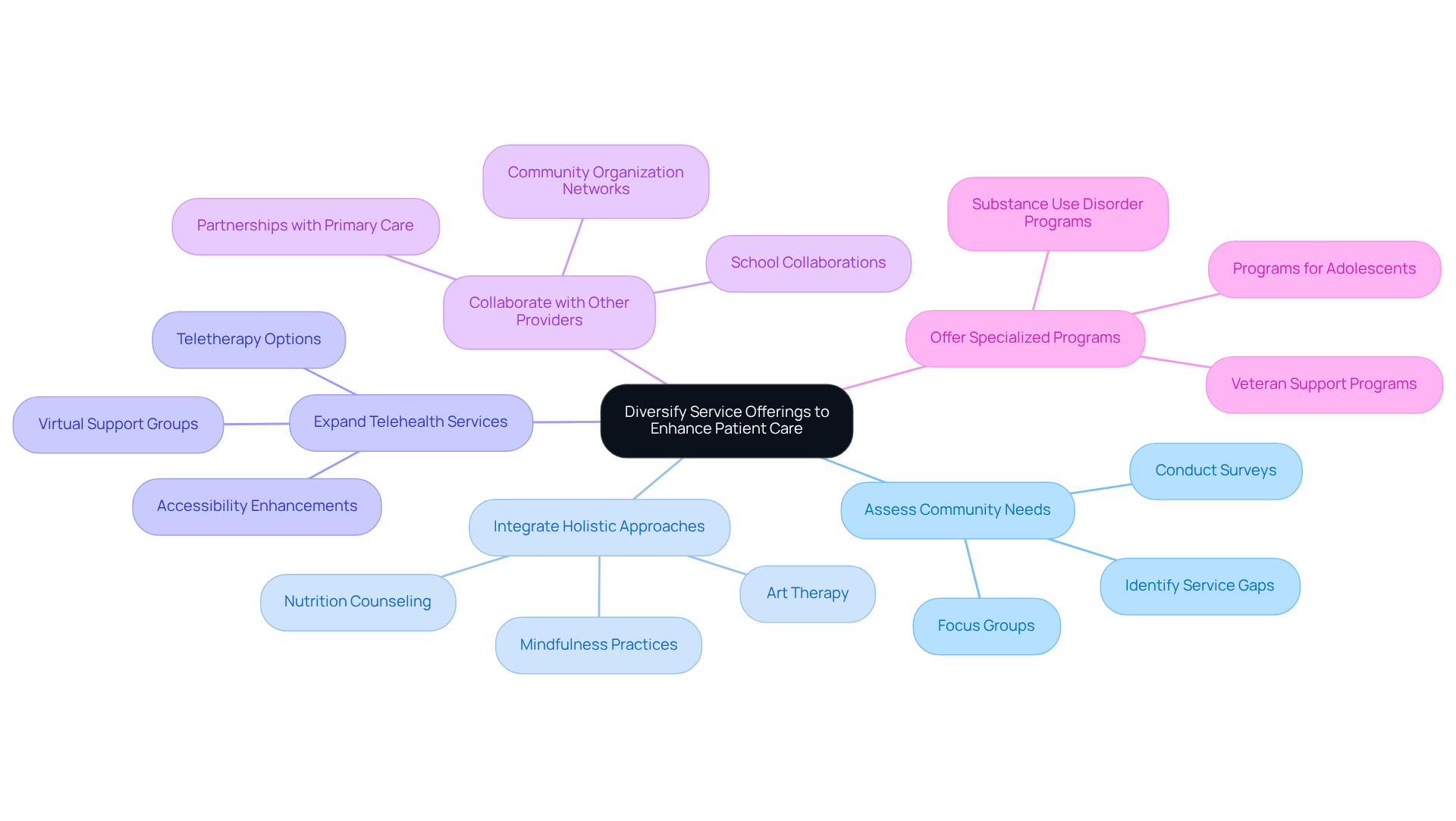
Organizations often struggle to meet diverse community needs while maintaining competitive advantage. To effectively diversify service offerings, behavioral health practices should consider the following strategies:
- Assess Community Needs: Conduct surveys or focus groups to identify gaps in services within the community. This approach assists in customizing offerings to address specific needs, ensuring that services are relevant and impactful.
- Integrate Holistic Approaches: Incorporate complementary therapies such as art therapy, mindfulness, or nutrition counseling to address the whole person, not just their symptoms. This can improve engagement and satisfaction among individuals receiving care.
- Expand Telehealth Services: With the rise of digital health, offering teletherapy or virtual support groups can enhance accessibility for individuals who may have difficulty attending in-person sessions. This flexibility can lead to enhanced retention and outcomes for individuals.
- Collaborate with Other Providers: Form partnerships with primary care physicians, schools, or community organizations to create a referral network that enhances service delivery and support for individuals. Such collaborations can enhance transitions for individuals and improve overall coordination of services.
- Offer Specialized Programs: Develop programs targeting specific populations, such as adolescents, veterans, or individuals with substance use disorders, to provide tailored support and improve outcomes. Specialized programs can also assist organizations in distinguishing themselves in a competitive market.
Ultimately, the adoption of these strategies can enhance behavioral health practice management and position organizations for long-term success in a competitive landscape.
Embrace Digital Transformation for Operational Efficiency
In an era where operational efficiency is paramount, behavioral health practice management faces the challenge of adapting to digital transformation. To successfully embrace this transformation, practices should consider the following best practices:
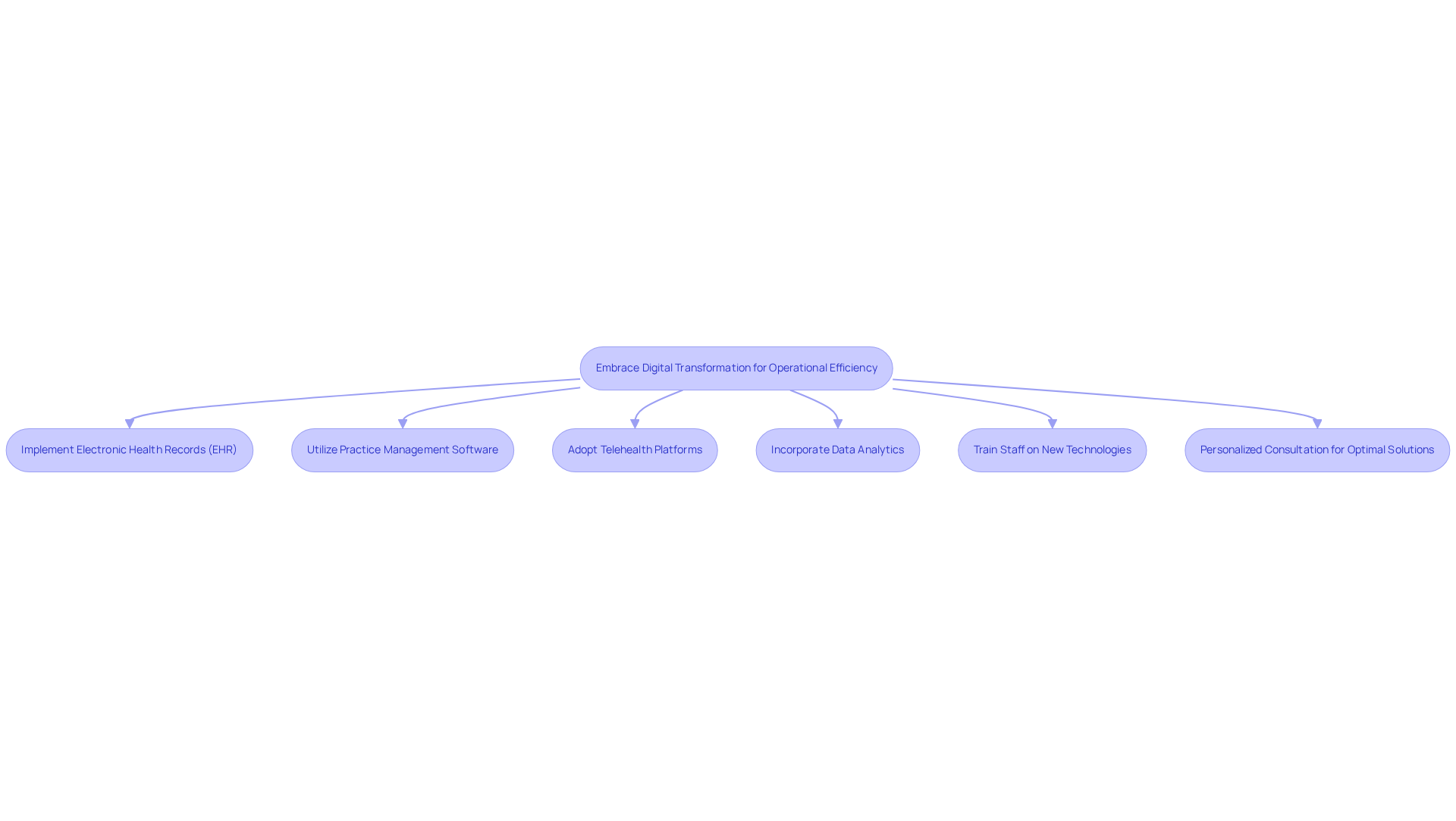
- Implement Electronic Health Records (EHR): Transitioning to an EHR system streamlines documentation, enhances data management, and improves communication among providers. The adoption of EHRs is essential for enhancing clinical care and outcomes, facilitating the exchange of health information.
- Utilize Practice Management Software: Investing in software that automates scheduling, billing, and communications with clients reduces administrative workload and minimizes errors. Effective management solutions can lead to a 20-30% decrease in claim denials and quicker reimbursements of 15-25% within 30-90 days, significantly enhancing revenue cycle performance. This is particularly important given the reported 11% claim denial rate that results in billions lost in revenue for healthcare providers.
- Adopt Telehealth Platforms: Utilizing telehealth solutions offers remote care, enhancing access for individuals and decreasing no-show rates. This method is becoming increasingly essential as the need for mental health services grows, enabling practices to connect with more individuals effectively.
- Incorporate Data Analytics: Utilizing analytics tools to track outcomes, operational efficiency, and financial performance enables data-driven decision-making. Practices can implement scorecard-driven adjustments tied to claims accuracy, denial rates, and days in accounts receivable to demonstrate operational rigor and enhance financial health.
- Train Staff on New Technologies: Ensuring that all team members are proficient in using new technologies through regular training fosters a culture of continuous improvement. This investment in staff development is crucial for maximizing the advantages of digital tools and can lead to enhanced satisfaction and retention.
- Personalized Consultation for Optimal Solutions: Healthcare Partners Consulting & Billing, LLC (HPC) offers tailored consultations to assist organizations in identifying the most appropriate administrative solutions customized to their unique requirements. By mapping current workflows, HPC can guide methods toward services that will enhance efficiency and support for individuals.
For more information or to schedule a consultation, please contact us at info@hpcbilling.com or call 888-517-4992. As a veteran-owned business with 39 years of expertise, we are committed to delivering customized solutions that empower healthcare providers by alleviating administrative burdens, enabling them to concentrate on their patients’ needs.
Ultimately, the choice to embrace digital transformation will determine the future success of behavioral health practice management in delivering quality care.
Prioritize Staff Training to Ensure Compliance and Quality
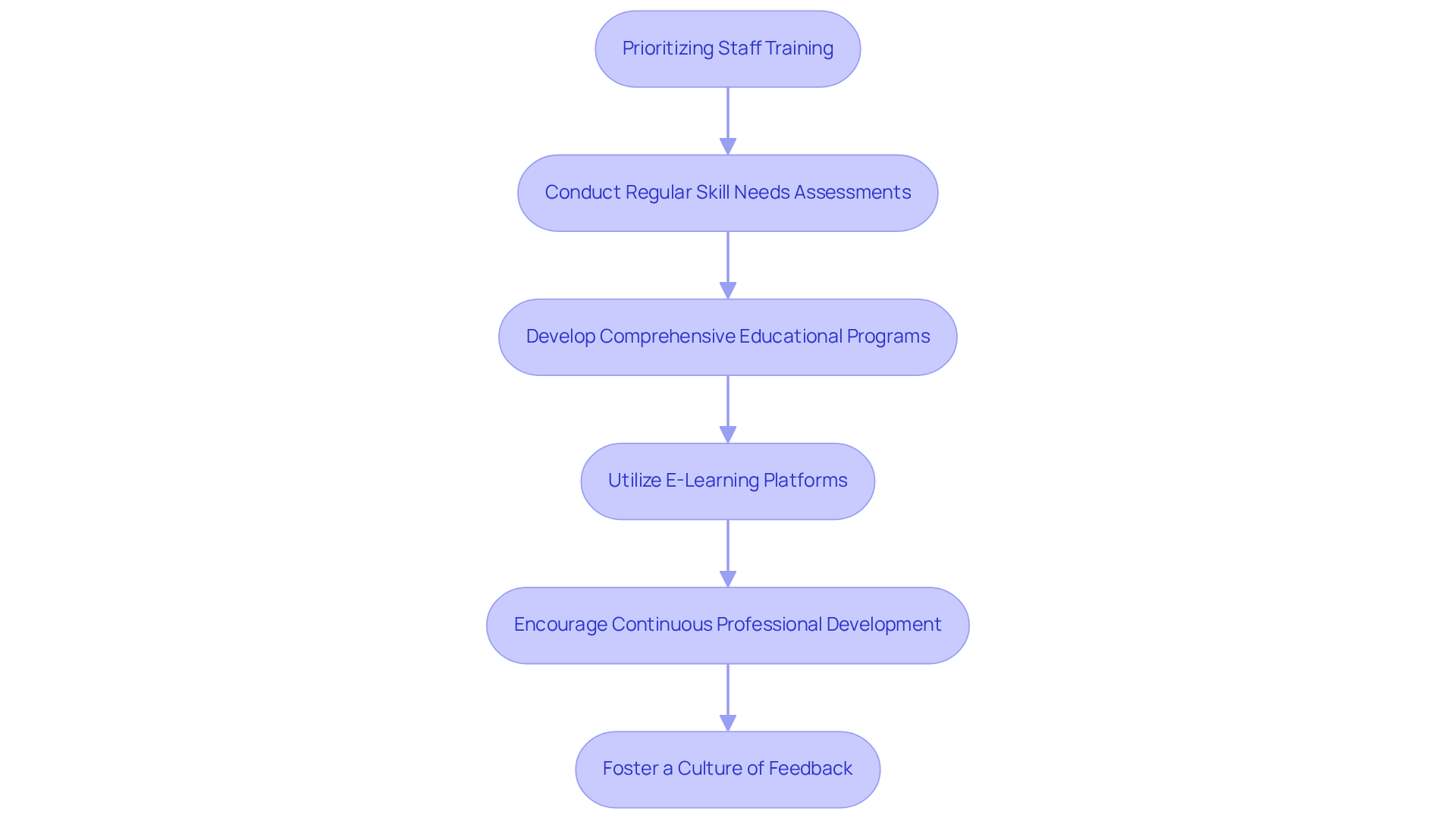
Inadequate staff training can lead to significant gaps in patient care and compliance, necessitating a strategic approach to professional development. To prioritize staff training effectively, behavioral health practices should implement the following strategies:
- Conduct Regular Skill Needs Assessments: Identify skill gaps and educational requirements through surveys or performance evaluations to tailor development programs accordingly.
- Develop Comprehensive Educational Programs: Create modules that cover compliance, patient care best practices, and the use of technology in management.
- Utilize E-Learning Platforms: Leverage online resources to provide flexible learning opportunities for staff, allowing them to learn at their own pace.
- Encourage Continuous Professional Development: Support staff in pursuing certifications and attending workshops or conferences to stay updated on industry trends and optimal methods.
- Foster a Culture of Feedback: Implement regular feedback mechanisms to assess program effectiveness and make necessary adjustments to educational initiatives.
Ultimately, prioritizing staff training within behavioral health practice management not only elevates care standards but also positions organizations for long-term success in a competitive landscape.
Strengthen Revenue Cycle Management for Financial Sustainability
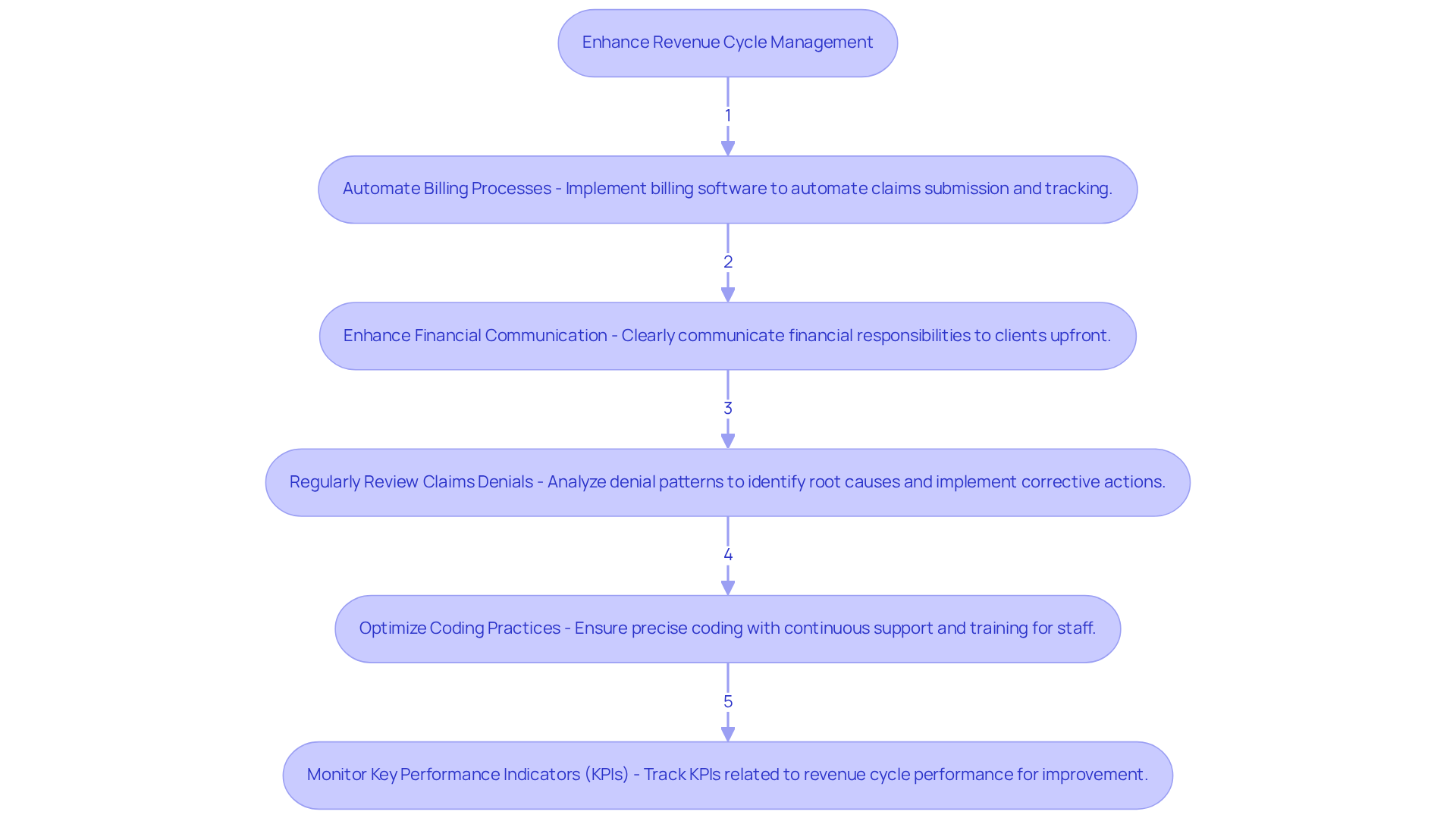
To enhance revenue cycle management, behavioral health practices must adopt strategic best practices that drive efficiency and accuracy:
- Automate Billing Processes: Implement billing software that automates claims submission and tracking. This approach minimizes errors and accelerates the reimbursement process. Organizations can achieve denial reductions of 20-30% and receive quicker reimbursements of 15-25% within 30 to 90 days.
- Enhance Financial Communication with Clients: Clearly communicate financial responsibilities to individuals upfront, including co-pays and deductibles. Without clear communication, practices risk losing significant revenue, as they may only collect 80 to 90% of patient balances at check-in or check-out.
- Regularly Review Claims Denials: Analyze denial patterns to identify root causes and implement corrective actions. This proactive approach not only mitigates losses but also enhances overall financial health. Practices that conduct formal monthly reviews of denial rates by payer consistently identify systemic problems before they compound, leading to improved revenue cycle performance.
- Optimize Coding Practices: Ensure precise coding by offering continuous support for staff and utilizing coding specialists. This reduces errors that can result in claim denials, with methods achieving coding accuracy rates exceeding 90% through effective training and documentation.
- Monitor Key Performance Indicators (KPIs): Track KPIs related to revenue cycle performance, such as days in accounts receivable and claim denial rates. This aids in recognizing areas for enhancement, with effective methods keeping a denial rate under 10% and days in accounts receivable below 42 days.
Additionally, Healthcare Partners Consulting & Billing, LLC (HPC) offers customized administrative support services to enhance efficiency and billing accuracy in behavioral health practice management. By leveraging HPC’s expertise, organizations can tackle underpayments, unprocessed claims, and aging claims effectively. Furthermore, HPC provides a quick quiz to assess your mental health service’s profitability, offering personalized recommendations to improve overall financial health. By implementing these strategies, practices can secure their financial future while delivering exceptional patient care.
Conclusion
Effective management in behavioral health practices requires a proactive approach to adapt to the dynamic healthcare landscape. Organizations can enhance operational efficiency and improve patient care by:
- Diversifying service offerings
- Embracing digital transformation
- Prioritizing staff training
- Strengthening revenue cycle management
These practices empower healthcare providers by reducing administrative burdens, allowing them to focus on patient well-being.
Key insights from the article highlight the importance of:
- Understanding community needs
- Integrating holistic approaches
- Leveraging technology to streamline operations
The emphasis on staff training and compliance ensures that practices maintain high standards of care while navigating the complexities of healthcare regulations. Furthermore, effective revenue cycle management is crucial for financial sustainability, allowing practices to thrive in a competitive environment.
The journey toward effective behavioral health practice management necessitates continuous improvement and adaptation to thrive in a competitive environment. Implementing these strategies is essential for ensuring the long-term success of your practice and the well-being of your patients. Engaging with experts like Healthcare Partners Consulting & Billing, LLC (HPC) offers tailored solutions to address unique challenges and drive success.
Frequently Asked Questions
What is the main focus of the article on diversifying service offerings in behavioral health practices?
The article focuses on strategies that behavioral health practices can implement to diversify their service offerings in order to meet community needs and maintain a competitive advantage.
How can organizations assess community needs effectively?
Organizations can assess community needs by conducting surveys or focus groups to identify gaps in services, which helps customize offerings to address specific needs.
What holistic approaches can be integrated into behavioral health services?
Holistic approaches that can be integrated include complementary therapies such as art therapy, mindfulness, and nutrition counseling, which address the whole person rather than just their symptoms.
Why is expanding telehealth services important for behavioral health practices?
Expanding telehealth services is important because it enhances accessibility for individuals who may have difficulty attending in-person sessions, leading to improved retention and outcomes.
How can collaboration with other providers benefit behavioral health practices?
Collaborating with primary care physicians, schools, or community organizations can create a referral network that enhances service delivery and support, improving overall coordination of services for individuals.
What are specialized programs, and why are they important?
Specialized programs are tailored initiatives targeting specific populations, such as adolescents, veterans, or individuals with substance use disorders. They are important because they provide focused support and help organizations distinguish themselves in a competitive market.
What is the overall benefit of adopting the strategies mentioned in the article?
The overall benefit of adopting these strategies is to enhance behavioral health practice management and position organizations for long-term success in a competitive landscape.