
Introduction
The efficiency of back office operations is a critical determinant of success for mental health clinics, yet many struggle with the complexities involved. By implementing best practices that streamline administrative tasks, clinics can empower their healthcare providers to focus on what truly matters: delivering exceptional patient care. Clinics face mounting challenges due to the intricate nature of billing and compliance, which can hinder their operational efficiency.
How can they optimize their back office teams to alleviate these burdens and enhance performance?
Define Back Office Operations in Mental Health Clinics
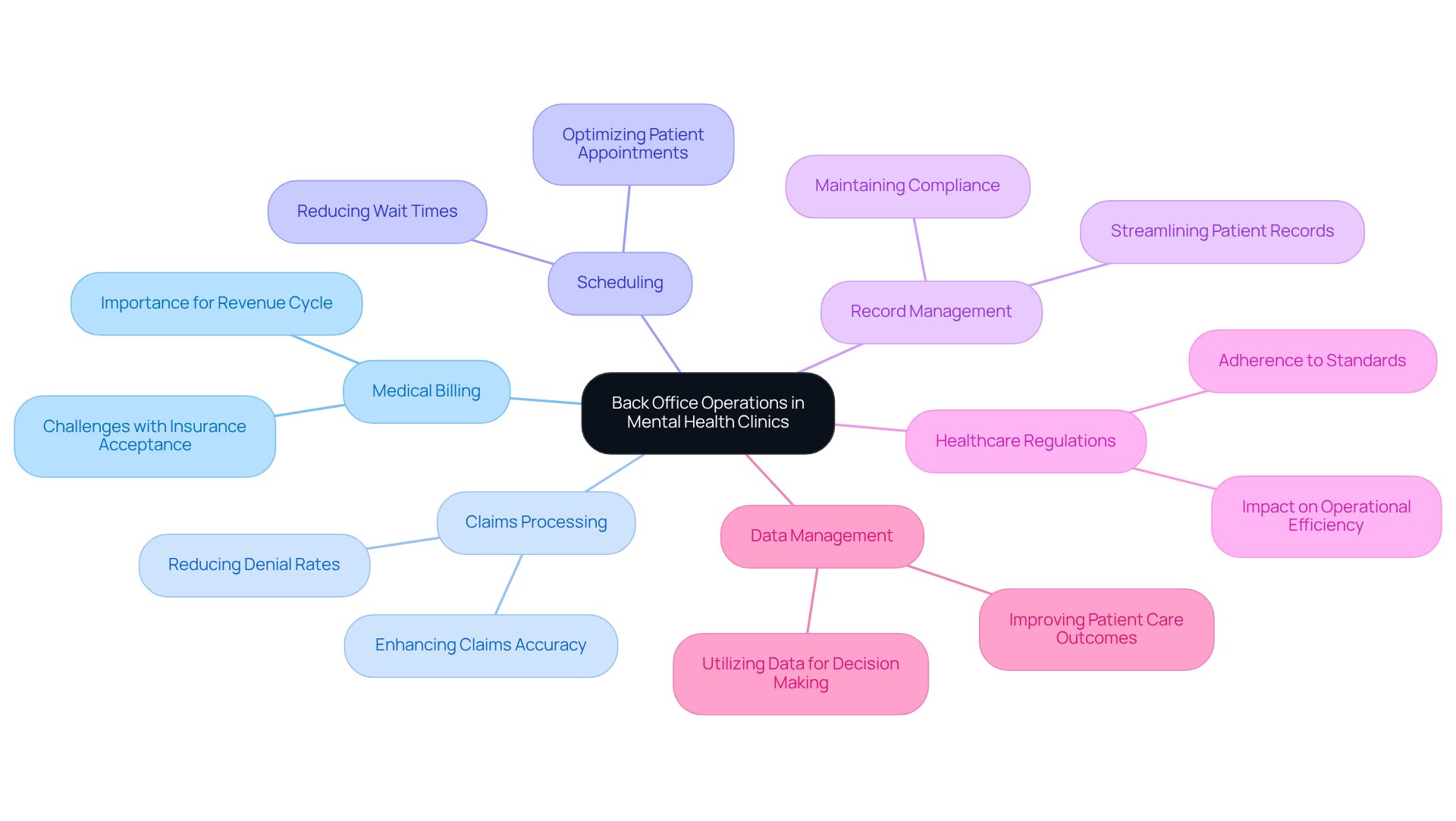
The efficiency of mental health clinics depends on the effectiveness of their back office team functions. These activities encompass a range of administrative and support tasks, including:
- Medical billing
- Claims processing
- Scheduling
- Record management
- Adherence to healthcare regulations
- Data management
By managing these tasks effectively, healthcare providers can focus on delivering quality patient care, free from administrative distractions.
To tackle the growing administrative workload, best practices now highlight the importance of streamlined processes and sufficient staffing. For instance, healthcare leaders have reported a 75.5% increase in administrative burden over the past year, underscoring the necessity for robust administrative support to alleviate stress on clinical staff. Moreover, organizations that implement scorecard-driven adjustments can enhance claims accuracy and reduce denial rates by 20-30%, leading to faster reimbursements within 30-90 days.
Many mental health professionals struggle with accepting insurance because of the complex billing rules and heavy administrative burdens they face. Nearly 50% of psychiatrists do not accept any form of insurance, creating barriers for patients seeking essential mental health services. This underscores the importance of having a reliable back office team to effectively navigate compliance and operational needs.
Case studies demonstrate the impact of efficient back office team operations on healthcare facility performance. Organizations that emphasize workforce stability and combine financial planning with staffing strategies have observed enhancements in both employee retention and satisfaction. By addressing administrative overload, healthcare facilities can enhance operational efficiency, ultimately leading to improved patient outcomes and a more sustainable practice model.
Enhancing these administrative tasks not only improves operational effectiveness but also directly impacts patient care accessibility.
Clarify Roles and Responsibilities of Back Office Staff
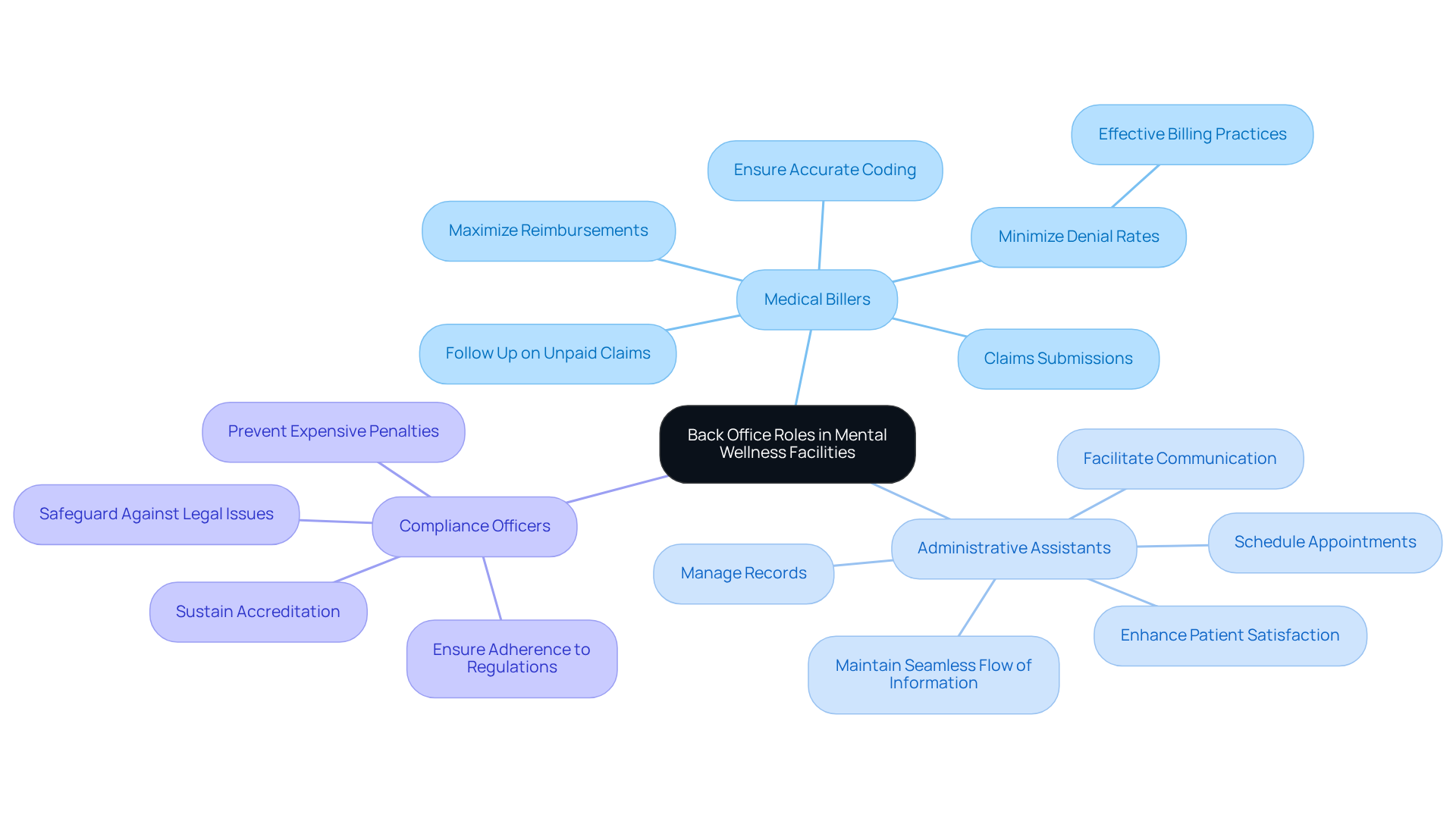
The effectiveness of mental wellness facilities significantly hinges on the roles played by the back office team. These roles include medical billers, administrative assistants, and compliance officers, each playing a crucial part in boosting clinic efficiency and care quality.
- Medical Billers: They manage claims submissions, follow up on unpaid claims, and ensure accurate coding. This meticulous attention to detail is vital for maximizing reimbursements and minimizing denial rates, which can be reduced by 20-30% with effective billing practices. Healthcare Partners Consulting specializes in providing tailored billing solutions that enhance revenue cycle management, particularly for behavioral and mental health practices.
- Administrative Assistants: These professionals manage records, schedule appointments, and facilitate communication between individuals and providers. Their organizational skills are crucial for maintaining a seamless flow of information, which directly impacts patient satisfaction and care quality. HPC offers dedicated virtual assistant services that streamline scheduling and client intake, allowing administrative staff to focus on more complex tasks.
- Compliance Officers: Tasked with ensuring that all operations adhere to healthcare regulations and standards, compliance officers play a pivotal role in safeguarding the facility against potential legal issues. Their oversight aids in sustaining accreditation and preventing expensive penalties, which is crucial for the facility’s financial well-being. With 39 years of experience, Healthcare Partners Consulting emphasizes a compliance-first approach, ensuring that clinics remain aligned with industry standards.
Defining these roles enhances accountability and streamlines operations. A cohesive team in the back office alleviates administrative burdens, allowing clinical staff to focus on patient interactions. Facilities that invest in training for their back office team often see improved operational efficiency and better patient outcomes. By cultivating a well-organized administrative environment, mental wellness facilities can enhance their processes and ultimately deliver superior quality care to those they serve. Ultimately, the investment in the back office team is not merely an operational decision but a strategic imperative for delivering exceptional patient care.
Implement Effective Communication Strategies
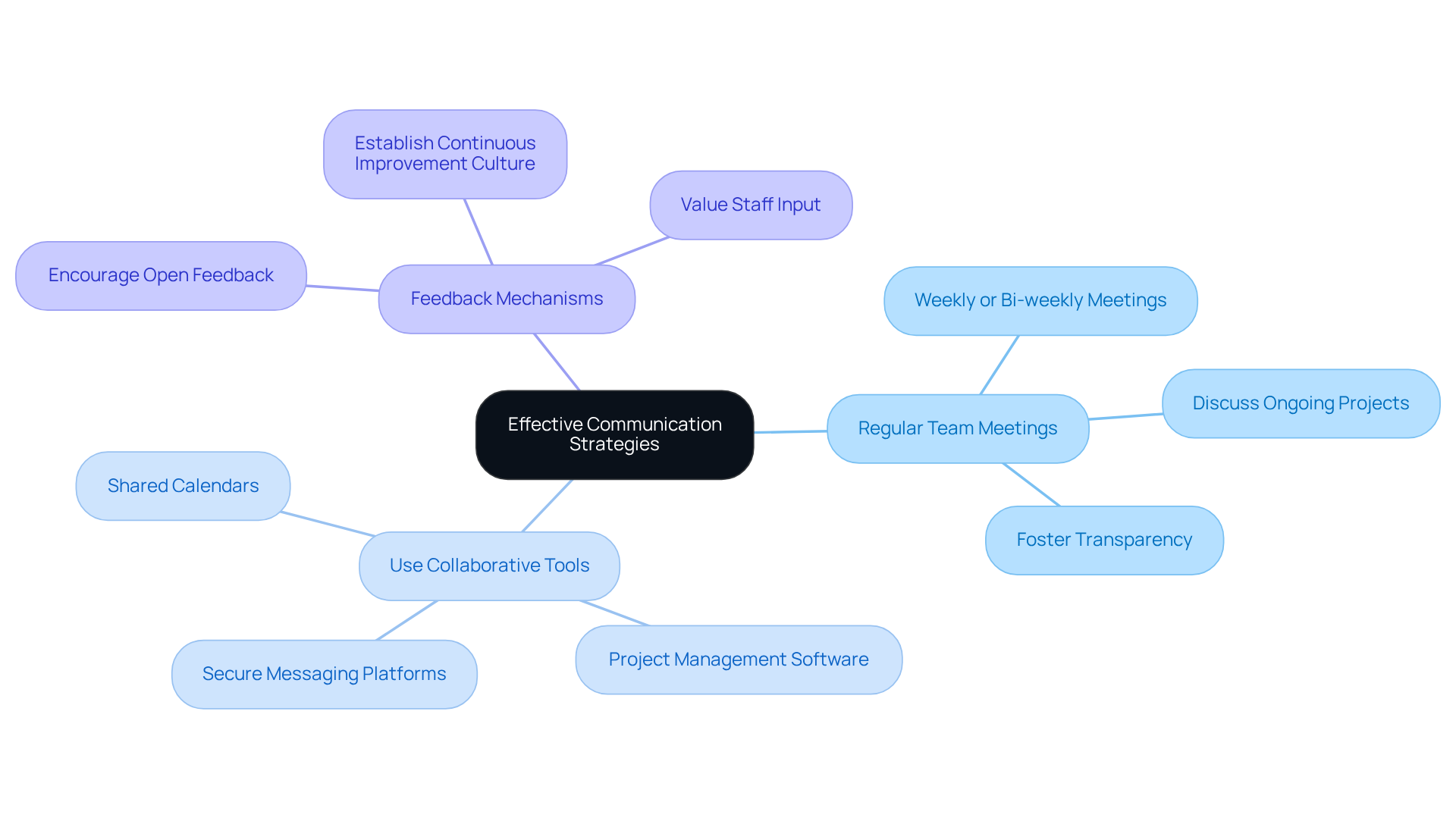
Without effective communication, the back office team in mental health facilities can falter, jeopardizing both team alignment and patient care. Here are some best practices to implement:
- Regular Team Meetings: Schedule weekly or bi-weekly meetings to discuss ongoing projects, address challenges, and share updates. This practice fosters transparency and collaboration, ensuring that all team members are aligned and informed.
- Use Collaborative Tools: Implement tools such as shared calendars, project management software, and secure messaging platforms to facilitate real-time communication among staff. These tools enhance coordination and streamline workflows, making it easier for teams to collaborate effectively.
- Feedback Mechanisms: Encourage open feedback from staff regarding communication processes and operational challenges. Establishing a culture of continuous improvement can lead to a more cohesive team environment, where everyone feels valued and heard.
Effective communication is crucial; it not only improves coordination between the back office team and clinical teams but also leads to better patient care outcomes. For example, case studies have demonstrated that healthcare facilities with robust communication practices see a decrease in denial rates by 20-30% and quicker reimbursement cycles of 15-25% within 30-90 days. By adopting these strategies and leveraging the expertise of Healthcare Partners Consulting & Billing, LLC (HPC), mental wellness facilities can access dedicated administrative support services tailored to their unique needs, including denial management, scheduling, document management, and insurance claims processing. As noted by Dirk Vogelaers from Ghent University Hospital, “Effective and efficient communication is crucial in healthcare.” Ultimately, the success of mental wellness facilities hinges on their ability to communicate effectively, directly impacting patient outcomes and operational efficiency.
Leverage Technology to Streamline Back Office Processes
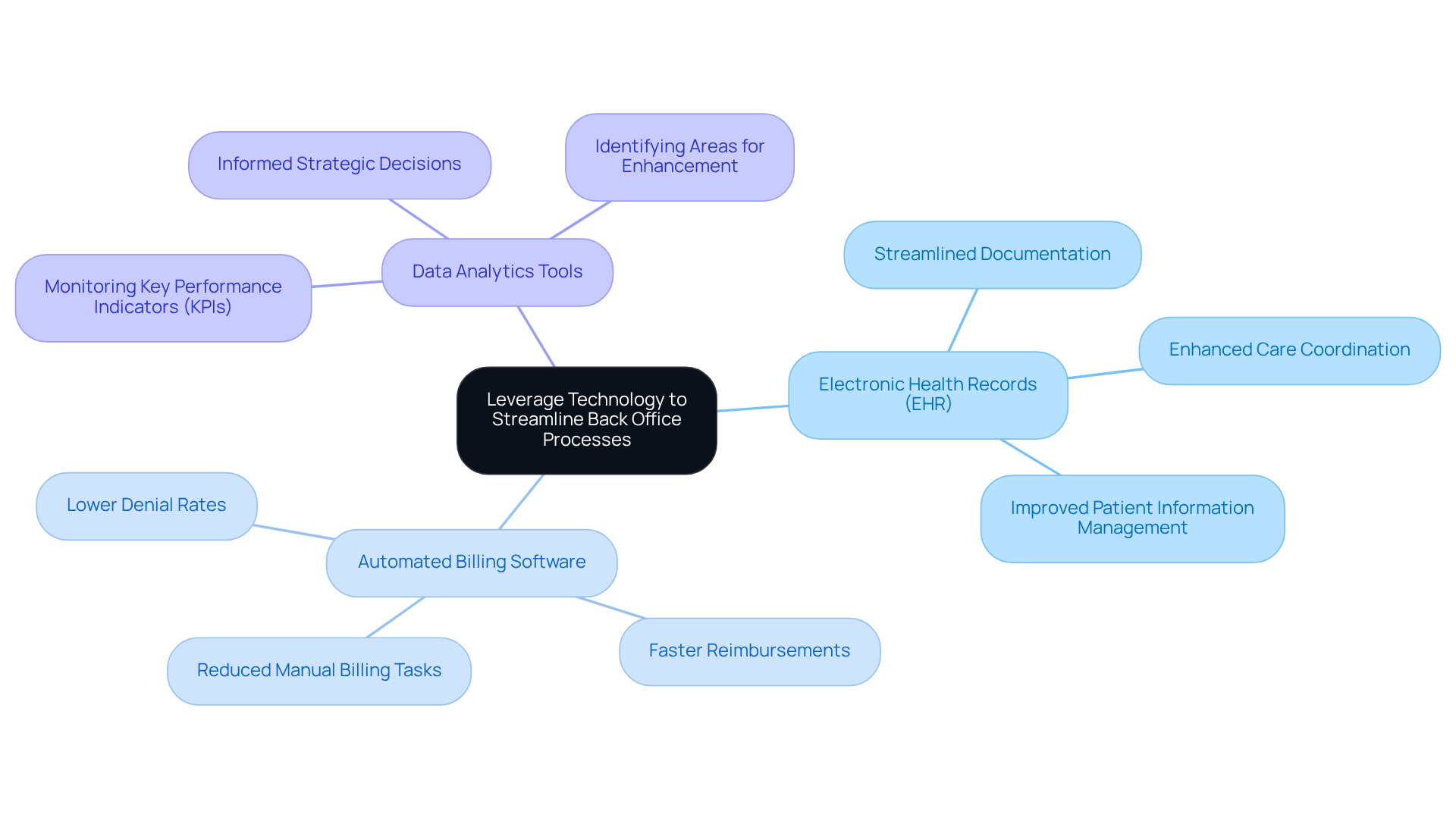
Incorporating technology into the back office team operations presents a significant opportunity for mental wellness clinics to enhance efficiency. Here are some recommended technologies:
- Electronic Health Records (EHR): EHR systems are essential for managing patient information, streamlining documentation, and facilitating billing processes. Facilities that exclusively use EHRs report higher rates of utilizing these systems for exchanging health information and coordinating care, which enhances overall operational efficiency. Healthcare Partners Consulting focuses on alleviating administrative burdens through the efforts of the back office team, thereby enhancing practice efficiency for healthcare providers.
- Automated Billing Software: Implementing automated billing software can significantly reduce the time spent on manual billing tasks. This technology automates claims submissions and tracks payments, leading to faster reimbursements-often within 30 to 90 days-and a reduction in denials by 20 to 30%. As a veteran-owned company with 39 years of experience, Healthcare Partners Consulting emphasizes a compliance-first approach to billing, ensuring adherence to payer rules.
- Data Analytics Tools: Utilizing analytics tools enables facilities to monitor key performance indicators (KPIs) related to billing, flow of individuals, and operational efficiency. This data-driven approach informs strategic decisions and identifies areas for enhancement, ultimately improving performance in the facility. Our committed virtual assistant services can assist healthcare facilities in managing these analytics efficiently, enabling providers to concentrate more on care for their patients.
These technologies allow mental health facilities to streamline administrative tasks, giving providers more time to focus on patient care and enhancing treatment outcomes. Ultimately, embracing these technologies can lead to improved patient outcomes and a more effective healthcare delivery system.
Prioritize Training and Development for Back Office Staff
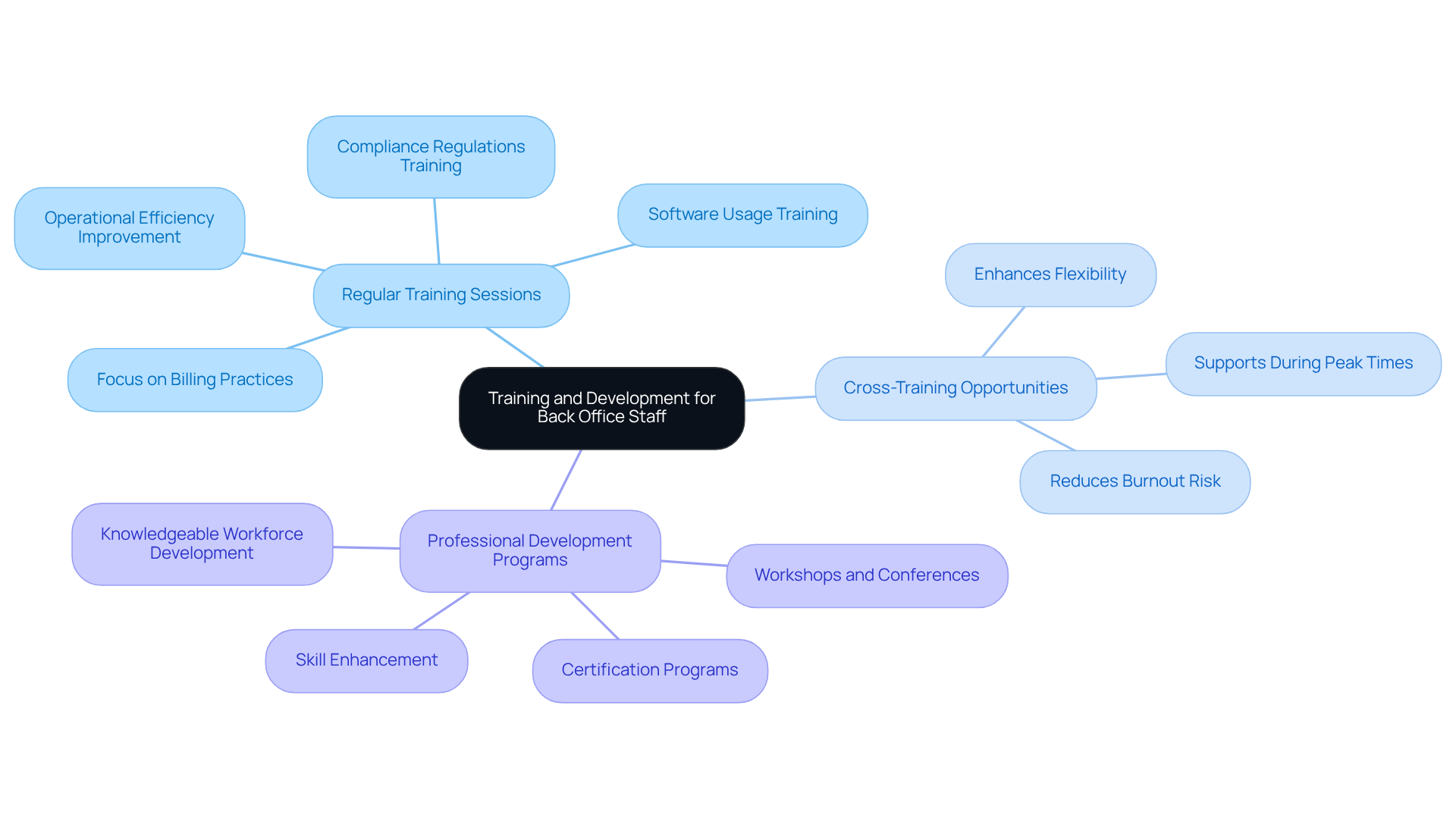
Investing in the training and development of the back office team is essential for optimizing healthcare operations. Here are some effective strategies for implementation:
- Regular Training Sessions: Implement training sessions focused on billing practices, compliance regulations, and software usage. This keeps staff informed and competent, crucial for operational efficiency and compliance with healthcare standards.
- Cross-Training Opportunities: Encourage cross-training among staff members to enhance flexibility. This practice allows team members to support each other during peak times or staff shortages, ensuring continuity of operations and reducing the risk of burnout.
- Professional Development Programs: Provide opportunities for staff to attend workshops, conferences, or certification programs that enhance their skills and knowledge. These initiatives enhance individual capabilities and contribute to building a more knowledgeable back office team.
By prioritizing training and development, mental health facilities can cultivate a skilled workforce, resulting in enhanced operational efficiency and improved care outcomes. For instance, case studies have shown that clinics implementing structured training programs experience a reduction in claim denials by 20-30% and faster reimbursement cycles of 15-25% within 30-90 days. This not only boosts revenue but also allows staff to focus more on patient care rather than administrative burdens. Ultimately, a well-trained back office team is crucial for driving both operational success and superior patient care.
Conclusion
Enhancing efficiency in mental health clinics hinges on optimizing back office operations. Focusing on the defined roles of back office staff is crucial. By implementing effective communication strategies, leveraging technology, and prioritizing training and development, clinics can significantly reduce administrative burdens. This enables healthcare providers to prioritize high-quality patient care.
Key insights from the article highlight the importance of a well-defined back office structure, where roles such as:
- Medical billers
- Administrative assistants
- Compliance officers
work cohesively to streamline operations. Effective communication practices and the integration of technology further enhance these efforts, leading to quicker reimbursements and reduced denial rates. Training and developing back office staff enhances efficiency and promotes continuous improvement, ultimately benefiting both the clinic and its patients.
In conclusion, the empowerment of healthcare providers through optimized back office operations is a strategic imperative that cannot be overlooked. By adopting these best practices, mental health clinics can navigate the complexities of billing and compliance with confidence, ensuring that they remain focused on their primary mission: providing exceptional care. Ultimately, these enhancements not only improve operational success but also ensure that patient care remains the top priority. For further assistance in optimizing back office functions, consider reaching out to Healthcare Partners Consulting & Billing, LLC at info@hpcbilling.com or call 888-517-4992.
Frequently Asked Questions
What are back office operations in mental health clinics?
Back office operations in mental health clinics include administrative and support tasks such as medical billing, claims processing, scheduling, record management, adherence to healthcare regulations, and data management. These functions are essential for allowing healthcare providers to focus on delivering quality patient care.
Why are efficient back office operations important for mental health clinics?
Efficient back office operations are crucial because they help manage the increasing administrative workload, allowing clinical staff to concentrate on patient care. Effective management of these tasks can lead to improved operational efficiency and better patient outcomes.
What challenges do mental health professionals face regarding insurance acceptance?
Many mental health professionals struggle with accepting insurance due to complex billing rules and heavy administrative burdens. Nearly 50% of psychiatrists do not accept any form of insurance, which creates barriers for patients seeking essential mental health services.
How can back office team operations impact healthcare facility performance?
Efficient back office team operations can enhance healthcare facility performance by improving employee retention and satisfaction, reducing administrative overload, and ultimately leading to better patient outcomes and a more sustainable practice model.
What roles are typically found in the back office of mental wellness facilities?
Typical roles in the back office include medical billers, administrative assistants, and compliance officers. Each role is vital for boosting clinic efficiency and care quality.
What are the responsibilities of medical billers in mental health clinics?
Medical billers manage claims submissions, follow up on unpaid claims, and ensure accurate coding. Their attention to detail is essential for maximizing reimbursements and minimizing denial rates.
What do administrative assistants do in mental health clinics?
Administrative assistants manage records, schedule appointments, and facilitate communication between individuals and providers. Their organizational skills are crucial for maintaining a seamless flow of information, which impacts patient satisfaction and care quality.
What is the role of compliance officers in mental health clinics?
Compliance officers ensure that all operations adhere to healthcare regulations and standards, safeguarding the facility against potential legal issues. Their oversight is vital for sustaining accreditation and preventing costly penalties.
How does investing in back office staff training benefit mental wellness facilities?
Investing in training for back office staff can lead to improved operational efficiency and better patient outcomes. A well-organized administrative environment enhances processes and allows clinical staff to focus more on patient interactions.