

Introduction
The complexities of endocrinology billing present significant challenges for healthcare providers seeking to optimize financial performance and patient outcomes.
With specialized knowledge of coding, documentation, and payer policies, practices can significantly enhance their revenue cycle management.
Failure to navigate these complexities can lead to significant financial losses and hinder patient care.
What targeted strategies can endocrinology practices adopt to overcome these challenges and enhance their competitive edge?
Implementing effective strategies can not only mitigate these challenges but also enhance overall practice efficiency and patient satisfaction.
Understand Endocrinology Billing Fundamentals
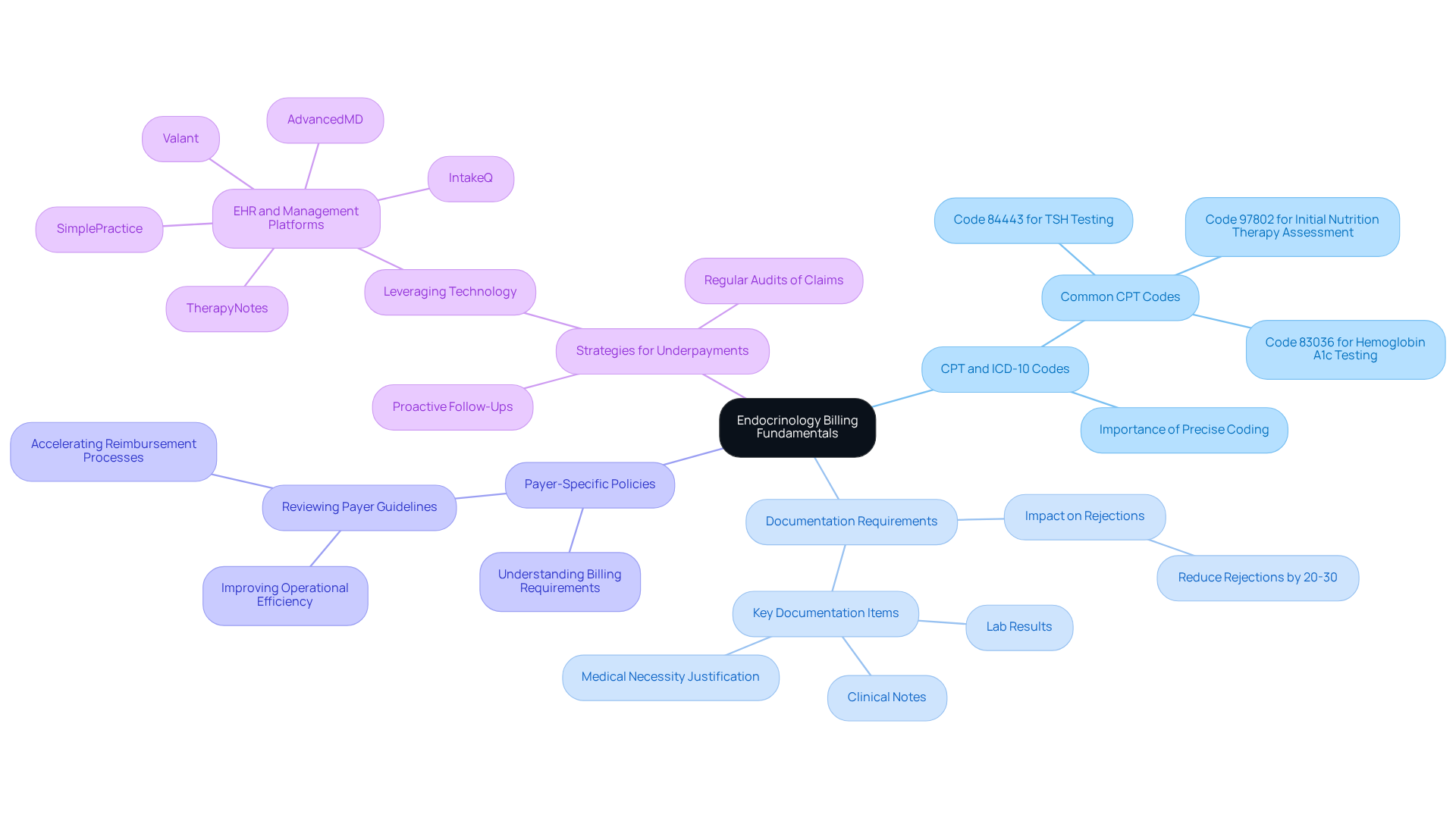
Navigating the complexities of endocrinology billing is essential for financial stability in healthcare practices. Endocrinology billing requires a specialized understanding of codes and regulations distinct from general medical billing. Key components include:
- CPT and ICD-10 Codes: It is crucial to familiarize yourself with the specific Current Procedural Terminology (CPT) and International Classification of Diseases (ICD-10) codes pertinent to endocrinology. Precise coding is vital for successful submission of requests and maximizing reimbursements.
- Documentation Requirements: By keeping thorough records, practices can reduce rejections by 20-30%, making documentation a key player in the billing process. Comprehensive documentation of all patient encounters is vital, including clinical notes, lab results, and any other relevant information that substantiates the medical necessity of the services rendered.
- Payer-Specific Policies: It’s important to note that each insurance company has its own set of billing requirements. Grasping these policies is essential to prevent denial of requests and ensure compliance. Consistently reviewing payer guidelines can improve operational efficiency and accelerate reimbursement processes, with numerous practices achieving quicker reimbursement within 15-25% of submissions processed in 30-90 days.
Alongside mastering these fundamentals, healthcare providers should implement specific strategies to tackle underpayments and aging accounts. This includes regular audits of claims to identify patterns of underpayment, proactive follow-ups on outstanding claims, and leveraging technology to streamline the claims process. Integrating with EHR and management platforms such as TherapyNotes, SimplePractice, Valant, AdvancedMD, and IntakeQ can further enhance efficiency and precision in financial practices.
Personalized consultations with Healthcare Partners Consulting & Billing, LLC (HPC) can help identify the most effective administrative solutions tailored to your organization’s needs. Ultimately, a strategic approach to billing can transform financial outcomes, allowing providers to prioritize patient care without financial distractions.
Identify Common Challenges in Endocrinology Billing
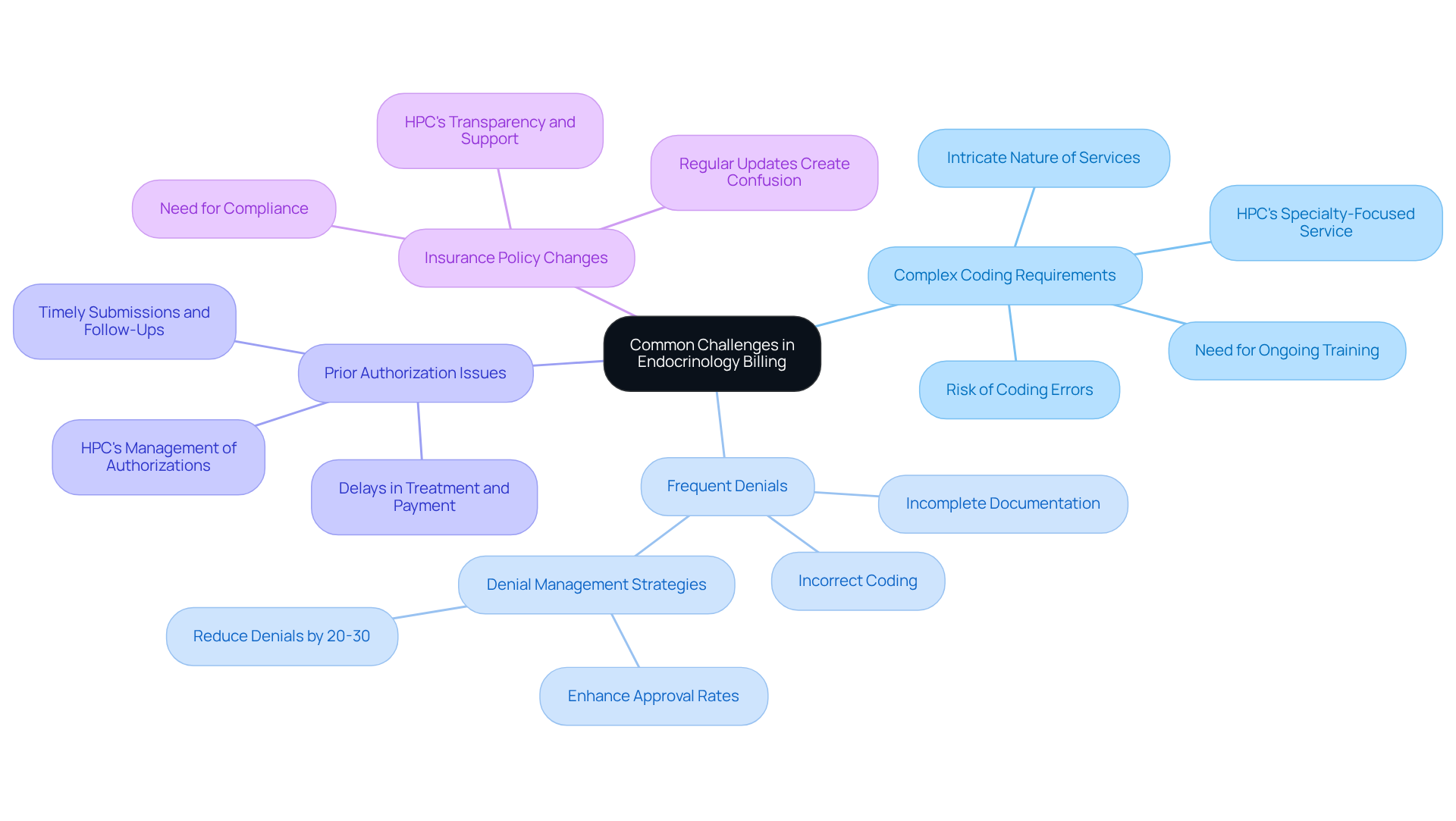
Endocrinology billing encompasses various challenges that can significantly disrupt the revenue cycle for healthcare providers:
- Complex Coding Requirements: The intricate nature of endocrinology services often leads to coding errors, which can significantly disrupt the revenue cycle for practices. Providers must remain informed about the latest codes and modifiers to prevent errors, as a single coding mistake can invalidate a submission. Healthcare Partners Consulting & Billing, LLC (HPC) offers specialty-focused, relationship-driven service tailored to ensure accurate coding and compliance, significantly reducing the risk of errors. With 39 years of experience, HPC empowers healthcare providers by removing administrative burdens, allowing them to focus on patient care.
- Frequent Denials: Claims may be denied due to incomplete documentation or incorrect coding. Comprehending the reasons behind refusals can assist practices in enhancing their processes. Effective denial management strategies can reduce denials by 20-30%, thereby significantly enhancing revenue for practices. HPC’s expertise in endocrinology billing services enables targeted strategies that improve approval rates, supported by transparent pricing and personalized service teams.
- Prior Authorization Issues: Many endocrinology services require prior authorization, which can delay treatment and payment. Ensuring timely submissions and follow-ups is crucial to avoid disruptions in cash flow. HPC’s dedicated team efficiently manages prior authorizations, minimizing delays and optimizing cash flow for practices.
- Insurance Policy Changes: Regular updates to insurance policies can create confusion. Practices must remain vigilant and adapt to these changes to maintain compliance and avoid potential claim rejections. HPC’s commitment to transparency and a compliance-first approach empowers healthcare providers to navigate these changes effectively.
By proactively addressing these challenges, healthcare providers can safeguard their financial health and enhance operational efficiency. Moreover, performing regular internal audits can assist in identifying and rectifying discrepancies in charges before they escalate, further improving operational efficiency.
Leverage Technology for Efficient Billing Processes
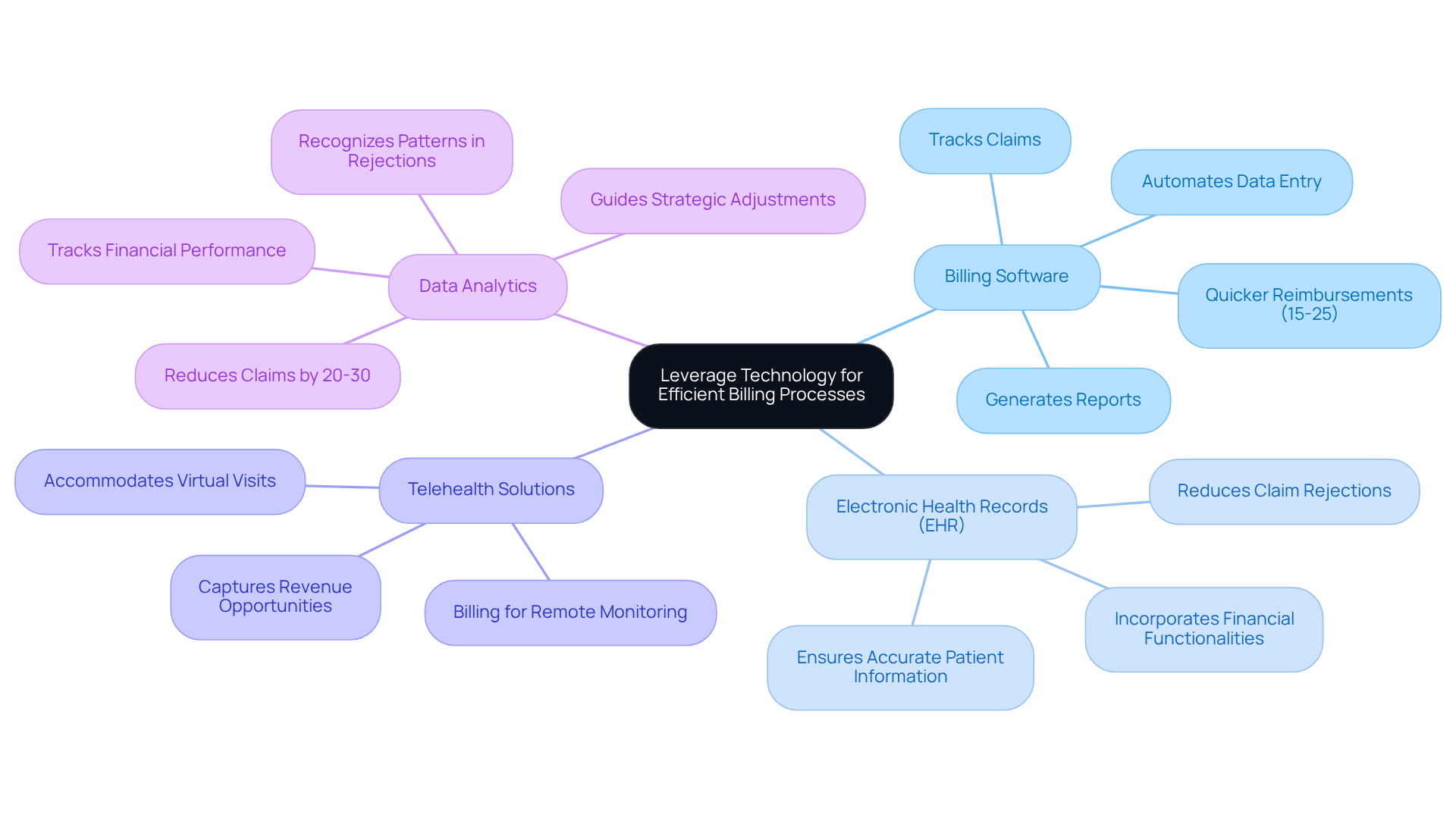
Manual errors and administrative inefficiencies can hinder the financial performance of endocrinology practices, making the integration of endocrinology billing services essential for improvement. To address these challenges, consider the following strategies:
- Billing Software: Invest in specialized billing software that automates data entry, tracks claims, and generates reports. This minimizes manual errors and speeds up the invoicing process, leading to quicker reimbursements of 15-25% within 30-90 days.
- Electronic Health Records (EHR): Utilize EHR systems that incorporate financial functionalities. This guarantees that patient information is precise and easily accessible for financial purposes, reducing the likelihood of rejections.
- Telehealth Solutions: With the rise of telehealth, ensure that your payment processes accommodate virtual visits. Understanding how to bill for remote patient monitoring and consultations is essential for capturing all revenue opportunities.
- Data Analytics: Utilize analytics tools to track financial performance and recognize patterns in rejections or delays. This data can guide strategic adjustments, resulting in a reduction of 20-30% in claims and enhancing overall revenue cycle management.
Ultimately, embracing these technological advancements can transform the operational landscape of endocrinology practices, allowing for a greater emphasis on patient care and clinical excellence through improved endocrinology billing services.
Implement Effective Denial Management Strategies
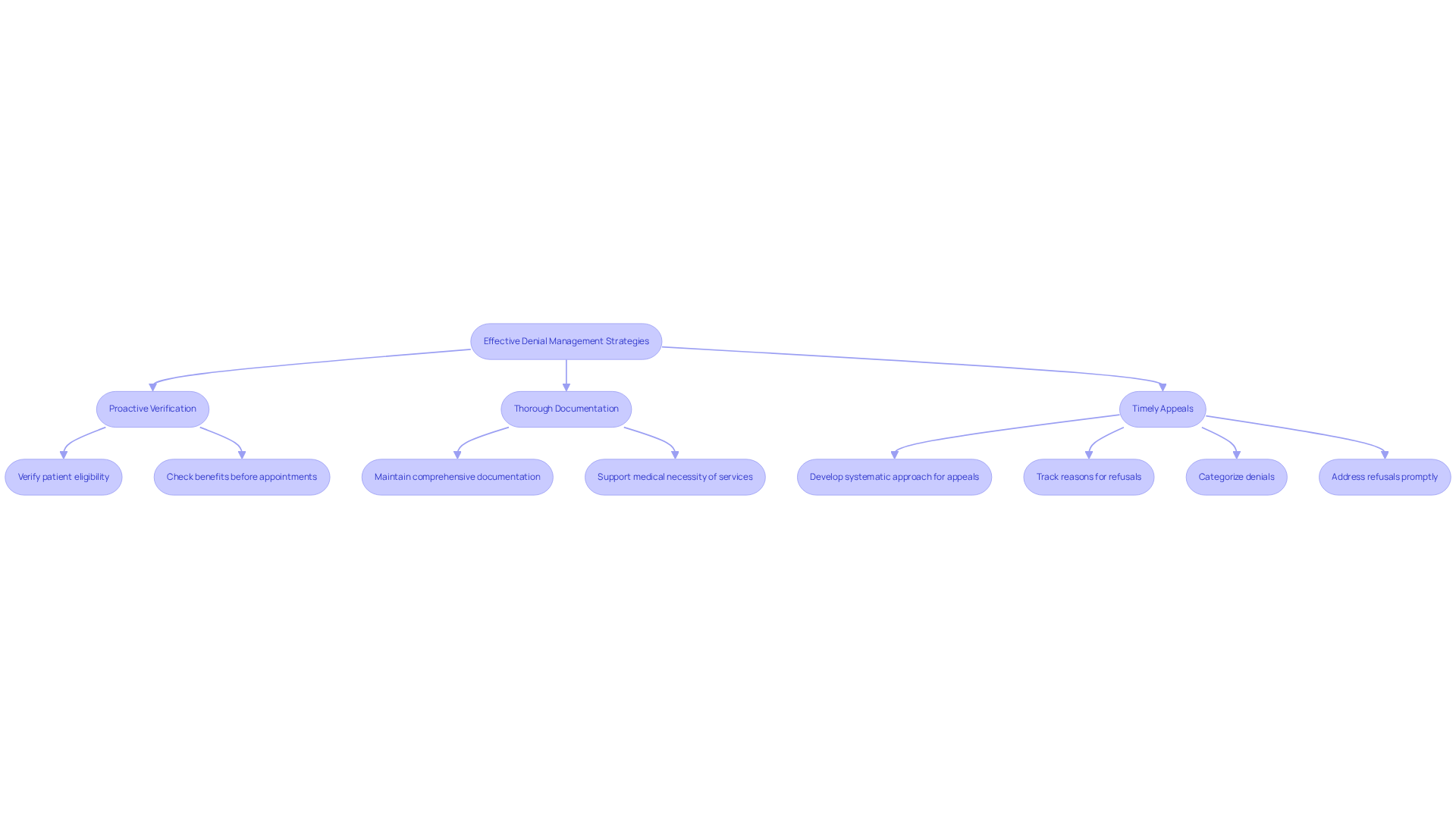
Endocrinology practices face significant challenges in managing claim denials, which can severely impact their revenue streams when relying on endocrinology billing services. To minimize claim denials and enhance revenue, these practices should adopt the following denial management strategies:
- Proactive Verification: By taking this proactive approach, practices can prevent coverage-related refusals, significantly lowering the chances of requests being turned down. Verifying patient eligibility and benefits before appointments ensures that services are covered.
- Thorough Documentation: Maintaining comprehensive documentation that supports the medical necessity of services is crucial. This includes detailed clinical notes and laboratory results, which are essential for substantiating requests and avoiding refusals due to inadequate information.
- Timely Appeals: Developing a systematic approach for appealing denied claims is vital. This should encompass tracking reasons for refusals, categorizing them, and addressing them promptly to avoid revenue loss. Effective management of claims using endocrinology billing services can lead to a 20-30% reduction in rejections and a 15-25% quicker reimbursement within 30-90 days.
Regularly educating billing personnel on coding updates, payer policies, and management techniques for claims is necessary for effective endocrinology billing services. Keeping the team informed can reduce errors and enhance overall efficiency, ensuring compliance with evolving regulations.
Without these strategies, practices risk not only financial instability but also the sustainability of their operations.
Conclusion
Navigating the complexities of endocrinology billing presents significant challenges that can impact both financial stability and patient care. By focusing on specialized coding, thorough documentation, and understanding payer-specific policies, practices can significantly enhance their billing processes. This approach not only improves reimbursement rates but also allows providers to focus on what matters most: their patients.
Key strategies discussed include addressing common challenges such as complex coding requirements, frequent claim denials, and the need for prior authorizations. These challenges often lead to financial strain and hinder the delivery of quality care. By leveraging technology and implementing effective denial management strategies, practices can streamline their operations and reduce administrative burdens. The expertise of Healthcare Partners Consulting & Billing, LLC (HPC) in providing tailored revenue cycle management solutions ensures that healthcare providers can navigate these challenges with confidence, ultimately leading to improved financial outcomes.
Ultimately, embracing best practices in endocrinology billing empowers healthcare providers to prioritize patient care, free from the distractions of administrative hurdles. By taking proactive steps to optimize billing processes, this proactive approach not only secures financial health but also enhances the quality of care provided to patients. For those seeking to optimize their billing processes, reaching out to HPC at info@hpcbilling.com or calling 888-517-4992 can be the first step toward achieving greater success in their practice.
Frequently Asked Questions
What is the importance of understanding endocrinology billing?
Understanding endocrinology billing is essential for financial stability in healthcare practices, as it requires specialized knowledge of codes and regulations distinct from general medical billing.
What are the key components of endocrinology billing?
Key components include familiarity with CPT and ICD-10 codes, thorough documentation requirements, and understanding payer-specific policies.
Why is precise coding important in endocrinology billing?
Precise coding is vital for the successful submission of requests and maximizing reimbursements.
How can thorough documentation impact billing?
Keeping thorough records can reduce rejections by 20-30%, making comprehensive documentation of all patient encounters crucial for substantiating the medical necessity of services rendered.
What should healthcare providers know about payer-specific policies?
Each insurance company has its own billing requirements, and understanding these policies is essential to prevent denial of requests and ensure compliance.
How can reviewing payer guidelines benefit healthcare practices?
Consistently reviewing payer guidelines can improve operational efficiency and accelerate reimbursement processes, with many practices achieving quicker reimbursement within 15-25% of submissions processed in 30-90 days.
What strategies can be implemented to tackle underpayments and aging accounts?
Strategies include regular audits of claims to identify patterns of underpayment, proactive follow-ups on outstanding claims, and leveraging technology to streamline the claims process.
How can integrating with EHR and management platforms help in billing?
Integrating with platforms such as TherapyNotes, SimplePractice, Valant, AdvancedMD, and IntakeQ can enhance efficiency and precision in financial practices.
What role do personalized consultations with Healthcare Partners Consulting & Billing, LLC (HPC) play?
Personalized consultations can help identify the most effective administrative solutions tailored to an organization’s needs, improving billing outcomes.
How can a strategic approach to billing benefit healthcare providers?
A strategic approach to billing can transform financial outcomes, allowing providers to prioritize patient care without financial distractions.