
Introduction
Inefficiencies in mental health clinics often lead to inflated operational costs, compromising the quality of patient care. Implementing best practices in revenue cycle management allows healthcare providers to streamline administrative processes and focus on quality care. The challenge lies in identifying and addressing these inefficiencies while managing compliance and technology integration. This article outlines four strategies that enable mental health practices to reduce costs and enhance operational efficiency, ensuring competitiveness in the healthcare landscape.
Understand Back Office Operations in Mental Health Clinics
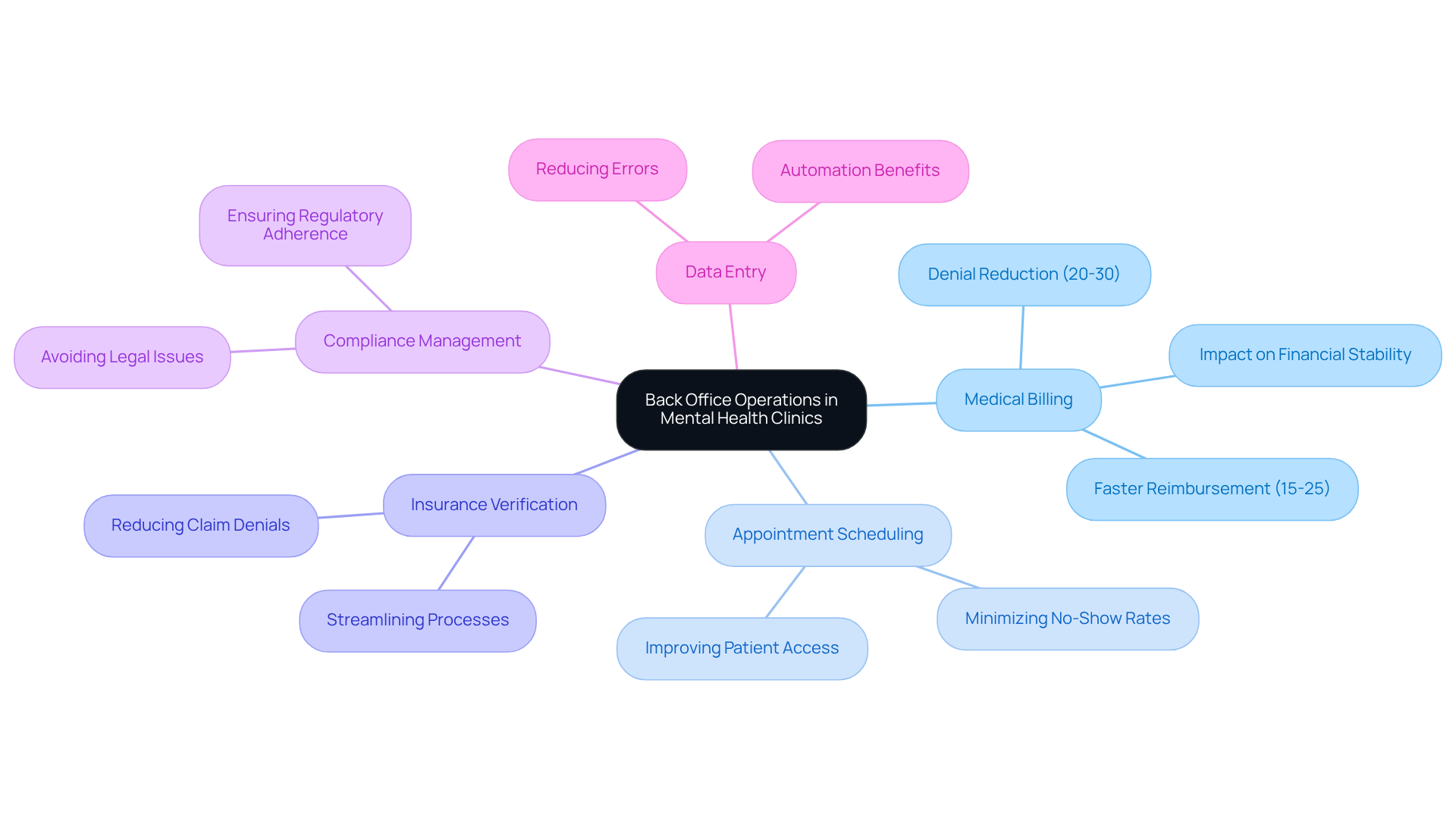
The efficiency of back office costs in mental health facilities is critical to effective practice management. These operations encompass essential administrative tasks such as:
- Medical billing
- Appointment scheduling
- Insurance verification
- Compliance management
- Data entry
A comprehensive grasp of these functions is essential, as they directly affect both the facility’s operational efficiency and the quality of care delivered.
For instance, delays in billing can hinder financial stability, limiting the organization’s ability to invest in patient care. Recent trends indicate that healthcare organizations are increasingly adopting technology and automation to streamline back office costs, which can significantly reduce operational expenses and enhance service delivery. In fact, practices that optimize their back office management can experience denial reductions of 20-30% and faster reimbursement rates of 15-25% within 30 to 90 days.
Healthcare Partners Consulting & Billing, LLC (HPC) specializes in providing tailored solutions that address these challenges. HPC’s revenue cycle management services allow behavioral practices to focus on patient care by reducing administrative burdens. Case studies highlight the importance of effective back office support. For example, a psychiatry group recently saved $1.4 million in denied claims by implementing machine-learning models to identify high-risk insurance claims, demonstrating the financial advantages of data-driven strategies. Additionally, the integration of electronic medical records (EHR) and revenue cycle management (RCM) systems has proven to enhance operational efficiency by digitizing and streamlining practice functions.
Moreover, healthcare leaders are encouraged to analyze their back office costs before investing in technology solutions. By identifying specific areas for enhancement, facilities can not only lower expenses but also improve patient outcomes and satisfaction. As the need for psychological support services continues to grow, investing in robust back office solutions is not just a choice; it is a necessity for sustainable growth in mental health practices.
Identify and Address Inefficiencies in Back Office Processes
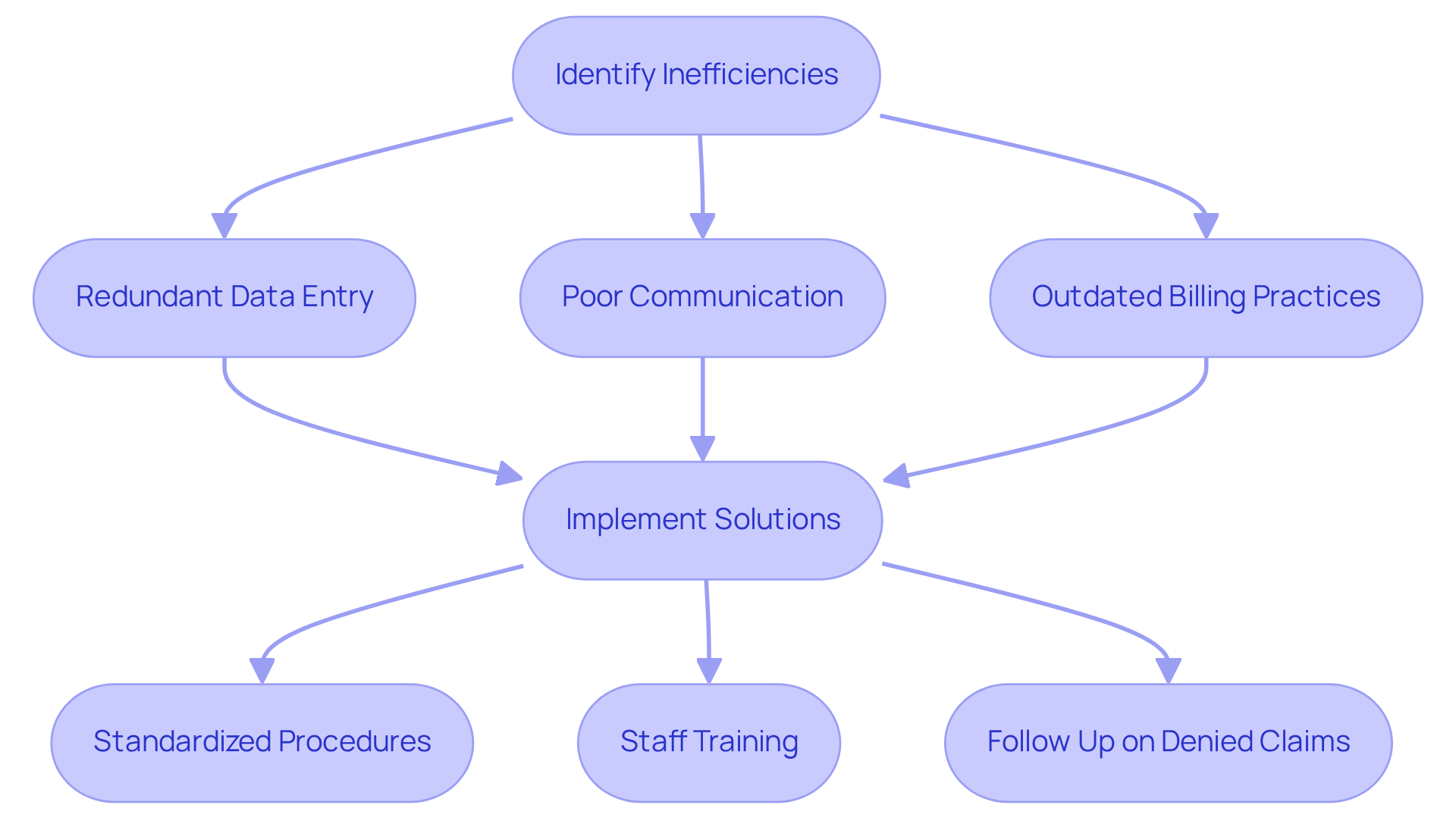
Mental health organizations must first confront the inefficiencies that plague their processes to effectively reduce back office costs. Common inefficiencies include:
- Redundant data entry
- Poor communication between departments
- Outdated billing practices
For instance, facilities that rely on manual data entry increase the likelihood of errors and consume valuable staff time. This is underscored by research indicating that 53% of healthcare personnel waste over an hour daily on unnecessary tasks.
To tackle these inefficiencies, healthcare facilities can:
- Implement standardized procedures
- Invest in training for staff on accurate coding practices
- Follow up on denied claims
Utilizing performance metrics tied to claims accuracy and denial rates is crucial; organizations that have adopted these metrics have reported denial reductions of 20-30% and faster reimbursements of 15-25% within 30-90 days after addressing these inefficiencies. Regularly reviewing workflows and soliciting feedback from staff can uncover hidden inefficiencies, which can lead to continuous improvement and a reduction in back office costs.
For example, the Fresno Community Health Care Network successfully cut prior-authorization denials by 22% through improved processes, saving 30 to 35 work hours weekly. Moreover, Healthcare Partners Consulting & Billing, LLC (HPC) provides tailored administrative support services designed to enhance billing accuracy and efficiency, including assistance with patient statements, underpayments, and aging claims.
Ultimately, by implementing these strategies, organizations can not only improve their operational efficiency but also enhance the quality of care they provide to their patients.
Leverage Technology for Enhanced Back Office Efficiency
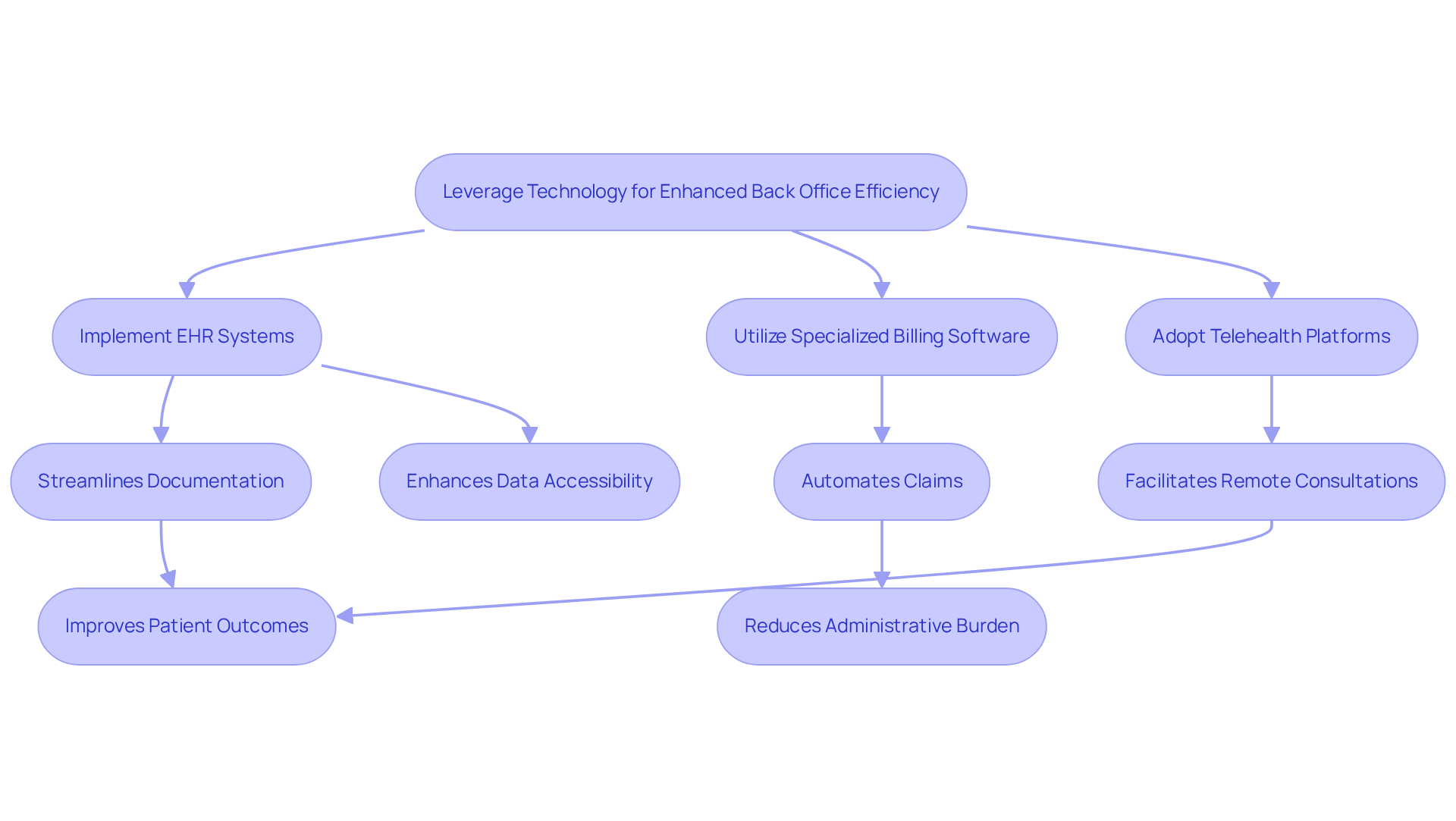
In an era where efficiency is paramount, mental wellness clinics face significant challenges without the integration of technology in their operations. Implementing electronic health record (EHR) systems is crucial for streamlining documentation, minimizing paperwork, and enhancing data accessibility. These systems not only enable secure sharing of individual information but also support evidence-based decision-making, essential for improving care. Research indicates that EHR systems can significantly reduce medical errors and enhance coordination among healthcare professionals, ultimately leading to better patient outcomes.
Additionally, specialized billing software like:
- TherapyNotes
- SimplePractice
- Valant
- AdvancedMD
- IntakeQ
automates claims submissions and tracks payments. This significantly reduces the time spent on billing tasks. Such automation can lead to a denial reduction of 20-30% and faster reimbursement timelines of 15-25% within 30-90 days, directly impacting the revenue cycle performance of the healthcare facility. Healthcare Partners Consulting & Billing, LLC (HPC) emphasizes a compliance-first approach, ensuring adherence to payer rules and enhancing claims accuracy, which further optimizes financial well-being.
Telehealth platforms further enhance service offerings by facilitating remote consultations, enabling healthcare facilities to reach a larger number of individuals without incurring additional overhead expenses. Investing in these technologies allows mental health clinics to reduce back office costs while improving satisfaction through more efficient service delivery. The integration of these digital tools fosters a collaborative environment, encouraging engagement and improving overall care outcomes. By embracing these advancements, clinics not only enhance their operational efficiency but also position themselves for sustainable growth in a competitive landscape.
Consider Outsourcing Back Office Functions for Cost Management
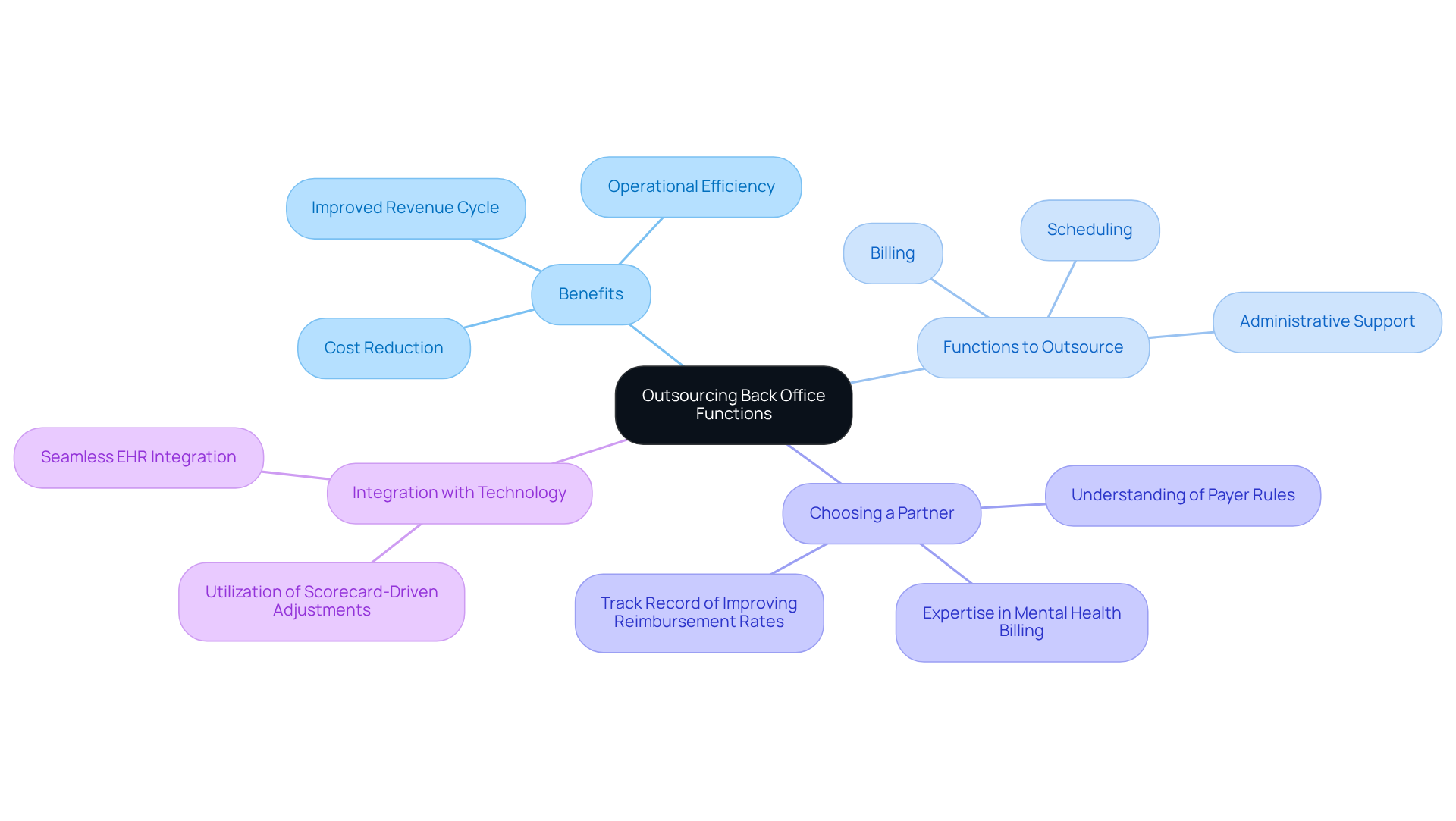
Outsourcing back office costs presents a strategic opportunity for mental health practices to enhance operational efficiency and reduce expenses. By collaborating with specialized service providers like Healthcare Partners Consulting & Billing, LLC (HPC), a veteran-owned company with 39 years of experience, healthcare facilities can delegate essential tasks such as billing, scheduling, and administrative support. This strategic move allows staff to focus on patient care. It also ensures that experts manage these functions, streamlining processes and enhancing compliance. Clinics that partner with HPC often experience a reduction in claim denials by 20-30% and faster reimbursement cycles of 15-25% within 30-90 days, leading to improved revenue cycle performance.
When assessing potential outsourcing collaborators, healthcare facilities should consider their proficiency in various business operations, particularly in the psychological support sector, along with their technological skills and established history. HPC provides a rapid quiz to evaluate practice profitability, assisting facilities in identifying concealed revenue losses and obtaining tailored suggestions for improving efficiency and billing precision. Additionally, HPC integrates seamlessly with EHR platforms like TherapyNotes and SimplePractice, ensuring a smooth workflow. Using scorecard-driven adjustments tied to claims accuracy and denial rates can significantly boost operational efficiency, ensuring that healthcare facilities uphold high standards in their financial management. Ultimately, this strategic partnership can redefine operational success and elevate the standard of care provided to patients.
Conclusion
Reducing back office costs in mental health clinics is crucial for enhancing operational efficiency and ensuring quality patient care. Mental health practices can enhance their financial health and service delivery by understanding back office operations, identifying inefficiencies, leveraging technology, and considering outsourcing.
Key strategies discussed include:
- Implementing standardized procedures to address common inefficiencies
- Integrating electronic health record systems to streamline documentation
- Outsourcing administrative functions to specialized providers like Healthcare Partners Consulting & Billing, LLC (HPC)
These strategies reduce claim denials and expedite reimbursement cycles. They also empower healthcare providers by alleviating administrative burdens, enabling a greater focus on patient care.
Ultimately, improving back office efficiency goes beyond cost reduction; it fosters a sustainable environment for thriving mental health practices. Embracing these best practices will enhance operational performance and contribute to better patient outcomes and satisfaction. Engaging with experienced partners like HPC can be a decisive factor in achieving enduring success in the mental health sector.
Frequently Asked Questions
What are back office operations in mental health clinics?
Back office operations in mental health clinics include essential administrative tasks such as medical billing, appointment scheduling, insurance verification, compliance management, and data entry.
Why is understanding back office operations important for mental health facilities?
Understanding back office operations is crucial because they directly affect the facility’s operational efficiency and the quality of care delivered. Delays in billing, for example, can hinder financial stability and limit the organization’s ability to invest in patient care.
How can technology and automation impact back office costs in mental health clinics?
Technology and automation can streamline back office costs, significantly reducing operational expenses and enhancing service delivery. Practices that optimize their back office management can experience denial reductions of 20-30% and faster reimbursement rates of 15-25% within 30 to 90 days.
What services does Healthcare Partners Consulting & Billing, LLC (HPC) provide?
HPC specializes in providing tailored revenue cycle management services that help behavioral practices reduce administrative burdens, allowing them to focus more on patient care.
Can you provide an example of the financial advantages of effective back office support?
Yes, a psychiatry group saved $1.4 million in denied claims by implementing machine-learning models to identify high-risk insurance claims, showcasing the financial benefits of data-driven strategies.
How do electronic medical records (EHR) and revenue cycle management (RCM) systems enhance operational efficiency?
The integration of EHR and RCM systems enhances operational efficiency by digitizing and streamlining practice functions, which can lead to improved management of back office operations.
What should healthcare leaders do before investing in technology solutions for back office operations?
Healthcare leaders are encouraged to analyze their back office costs to identify specific areas for enhancement, which can help lower expenses and improve patient outcomes and satisfaction.
Why is investing in robust back office solutions necessary for mental health practices?
Investing in robust back office solutions is necessary for sustainable growth in mental health practices, especially as the demand for psychological support services continues to grow.