

Introduction
A clear understanding of healthcare financing is crucial for providers seeking to optimize operations and improve patient care. The distinction between payors and payers significantly influences the financial landscape of medical practices, affecting reimbursement rates and operational efficiency. Healthcare providers face complexities in financing.
How can understanding payors and payers enhance revenue cycles and patient care? This article explores the key differences between payors and payers, emphasizing their respective roles and the vital impact they have on healthcare systems across the nation.
Define Payors and Payers: Key Differences in Healthcare
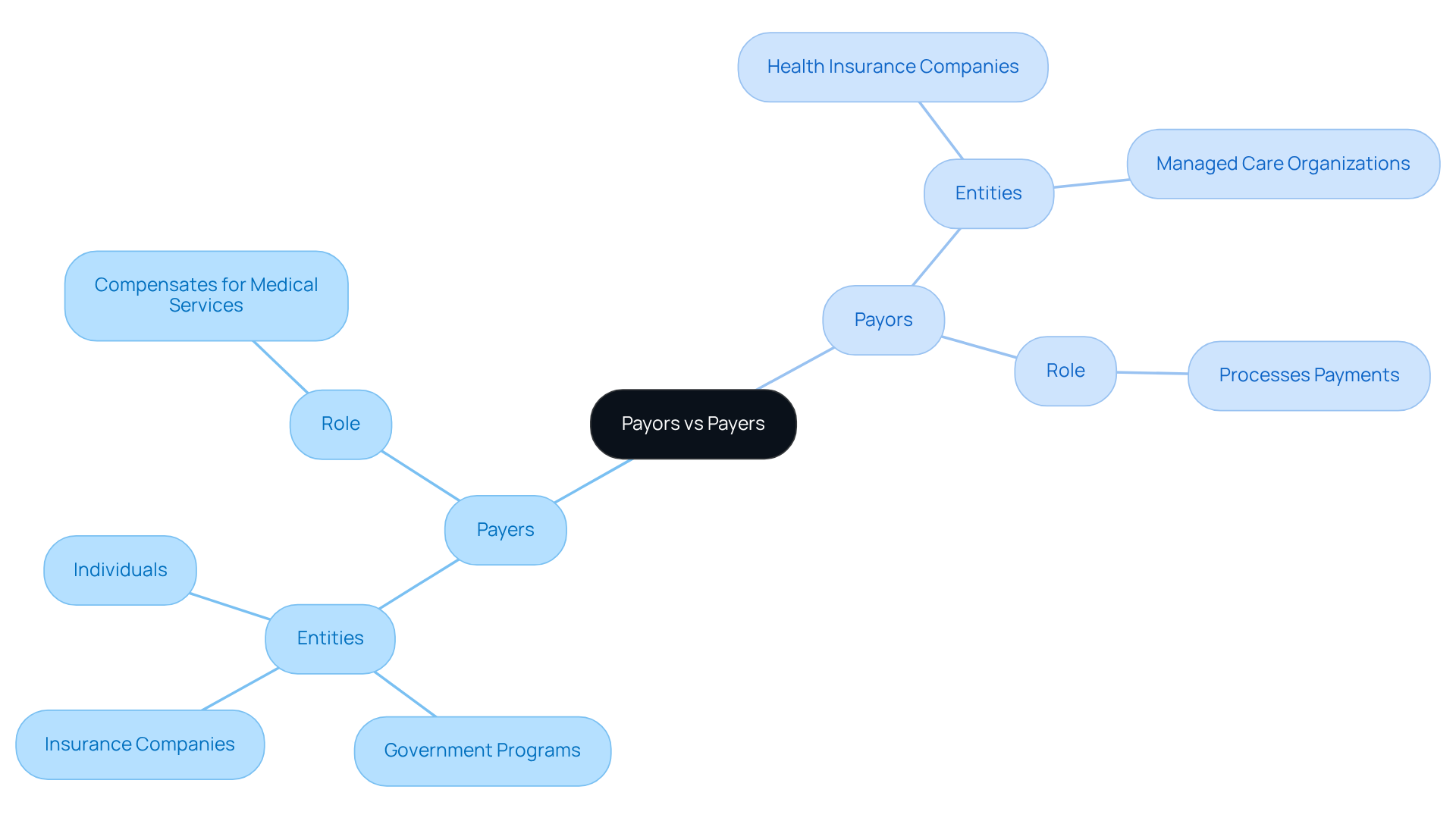
Understanding the distinction between payors vs payers is essential for effective financial discussions in the medical sector. A ‘payer’ generally refers to any entity that compensates for medical services, including insurance companies, government programs, and individuals. Conversely, ‘payor’ denotes the organization that processes payments, including health insurance companies and managed care organizations. This distinction is crucial for understanding the roles these entities play in the reimbursement process.
The American Medical Association (AMA) acknowledges ‘payor’ as the preferred term, which may influence how medical providers and administrators discuss these financial entities. For instance, a research analysis on the distinctions between payors vs payers emphasizes that while both terms pertain to the financial elements of medical services, the operational emphasis of payors on processing can enhance revenue cycle performance. Adjustments based on scorecard metrics related to claims accuracy and denial rates can reduce denials by 20-30% and expedite reimbursements by 15-25% within 30-90 days.
Understanding these nuances clarifies the financial landscape of medical services and enhances operational efficiency, allowing practitioners to navigate the complexities of reimbursement more effectively. Healthcare Partners Consulting (HPC) provides tailored consultations to identify optimal administrative solutions for medical practices, ensuring that mental health clinic owners can enhance their profitability. By assessing your practice’s profitability through a quick quiz and providing personalized recommendations, HPC empowers providers to focus on patient care while we handle the administrative burdens. The AMA’s role in defining terminology underscores the importance of distinctions like payors vs payers for clearer financial discussions in healthcare.
Examine Roles: Functions of Payors and Payers in Healthcare
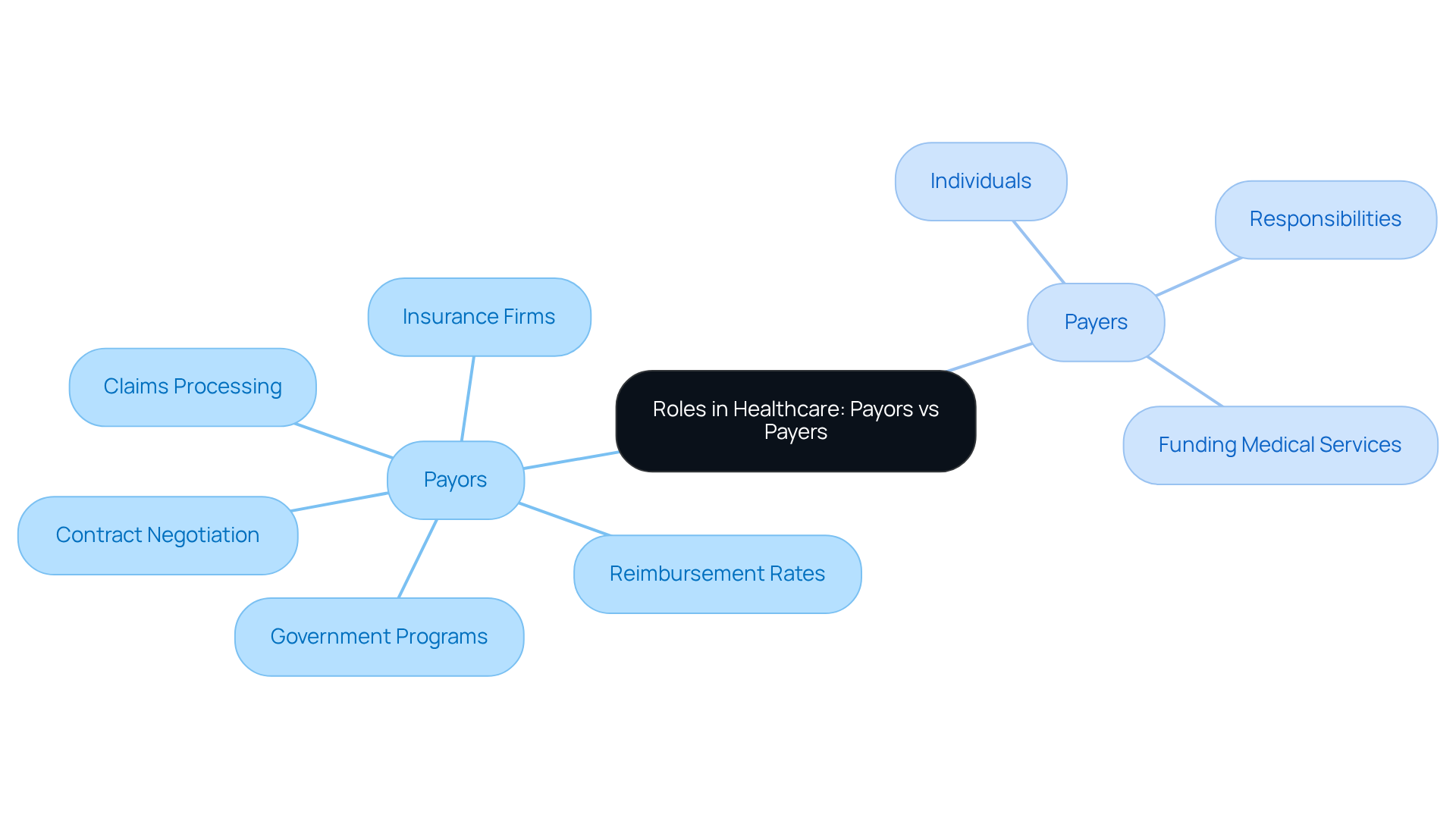
Understanding the distinct roles of payors vs payers is vital for the effective functioning of the medical system. Payors, which encompass insurance firms and government programs, are responsible for establishing reimbursement rates, processing claims, and managing eligibility. They negotiate contracts with medical providers to set payment terms for services rendered. Conversely, payers include both payors and individuals, representing the entities that ultimately fund medical services. This distinction of payors vs payers is crucial because it clarifies the responsibilities and interactions within the medical ecosystem. For instance, while a payor may negotiate a lower rate for a service, the payer-whether the individual receiving care or their insurance-bears the responsibility for covering the associated costs. Understanding these roles is essential for healthcare providers navigating billing complexities, allowing them to focus on patient care.
In 2026, the landscape for payors vs payers is evolving, with a significant emphasis on improving operational efficiency. Payers are increasingly adopting AI and analytics to automate manual processes, which can lead to a reduction in denials by 20-30% and faster reimbursement timelines of 15-25% within 30-90 days. This shift addresses previous operational inefficiencies, streamlining processes and ensuring timely access to care.
Moreover, effective management of patient statements is crucial in addressing underpayments, unprocessed claims, and aging claims. By implementing comprehensive revenue cycle management strategies tailored primarily to behavioral, mental health, and integrated care practices, organizations can significantly enhance their financial sustainability. Case studies demonstrate the effect of these roles: for instance, government reimbursement rates established by payors frequently lead to reduced payments for services, which can financially burden medical practitioners. Furthermore, as payors broaden collaboration with practitioners for real-time clinical data sharing, they improve the accuracy and efficiency of claims processing, further supporting the financial sustainability of medical practices. Understanding the subtleties of payors vs payers roles enables medical professionals to improve revenue cycles and patient outcomes.
Furthermore, Healthcare Partners Consulting & Billing, LLC (HPC), a veteran-owned company with 39 years of experience, emphasizes the importance of integrating with platforms like TherapyNotes, SimplePractice, Valant, AdvancedMD, and IntakeQ to streamline operations and enhance compliance. This all-encompassing strategy enables medical professionals by alleviating administrative challenges, permitting them to concentrate on delivering high-quality care. Without this understanding, medical professionals risk inefficiencies that could compromise patient care.
Analyze Impact: Financial and Operational Effects on Healthcare Practices
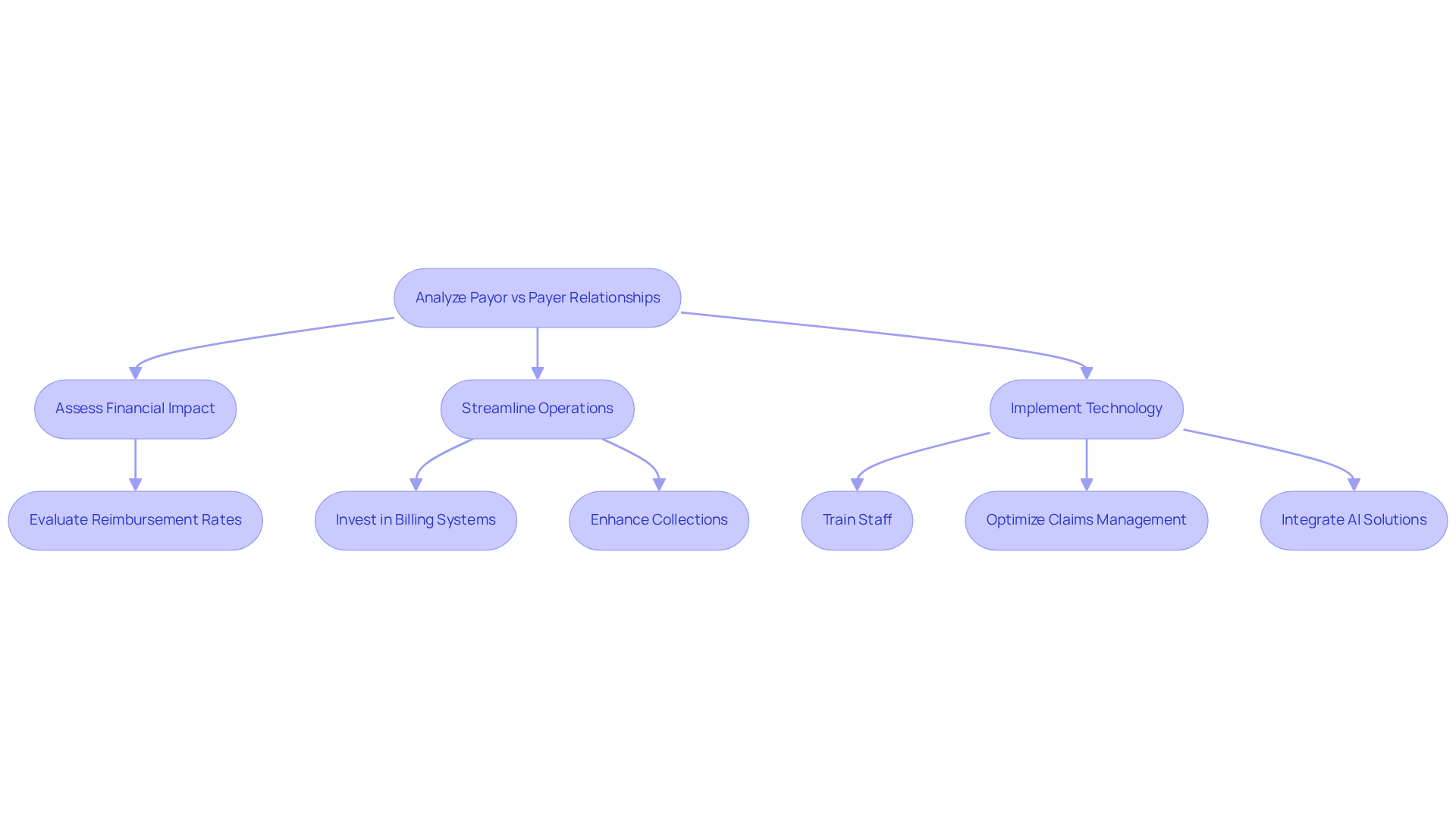
The interplay between payors vs payers and healthcare practices significantly influences both financial stability and operational efficiency. The distinction between payors vs payers shapes the revenue cycle by determining reimbursement rates and payment timelines, which directly impact a practice’s cash flow. For instance, practices that depend heavily on a single payor risk financial instability, especially when faced with reduced reimbursement rates or delayed payments. This risk is compounded by the administrative burden of managing multiple payors vs payers, which can detract from a provider’s focus on care. Navigating complex billing procedures often leads to increased overhead costs and decreased operational efficiency, particularly in managing statements and requests.
Proactive management of payors vs payers relationships not only enhances revenue but also streamlines operations, creating a more resilient practice. Practices that invest in robust billing systems and comprehensive staff training can significantly reduce denials by as much as 20-30% and enhance collections. This approach not only bolsters financial stability but also contributes to better patient outcomes and satisfaction. Furthermore, practices that implement scorecard-driven adjustments tied to claims accuracy, denial rates, and days in accounts receivable demonstrate operational rigor, further optimizing their revenue cycle performance when considering the differences between payors vs payers.
As we approach 2026, the evolving landscape of healthcare reimbursement necessitates that practices remain vigilant and adaptable. The integration of advanced technologies, including AI with human oversight, can provide a competitive advantage, ensuring that practices are well-positioned to navigate the complexities of payer dynamics while maintaining a focus on delivering quality care. Additionally, the expiration of enhanced ACA subsidies may increase financial responsibility for individuals, making clear communication regarding coverage and payment options essential for maintaining trust. Ongoing regulatory scrutiny regarding medical billing compliance and documentation accuracy must also be factored into operational strategies. By addressing underpayments, unprocessed claims, and aging claims effectively, practices can optimize their patient statements and claims management, ultimately leading to improved financial health and operational efficiency.
Identify Types: Commercial, Government, and Private Payors
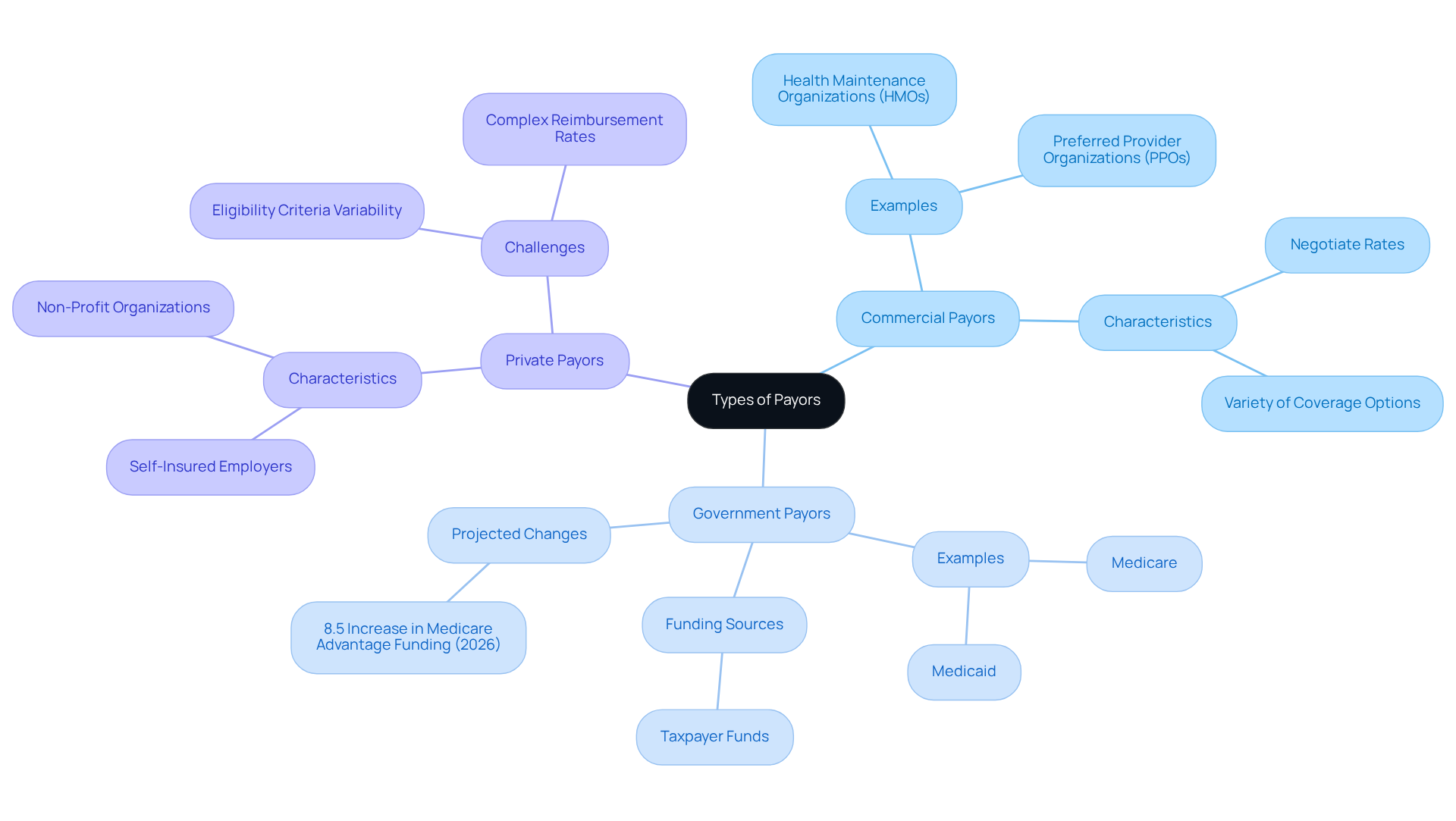
Understanding the nuances of payors vs payers is crucial for healthcare practitioners navigating the complexities of reimbursement. In the medical industry, the distinction between payors vs payers can be categorized into three main types:
- Commercial payors
- Government payors
- Private payors
Commercial payors include private insurance companies that offer a variety of health plans, such as Health Maintenance Organizations (HMOs) and Preferred Provider Organizations (PPOs). These payors typically negotiate rates with medical practitioners and may offer a variety of coverage options to their members.
Government payors, including Medicare and Medicaid, provide health coverage financed by taxpayer funds, often with specific eligibility criteria and reimbursement frameworks that can significantly influence revenue for healthcare professionals. In 2026, federal funding for Medicare Advantage is projected to increase by 8.5%, which may impact reimbursement rates and eligibility criteria.
Lastly, private payors encompass entities that are not publicly traded, including self-insured employers and non-profit organizations that provide health benefits to their employees or members. Practitioners often struggle to navigate the complexities of varying reimbursement rates and eligibility criteria, which can lead to significant financial losses for healthcare practices.
As value-based care models evolve, understanding the dynamics between medical practitioners and the distinction of payors vs payers is essential for effective practice management. Additionally, Healthcare Partners Consulting & Billing, LLC (HPC) specializes in optimizing patient statements and managing claims effectively, addressing underpayments and aging claims to empower healthcare providers to focus on patient care.
As the landscape of healthcare financing evolves, practitioners who remain informed about the differences between payors vs payers will be better positioned to enhance their practice management and financial outcomes.
Conclusion
Navigating the complexities of reimbursement can be daunting for healthcare providers. Understanding the differences between payors and payers is essential for healthcare providers aiming to navigate these challenges effectively. By distinguishing between these two terms, practitioners can better grasp the roles and responsibilities that influence their financial landscape, ultimately allowing them to focus more on patient care rather than administrative burdens.
The article highlights key distinctions, emphasizing that payors are primarily responsible for processing payments and negotiating reimbursement rates, while payers encompass both the entities that fund medical services and the individuals receiving care. This understanding is crucial for healthcare practices, particularly in the behavioral and mental health sectors, as it directly impacts their revenue cycle management and operational efficiency. Understanding the roles of payors and payers helps practices improve their financial sustainability and enhance patient outcomes.
As the healthcare landscape continues to evolve, providers must recognize how these distinctions impact their operations and financial health. Working with experts at Healthcare Partners Consulting & Billing, LLC (HPC) can help providers streamline operations and concentrate on delivering quality care. By prioritizing compliance and operational efficiency, practices can navigate the complexities of reimbursement with confidence, ensuring they are well-equipped to meet the challenges of the future. For tailored support, reach out to HPC at info@hpcbilling.com or call 888-517-4992 to explore how to optimize your practice’s financial health.
Frequently Asked Questions
What is the difference between payors and payers in healthcare?
A ‘payer’ refers to any entity that compensates for medical services, such as insurance companies, government programs, and individuals. In contrast, a ‘payor’ denotes the organization that processes payments, including health insurance companies and managed care organizations.
Why is it important to understand the distinction between payors and payers?
Understanding the distinction is crucial for effective financial discussions in the medical sector, as it clarifies the roles these entities play in the reimbursement process and can enhance operational efficiency.
What term does the American Medical Association (AMA) prefer to use?
The AMA acknowledges ‘payor’ as the preferred term, which may influence how medical providers and administrators discuss financial entities in healthcare.
How can the operational emphasis of payors improve revenue cycle performance?
The operational focus of payors on processing payments can enhance revenue cycle performance by improving claims accuracy and reducing denial rates, potentially decreasing denials by 20-30% and expediting reimbursements by 15-25% within 30-90 days.
How does Healthcare Partners Consulting (HPC) assist medical practices?
HPC provides tailored consultations to identify optimal administrative solutions for medical practices, helping mental health clinic owners enhance profitability by assessing their practice’s profitability and offering personalized recommendations.
What is the significance of the AMA’s role in defining terminology in healthcare?
The AMA’s role underscores the importance of distinctions like payors vs payers, facilitating clearer financial discussions and improving understanding within the healthcare financial landscape.