
Introduction
In the complex landscape of healthcare, clinics face significant challenges in managing claims effectively. Implementing best practices in claims management can help clinics significantly reduce administrative burdens, allowing them to focus on what truly matters: their patients. Navigating the complexities of compliance can overwhelm clinics, diverting their focus from patient care. This article outlines five essential practices that can enhance claims management systems, enabling healthcare providers to overcome challenges and capitalize on growth opportunities.
Define Claims Management Systems in Healthcare
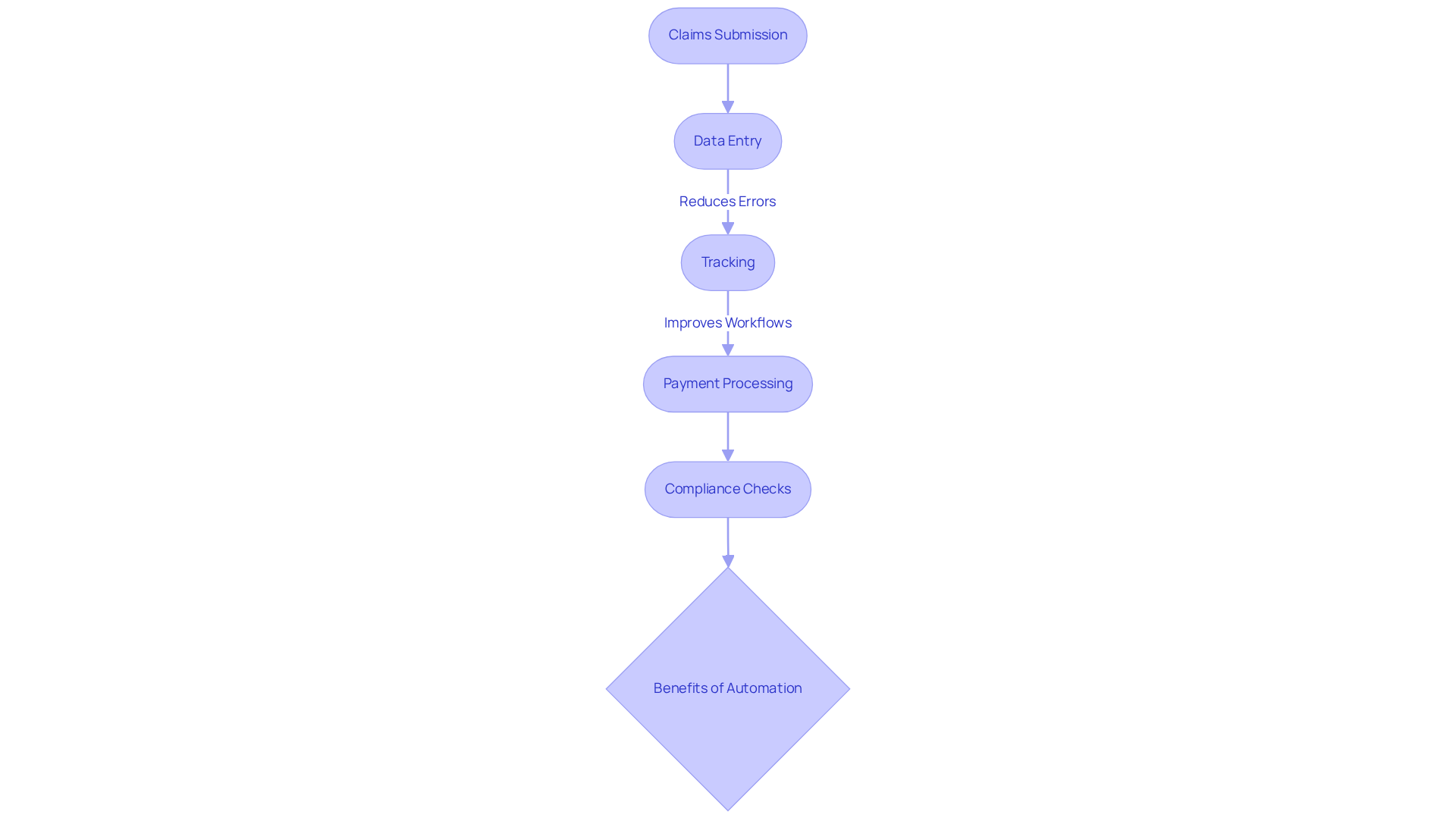
Healthcare billing processing solutions encompass the intricate procedures and technologies that manage submissions from healthcare providers to insurance firms. These platforms manage the entire lifecycle of a request, from submission to payment processing. Automation of tasks like data entry and tracking improves workflows, reduces errors, and ensures compliance with regulatory standards. This automation enables healthcare providers to prioritize patient care over administrative tasks.
Recent advancements indicate that effective management of requests can lead to a 20-30% reduction in denials and accelerate reimbursement timelines by 15-25% within 30-90 days, significantly enhancing revenue cycle outcomes. Additionally, integrating with EHR platforms like TherapyNotes and SimplePractice can further optimize these processes.
As a veteran-owned business with 39 years of experience, Healthcare Partners Consulting & Billing, LLC (HPC) is dedicated to empowering mental health clinic owners by enhancing billing efficiency and improving overall revenue cycle outcomes. Ultimately, this focus on efficiency and accuracy can transform the financial health of mental health clinics, allowing them to thrive in a competitive landscape.
Identify Key Features of Effective Claims Management Systems
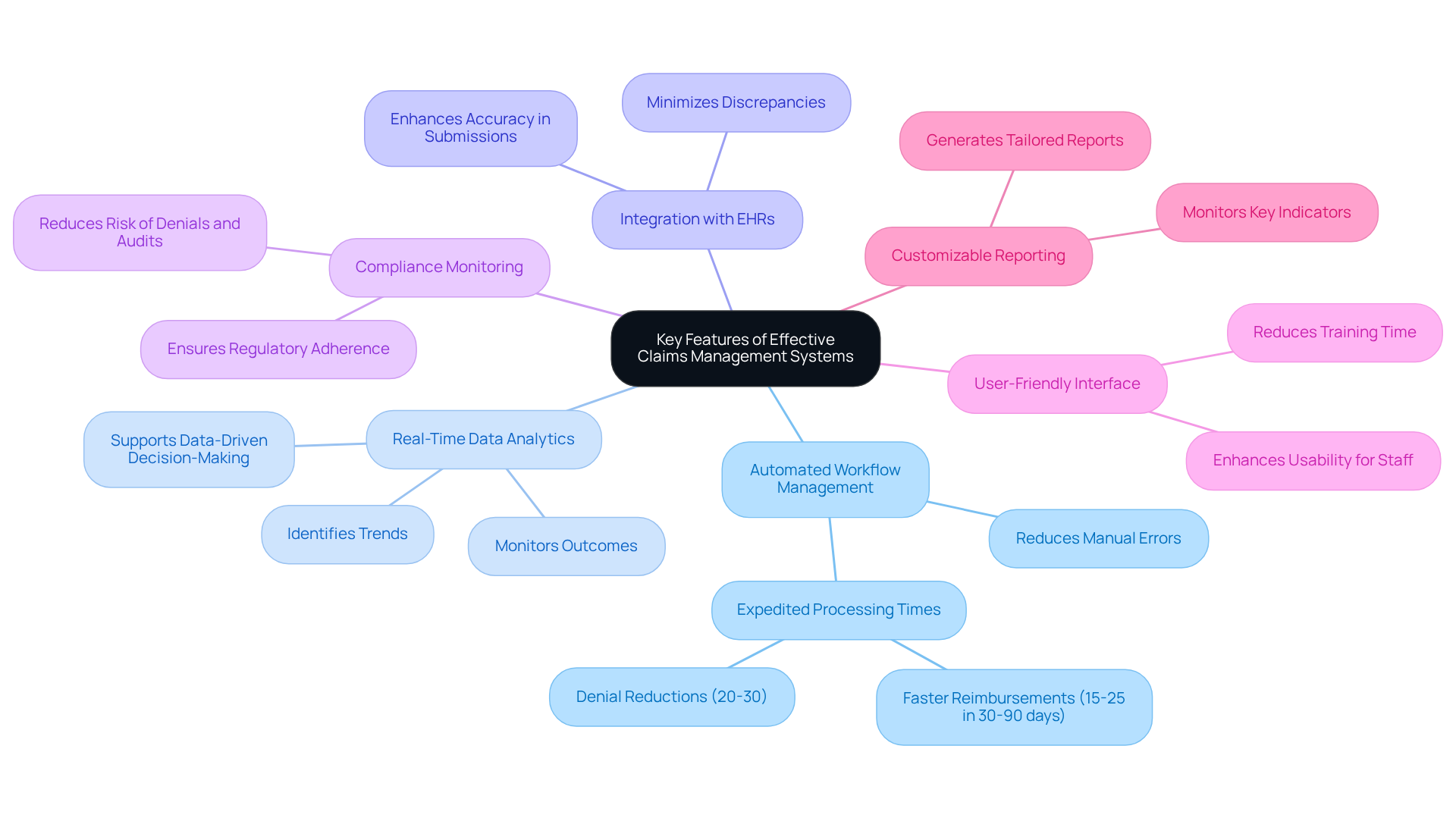
In an increasingly complex healthcare landscape, effective claims management systems are essential for operational success. These systems should incorporate several key features to optimize performance and enhance operational efficiency:
- Automated Workflow Management: This feature streamlines the process by automating repetitive tasks, significantly reducing manual errors and expediting processing times. Organizations utilizing automated workflows have reported denial reductions of 20-30% and faster reimbursements within 15-25% in 30-90 days.
- Real-Time Data Analytics: Systems must offer strong analytical capabilities to monitor outcomes, identify trends, and support data-driven decision-making. This allows clinics to make timely adjustments based on performance metrics.
- Integration with EHRs: Seamless integration with Electronic Health Records (EHR) ensures that patient data flows smoothly between clinical and billing systems, minimizing discrepancies and enhancing accuracy in submissions.
- Compliance Monitoring: Built-in compliance checks are essential for ensuring that claims adhere to regulatory standards, thereby reducing the risk of denials and audits. This feature is crucial in maintaining operational integrity and avoiding costly penalties.
- User-Friendly Interface: A straightforward interface enhances usability for staff, reducing training time and improving overall efficiency. Systems that prioritize user experience can lead to quicker adoption and improved outcomes.
- Customizable Reporting: The ability to generate tailored reports allows clinics to monitor key indicators and adjust strategies accordingly. This flexibility is vital for ongoing operational improvements and strategic planning.
Integrating these features into claims management systems for insurance can transform operational challenges into opportunities for growth and efficiency. For example, organizations that implement scorecard-driven adjustments related to accuracy of submissions, denial rates, and days in accounts receivable exhibit operational rigor and can significantly enhance their revenue cycle performance. Ultimately, the right features can turn potential pitfalls into pathways for enhanced revenue cycle performance.
Ensure Compliance with Healthcare Regulations
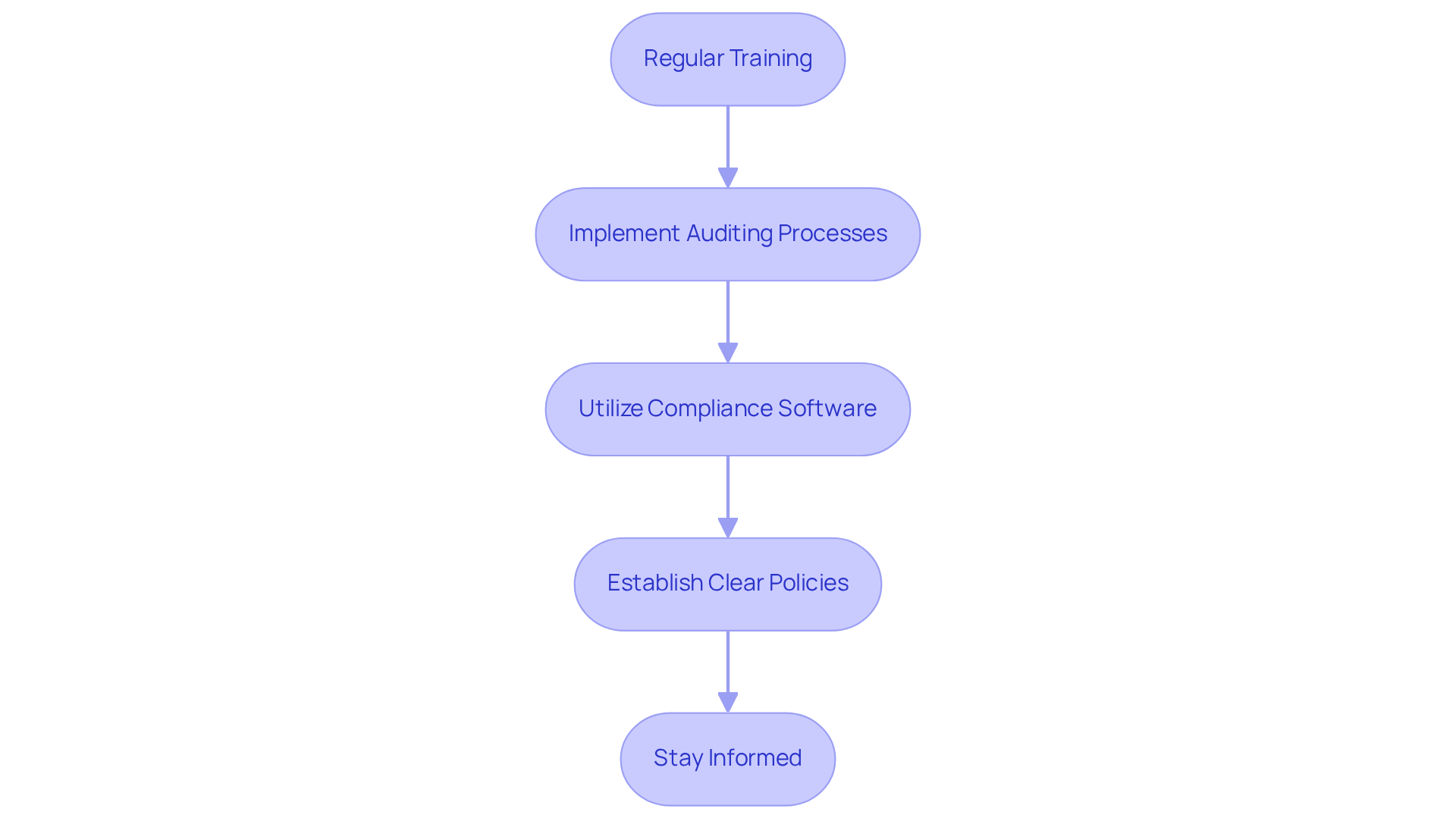
Adhering to healthcare regulations is essential for clinics to maintain operational integrity and protect patient information. Compliance with laws such as HIPAA, Medicare, and Medicaid is crucial for safeguarding patient data and ensuring billing accuracy. The following best practices are essential for ensuring compliance:
- Regular Training: Conduct ongoing training sessions for staff on compliance requirements and updates to regulations. This ensures that everyone is informed and equipped to handle changes effectively.
- Implement Auditing Processes: Regular evaluations of submission records and billing methods can assist in identifying potential compliance issues before they escalate. This proactive approach can reduce denial rates by 20-30% and enhance overall operational efficiency.
- Utilize Compliance Software: Invest in software solutions that feature compliance monitoring capabilities. These tools can automatically identify potential violations, streamlining the process and enhancing accuracy.
- Establish Clear Policies: Develop and communicate clear guidelines regarding billing methods, coding, and patient data management. This ensures all staff comprehend their responsibilities and the significance of compliance.
- Stay Informed: Keep updated on changes in healthcare regulations and modify operations accordingly. This is essential for quicker reimbursement, typically within 15-25% of submissions processed in 30-90 days.
By implementing these practices, clinics can significantly enhance their operational efficiency and patient care quality.
Train Staff and Integrate Systems into Workflows
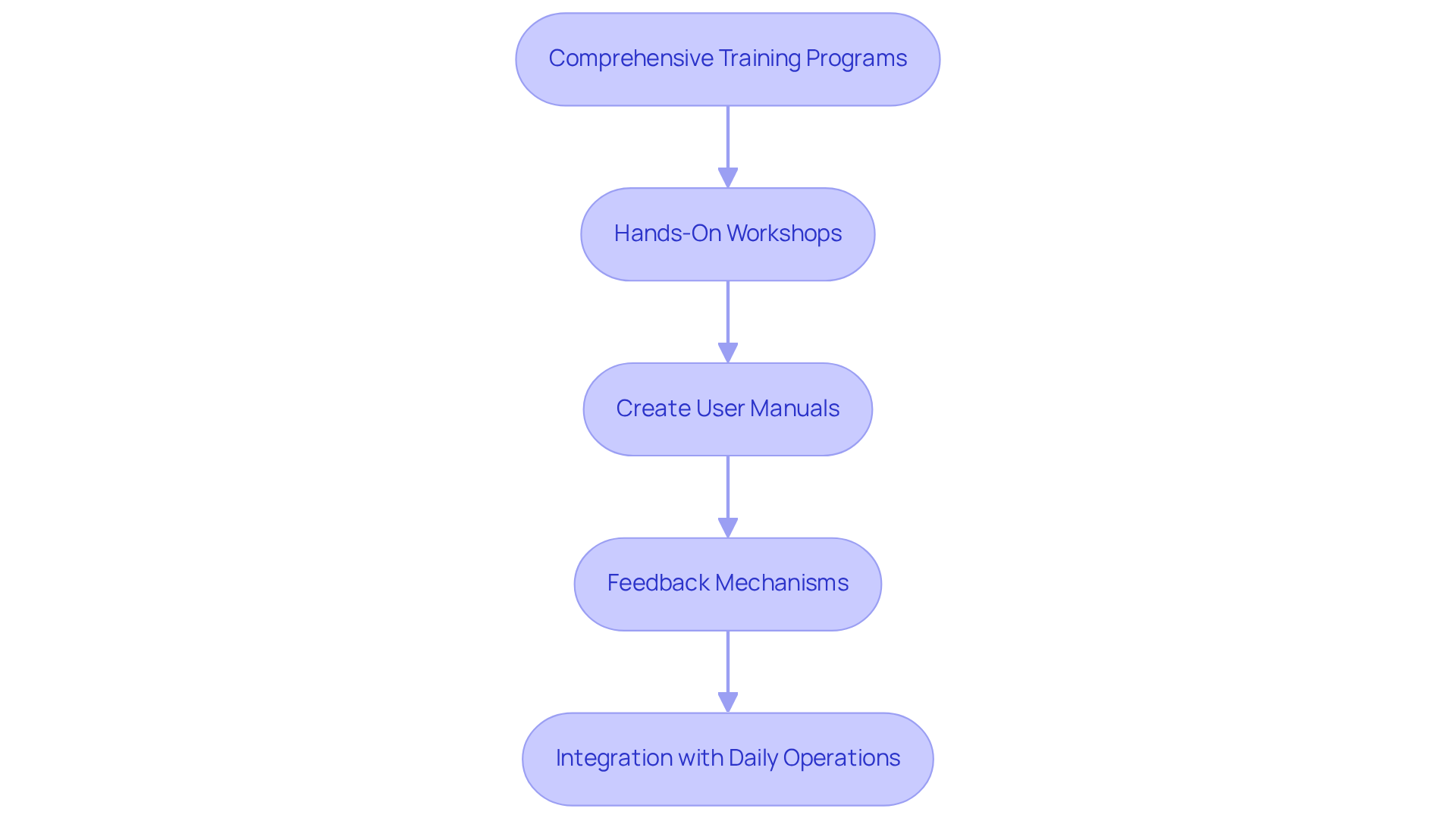
Enhancing efficiency in mental health services requires a strategic approach to training personnel and integrating management tools into existing workflows. Here are best practices to achieve this:
- Comprehensive Training Programs: Create training initiatives that cover all facets of the management process, including navigation, data entry, and compliance requirements. This comprehensive training helps staff feel prepared to tackle various scenarios, especially in mental and behavioral health billing.
- Hands-On Workshops: Conduct interactive sessions where staff can engage with the platform in real-world scenarios. This experiential learning boosts their confidence and skills, resulting in enhanced performance in processing claims, while aligning with the operational backbone provided by Healthcare Partners Consulting & Billing, LLC (HPC).
- Create User Manuals: Provide easy-to-follow user manuals and quick reference guides that staff can consult as needed. These resources promote continuous learning and assist staff in navigating the framework efficiently, ensuring they can adjust to the distinct requirements of their work.
- Feedback Mechanisms: Establish feedback channels for staff to report challenges or suggest improvements. This fosters a culture of continuous learning and adaptation, ensuring that the training remains relevant and effective in the evolving landscape of healthcare billing.
- Integration with Daily Operations: Ensure that the management system is seamlessly incorporated into daily workflows, minimizing disruptions and enhancing user adoption. This empowers healthcare providers to focus on patient care while HPC handles the complexities of revenue cycle management, leveraging 39 years of experience and a veteran-owned status to deliver tailored solutions.
Implementing these optimal approaches can lead to substantial enhancements in processing efficiency. Studies suggest a potential decrease in denial rates by 20-30% and quicker reimbursement times of 15-25% within 30-90 days. Ultimately, prioritizing effective training and integration can transform operational efficiency and revenue outcomes in healthcare practices, supported by the expertise of Healthcare Partners Consulting & Billing, LLC (HPC) in navigating the complexities of medical billing.
Evaluate Performance and Optimize Claims Management Processes
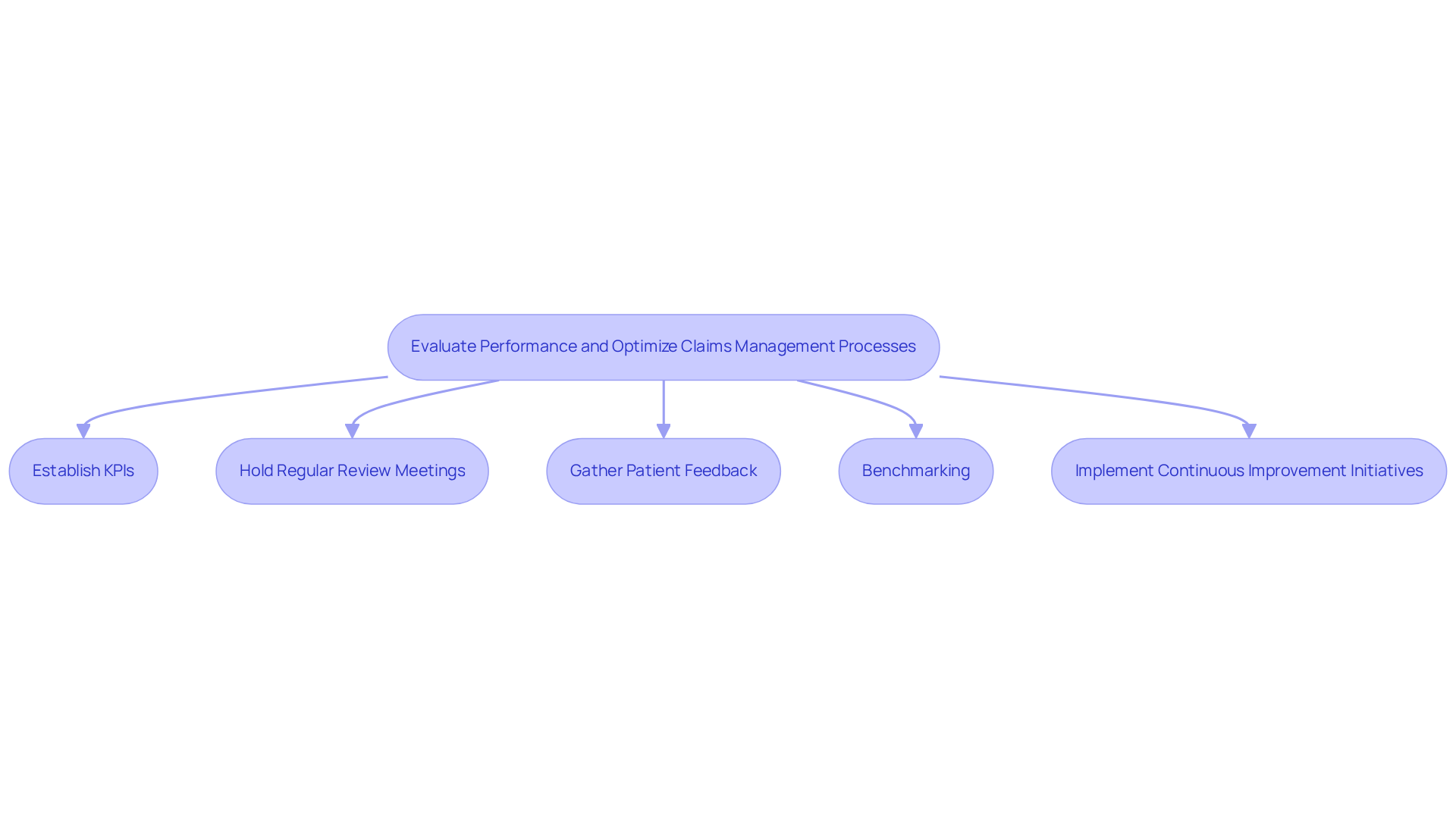
To maximize the effectiveness of management systems, it is crucial to engage in regular evaluation and optimization. Here are strategies to assess performance, particularly when leveraging the expertise of Healthcare Partners Consulting & Billing, LLC (HPC):
- Key Performance Indicators (KPIs): Establish KPIs such as processing time for requests, denial rates, and first-pass resolution rates to measure the effectiveness of the management process. HPC’s tailored solutions assist in effectively tracking these metrics. This can lead to denial reductions of 20-30% and faster reimbursements of 15-25% within a timeframe of 30-90 days.
- Regular Review Meetings: Hold regular meetings with your dedicated HPC team to review performance metrics and discuss areas for improvement. This strategy fosters a culture of continuous improvement and operational discipline. It ensures that modifications are driven by scorecard metrics and linked to submission accuracy and days in accounts receivable.
- Patient Feedback: Gathering feedback from patients about their billing experience helps identify pain points in the claims process. HPC focuses on being transparent and ensuring patients are satisfied with their billing experience, which can enhance overall satisfaction and retention.
- Benchmarking: Compare results against industry standards to identify gaps and areas for improvement. This approach assists clinics in comprehending their position in the market and adopting optimal methods from leading organizations, utilizing HPC’s 39 years of experience for valuable insights.
- Continuous Improvement Initiatives: Implement initiatives aimed at refining processes, such as adopting new technologies or revising workflows based on performance data. For instance, integrating with EHR systems like TherapyNotes or SimplePractice can streamline claims processing and enhance decision-making efficiency, ensuring that your billing practices are always up to date and effective.
Implementing these strategies not only enhances operational efficiency but also positions organizations for sustained financial success.
Conclusion
Effective claims management systems are essential for healthcare clinics striving to enhance patient care and streamline operations. Focusing on automation, compliance, and staff training significantly reduces administrative burdens. This allows healthcare providers to dedicate more time to their patients. This article highlights the critical need for clinics to adopt best practices that not only improve revenue cycle management but also empower them to thrive in a competitive environment.
Key strategies discussed include:
- Integration of automated workflows
- Real-time data analytics
- Compliance monitoring
All of which contribute to a more efficient claims process. Additionally, the emphasis on training staff and incorporating user-friendly systems ensures that clinics can adapt to the complexities of healthcare billing while maintaining high standards of patient care. HPC, with its veteran-owned expertise, plays a crucial role in enhancing these efforts, providing tailored solutions that address the unique challenges faced by mental health and integrated care practices.
In conclusion, prioritizing effective claims management is not just about improving financial outcomes; it is about fostering an environment where healthcare providers can focus on what truly matters – patient care. By implementing these best practices, clinics can enhance their operational efficiency, ensure compliance, and ultimately improve the quality of care they provide. Ultimately, embracing these strategies allows clinics to prioritize patient care while navigating the complexities of healthcare billing with assurance. For more information or to explore tailored solutions, contact HPC at info@hpcbilling.com or call 888-517-4992.
Frequently Asked Questions
What are claims management systems in healthcare?
Claims management systems in healthcare are solutions that manage the entire lifecycle of billing submissions from healthcare providers to insurance firms, including submission, payment processing, and compliance with regulatory standards. They automate tasks like data entry and tracking to improve workflows and reduce errors.
How do claims management systems benefit healthcare providers?
These systems can lead to a 20-30% reduction in claim denials and accelerate reimbursement timelines by 15-25% within 30-90 days, enhancing revenue cycle outcomes and allowing healthcare providers to focus more on patient care.
What are the key features of effective claims management systems?
Key features include: – Automated Workflow Management: Reduces manual errors and speeds up processing. – Real-Time Data Analytics: Supports data-driven decision-making by monitoring outcomes and trends. – Integration with EHRs: Ensures smooth data flow between clinical and billing systems. – Compliance Monitoring: Ensures claims adhere to regulatory standards, reducing denial risks. – User-Friendly Interface: Enhances usability and reduces training time for staff. – Customizable Reporting: Allows clinics to generate tailored reports for monitoring key indicators.
How does automation in claims management impact operational efficiency?
Automation streamlines repetitive tasks, significantly reduces manual errors, and expedites processing times, leading to improved operational efficiency and faster reimbursements.
Why is compliance monitoring important in claims management systems?
Compliance monitoring is crucial for ensuring that claims meet regulatory standards, which helps reduce the risk of denials and audits, maintaining operational integrity and avoiding costly penalties.
How can integrating claims management systems with EHRs improve billing accuracy?
Seamless integration with Electronic Health Records minimizes discrepancies between clinical and billing data, enhancing accuracy in submissions and reducing the likelihood of errors.
What role does user experience play in the effectiveness of claims management systems?
A user-friendly interface improves usability for staff, leading to quicker adoption of the system and overall improved efficiency in managing claims.
How can customizable reporting benefit healthcare clinics?
Customizable reporting allows clinics to monitor key performance indicators and adjust their strategies accordingly, which is vital for ongoing operational improvements and strategic planning.