
Introduction
Mental health clinics face distinct billing challenges that threaten their financial stability and operational effectiveness. By addressing these needs, providers can prioritize patient care over administrative tasks. The challenge is clear: how can mental health practices navigate billing complexities to ensure compliance and improve revenue recovery? This article explores essential billing solutions for mental health clinics, providing insights into practices that can enhance financial outcomes.
Assess Unique Billing Needs of Mental Health Clinics
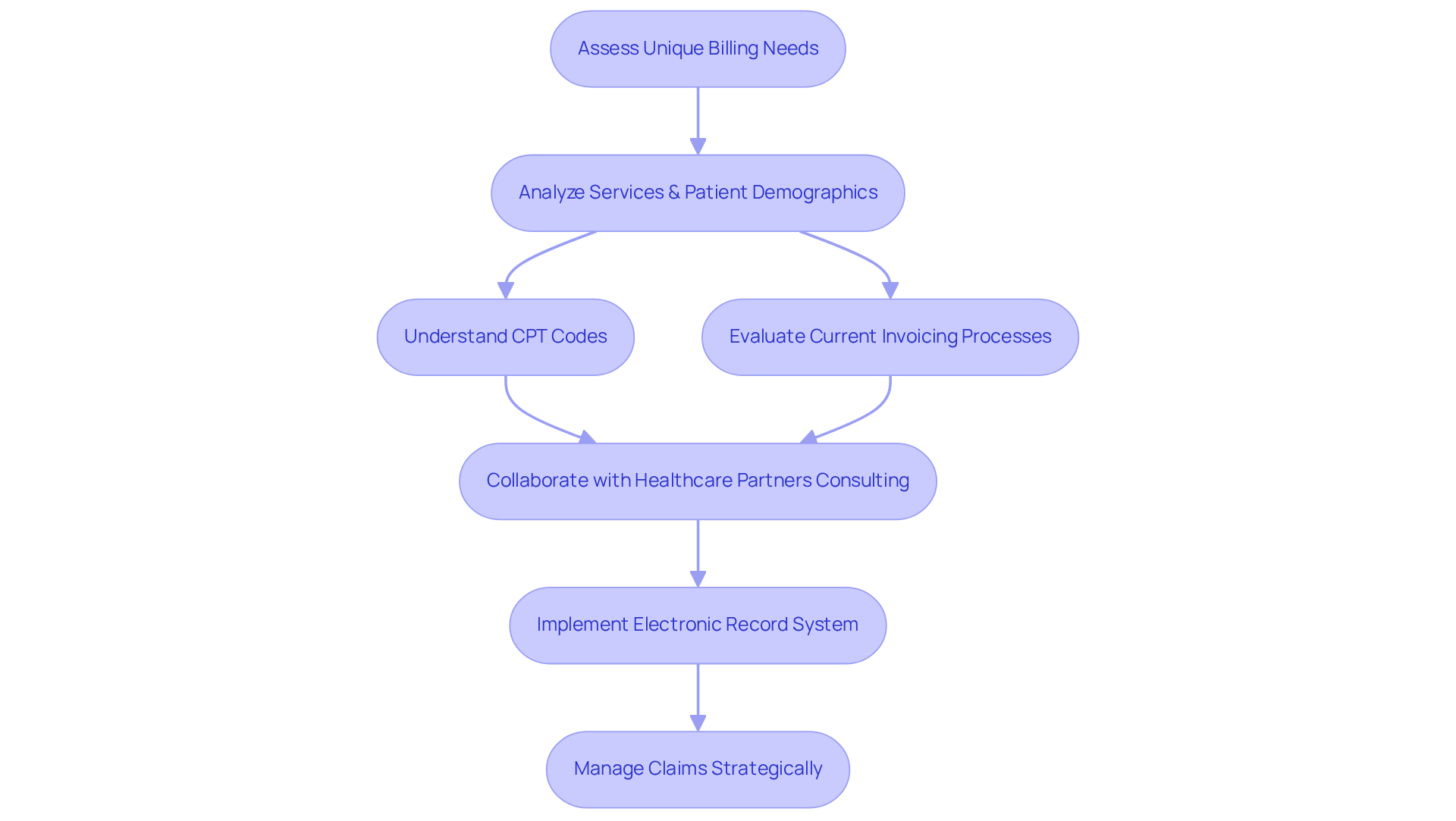
Mental wellness facilities face distinct challenges related to billing solutions that can significantly impact their financial viability. Clinics must start with a thorough analysis of their services, patient demographics, and payer contracts to navigate these complexities effectively. This includes a comprehensive understanding of specific CPT codes pertinent to mental health services, such as time-based codes for therapy sessions (e.g., 90832, 90834, 90837), ensuring that documentation aligns with payer expectations.
Assessing current invoicing processes is essential for pinpointing inefficiencies that may result in claim denials. Collaborating with specialists from Healthcare Partners Consulting, a veteran-owned firm with 39 years of experience, provides critical insights and facilitates the development of customized solutions that align with the clinic’s operational objectives. For instance, implementing a robust electronic record system that integrates billing functions can streamline workflows and reduce administrative burdens, enabling providers to focus more on patient care.
Strategic claims management is crucial for revenue recovery in healthcare. By contesting appropriate refusals promptly, healthcare facilities can reclaim the revenue they’ve generated, which is essential for sustaining financial well-being. Real-world evidence shows that healthcare facilities that proactively evaluate their specific financial needs can achieve a reduction in claim denials by 20-30%, significantly improving their revenue cycle management. Furthermore, these enhancements can result in quicker reimbursement periods, with numerous healthcare facilities indicating decreases in payment delays of 15-25% within 30-90 days. By prioritizing customized billing solutions and adhering to payer regulations, mental health providers can safeguard their financial health and enhance patient care.
Implement Innovative Billing Solutions to Enhance Patient Payments
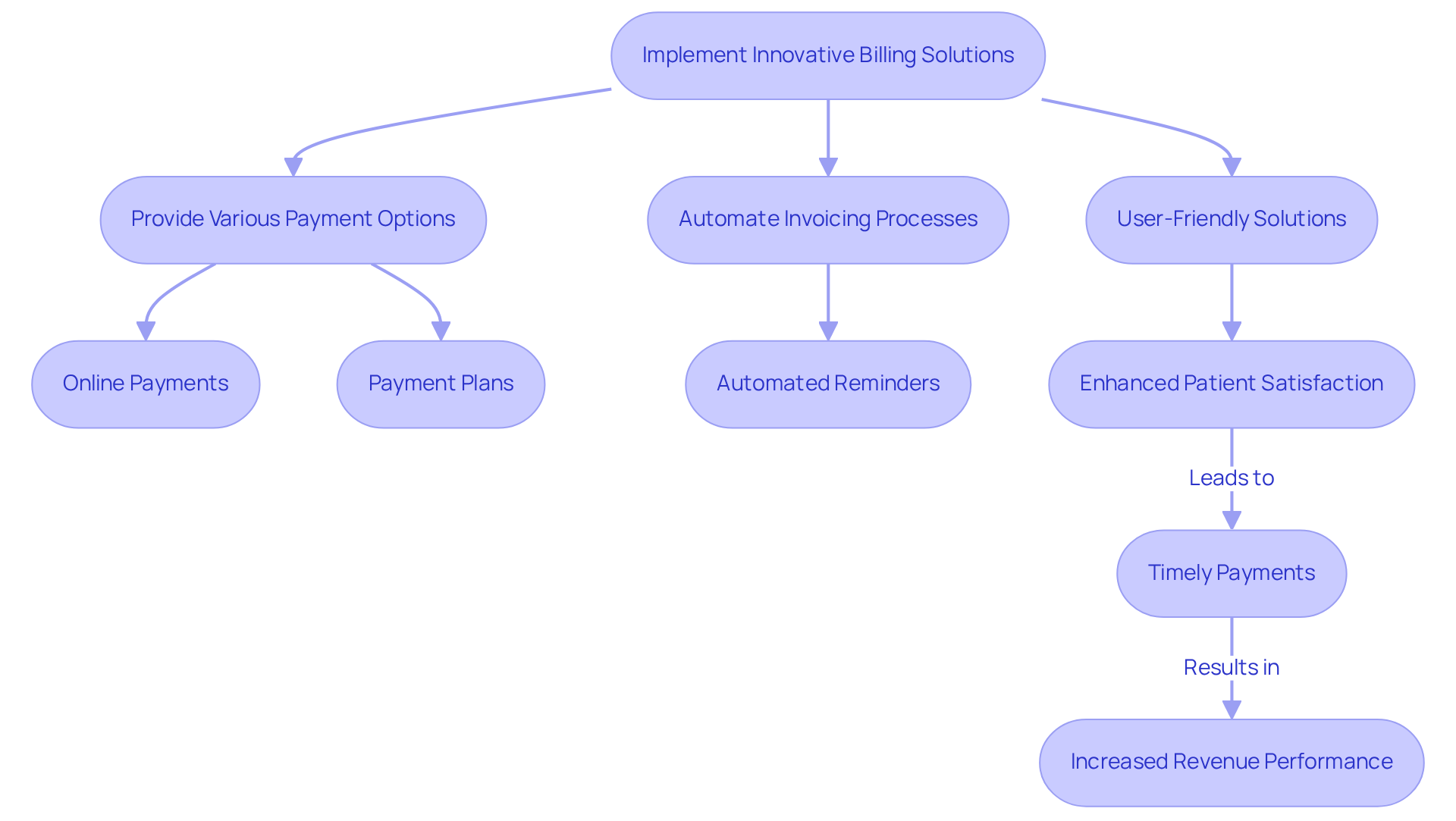
To enhance the efficiency of patient payments, mental wellness clinics must consider adopting innovative billing solutions that simplify the transaction process. Providing various payment options, including online payments, payment plans, and mobile solutions, can greatly enhance patient satisfaction and improve the chances of timely payments.
Automating invoicing processes through technology is an effective strategy. Invoicing software that integrates with electronic medical record (EMR) systems simplifies claim submissions and minimizes errors. Automated reminders for upcoming payments or outstanding balances encourage patients to settle their accounts promptly.
A research report from a mental health facility that implemented an integrated payment solution indicated a 25% rise in patient payment rates within six months. By focusing on user-friendly billing solutions and automating administrative tasks, healthcare facilities can increase revenue and enable staff to concentrate on delivering quality patient care. Additionally, effective invoicing practices can reduce denial rates by 20-30% and expedite reimbursements by 15-25% within 30-90 days, thereby improving revenue cycle performance.
Ensure Compliance with Healthcare Regulations in Billing Practices
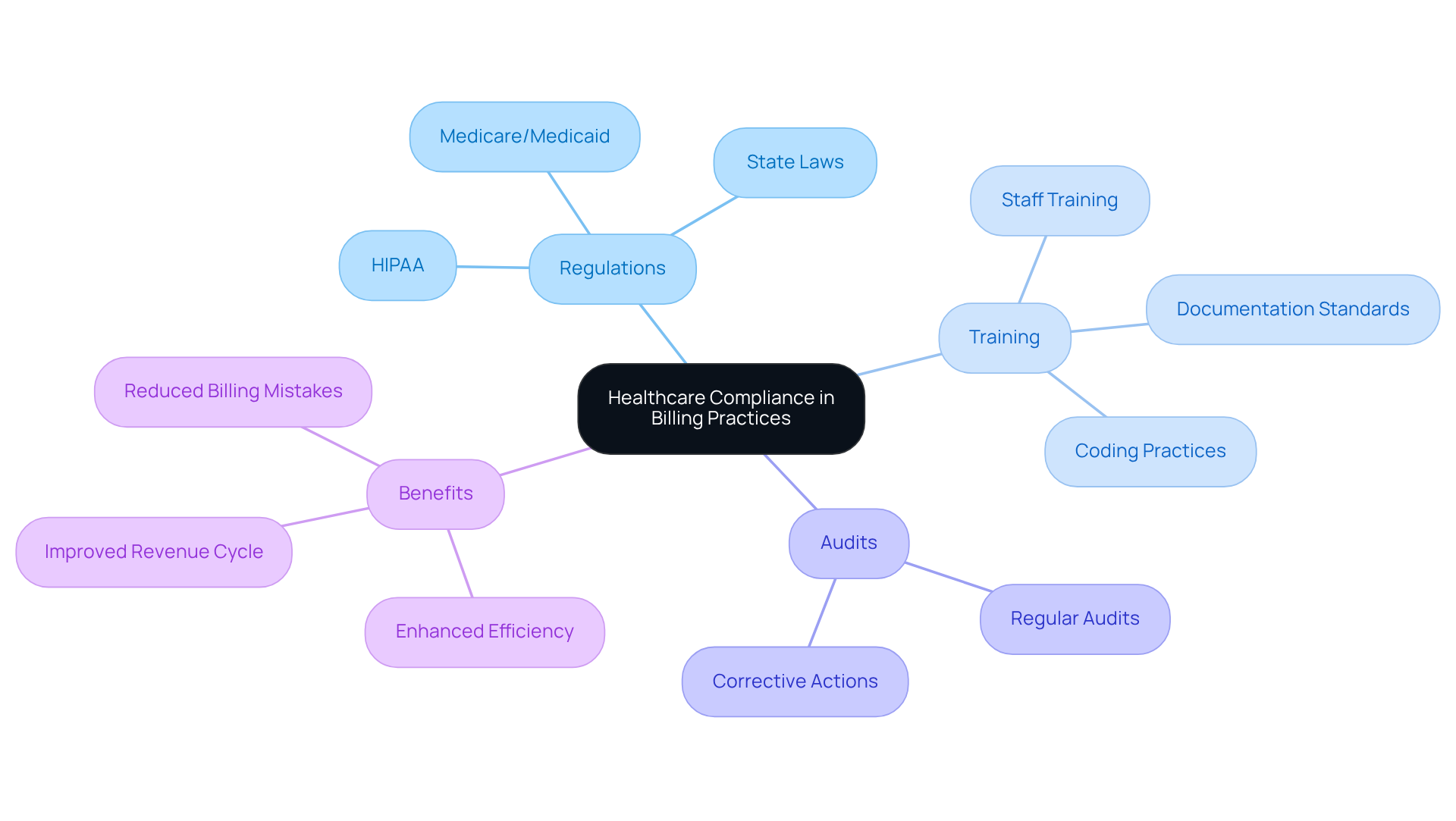
Adherence to healthcare regulations is not merely a legal obligation; it is a fundamental component of operational success for mental wellness clinics. Establishing a robust compliance program is crucial, which includes regular training for staff on payment regulations, documentation standards, coding practices tailored to mental wellness services, and effective billing solutions.
Key regulations encompass:
- HIPAA for patient privacy
- Medicare and Medicaid reimbursement guidelines
- State-specific laws governing mental wellness services
Conducting regular audits of billing solutions can help identify non-compliance areas, allowing for timely corrective actions. Non-compliance can expose mental wellness clinics to significant legal risks and operational challenges.
For example, a mental health facility that implemented a comprehensive compliance training program experienced a 40% decrease in billing mistakes and refusals related to documentation issues. This proactive approach not only mitigates risks but also enhances operational efficiency and revenue. Prioritizing compliance helps healthcare facilities safeguard against audits and penalties. It also boosts their credibility with both patients and payers. Moreover, effective compliance strategies can lead to improved billing solutions that result in reductions of 20-30% in claims rejections and quicker reimbursements of 15-25% within 30-90 days, greatly enhancing the revenue cycle performance of the practice.
For further insights on achieving compliance and optimizing billing processes, consider reaching out to Healthcare Partners Consulting at 888-517-4992 or info@hpcbilling.com. Our team is available nationwide, Monday-Friday, to help you navigate the complexities of healthcare regulations and enhance your operational efficiency.
Adopt Effective Denial Management Strategies for Revenue Recovery
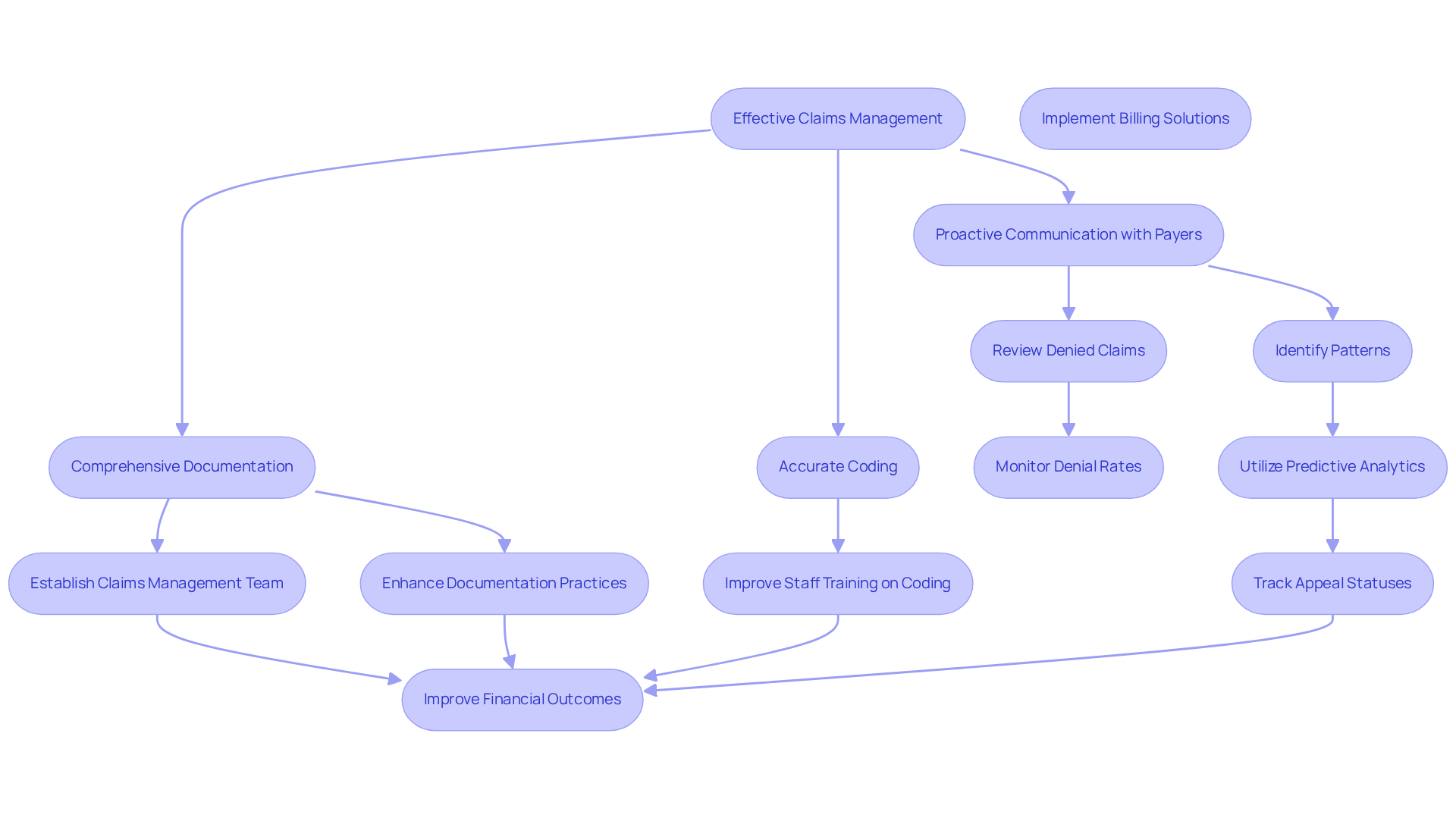
Effective claims management is essential for optimizing revenue recovery in mental health facilities. To reduce refusals, healthcare facilities should implement a systematic strategy that emphasizes comprehensive documentation, accurate coding, and proactive communication with payers.
Establishing a specialized claims management team is vital for effectively addressing claims refusals. This team should focus on reviewing denied claims, identifying patterns, and developing targeted solutions. By examining the causes for refusals, healthcare facilities can implement corrective actions, such as enhancing documentation practices and improving staff training on coding requirements.
A mental health facility that implemented a structured claims management process recovered 50% of previously denied claims within three months. This outcome highlights the necessity of addressing root causes and cultivating accountability. By prioritizing effective revenue management strategies and implementing billing solutions, healthcare facilities can enhance their financial cycle, ensuring they receive fair compensation for the services rendered.
Furthermore, practices that implement structured refusal management procedures can anticipate a decrease in rejections by 20-30% and quicker reimbursements by 15-25% within 30-90 days. Utilizing scorecard-driven adjustments tied to claims accuracy, denial rates, and days in accounts receivable can further demonstrate operational rigor, leading to improved financial outcomes and operational efficiency.
To further enhance profitability, mental health practices can take advantage of personalized administrative support services, including billing solutions, offered by Healthcare Partners Consulting (HPC), such as scheduling, document management, and insurance claims assistance. By assessing your practice’s profitability through a quick quiz, clinics can identify hidden revenue leaks and receive tailored recommendations to improve efficiency and billing accuracy. This proactive approach not only addresses underpayments and aging claims but also empowers healthcare providers to focus more on patient care, ultimately leading to a more sustainable practice.
Conclusion
Mental health clinics encounter distinct billing challenges that threaten their operational success and financial viability. By focusing on tailored billing solutions, these facilities can empower healthcare providers to minimize administrative burdens and concentrate on delivering quality patient care. The integration of innovative billing practices not only enhances revenue recovery but also ensures compliance with healthcare regulations, ultimately fostering a sustainable environment for mental wellness services.
Key strategies discussed include:
- Assessing the specific billing needs of mental health clinics
- Implementing automated invoicing systems
- Establishing effective denial management processes
Collaborating with experts from Healthcare Partners Consulting & Billing, LLC (HPC) can provide invaluable insights and support in navigating these complexities. By prioritizing compliance and adopting a proactive approach to claims management, clinics can significantly reduce claim denials and expedite reimbursements, leading to improved financial outcomes.
The significance of tailored billing solutions is paramount for operational success. Clinics must prioritize their financial health to maintain focus on delivering exceptional patient care. For further assistance, engaging with Healthcare Partners Consulting at 888-517-4992 or info@hpcbilling.com may be the decisive factor in achieving billing excellence and ensuring operational sustainability.
Frequently Asked Questions
What unique billing challenges do mental health clinics face?
Mental health clinics encounter distinct challenges related to billing solutions that can significantly impact their financial viability, including the need for a thorough analysis of services, patient demographics, and payer contracts.
Why is understanding specific CPT codes important for mental health services?
Understanding specific CPT codes, such as time-based codes for therapy sessions, is crucial to ensure that documentation aligns with payer expectations and to facilitate accurate billing.
How can clinics assess their current invoicing processes?
Clinics can assess their current invoicing processes by identifying inefficiencies that may lead to claim denials, which is essential for improving their billing practices.
What role does Healthcare Partners Consulting play in improving billing for mental health clinics?
Healthcare Partners Consulting, a veteran-owned firm with 39 years of experience, provides critical insights and helps develop customized solutions that align with the clinic’s operational objectives.
How can implementing an electronic record system benefit mental health clinics?
Implementing a robust electronic record system that integrates billing functions can streamline workflows, reduce administrative burdens, and allow providers to focus more on patient care.
What is the importance of strategic claims management in healthcare?
Strategic claims management is crucial for revenue recovery, as it allows healthcare facilities to contest appropriate refusals promptly and reclaim generated revenue, which is essential for financial sustainability.
What impact can proactive financial evaluations have on claim denials?
Proactively evaluating specific financial needs can lead to a reduction in claim denials by 20-30%, significantly improving revenue cycle management for healthcare facilities.
How can customized billing solutions affect reimbursement periods?
Customized billing solutions can result in quicker reimbursement periods, with many healthcare facilities reporting decreases in payment delays of 15-25% within 30-90 days.