
Introduction
Despite their critical role, many mental health clinics face challenges in optimizing back office processes. Efficient back office operations are essential for enhancing operational efficiency and allowing clinics to focus on delivering quality care. By mastering administrative tasks such as:
- Medical billing
- Claims management
- Patient record maintenance
clinics can significantly improve their performance. However, providers must navigate the complexities of compliance and the evolving landscape of mental health regulations to excel in their back office operations. This article outlines four best practices that enable mental health clinics to enhance operational efficiency, alleviate administrative burdens, and improve patient outcomes.
Understand Back Office Processes in Mental Health Clinics
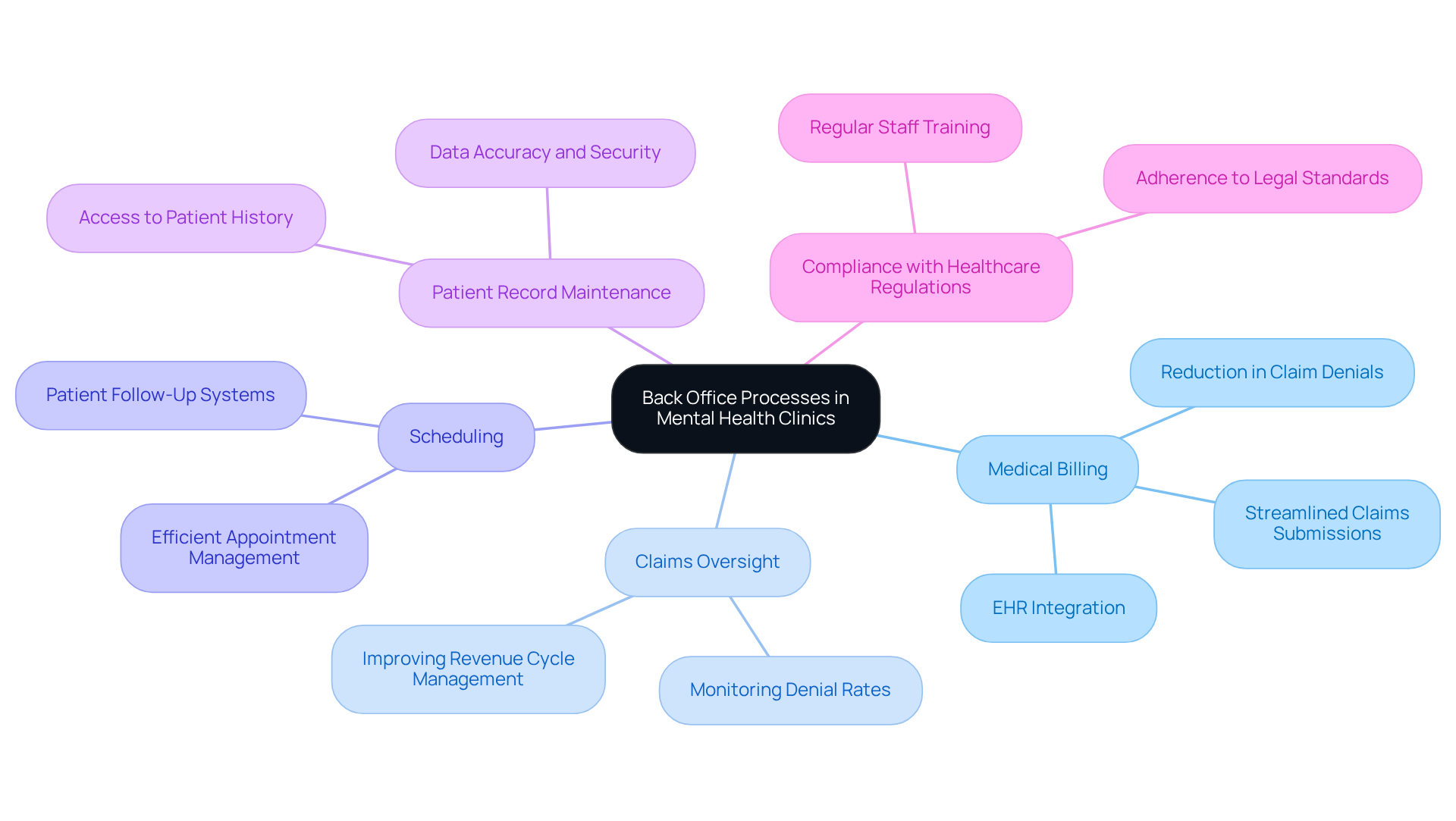
Efficient back office processes are essential for mental health facilities to guarantee high-quality care and operational effectiveness. These processes encompass various administrative functions, including:
- Medical billing
- Claims oversight
- Scheduling
- Patient record maintenance
- Compliance with healthcare regulations
Without a clear grasp of these functions, managers may struggle to pinpoint inefficiencies and implement necessary improvements.
For instance, integrating electronic health records (EHR) with billing systems can significantly streamline claims submissions, reducing errors and enhancing revenue cycle management. Clinics that implement this integration frequently report a 20-30% decrease in claim denials and faster reimbursements, often within 15-25% of the standard 30-90 day timeframe.
Regular training for staff on compliance and operational procedures is also essential. This fosters accountability and operational efficiency among team members, ensuring alignment with the organization’s goals. Moreover, utilizing scorecard-driven adjustments tied to claims accuracy, denial rates, and days in accounts receivable can yield valuable insights into operational performance, enabling clinics to make data-driven decisions that enhance overall effectiveness.
Considering recent legislative changes and funding reforms in mental wellness care, staying informed about best practices in back office processes is more crucial than ever. Clinics that effectively manage their back office processes will improve their operational efficiency and enhance the quality of care they provide.
Optimize Medical Billing and Claims Management
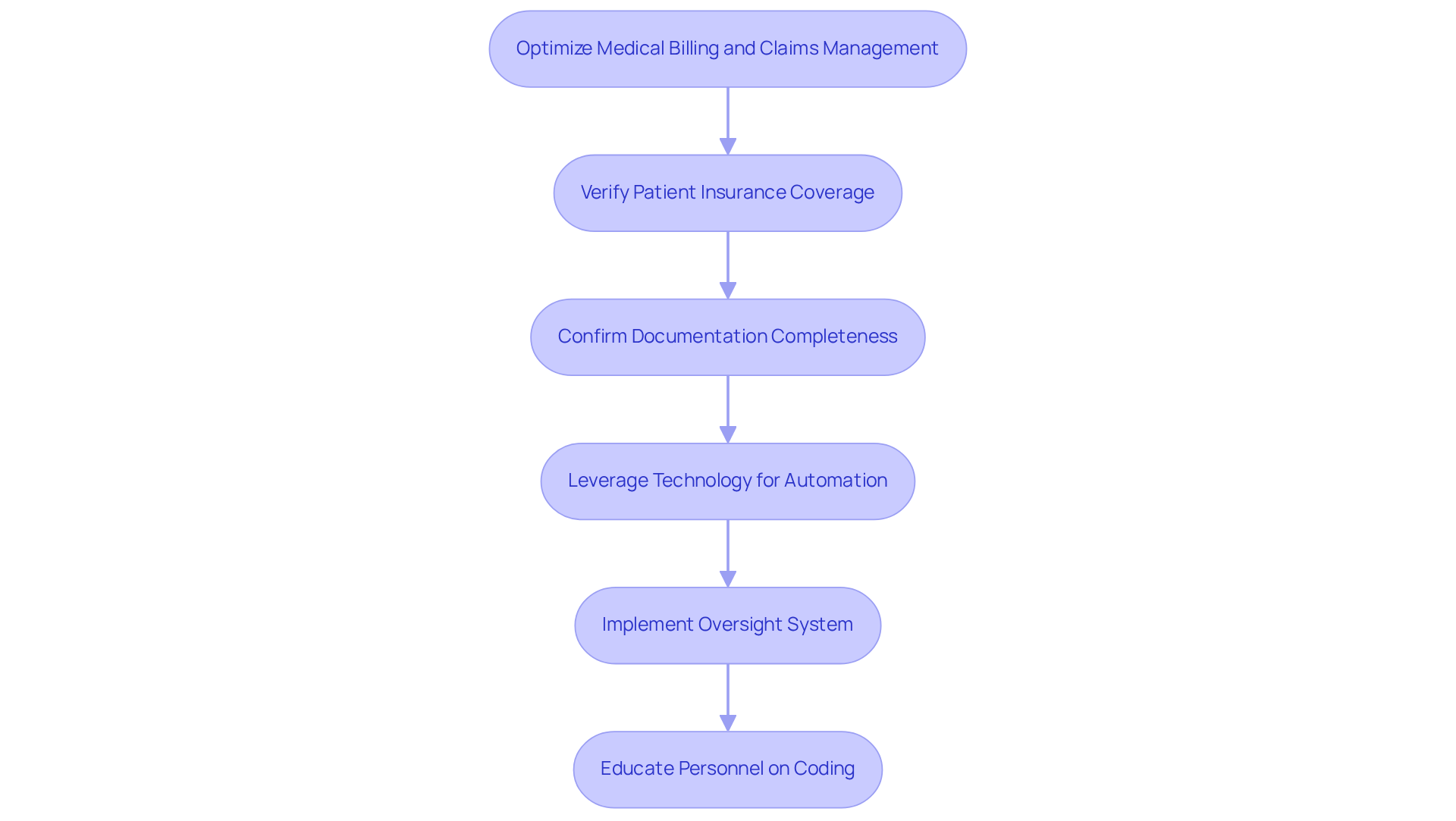
To enhance the efficiency of medical billing and claims processes, mental health clinics must adopt a proactive and structured approach. This involves:
- Verifying patient insurance coverage prior to appointments
- Confirming the completeness and accuracy of all necessary documentation
- Leveraging technology to automate billing processes
Implementing a robust practice oversight system can help track claims in real-time, allowing for quicker follow-ups on denied claims. Many clinics struggle with delayed reimbursements and high denial rates, impacting their financial health. Clinics utilizing electronic claim submissions have experienced notable reductions in processing times and higher rates of successful reimbursements.
Partnering with Healthcare Partners Consulting & Billing, LLC (HPC) allows clinics to access specialized denial resolution services that have demonstrated a reduction in denial rates by 20-40% and an increase in revenue by 15-30%. Regular audits of billing practices can identify patterns of denial and areas for improvement. Furthermore, educating personnel on coding updates and compliance requirements is crucial to reduce errors and improve the overall billing efficiency of the practice.
By concentrating on these optimal practices and utilizing effective denial strategies, clinics can significantly enhance their financial outcomes and operational efficiency, ultimately contributing to better patient care and clinic sustainability.
Implement Effective Office Management Strategies
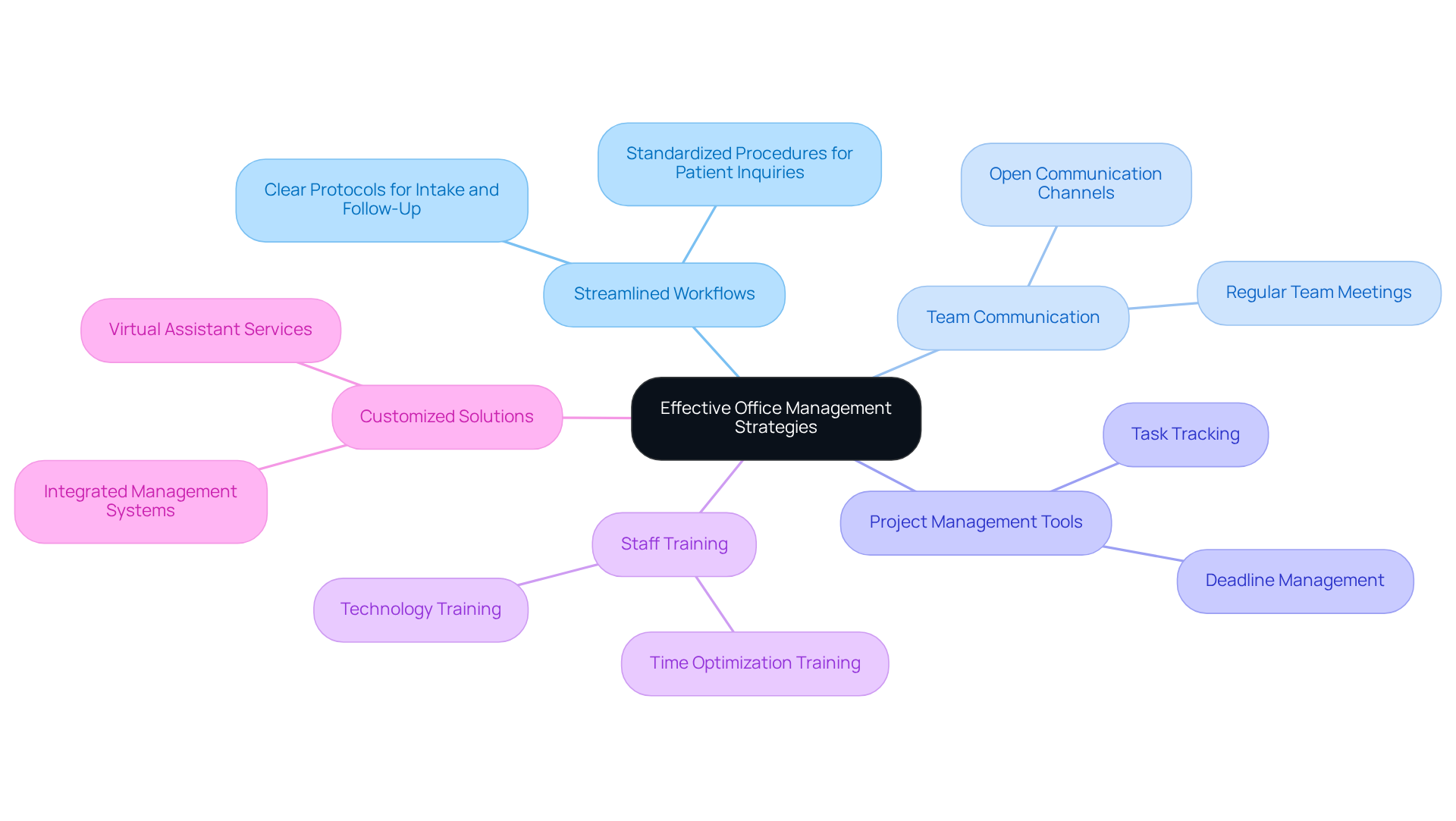
Effective office management strategies are essential for enhancing operational efficiency and client satisfaction in mental health facilities. Streamlined workflows that enhance communication and collaboration among staff significantly improve clinic performance. Regular team meetings to address care and administrative challenges encourage open communication among team members, allowing for the identification of potential issues before they escalate.
Utilizing project management tools can help track tasks and deadlines, ensuring that all team members are aware of their responsibilities. Establishing clear protocols for intake and follow-up reduces confusion and enhances satisfaction. Standardized procedures for patient inquiries and scheduling lead to fewer missed appointments and higher patient engagement.
Investing in staff training on time optimization, organizational abilities, compliance, and technology empowers employees to take ownership of their roles, leading to a more efficient practice. For instance, organizations that implement integrated management systems can reduce administrative costs by up to 21% per visit in the first year, while also achieving denial reductions of 20-30% and faster reimbursements of 15-25% within 30-90 days. These improvements not only streamline operations but also allow healthcare providers to focus more on delivering high-quality care.
As highlighted by Healthcare Partners Consulting & Billing, LLC (HPC), customized solutions such as clean claims processing, rapid follow-up, and clear reporting can greatly improve administrative efficiency, allowing healthcare providers to focus on care. HPC’s comprehensive administrative and billing solutions, including specialized virtual assistant services for scheduling and intake, further support mental wellness practices in optimizing their operations. By prioritizing these strategies, mental health facilities can significantly enhance both their operational performance and the quality of care provided to clients.
Utilize Virtual Assistant Services for Administrative Support
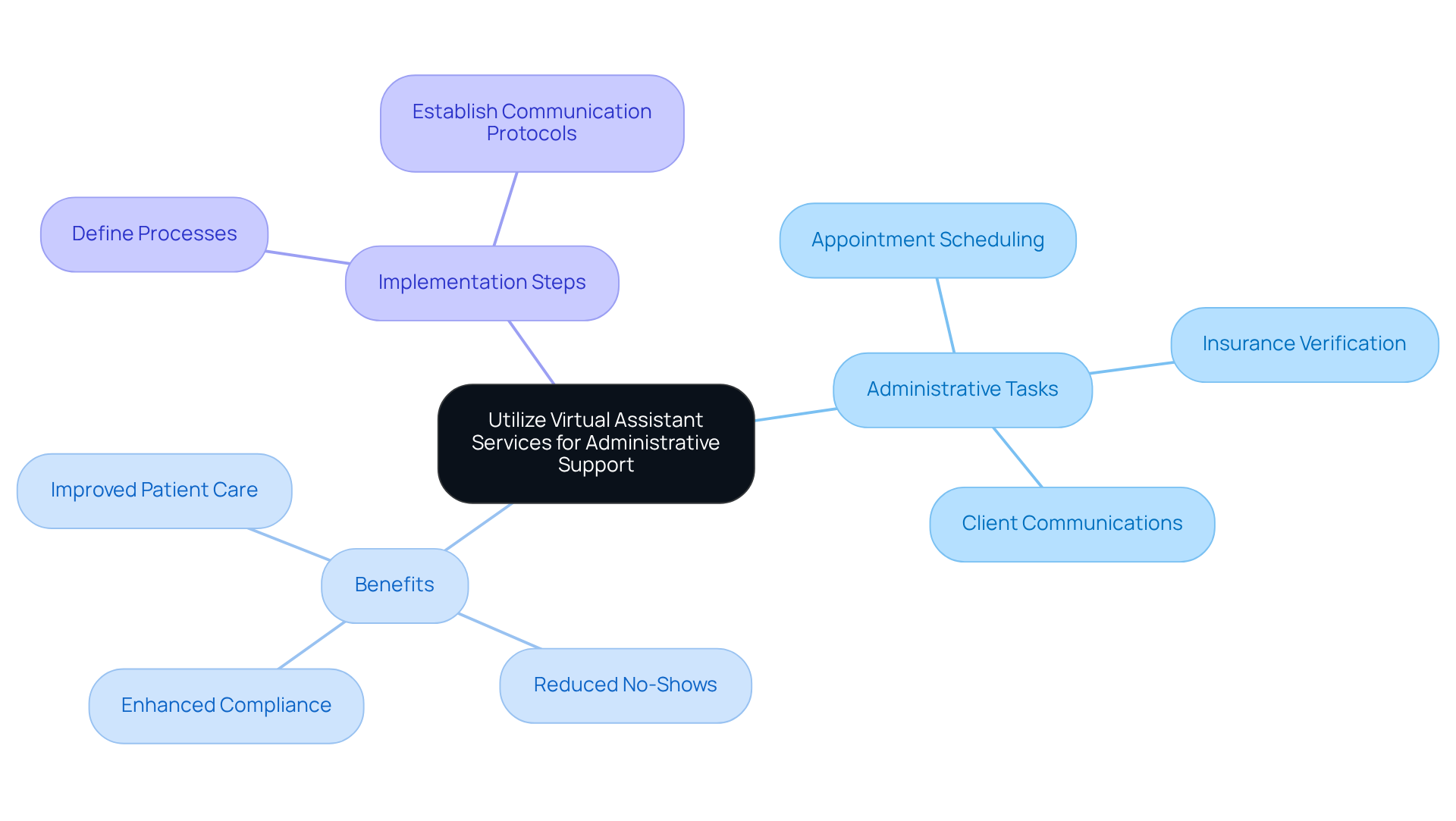
Mental health practices often struggle with back office processes that detract from the quality of patient care. Virtual assistant services from Healthcare Partners Consulting & Billing, LLC (HPC) provide essential support by managing various administrative responsibilities, such as:
Outsourcing these functions to trained healthcare virtual assistants allows clinics to improve their back office processes and lessen the administrative burden on in-house staff. This shift allows staff to focus on direct patient care, significantly enhancing the overall experience for those receiving services by improving back office processes. Clinics that have integrated HPC’s virtual assistants into their operations report a reduction in appointment no-shows and improved follow-up rates, which are crucial for maintaining continuity of care.
These virtual assistants are essential for compliance, as they accurately update and securely store medical records. This adherence to regulatory standards not only safeguards patient information but also enhances the facility’s reputation. To effectively implement virtual assistant services, healthcare facilities should:
- Clearly define the back office processes to be outsourced
- Establish robust communication protocols to ensure seamless integration with existing workflows
Regular feedback and performance assessments are crucial for optimizing the use of HPC’s virtual assistants in back office processes, ensuring they meet the specific requirements of the practice and contribute to improved operational efficiency.
HPC’s extensive revenue cycle management, customized specifically for behavioral and mental wellness practices, further enhances the financial stability of facilities. As a veteran-owned company with 39 years of experience, HPC emphasizes a compliance-first approach, ensuring that all billing practices align with payer rules and regulations. Client testimonials from practitioners like Dr. Sarah Mitchell and Dr. Michael Rodriguez highlight significant revenue increases and reductions in administrative burdens, showcasing the effectiveness of HPC’s services. Ultimately, the integration of HPC’s services allows mental health clinics to prioritize patient care while ensuring operational excellence.
Conclusion
In an era where operational efficiency directly impacts patient care, mental health clinics must prioritize their back office processes. By implementing targeted strategies in medical billing, claims management, and office operations, clinics can significantly reduce administrative burdens, allowing healthcare providers to concentrate on what truly matters: patient care. The integration of specialized services, such as those offered by Healthcare Partners Consulting & Billing, LLC (HPC), empowers practices to enhance their operational performance and financial health.
Key insights from the article highlight the importance of:
- Adopting structured approaches to medical billing and claims management
- Implementing effective office management strategies
- Utilizing virtual assistant services
These practices not only streamline operations but also foster a culture of compliance and accountability, ultimately leading to improved patient outcomes. The testimonials from satisfied clients underscore the tangible benefits of these strategies, including increased revenue and reduced administrative burdens.
In a landscape where mental health care is increasingly complex, prioritizing back office efficiency is essential. This integration not only alleviates administrative pressures but also allows clinics to focus on delivering exceptional patient care. Collaborating with expert partners like HPC can significantly enhance this mission, enabling clinics to thrive in a challenging environment while focusing on their core commitment to patient wellness. Ultimately, the commitment to operational excellence will define the future of mental health care delivery.
Frequently Asked Questions
What are the key back office processes in mental health clinics?
The key back office processes in mental health clinics include medical billing, claims oversight, scheduling, patient record maintenance, and compliance with healthcare regulations.
Why is understanding back office processes important for mental health facilities?
Understanding back office processes is important because it helps managers identify inefficiencies and implement necessary improvements, ensuring high-quality care and operational effectiveness.
How can integrating electronic health records (EHR) with billing systems benefit clinics?
Integrating EHR with billing systems can streamline claims submissions, reduce errors, and enhance revenue cycle management, leading to a reported 20-30% decrease in claim denials and faster reimbursements.
What is the typical timeframe for reimbursements after implementing EHR integration?
Clinics that implement EHR integration often experience reimbursements within 15-25% of the standard 30-90 day timeframe.
Why is regular training for staff important in mental health clinics?
Regular training for staff is essential to foster accountability and operational efficiency, ensuring that team members are aligned with the organization’s goals and compliant with operational procedures.
How can clinics utilize scorecard-driven adjustments?
Clinics can utilize scorecard-driven adjustments tied to claims accuracy, denial rates, and days in accounts receivable to gain insights into operational performance and make data-driven decisions.
Why is it crucial for clinics to stay informed about best practices in back office processes?
Staying informed about best practices is crucial due to recent legislative changes and funding reforms in mental wellness care, which can impact operational efficiency and the quality of care provided.