

Introduction
Navigating the financial intricacies of healthcare clinics presents significant challenges that can impact operational success. Accounts Payable (AP) and Accounts Receivable (AR) play pivotal roles in maintaining a clinic’s financial health. This complexity often leads to financial mismanagement.
How can clinics effectively balance these two critical components to ensure not only their financial stability but also the quality of patient care?
This article will clarify the distinctions between AP and AR, analyze their impact on cash flow, and outline best practices for management, enabling healthcare providers to enhance operational efficiency and prioritize patient care.
Define Accounts Payable and Accounts Receivable
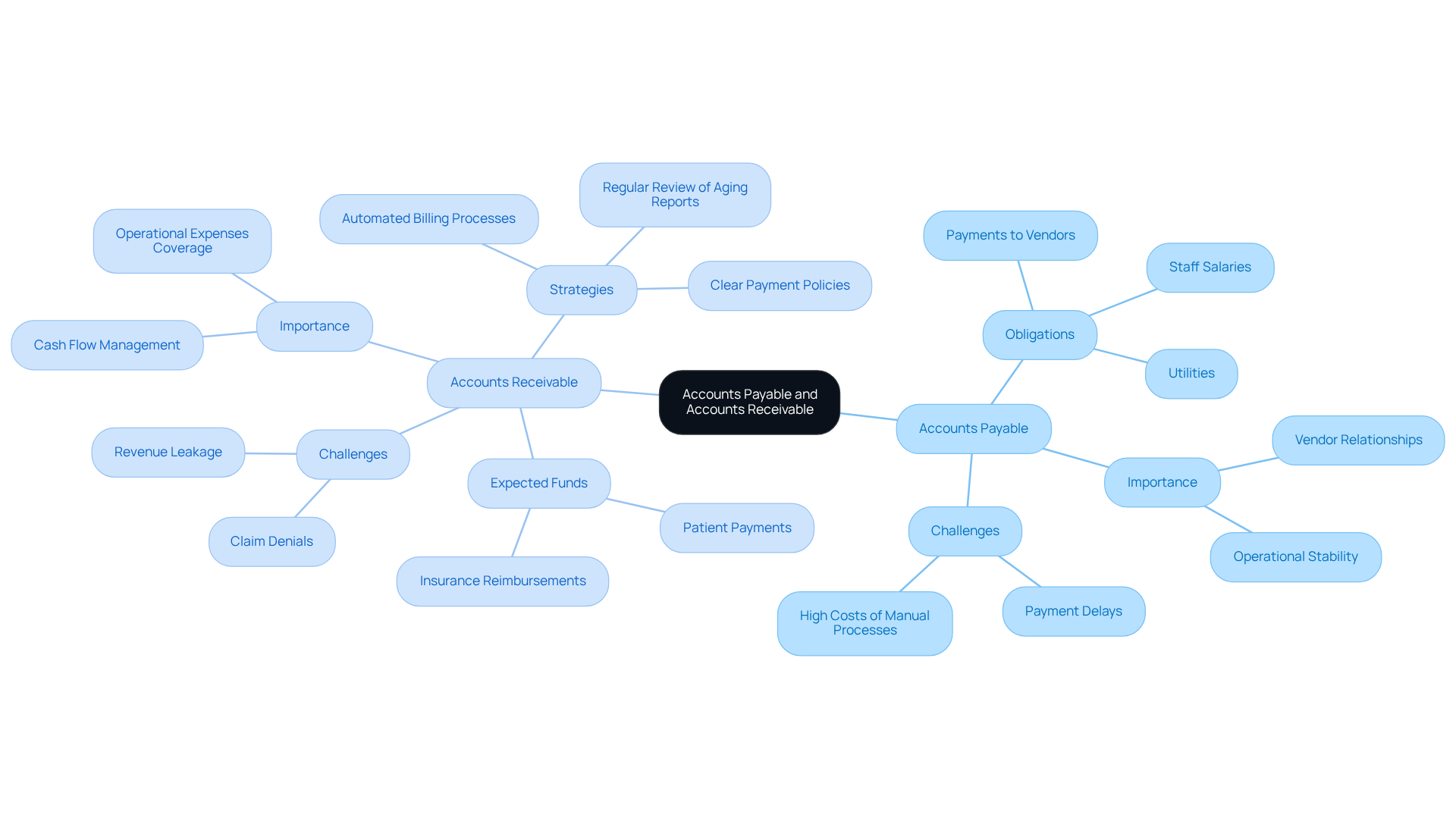
Understanding the financial dynamics of healthcare operations is essential for maintaining organizational stability. Accounts Payable (AP) in healthcare refers to the short-term obligations that a healthcare entity owes to its suppliers, vendors, and service providers. This includes payments for essential items such as medical supplies, utilities, and staff salaries. Timely oversight of AP is vital; it ensures strong vendor relationships and operational stability, thus preventing service interruptions.
In contrast, Accounts Receivable (AR) signifies the funds that a healthcare organization anticipates collecting from patients and insurance companies for services provided. Effective accounts receivable oversight is essential for ensuring that funds return to the organization swiftly, enabling the coverage of operational expenses and investment in new services. Challenges in AR management can lead to significant financial strain on healthcare organizations. Ineffective AR management can result in cash flow delays, claim denials, and revenue leakage, which can greatly affect the financial health of a healthcare entity.
At HPC, we believe personalized consultations are key to helping practices find the best administrative solutions for their unique needs. By mapping current workflows during a 30-minute call, HPC can guide clinics toward services that effectively address underpayments, unprocessed claims, and aging claims in healthcare billing. Recent case studies highlight the benefits of effective AP and AR management. For instance, practices that implemented automated billing processes saw a reduction in AR days by 20-30% and faster reimbursements of 15-25% within 30-90 days. Enhancing cash flow and improving revenue cycle performance enables healthcare facilities to focus more on patient care.
Understanding the differences between account payable vs accounts receivable, along with the challenges and strategies for effective management, is crucial for healthcare organizations aiming to optimize their financial operations and ensure sustainability in a competitive healthcare landscape. By prioritizing effective AP and AR management, healthcare organizations can secure their financial future and enhance patient care.
Differentiate Between Accounts Payable and Accounts Receivable
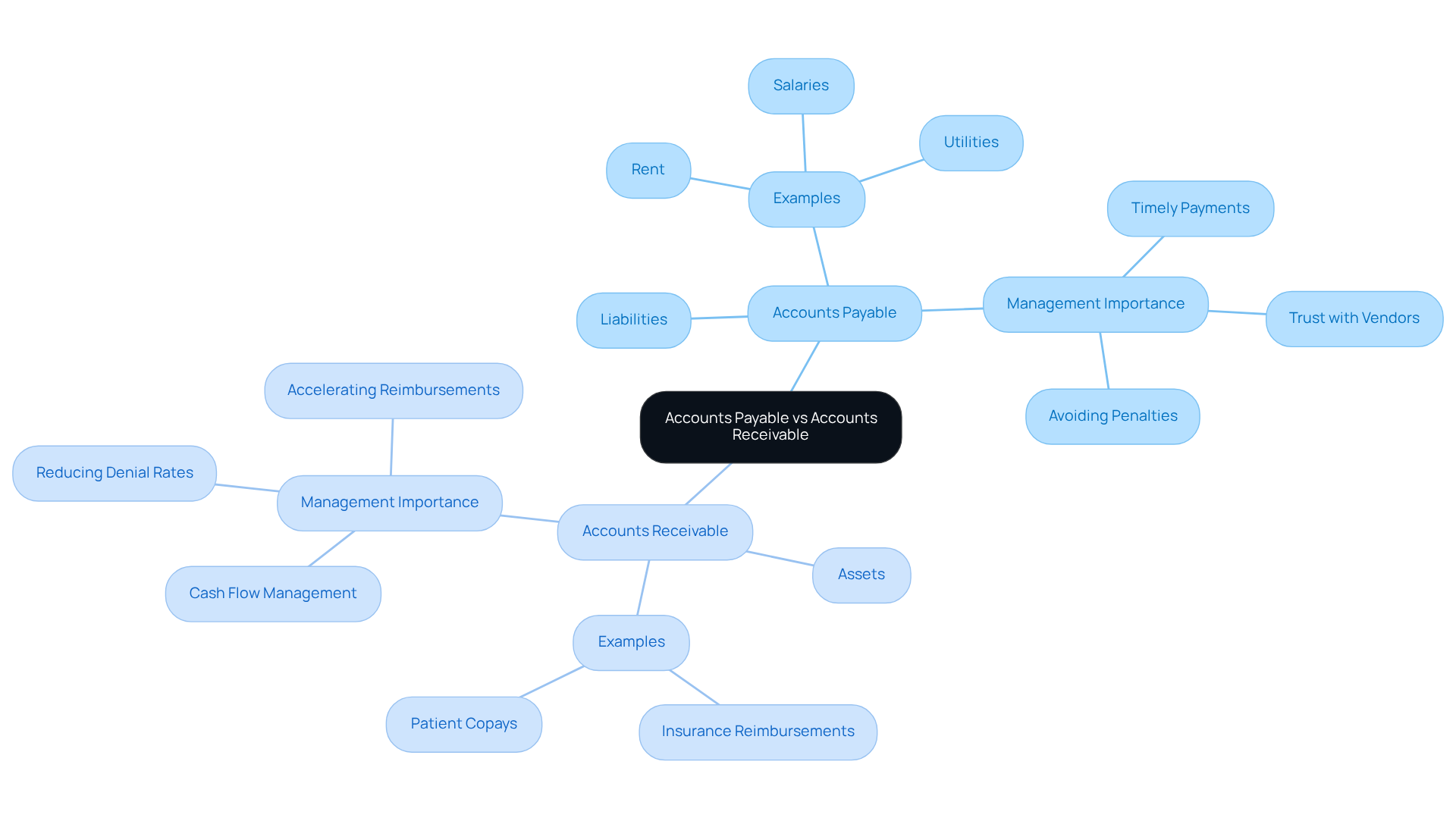
Understanding the dynamics of account payable vs accounts receivable is crucial for healthcare facilities aiming to maintain financial health. AP relates to a healthcare facility’s liabilities, representing the amounts owed to vendors for supplies and services received but not yet settled. This includes expenses such as office rent, utility bills, and salaries. In contrast, AR reflects the organization’s assets, specifically the money owed for services rendered, including insurance reimbursements and patient copays. While account payable vs accounts receivable indicates financial obligations and potential inflow of funds, the distinction is vital for effective flow management. A balanced approach to account payable vs accounts receivable allows clinics to synchronize outgoing payments with incoming revenues. This alignment is essential for maintaining financial stability and operational efficiency.
Regularly reviewing aging reports is essential; without these reviews, overdue AR accounts may go unnoticed, hindering cash flow. Efficient management of AP ensures that payments are made on time, fostering trust with vendors and avoiding penalties. For example, organizations that implement structured billing workflows can reduce AR days and denial rates by ensuring cleaner claims and faster follow-up. Such operational rigor can result in a 20-30% decrease in denial rates and a 15-25% acceleration in reimbursements within 30-90 days, thereby improving the practice’s financial health and its ability to invest in patient care.
To further evaluate your practice’s financial health, consider taking our quick quiz to discover your mental health practice profitability score. This assessment will help you spot hidden revenue leaks and provide personalized recommendations for improving efficiency and billing accuracy.
Case studies illustrate the impact of effective AP and AR management. For instance, an establishment that implemented a follow-up strategy for delayed insurance payments experienced a 15-25% rise in reimbursement rates within 30-90 days. By effectively balancing accounts payable vs accounts receivable, healthcare facilities can sustain the financial flow essential for growth, ensuring they can continue to deliver high-quality care to their patients. Ultimately, effective management of AP and AR is not just about numbers; it’s about ensuring the sustainability of patient care.
Implement Best Practices for Managing AP and AR in Mental Health Clinics
To enhance the management of Accounts Payable (AP) and Accounts Receivable (AR), mental health clinics must implement strategic best practices:
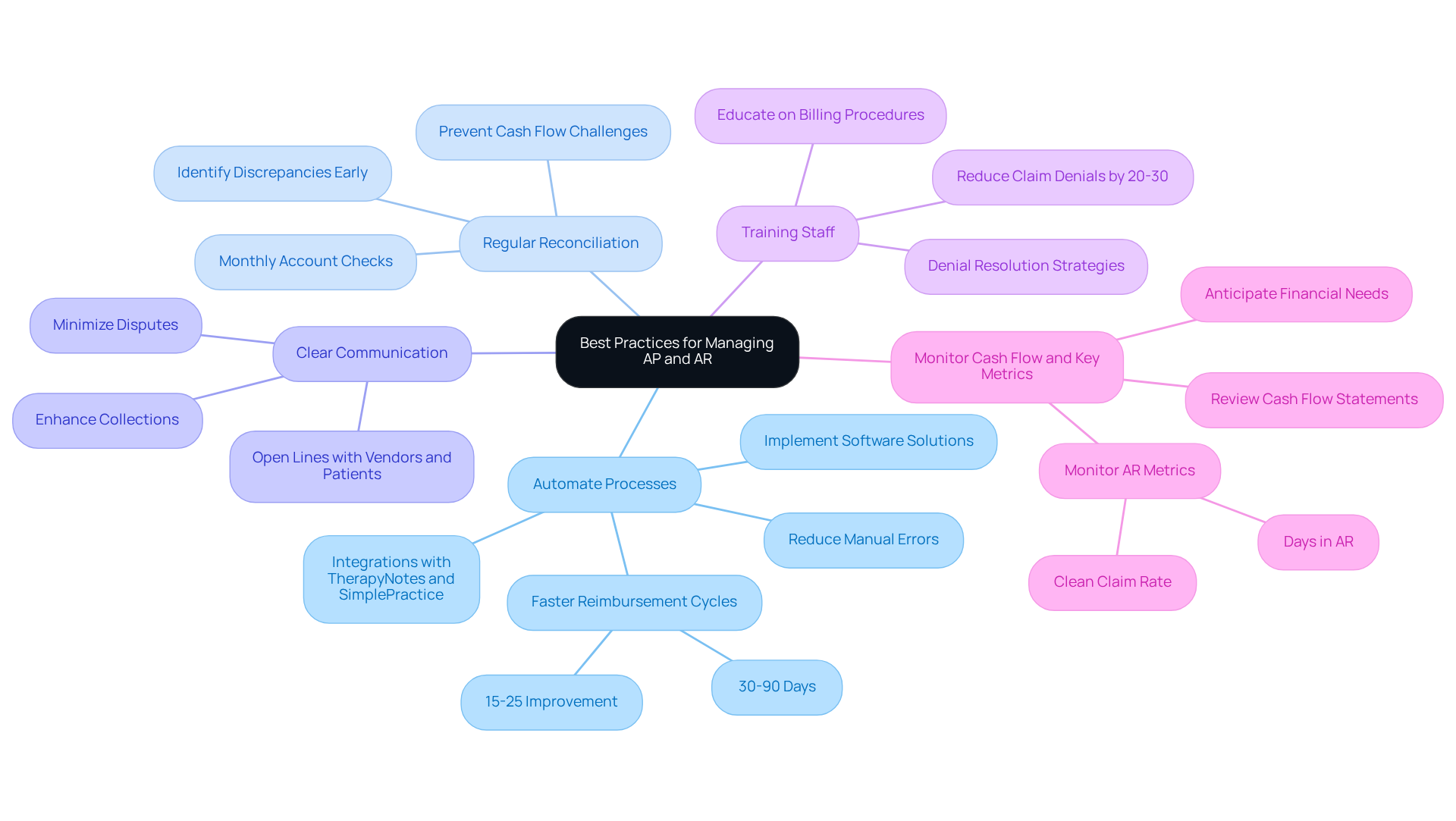
- Automate Processes: Implement software solutions to automate invoicing and payment reminders. This reduces manual errors and boosts efficiency, leading to faster reimbursement cycles of 15-25% within 30-90 days, crucial for maintaining financial flow. Leveraging integrations with platforms like TherapyNotes and SimplePractice can further streamline these processes and address underpayments and unprocessed claims.
- Regular reconciliation of account payable vs accounts receivable should be conducted monthly to ensure accuracy and identify discrepancies early. Without regular reconciliation, clinics risk facing cash flow challenges and financial discrepancies. This practice helps maintain a healthy cash flow and prevents potential financial issues, particularly in managing underpayments and aging claims.
- Clear Communication: Maintain open lines of communication with vendors and patients regarding payment terms and expectations. Clear communication can enhance collections and minimize disputes, nurturing better relationships and improving the handling of unprocessed claims.
- Training Staff: Regularly educate staff on billing procedures and compliance requirements, including denial resolution strategies. This minimizes errors and enhances service delivery, contributing to a reduction in claim denials by 20-30%. Understanding the nuances of payer behavior is essential for effective denial management and revenue recovery.
- Monitor Cash Flow and Key Metrics: Regularly review cash flow statements and monitor key AR metrics such as Days in AR and Clean Claim Rate. This helps anticipate financial needs and adjust strategies accordingly, ensuring timely follow-up and recovery of unpaid claims. Aiming for less than 30 days in AR is a recommended approach that supports financial health.
By implementing these methods, clinics can streamline operations and focus more on delivering quality patient care, ultimately improving the overall effectiveness and financial well-being of mental health facilities. Ultimately, these strategies can transform financial management, allowing clinics to prioritize patient care while ensuring fiscal responsibility.
Analyze the Impact of AP and AR on Cash Flow
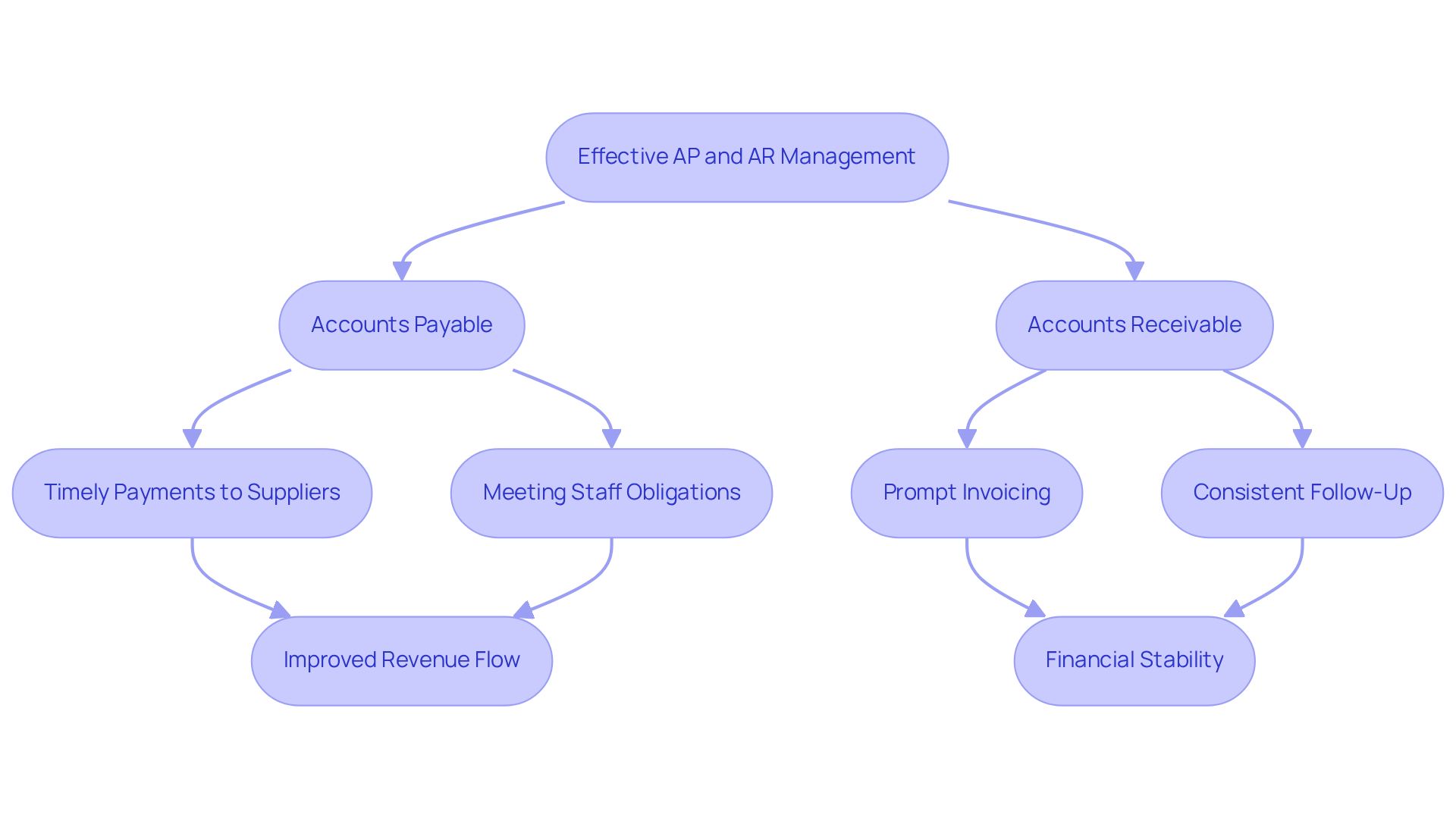
The management of account payable vs accounts receivable is critical for ensuring a healthcare facility’s financial stability. Effective oversight of accounts payable allows healthcare facilities to meet their obligations to suppliers and staff, essential for smooth operations. Conversely, effective AR management guarantees timely payments to clinics, crucial for financial flow. Delays in AR can lead to financial shortages, complicating timely bill payments. Therefore, a balanced approach to managing both account payable vs accounts receivable is vital for financial health.
Clinics that focus on prompt invoicing and consistent follow-up can greatly improve their revenue flow. For instance, implementing best practices in AP and AR management can lead to:
- A reduction in denial rates by 20-30%
- Faster reimbursement cycles of 15-25% within 30-90 days
This proactive strategy not only enhances financial flow but also enables healthcare facilities to invest more in patient care and operational enhancements.
Case studies emphasize the significance of tracking metrics such as ‘income in 60 days’ and ‘days in accounts receivable,’ which act as early warning systems for potential cash flow challenges. By addressing payment discrepancies promptly and ensuring accurate claim submissions, clinics can foster better relationships with payers and enhance their overall revenue cycle performance. Neglecting AP and AR management can jeopardize a healthcare facility’s financial future and operational integrity.
Conclusion
Understanding the distinctions between Accounts Payable (AP) and Accounts Receivable (AR) is crucial for healthcare clinics aiming for financial stability and operational efficiency. Effective management of these components ensures timely vendor payments and secures funds owed for services rendered. This balance supports the organization’s financial health and enables healthcare providers to concentrate on delivering quality patient care.
The article highlights the importance of implementing best practices in AP and AR management, such as:
- Automating processes
- Maintaining clear communication
- Regularly monitoring cash flow metrics
Implementing these strategies can significantly improve financial performance by reducing denial rates and accelerating reimbursement cycles. Without these practices, clinics risk financial instability and compromised patient care. By prioritizing these practices, healthcare facilities can mitigate cash flow challenges and enhance their overall revenue cycle management, particularly in the context of behavioral and mental health services.
Ultimately, the effective management of Accounts Payable and Accounts Receivable is not merely a financial necessity; it is a vital aspect of sustaining high-quality patient care. Clinics that proactively manage AP and AR secure their financial future, enabling investments in new services and enhancements in patient outcomes. For those seeking to optimize their financial operations, engaging with experts like Healthcare Partners Consulting & Billing, LLC (HPC) can provide tailored solutions that empower practices to thrive in a competitive landscape.
Frequently Asked Questions
What is Accounts Payable (AP) in healthcare?
Accounts Payable (AP) in healthcare refers to the short-term obligations that a healthcare entity owes to its suppliers, vendors, and service providers, including payments for medical supplies, utilities, and staff salaries.
Why is timely oversight of Accounts Payable important?
Timely oversight of Accounts Payable is vital for maintaining strong vendor relationships and operational stability, which helps prevent service interruptions in healthcare operations.
What does Accounts Receivable (AR) signify in healthcare?
Accounts Receivable (AR) signifies the funds that a healthcare organization anticipates collecting from patients and insurance companies for services provided.
Why is effective management of Accounts Receivable crucial?
Effective management of Accounts Receivable is essential to ensure that funds return to the organization swiftly, covering operational expenses and allowing for investment in new services. Poor AR management can lead to cash flow delays, claim denials, and revenue leakage.
What are some challenges associated with Accounts Receivable management?
Challenges in Accounts Receivable management can include cash flow delays, claim denials, and revenue leakage, all of which can significantly affect the financial health of a healthcare organization.
How can personalized consultations help healthcare practices?
Personalized consultations can help healthcare practices by mapping current workflows and guiding them toward services that effectively address issues like underpayments, unprocessed claims, and aging claims in healthcare billing.
What benefits have been observed from effective AP and AR management?
Effective AP and AR management has led to practices implementing automated billing processes, resulting in a reduction of AR days by 20-30% and faster reimbursements of 15-25% within 30-90 days.
How does effective AP and AR management impact patient care?
By enhancing cash flow and improving revenue cycle performance, effective AP and AR management allows healthcare facilities to focus more on patient care, ultimately benefiting both the organization and its patients.
Why is understanding the differences between AP and AR important for healthcare organizations?
Understanding the differences between Accounts Payable and Accounts Receivable, along with the challenges and strategies for effective management, is crucial for healthcare organizations to optimize their financial operations and ensure sustainability in a competitive landscape.