

Introduction
Mental health clinics encounter significant challenges in their billing processes, impacting their ability to deliver quality patient care. As demand for effective virtual medical billing solutions increases, it is crucial to understand the specific needs of these facilities. This article outlines five best practices that enable healthcare providers to streamline administrative tasks and prioritize patient care. Clinics can leverage technology and strategic communication to enhance billing efficiency while effectively navigating compliance and payer requirements.
Assess Unique Billing Needs of Mental Health Clinics
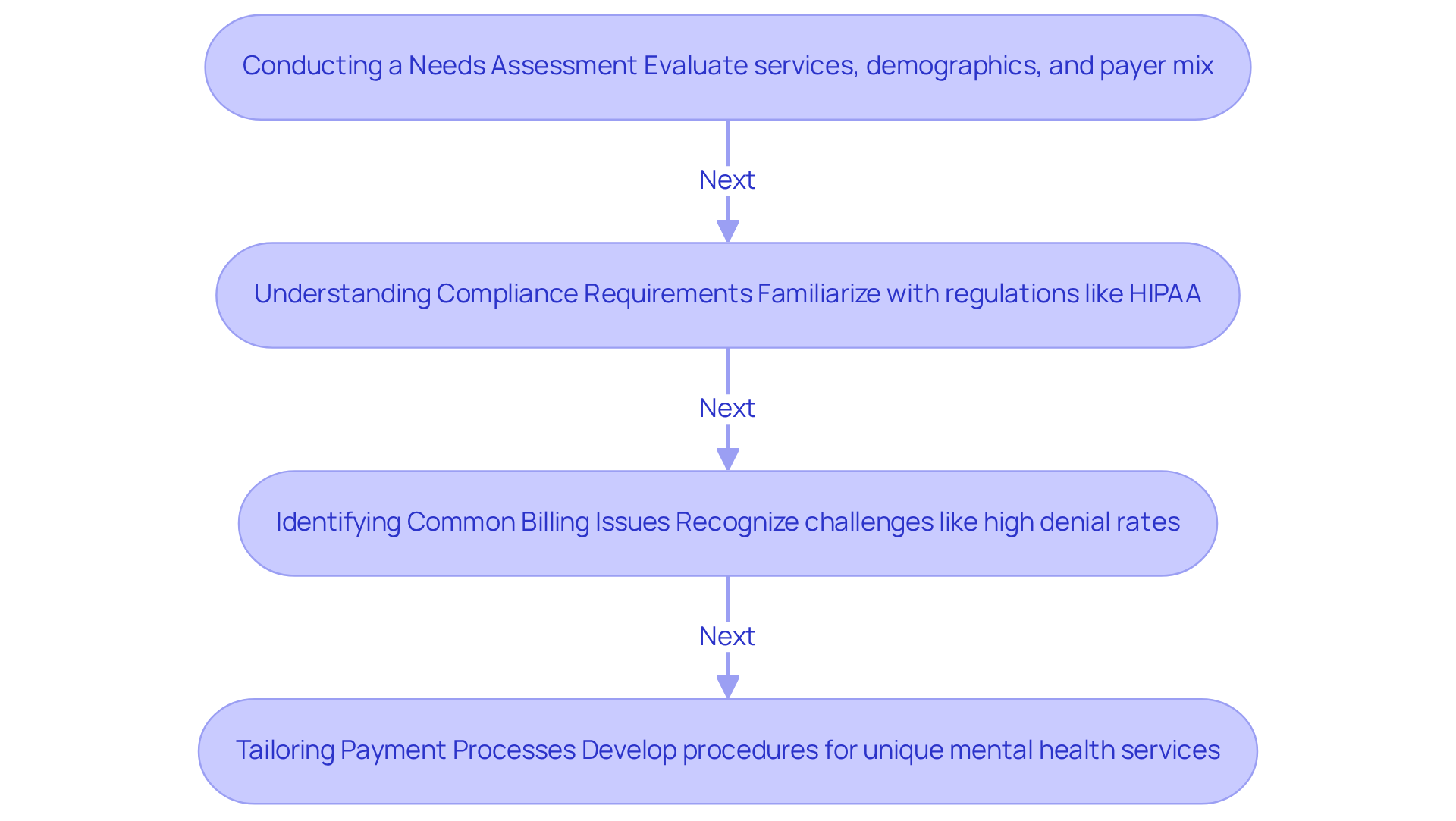
Mental health facilities face distinct challenges in payment processes that require careful consideration and strategic planning. These challenges include various treatment methods, session-based charges, and specific coding standards. Clinics can effectively assess these needs by:
- Conducting a Needs Assessment: Evaluating the types of services offered, patient demographics, and payer mix helps identify specific payment requirements. This foundational step aids in customizing payment strategies to the clinic’s unique context.
- Understanding Compliance Requirements: Familiarizing oneself with regulations specific to mental health reimbursement, including HIPAA and state-specific laws, is essential to ensure compliance and avoid penalties. Staying updated on evolving regulations is crucial, especially with the upcoming changes in 2026.
- Identifying Common Billing Issues: Recognizing frequent challenges, such as high denial rates for submissions, which can range from 12% to 20%, is vital. The necessity for detailed documentation to support medical necessity cannot be overstated. Addressing these issues proactively can significantly reduce administrative burdens.
- Tailoring Payment Processes: Developing payment procedures that accommodate the unique aspects of mental health services, such as varying lengths of sessions and different codes for different types of therapy, is critical. Implementing scorecard-driven adjustments tied to claims accuracy and denial rates can enhance operational rigor and improve financial outcomes.
By optimizing payment processes, mental health facilities can minimize errors and improve overall operational efficiency, potentially achieving a 20-30% decrease in denial rates and quicker reimbursements of 15-25% within 30-90 days. Ultimately, a strategic approach to payment processes can transform the financial landscape for mental health facilities, leading to sustainable growth and improved patient care.
Choose Appropriate Technology for Virtual Billing
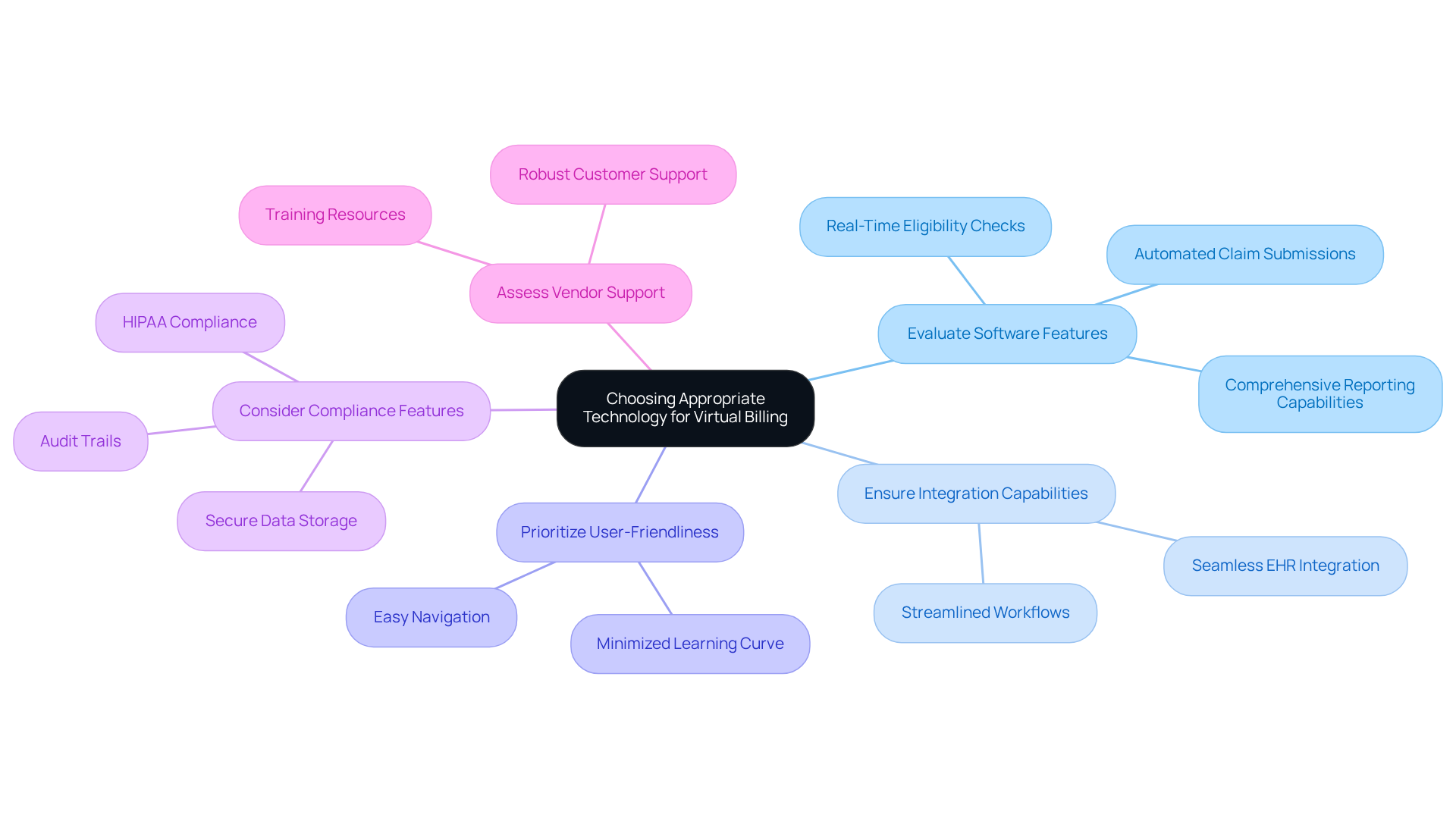
Without the right technology, mental health clinics risk financial inefficiencies and inaccuracies in their invoicing processes. Here are key considerations:
- Evaluate Software Features: Look for software that includes automated claim submissions, real-time eligibility checks, and comprehensive reporting capabilities. These features can significantly improve invoicing accuracy and operational efficiency.
- Ensure Integration Capabilities: Choose technology that integrates seamlessly with existing Electronic Health Records (EHR) systems. This integration streamlines workflows and reduces data entry mistakes, which is essential for maintaining precise records and billing information.
- Prioritize User-Friendliness: Choose software that’s user-friendly and easy to navigate. A user-friendly interface minimizes the learning curve for staff, enabling them to concentrate more on care for individuals rather than administrative tasks.
- Consider Compliance Features: Ensure the technology adheres to HIPAA regulations and includes features that support compliance, such as secure data storage and audit trails. Compliance is vital to protect patient information and avoid costly penalties, which can range from $100 to $1.5 million per violation.
- Assess Vendor Support: Select a vendor that provides robust customer support and training resources. Effective vendor support is crucial for successful implementation and ongoing use, assisting healthcare facilities in adapting to new systems and maximizing their benefits.
This strategic investment not only safeguards patient information but also enhances the financial stability of the practice. Implementing effective payment solutions can lead to a 20-30% decrease in denial rates and quicker reimbursements of 15-25% within 30-90 days, ultimately supporting the financial well-being of the practice.
Train Staff on New Billing Systems
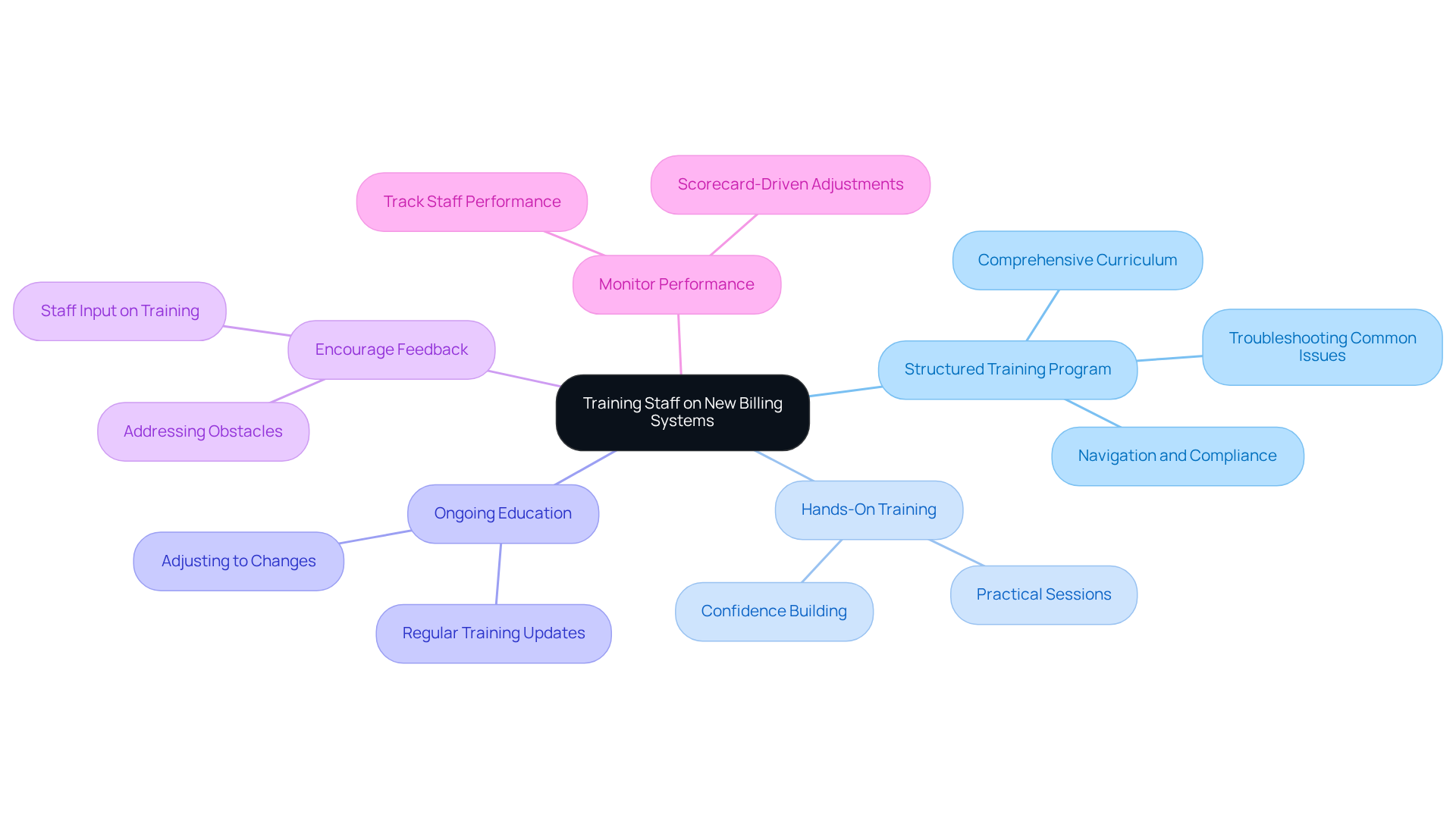
Maximizing the advantages of technology in mental health clinics hinges on effective training in new financial systems, particularly in enhancing statements for clients and managing submissions efficiently, including addressing underpayments, unprocessed submissions, and aging submissions. The following strategies are recommended:
- Develop a Structured Training Program: Establish a comprehensive curriculum that encompasses all aspects of the financial system, including navigation, compliance requirements, and troubleshooting common issues related to patient statements and reimbursement management. This foundational knowledge is essential for staff to operate efficiently.
- Utilize Hands-On Training: Incorporate practical, hands-on sessions where staff can practice using the system in a controlled environment. This method boosts their confidence and skills, resulting in improved performance in real-world situations, particularly when addressing underpayments and aging issues.
- Provide Ongoing Education: Implement regular training updates to keep staff informed about system upgrades, changes in payment regulations, and best practices. Ongoing education is essential for adjusting to the changing environment of healthcare billing, especially in mental health, and for efficiently handling unprocessed requests.
- Encourage Feedback: Foster an environment where staff can provide feedback on the training process and suggest improvements. This guarantees that the program develops to fulfill their requirements and addresses any obstacles they face in management of claims.
- Monitor Performance: Track staff performance post-training to identify areas for improvement and provide additional support where necessary. Employing scorecard-driven adjustments linked to accuracy, denial rates, and days in accounts receivable can showcase operational rigor and improve overall efficiency.
Without proper training, clinics risk increased claim denials and operational inefficiencies. Ultimately, a well-trained staff can significantly enhance the clinic’s operational efficiency and patient care quality. Integrating with EHR and practice management platforms like TherapyNotes and SimplePractice can further streamline these processes.
Establish Communication Channels for Billing Clarity
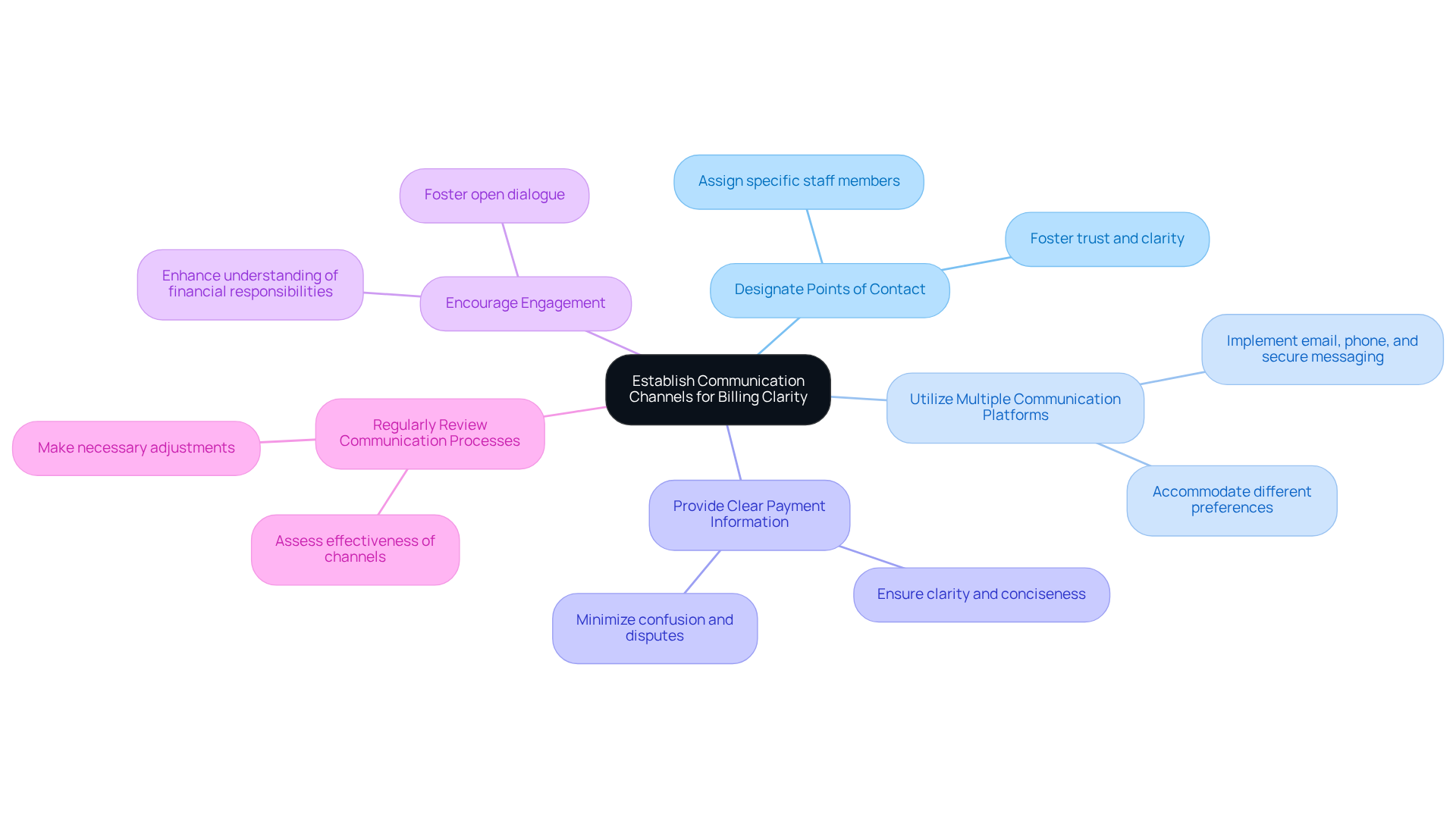
Effective communication is crucial for optimizing payment processes in mental health clinics, as it directly impacts patient satisfaction and operational efficiency. Here are strategies to establish robust communication channels:
- Designate Points of Contact: Assign specific staff members as points of contact for billing inquiries. This ensures that individuals and providers know whom to approach for questions or concerns, fostering a sense of trust and clarity.
- Utilize Multiple Communication Platforms: Implement various communication methods, such as email, phone, and secure messaging systems. This accommodates different preferences and ensures accessibility, allowing individuals to engage in the manner that suits them best.
- Provide Clear Payment Information: Ensure that all statements and communications are clear, concise, and devoid of jargon. This facilitates understanding of financial responsibilities for individuals, minimizing confusion and possible disputes. Confusion over payment processes can lead to disputes, creating unnecessary stress for individuals.
- Encourage Engagement: Foster open dialogue with individuals regarding their financial inquiries and concerns. This engagement helps individuals understand their financial responsibilities better and enhances their experience with the facility.
- Regularly Review Communication Processes: Periodically assess the effectiveness of communication channels and make necessary adjustments. This continuous assessment can enhance clarity and responsiveness, ultimately resulting in improved satisfaction and fewer invoicing errors. This leads to a more efficient administrative process and a better experience for all parties involved.
Establishing effective communication channels enhances patient satisfaction and reduces invoicing errors. This streamlining of administrative processes leads to improved operational efficiency. Ultimately, these strategies not only enhance patient experiences but also significantly improve the financial health of the clinic.
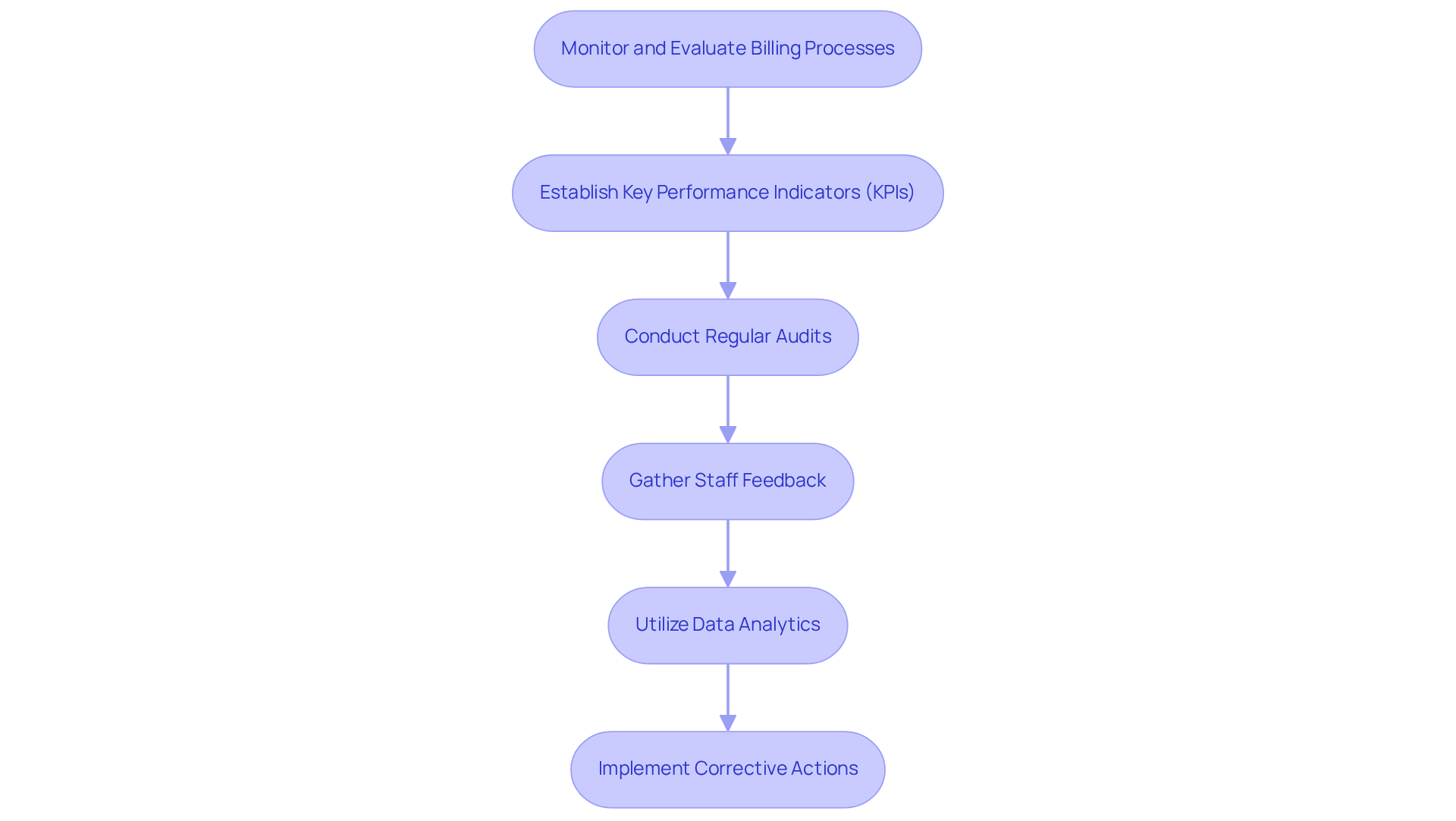
Monitor and Evaluate Billing Processes Regularly
In mental health facilities, maintaining operational efficiency and compliance hinges on regular oversight and assessment of financial processes. Implementing the following key practices can significantly enhance operational performance:
- Establish Key Performance Indicators (KPIs): Define KPIs such as denial rates, days in accounts receivable, and clean submission rates to effectively measure the success of revenue processes. This assists clinics in monitoring their performance and recognizing areas for enhancement, particularly in handling underpayments and aging invoices.
- Conduct Regular Audits: Regular audits can reveal hidden inefficiencies that may hinder financial performance. Schedule periodic reviews of financial practices to uncover discrepancies, compliance issues, and opportunities for improvement, ensuring adherence to evolving regulations and addressing unprocessed claims.
- Gather Staff Feedback: Encourage staff to share insights on financial processes and identify challenges they face. This fosters a culture of continuous improvement and engagement, leading to innovative solutions, especially in the generation and follow-up of patient statements.
- Utilize Data Analytics: Leverage data analytics tools to monitor financial performance over time, identifying trends and areas needing attention. Effective use of analytics can lead to a 20-30% reduction in claim denials and improve overall revenue cycle performance, ensuring that underpayments are promptly addressed.
- Implement Corrective Actions: Based on monitoring results, develop and execute corrective measures to address identified issues. This proactive approach is essential for adapting to the new telehealth framework and maximizing revenue potential.
By consistently monitoring and evaluating payment processes, mental health clinics can enhance operational efficiency and reduce errors. This ultimately improves patient care and can lead to faster reimbursement timelines of 15-25% within 30-90 days. Ultimately, aligning billing workflows with telehealth practices not only captures revenue opportunities but also fortifies the financial health of mental health clinics.
Conclusion
Implementing effective virtual medical billing solutions is crucial for clinics, especially those specializing in mental health. Tailored strategies that address the unique billing challenges in mental health can significantly enhance operational efficiency and patient care. Empowering healthcare providers by alleviating administrative burdens allows them to focus on patient care.
Key practices discussed include:
- Assessing the specific billing needs of mental health clinics
- Selecting appropriate technology
- Training staff effectively
- Establishing clear communication channels
- Regularly monitoring billing processes
Each of these elements plays a vital role in optimizing revenue cycle management, ensuring compliance, and ultimately improving financial outcomes for practices. By adopting a comprehensive approach to billing, clinics can reduce denial rates, expedite reimbursements, and enhance overall operational performance.
In conclusion, the significance of adopting best practices for virtual medical billing cannot be overstated. Navigating billing complexities requires mental health clinics to leverage technology and foster continuous improvement. Without expert guidance, clinics risk stagnation in their billing processes, making it essential to engage with specialists like Healthcare Partners Consulting & Billing, LLC (HPC) for sustainable growth and operational excellence.
Frequently Asked Questions
What unique billing needs do mental health clinics face?
Mental health clinics encounter distinct challenges in payment processes, including various treatment methods, session-based charges, and specific coding standards that require careful assessment and strategic planning.
How can mental health clinics assess their billing needs?
Clinics can assess their billing needs by conducting a needs assessment to evaluate services offered, patient demographics, and payer mix, understanding compliance requirements, identifying common billing issues, and tailoring payment processes to their unique context.
Why is understanding compliance requirements important for mental health clinics?
Familiarizing oneself with regulations specific to mental health reimbursement, such as HIPAA and state-specific laws, is essential to ensure compliance and avoid penalties, especially with upcoming changes in 2026.
What are some common billing issues faced by mental health clinics?
Common billing issues include high denial rates for submissions, which can range from 12% to 20%, and the need for detailed documentation to support medical necessity.
How can mental health clinics tailor their payment processes?
Clinics can develop payment procedures that accommodate the unique aspects of mental health services, such as varying session lengths and different therapy codes, and implement scorecard-driven adjustments tied to claims accuracy and denial rates.
What benefits can optimizing payment processes bring to mental health facilities?
Optimizing payment processes can minimize errors, improve operational efficiency, potentially achieve a 20-30% decrease in denial rates, and lead to quicker reimbursements of 15-25% within 30-90 days.
What technology considerations should mental health clinics keep in mind for virtual billing?
Clinics should evaluate software features, ensure integration capabilities with existing EHR systems, prioritize user-friendliness, consider compliance features, and assess vendor support.
Why is it important for billing software to have compliance features?
Compliance features are vital to protect patient information and avoid costly penalties, which can range from $100 to $1.5 million per violation.
How can effective payment solutions impact the financial stability of a mental health practice?
Implementing effective payment solutions can lead to a 20-30% decrease in denial rates and quicker reimbursements of 15-25% within 30-90 days, ultimately supporting the financial well-being of the practice.