Introduction
In an era where compliance and patient safety are critical, healthcare clinics are increasingly turning to provider credentialing software to enhance operational efficiency. This technology automates verification processes and centralizes provider data, alleviating administrative burdens and allowing healthcare providers to concentrate on patient care. Clinics often struggle with the overwhelming number of software options available, leading to confusion and potential missteps in the selection process. Choosing the right software can streamline operations, ensuring compliance and enhancing the quality of patient care.
Understand Provider Credentialing Software and Its Importance
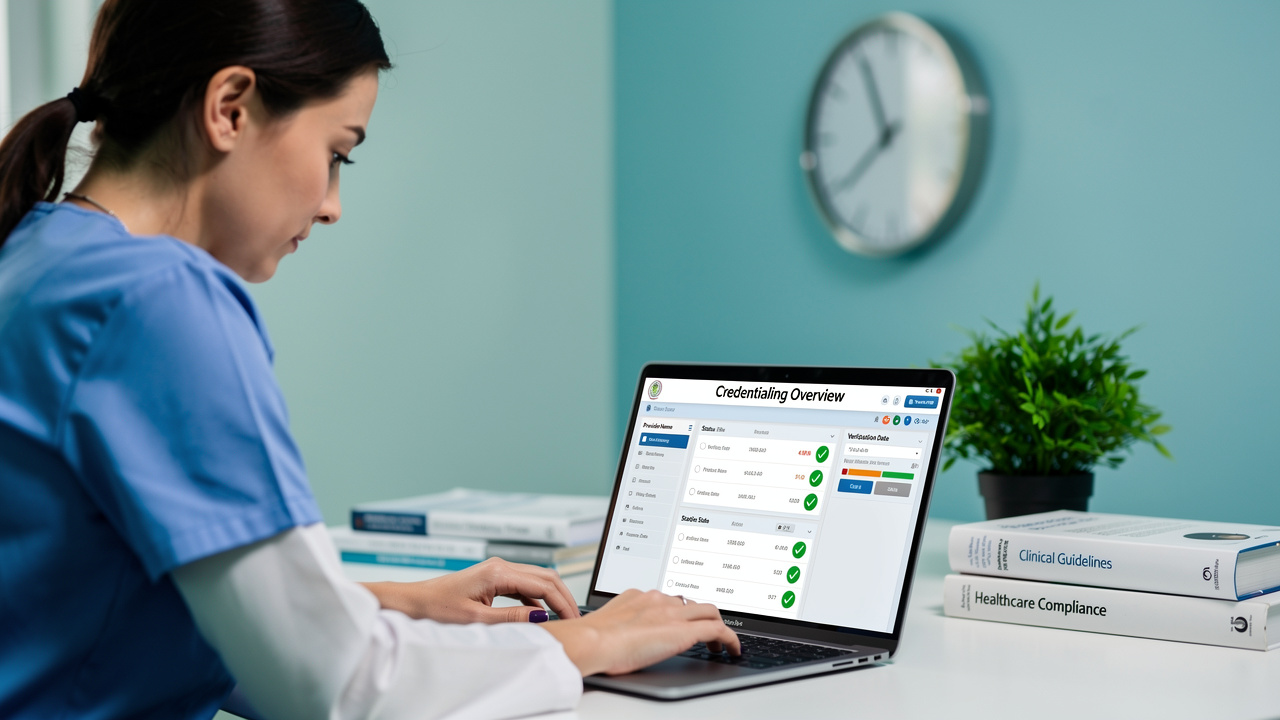
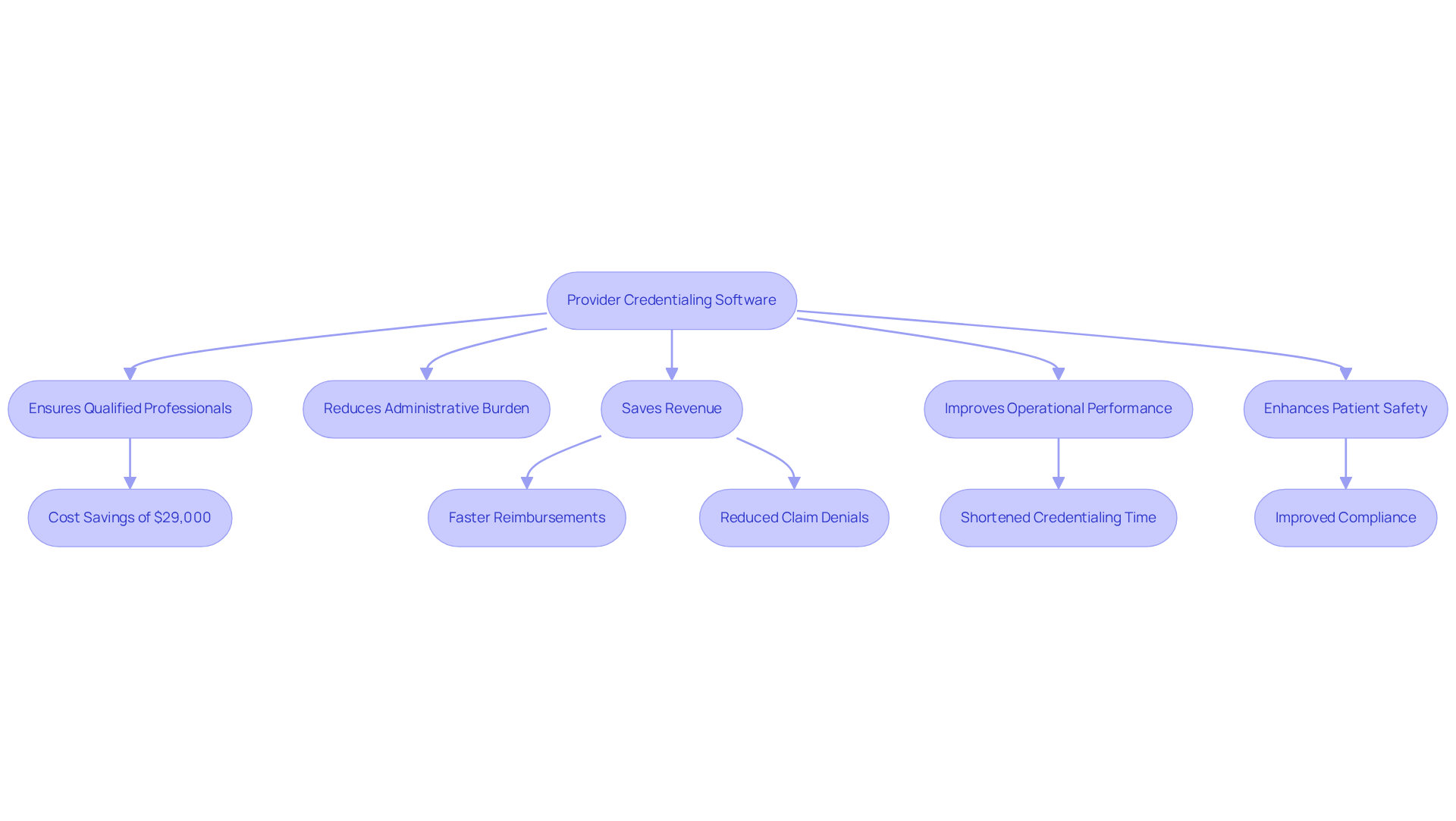
Provider credentialing software plays a crucial role in ensuring that healthcare professionals meet the necessary qualifications and standards. In mental health clinics, where adherence to regulations is essential, this system ensures that only qualified professionals provide care, thereby protecting patient safety and improving the overall quality of services. By utilizing provider credentialing software, centralizing provider data and automating verification processes reduce administrative burdens, allowing healthcare providers to concentrate on patient care rather than paperwork.
The significance of such applications is underscored by the fact that delays in obtaining credentials can cost the average physician over $50,000 in lost revenue. Furthermore, automated verification processes can save physicians approximately $29,000 each year and decrease the time spent on verification tasks by around three hours. This efficiency translates into improved operational performance and more effective revenue cycle management, with faster reimbursements of 15-25% within 30-90 days and a reduction in claim denials by 20-30%.
Case studies demonstrate that integrating verification software with existing healthcare systems can streamline operations. For example, organizations that have implemented automated verification processes report a significant reduction in processing timelines, shortening the duration from recruitment to billing eligibility from 6-9 months to just 60-90 days. This integration enhances recruitment and retention of healthcare professionals while supporting broader organizational goals, transforming the verification process from a cost center into a strategic function.
In 2026, the significance of provider credentialing software continues to expand as healthcare organizations prioritize investments in this technology to meet growing regulatory compliance demands and enhance patient safety. As healthcare organizations increasingly invest in these technologies, the potential for improved patient outcomes and operational efficiency becomes more pronounced.
Identify Key Benefits of Credentialing Software for Mental Health Clinics
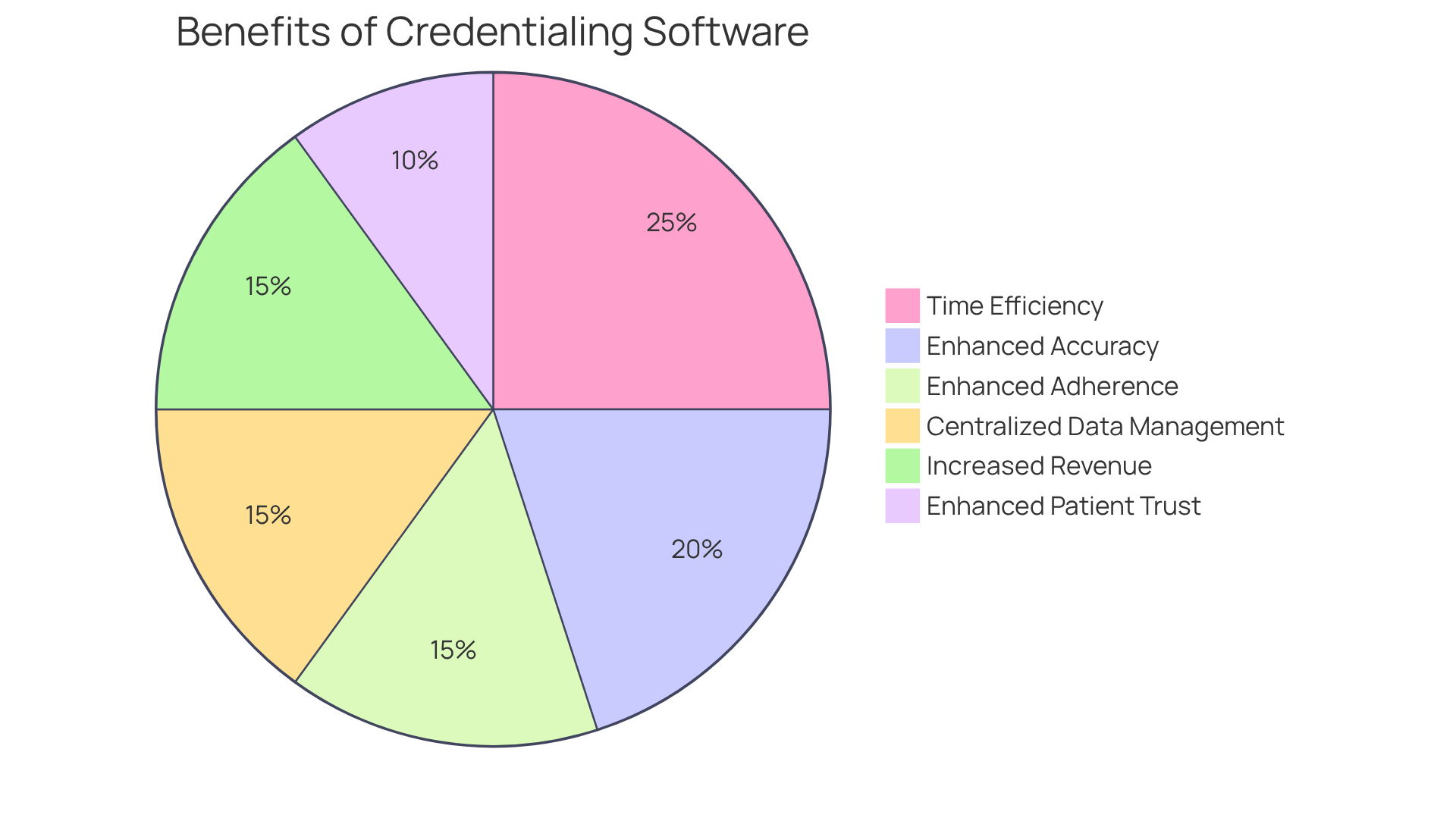
Many clinics struggle with lengthy onboarding processes that delay patient care, making the implementation of credentialing software essential. Implementing credentialing software in mental health clinics offers numerous benefits, including:
- Enhanced Accuracy: Automated data entry and validation minimize human errors, ensuring that information about healthcare professionals is always precise and current.
- Time Efficiency: By streamlining the credentialing process, healthcare facilities can significantly reduce the time it takes to onboard new professionals, allowing them to start seeing patients sooner.
- Enhanced Adherence: Credentialing software assists healthcare facilities in complying with regulatory standards by automating compliance checks and maintaining comprehensive records of qualifications.
- Centralized Data Management: A single source of truth for healthcare data simplifies access and management, reducing the risk of lost or outdated information.
- Increased Revenue: Faster credentialing processes lead to quicker billing cycles, which can enhance cash flow and overall income for the practice.
- Enhanced Patient Trust: By ensuring that only qualified providers are credentialed, healthcare facilities can build trust with patients and insurance companies, leading to better patient outcomes and satisfaction.
By taking this step, you can significantly enhance your practice’s efficiency and patient satisfaction.
Select the Right Credentialing Software for Your Clinic’s Needs
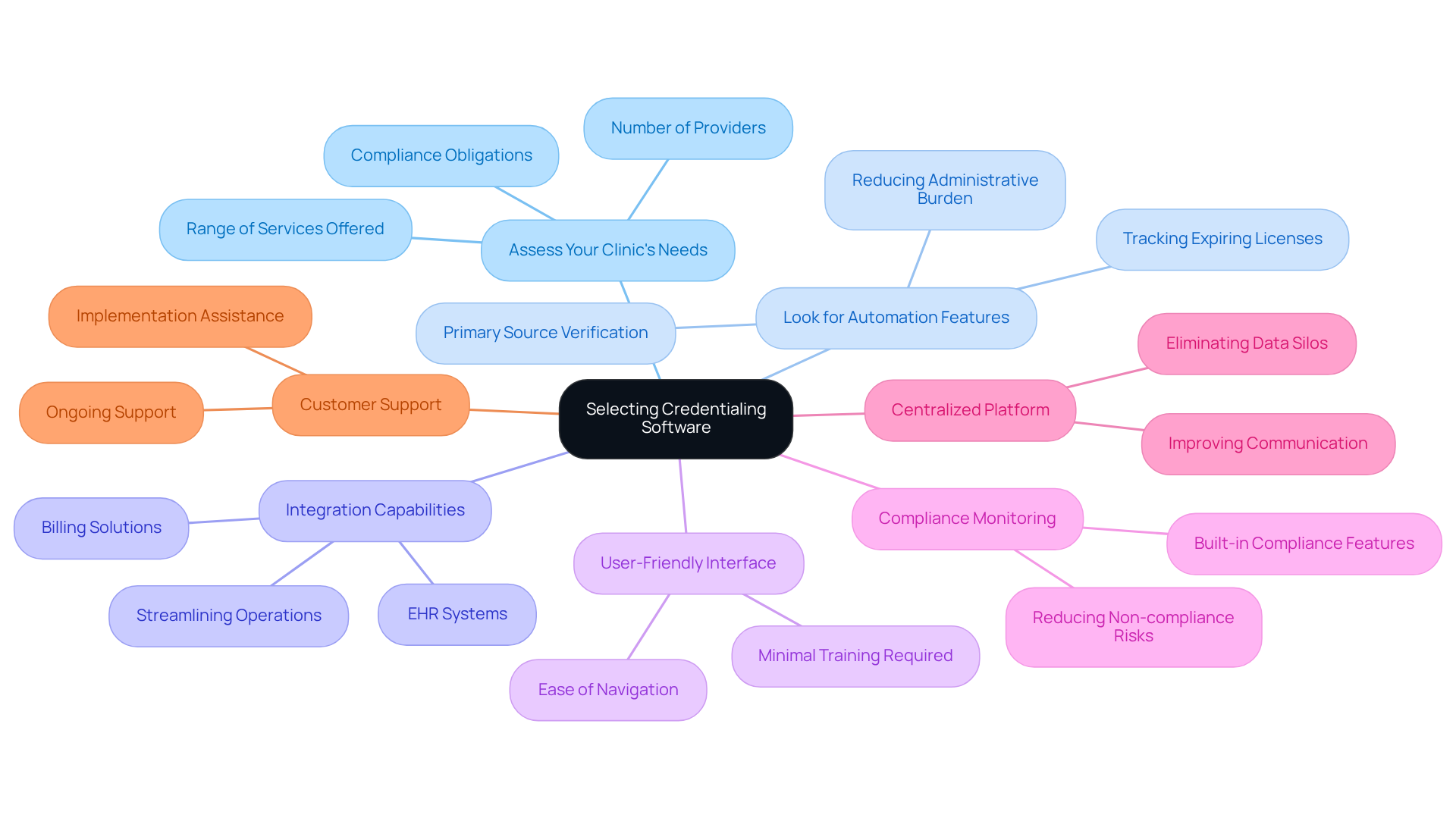
Selecting provider credentialing software for a mental health clinic involves navigating a complex landscape of operational needs and regulatory requirements. To make an informed choice, consider the following critical factors:
- Assess Your Clinic’s Needs: Begin by evaluating your clinic’s specific requirements, including the number of providers, the range of services offered, and compliance obligations. Understanding these elements will guide your selection process for technology.
- Look for Automation Features: Choose tools that automate key verification processes, such as primary source verification and tracking of expiring licenses. Administrative tasks can overwhelm staff, detracting from patient care, so automation can significantly reduce these burdens, allowing your staff to focus more on patient care.
- Integration Capabilities: Ensure that the system can seamlessly connect with your existing platforms, including Electronic Health Records (EHR) and billing solutions. This integration is essential for streamlining operations and enhancing overall efficiency.
- User-Friendly Interface: An intuitive interface is essential for ensuring that your staff can navigate the system easily without extensive training. This will facilitate smoother adoption and utilization of the system.
- Compliance Monitoring: Choose a solution that incorporates built-in compliance monitoring features. This functionality helps maintain adherence to regulatory standards, reducing the risk of non-compliance and associated penalties.
- Centralized Platform: Consider a solution that offers a centralized platform to eliminate data silos and improve communication across departments. This is vital for ensuring that all teams work from the same up-to-date information, enhancing operational efficiency.
- Customer Support: Evaluate how much support the vendor offers to ensure smooth implementation and ongoing assistance. Continuous support can be invaluable during implementation and throughout the system’s lifecycle, ensuring that any issues are promptly addressed.
Focusing on these critical factors enables mental health organizations to select provider credentialing software that aligns with operational needs while enhancing regulatory compliance and effectiveness. Implementing the right solution can lead to improved revenue cycle performance, with potential reductions in claim denials by 20-30% and faster reimbursements of 15-25% within 30-90 days. Furthermore, comprehending the financial consequences of delays in the verification processes-where healthcare organizations incur an average loss of $7,500 per physician per day-highlights the necessity of choosing efficient technology. The right technology not only streamlines operations but also safeguards against costly compliance failures that can impact financial health.
Implement Credentialing Software Effectively in Your Clinic
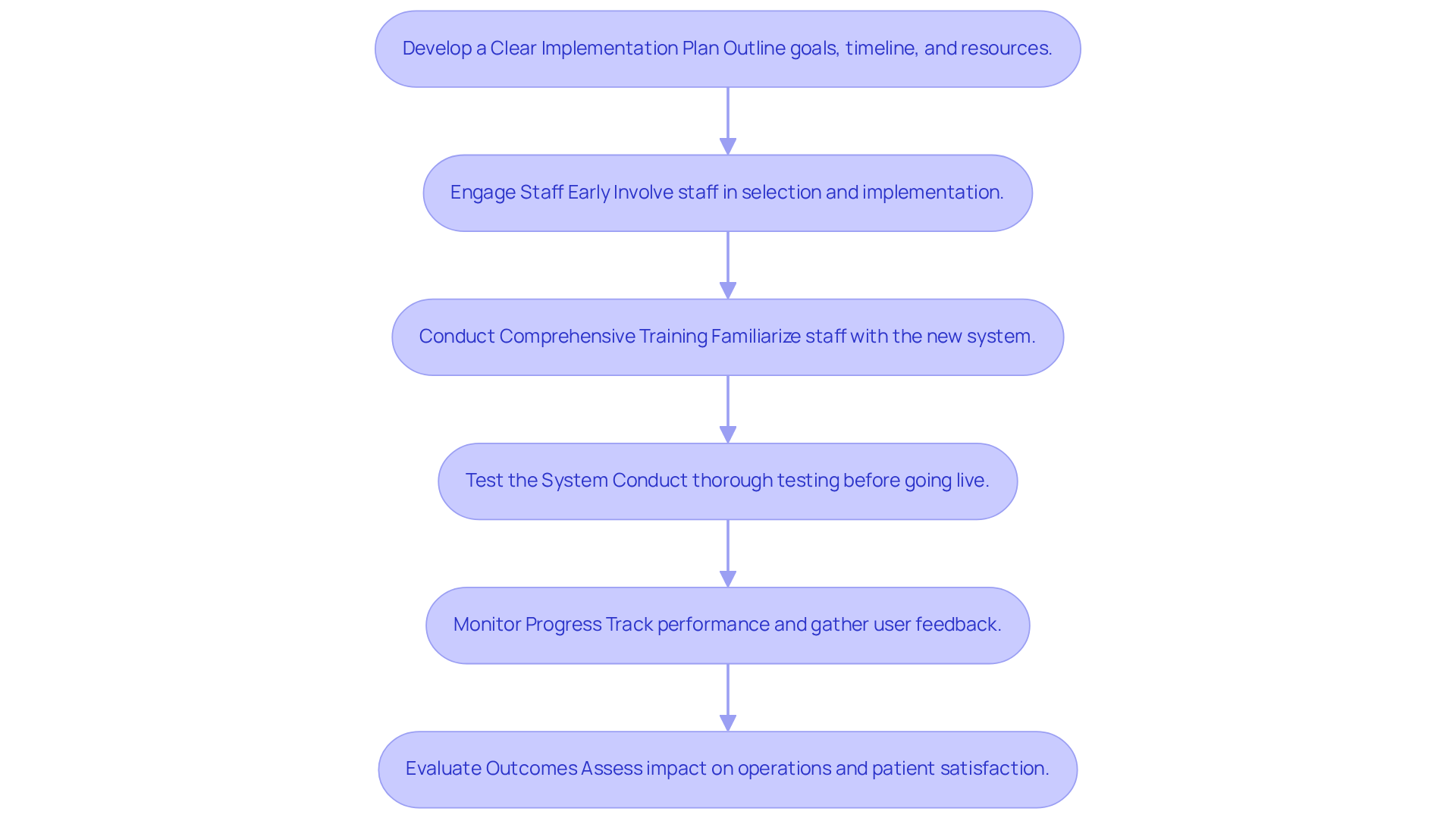
To implement credentialing software effectively in your clinic, a structured approach is essential:
- Develop a Clear Implementation Plan: Outline the goals, timeline, and resources needed for the implementation process, ensuring that all stakeholders are aligned. This plan should also consider how Healthcare Partners Consulting’s streamlined revenue cycle management can support your clinic’s operational efficiency.
- Engage Staff Early: Involve staff members in the selection and implementation process to gain their insights and foster buy-in, which can ease the transition. Highlighting the comprehensive services offered by Healthcare Partners Consulting, including provider credentialing software for credentialing and re-credentialing, can help staff understand the importance of these processes.
- Conduct Comprehensive Training: Conduct comprehensive training sessions to familiarize staff with the new system. Focus on its features and functionalities, emphasizing how these features integrate with Healthcare Partners Consulting’s services and popular EHR platforms like TherapyNotes and SimplePractice to enhance practice efficiency.
- Test the System: Before going live, conduct thorough testing of the application to identify and resolve any issues that may arise. Ensure that the testing phase includes scenarios that reflect the processes supported by Healthcare Partners Consulting.
- Monitor Progress: After implementation, continuously track the system’s performance and gather feedback from users to make necessary adjustments. You can enhance this ongoing evaluation by using the reporting capabilities of Healthcare Partners Consulting’s services.
- Evaluate Outcomes: Regularly assess the impact of the provider credentialing software on clinic operations, including efficiency, compliance, and patient satisfaction, to ensure that it meets the intended goals. By leveraging Healthcare Partners Consulting’s expertise, clinics can significantly enhance their operational outcomes and patient satisfaction.
Conclusion
The integration of provider credentialing software addresses critical operational challenges faced by mental health clinics. Implementing this software is a transformative step, enabling clinics to enhance operational efficiency and focus on delivering quality patient care. By automating verification processes and centralizing provider data, clinics can significantly reduce administrative burdens. This shift improves care quality and accelerates reimbursements while reducing claim denials. These changes ultimately enhance the clinic’s financial health.
The article highlights several key benefits of credentialing software, including:
- Enhanced accuracy
- Time efficiency
- Improved adherence to regulatory standards
By streamlining the onboarding process, clinics can ensure that qualified professionals are ready to provide care sooner, fostering trust with patients and insurance companies alike. Additionally, selecting appropriate technology and implementation strategies enables clinics to boost operational efficiency and allows staff to concentrate on delivering exceptional patient care. The importance of choosing the right software tailored to the specific needs of the clinic cannot be overstated, as it directly impacts compliance and operational effectiveness.
In conclusion, the integration of provider credentialing software is essential for mental health clinics aiming to thrive in a competitive healthcare landscape. Investing in the right technology is crucial for clinics to navigate the complexities of modern healthcare and achieve superior patient outcomes. For further assistance in optimizing your clinic’s operations, consider reaching out to Healthcare Partners Consulting & Billing, LLC at info@hpcbilling.com or call 888-517-4992.
Frequently Asked Questions
What is provider credentialing software?
Provider credentialing software is a system that ensures healthcare professionals meet necessary qualifications and standards, particularly in mental health clinics, to protect patient safety and improve service quality.
Why is provider credentialing software important in healthcare?
It is important because it centralizes provider data, automates verification processes, reduces administrative burdens, and allows healthcare providers to focus more on patient care rather than paperwork.
How can delays in obtaining credentials impact healthcare providers financially?
Delays in obtaining credentials can cost the average physician over $50,000 in lost revenue.
What financial benefits does automated verification provide to physicians?
Automated verification processes can save physicians approximately $29,000 each year and reduce the time spent on verification tasks by around three hours.
How does provider credentialing software improve operational performance?
It leads to faster reimbursements of 15-25% within 30-90 days and reduces claim denials by 20-30%, enhancing overall revenue cycle management.
What are the benefits of integrating verification software with existing healthcare systems?
Integration can streamline operations, significantly reduce processing timelines from recruitment to billing eligibility, and enhance the recruitment and retention of healthcare professionals.
What is the expected trend for provider credentialing software by 2026?
The significance of provider credentialing software is expected to expand as healthcare organizations prioritize investments in this technology to meet growing regulatory compliance demands and enhance patient safety.