
Introduction
For mental health practices, mastering accounts receivable (AR) is crucial for achieving financial stability and operational efficiency. As a vital aspect of revenue cycle management, AR not only represents the outstanding payments owed for services rendered but also serves as an indicator of the overall financial health of a practice.
However, many practices struggle with the complexities of managing AR efficiently, which can divert attention from patient care and impact overall practice viability. By implementing effective strategies, practices can safeguard their financial health and prioritize patient care.
Define Accounts Receivable in Healthcare Practices
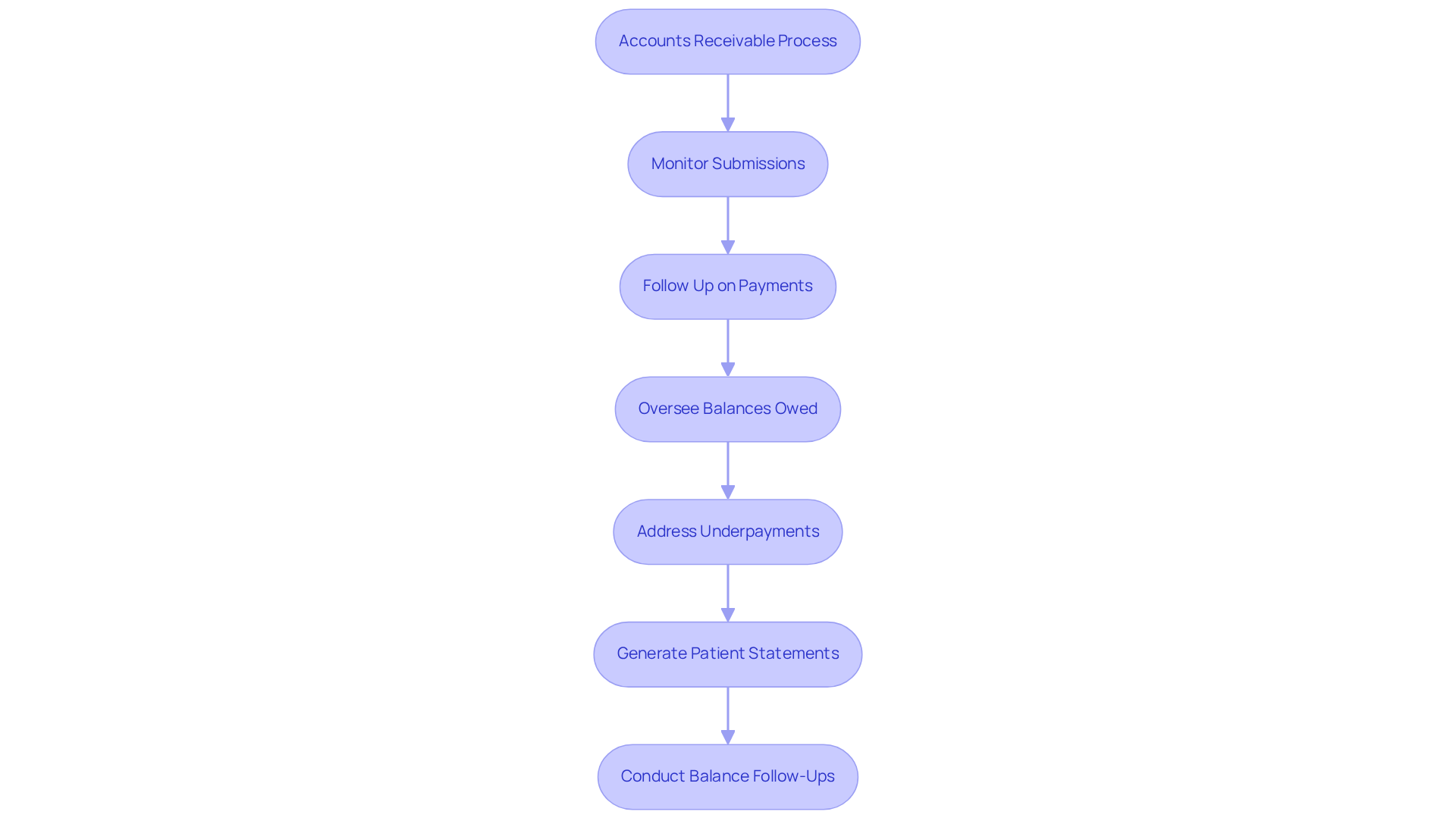
In healthcare, one might ask what does accounts receivable reflect on the practice, as it represents a critical financial component that encompasses outstanding payments owed for services rendered. This includes amounts owed by both individuals receiving care and insurance companies. In mental health services, AR covers various offerings such as therapy sessions, consultations, and other treatments provided to individuals. Effective management of accounts receivable is crucial for sustaining cash flow, as it raises the question of what does accounts receivable reflect on the practice? It ensures that operations can continue to run efficiently. The accounts receivable process generally entails monitoring submissions made to insurers, following up on outstanding payments, and overseeing balances owed. These activities are essential for determining what does accounts receivable reflect on the practice’s financial stability.
Enhancing statements and managing reimbursements requires addressing underpayments, unprocessed submissions, and aging requests. By implementing streamlined processes for generating patient statements and conducting balance follow-ups, practices can enhance billing efficiency and improve collection rates. Monitoring AR days is essential as it aids in tracking how swiftly insurance companies handle requests, directly affecting cash flow. Furthermore, the incorporation of Electronic Health Records (EHR) can optimize billing processes, improving the accuracy of submissions and operational efficiency. Clinics that utilize automated billing systems report collection rates reaching 94%, significantly surpassing the industry average of 68%. This underscores the necessity of streamlined AR processes to ensure financial stability and to explore what does accounts receivable reflect on the practice of delivering quality care. Additionally, addressing staffing issues is vital, as high turnover rates can lead to inconsistent follow-up and missed claims recovery opportunities, further complicating AR management. Personalized consultations can assist in identifying optimal administrative solutions tailored to the unique needs of healthcare organizations, empowering providers to concentrate more on patient care. Ultimately, effective AR management raises the question of what does accounts receivable reflect on the practice, as it not only secures financial health but also enhances the capacity to provide quality patient care.
Explain the Importance of Accounts Receivable for Financial Health
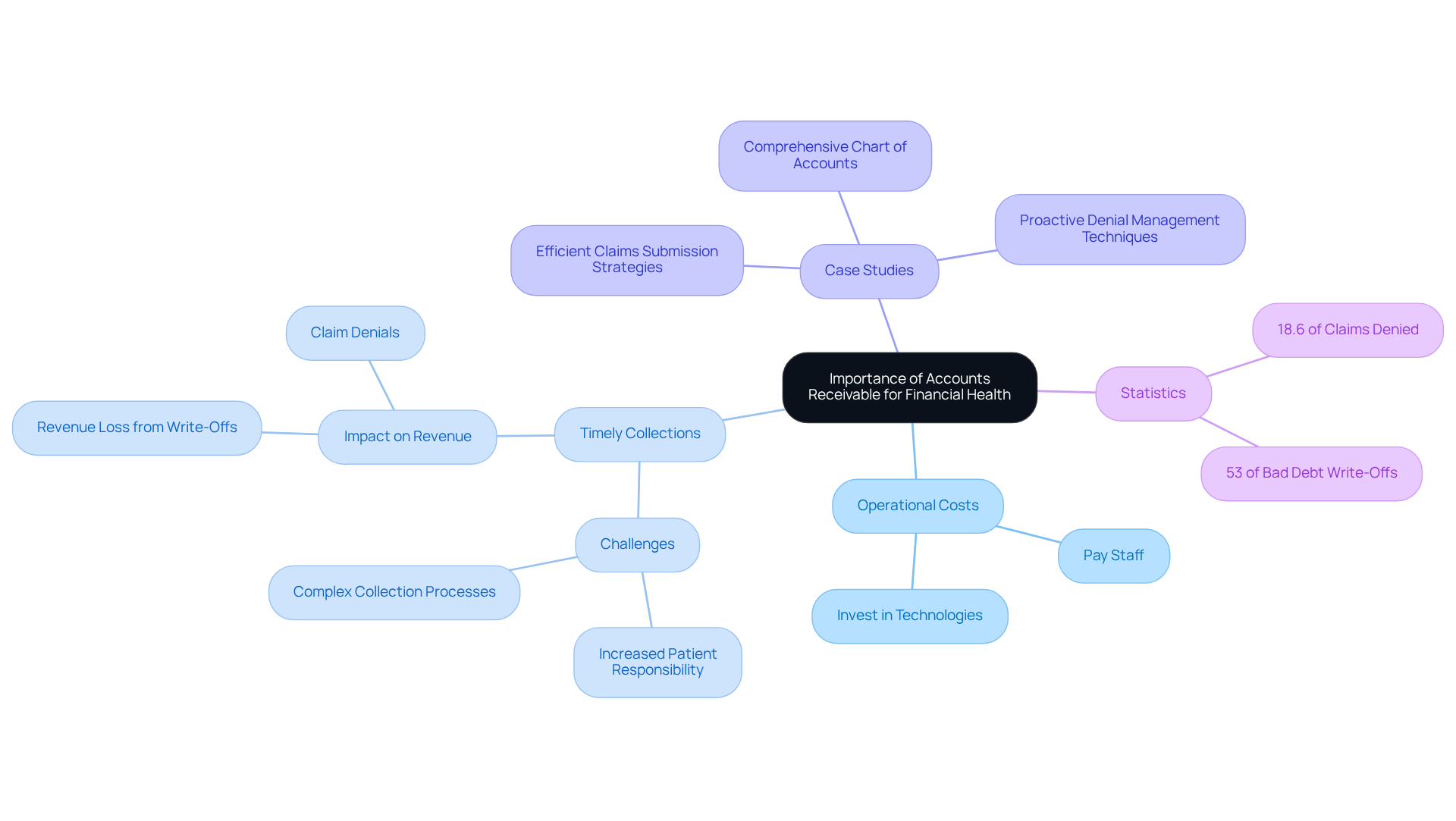
Accounts receivable (AR) management is not merely a financial task; it is a pivotal factor that influences the economic stability of mental health services. Effective AR management allows practices to meet operational costs, pay staff, and invest in new technologies. For instance, organizations that maintain disciplined AR processes can significantly reduce days sales outstanding (DSO), thereby enhancing liquidity and enabling them to navigate financial challenges more effectively.
Timely collections from AR are essential in preventing revenue loss due to write-offs or claim denials, which are common in the mental health sector. Nearly 50% of revenue cycle leaders identify timely collections as their most pressing challenge, exacerbated by increased consumer responsibility and complex collection processes.
Healthcare Partners Consulting provides tailored administrative support services that help streamline operations and improve financial health. These services include:
- Assistance with scheduling
- Document management
- Insurance claims
This allows healthcare professionals to focus on patient care while ensuring efficient billing processes. Additionally, HPC offers a quick quiz to help mental health professionals assess their profitability score, enabling them to identify hidden revenue leaks and receive personalized recommendations for enhancing efficiency and billing accuracy.
Case studies highlight the importance of AR management: one organization implemented a comprehensive chart of accounts, which organized data and improved tracking of therapy session revenues and insurance reimbursements. This strategic approach not only streamlined operations but also strengthened the practice’s financial health.
Statistics further emphasize the significance of AR management; in 2023, 18.6% of in-network claims were denied, an increase from 16.6% in 2021, underscoring the necessity for accurate billing and coding to prevent disruptions in cash flow. Moreover, 53% of bad debt write-offs were associated with insured individuals facing high out-of-pocket expenses, illustrating the need for effective AR strategies to mitigate revenue loss.
Ultimately, neglecting AR management can compromise the quality of care that mental health organizations strive to provide.
Detail the Components and Management of Accounts Receivable
Effective accounts receivable management is vital for understanding what accounts receivable reflects on the practice of financial sustainability in healthcare organizations. Key components include:
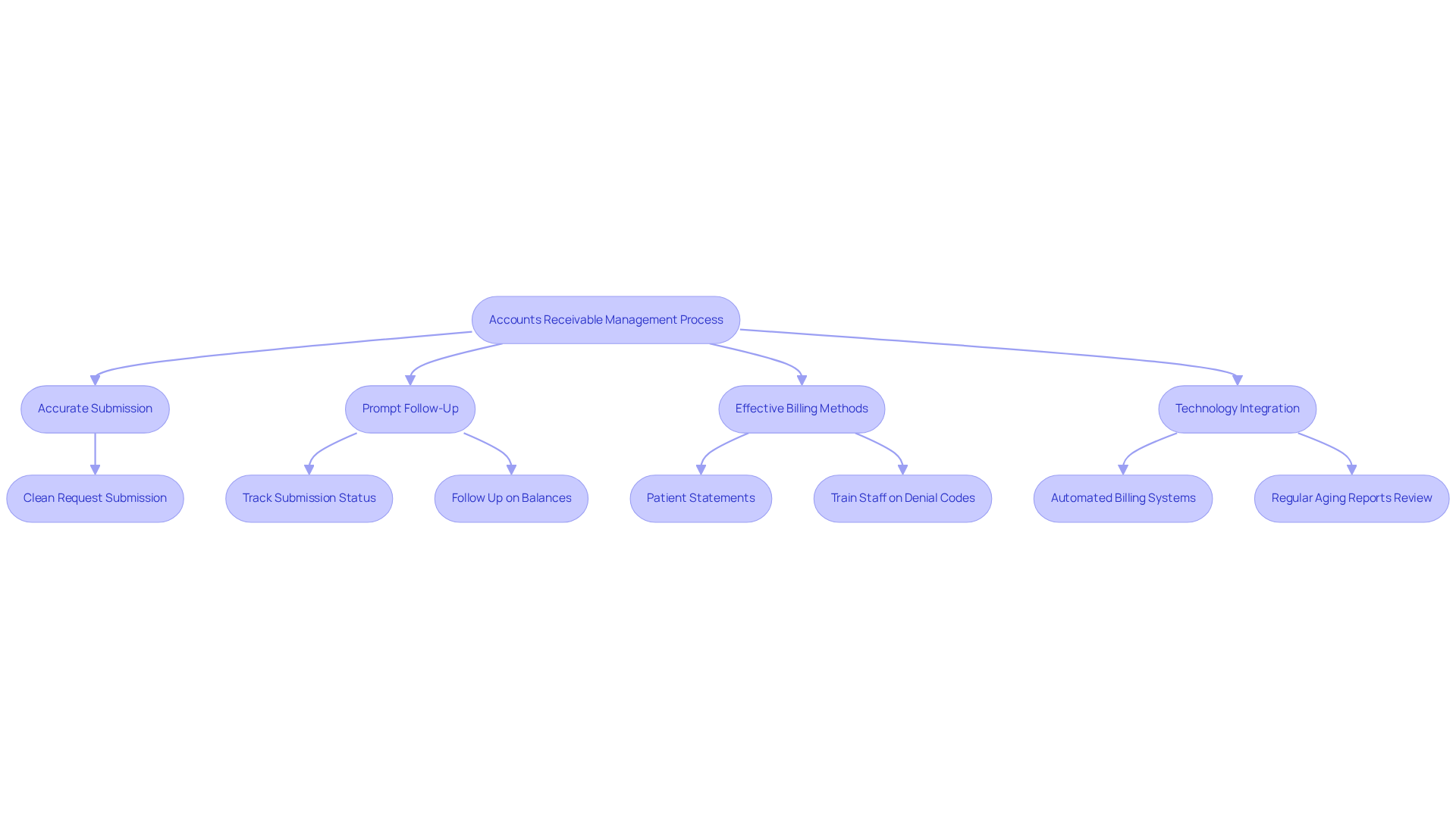
- Accurate submission of clean requests
- Prompt follow-up on unpaid submissions
- Effective patient billing methods, such as creating patient statements and following up on balances
Accurate submissions are crucial for reducing the chances of denials and payment delays. Once submissions are made, tracking their status and communicating with payers is essential for ensuring timely payments.
Managing patient balances is equally important. Establishing clear policies for billing and collecting payments from patients is essential. The integration of technology, such as automated billing systems, can streamline these processes, minimize errors, and enhance overall operational efficiency. Regular reviews of aging reports are crucial for identifying overdue accounts and prioritizing collections, directly correlating with improved cash flow and financial stability.
For instance, a multi-specialty pain management group in Texas successfully reduced their accounts receivable days from 62 to 29 by implementing a structured AR management process that included daily follow-ups and prioritization of high-value claims. This case demonstrates how systematic approaches can result in significant enhancements in economic performance.
Optimal methods for managing accounts receivable also involve:
- Training staff on denial codes
- Conducting monthly aging reviews to ensure timely follow-ups
By addressing common pitfalls, such as postponing follow-ups on outstanding invoices, organizations can enhance their accounts receivable management efficiency and improve recovery rates, leading to a better understanding of what accounts receivable reflects on the practice, ultimately supporting better care for individuals and financial well-being.
Moreover, it is essential to verify patient eligibility multiple times before appointments to prevent claim denials. According to MGMA benchmarks, the target for Days in AR should be under 40 days, and organizations should aim for a net collection rate above 95%. Furthermore, proactive billing methods can result in a 30% rise in point-of-service cash collections annually, further highlighting the significance of efficient accounts receivable management.
Healthcare Partners Consulting & Billing, LLC (HPC) offers personalized consultations to help practices identify optimal administrative solutions tailored to their specific needs. By mapping current workflows and addressing underpayments, unprocessed invoices, and aging invoices, HPC empowers healthcare providers to concentrate on care for individuals while enhancing billing efficiency. By refining their accounts receivable processes, organizations can significantly enhance their financial health and patient care capabilities, raising the question of what accounts receivable reflects on the practice?
Provide Examples of Accounts Receivable in Healthcare Settings
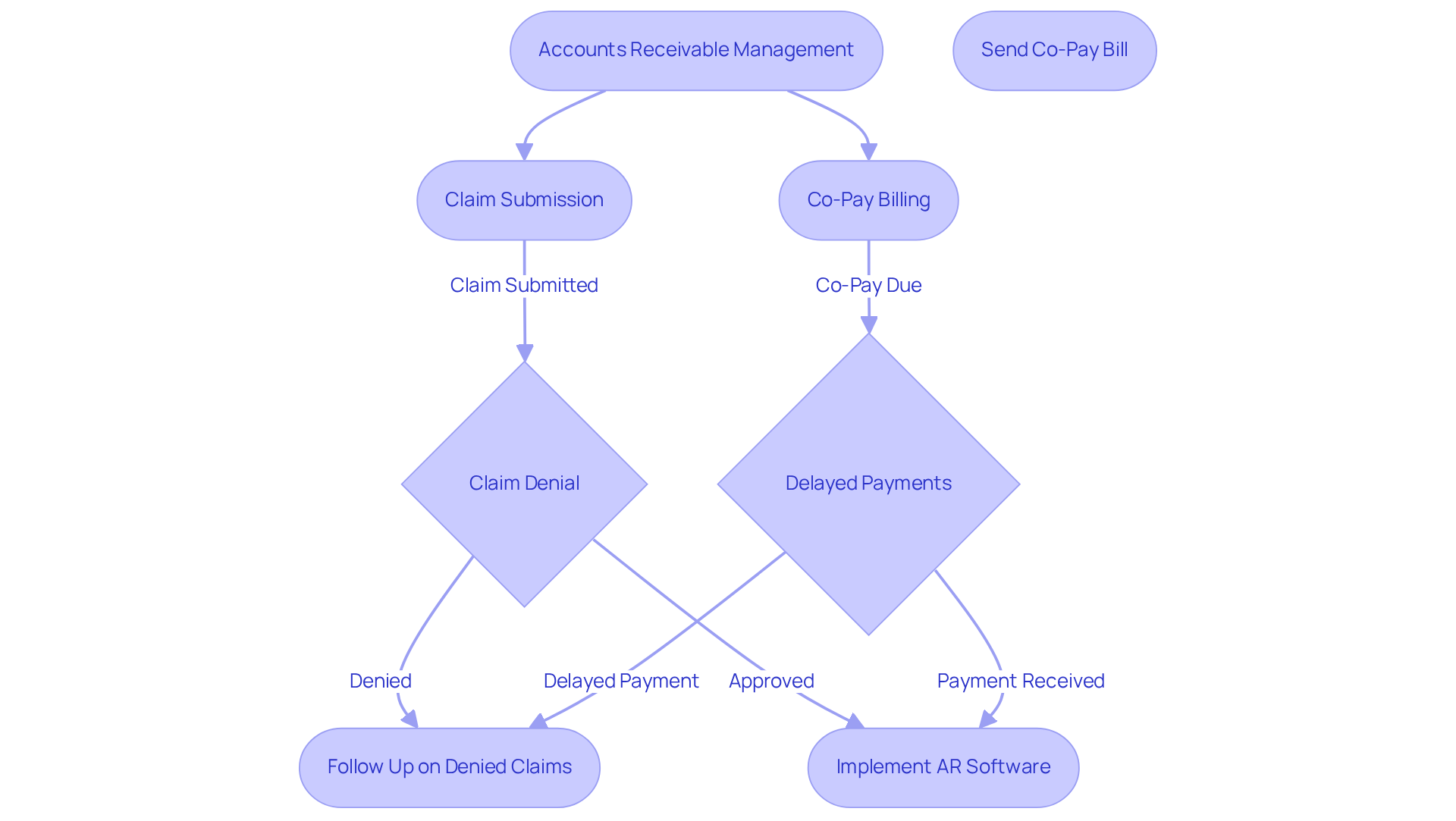
In mental health clinics, the complexities of accounts receivable present significant challenges that require strategic management. For example, a clinic might submit a claim to an insurance company for multiple therapy sessions provided to a patient. If this claim is denied due to missing documentation, the clinic must actively follow up to resolve the issue and secure payment. Another scenario involves an individual receiving a bill for their co-pay after a consultation; this amount remains part of the clinic’s accounts receivable until it is settled. Additionally, clinics often struggle with delayed payments due to incomplete claims and patient non-compliance, especially when deductible resets occur, leading to larger patient responsibilities. Such scenarios highlight the necessity for robust AR management strategies, which are essential for ensuring that healthcare providers receive timely payments for their services. This, in turn, enhances the operational and economic well-being of the organization.
Healthcare Partners Consulting provides a quick quiz designed to help mental health practices evaluate their profitability. This allows clinic owners to spot hidden revenue leaks and receive personalized recommendations for improving efficiency and billing accuracy. Our tailored administrative support services, including scheduling, document management, and insurance assistance, are designed to optimize operations and improve economic outcomes. Case studies illustrate the impact of structured AR processes. For instance, facilities that have implemented advanced software systems to track aging balances have reported significant improvements in their financial recovery efforts, with some experiencing a decrease in AR days by 20-30%. By prioritizing timely claim submissions and maintaining clear communication with patients regarding their payment responsibilities, clinics can enhance their collection rates and reduce the time spent on billing tasks. Moreover, understanding the legal avenues for collecting debts can provide additional strategies for organizations facing persistent AR challenges. As noted by Wakefield, “The A/R directly impacts cash flow, a critical determinant of a healthcare operation’s operational viability.” A proactive approach to AR not only secures revenue but also supports the overall mission of providing quality care.
Conclusion
Effective management of accounts receivable is critical for the financial sustainability of mental health practices. It reflects a practice’s operational efficiency and capacity to deliver quality care. Understanding AR is complex, yet it is crucial for maintaining a steady cash flow, enabling a focus on patient care.
Throughout the article, key insights have been shared regarding the importance of:
- Timely collections
- Accurate submissions
- The integration of technology in AR management
The discussion highlighted how practices can enhance their financial stability by implementing structured processes, addressing common pitfalls, and utilizing automated systems. Real-life examples demonstrated the tangible benefits of effective AR management, showcasing how organizations can significantly reduce their days sales outstanding and improve their overall economic performance.
In conclusion, prioritizing accounts receivable management is not just a financial necessity; it is a strategic imperative for mental health practices aiming to thrive in a competitive landscape. By adopting best practices and utilizing tailored support from experts like Healthcare Partners Consulting & Billing, LLC (HPC), providers can effectively manage administrative burdens and enhance their focus on delivering exceptional patient care. Ultimately, a robust approach to AR management not only secures financial health but also strengthens the ability to provide essential care to those in need. For further assistance, practices can reach out to HPC at info@hpcbilling.com or call 888-517-4992 to explore personalized solutions that align with their unique needs.
Frequently Asked Questions
What is accounts receivable in healthcare practices?
Accounts receivable in healthcare represents outstanding payments owed for services rendered, including amounts owed by individuals receiving care and insurance companies.
Why is effective management of accounts receivable important?
Effective management of accounts receivable is crucial for sustaining cash flow, ensuring that healthcare operations can run efficiently.
What does the accounts receivable process involve?
The accounts receivable process involves monitoring submissions made to insurers, following up on outstanding payments, and overseeing balances owed.
How can practices enhance their billing efficiency?
Practices can enhance billing efficiency by addressing underpayments, unprocessed submissions, and aging requests, as well as implementing streamlined processes for generating patient statements and conducting balance follow-ups.
What is the significance of monitoring AR days?
Monitoring AR days is essential for tracking how swiftly insurance companies handle requests, which directly affects cash flow.
How can Electronic Health Records (EHR) impact billing processes?
The incorporation of Electronic Health Records (EHR) can optimize billing processes by improving the accuracy of submissions and operational efficiency.
What collection rates do clinics using automated billing systems report?
Clinics that utilize automated billing systems report collection rates reaching 94%, significantly higher than the industry average of 68%.
What challenges can high turnover rates create in accounts receivable management?
High turnover rates can lead to inconsistent follow-up and missed claims recovery opportunities, complicating accounts receivable management.
How can personalized consultations help healthcare organizations?
Personalized consultations can assist in identifying optimal administrative solutions tailored to the unique needs of healthcare organizations, allowing providers to focus more on patient care.
What overall impact does effective accounts receivable management have on healthcare practices?
Effective accounts receivable management secures financial health and enhances the capacity to provide quality patient care.