

Introduction
In an era of escalating operational costs and heightened patient financial responsibilities, effective revenue cycle management (RCM) is crucial for the financial health of healthcare practices. Mastering RCM enables clinics to enhance cash flow and allows healthcare providers to prioritize quality patient care. However, practices must adapt to evolving technologies and regulatory challenges to effectively optimize their revenue cycle. Failure to optimize RCM can lead to financial instability and hinder the quality of patient care.
Define Revenue Cycle Management in Healthcare
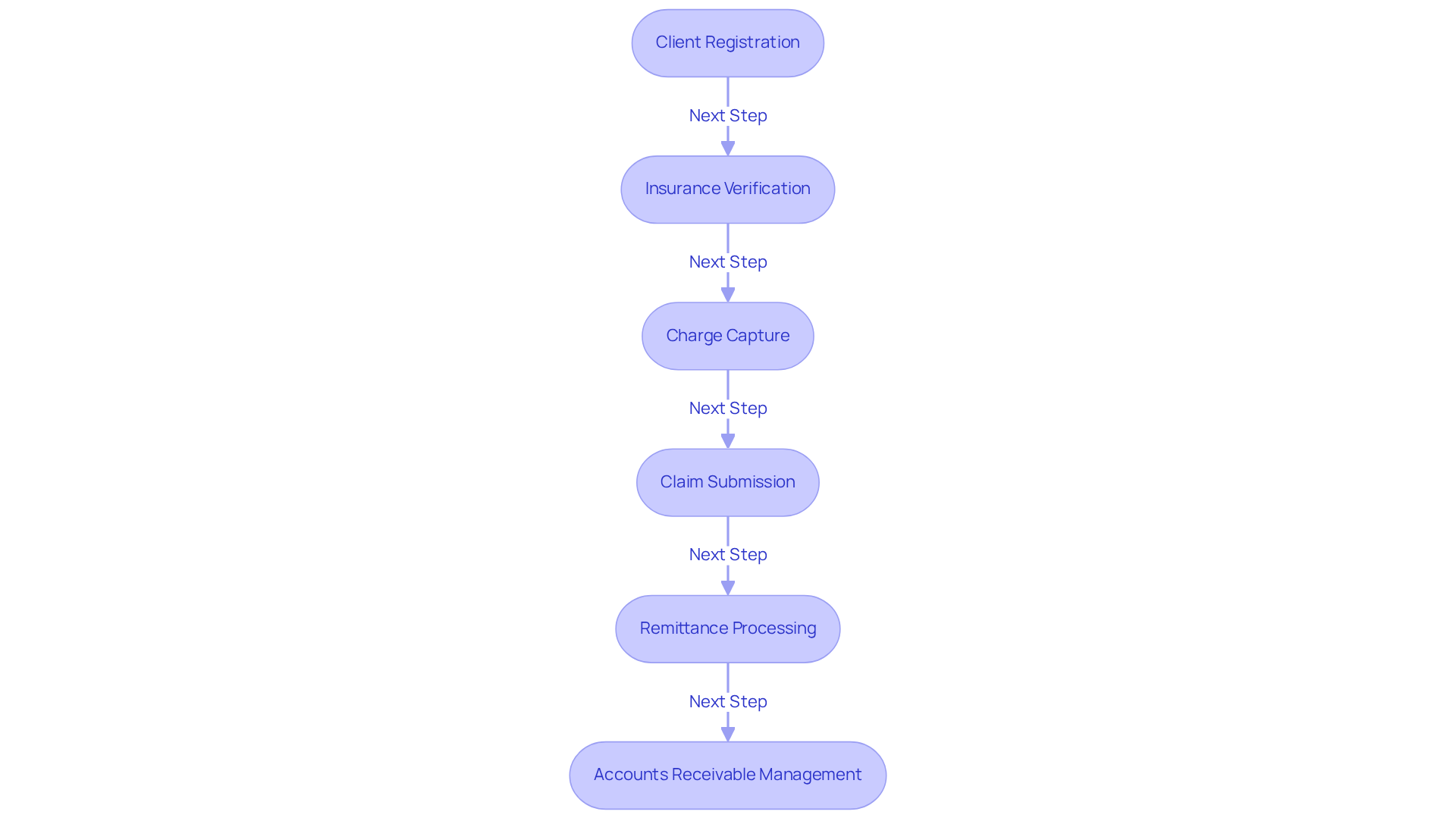
As healthcare providers face increasing financial pressures, effective practices within the healthcare revenue cycle management industry become crucial for sustainability. The healthcare revenue cycle management industry involves the comprehensive process of overseeing the financial aspects of care, starting from appointment scheduling to the final payment collection. This multi-step process includes:
- Client registration
- Insurance verification
- Charge capture
- Claim submission
- Remittance processing
- Accounts receivable management
Effective RCM is crucial in the healthcare revenue cycle management industry, as it helps healthcare providers get paid accurately and on time for the services they provide, which is essential for maintaining financial stability and enabling them to concentrate on delivering quality care.
In 2026, the healthcare revenue cycle management industry is evolving to address significant challenges, including rising rejection rates and increased patient financial responsibility. Organizations are increasingly adopting automation and predictive analytics to enhance their performance within the healthcare revenue cycle management industry. For example, a proactive strategy for managing claims can result in a decrease in rejections by 20-30% and enhance reimbursement timelines by 15-25% within 30-90 days. High-performing RCM teams are focusing on optimizing first-pass acceptance rates and implementing real-time claim status tracking to prevent denials before submission.
Case studies illustrate the impact of these strategies. For instance, organizations that have revamped their collections processes through clear estimates and digital payment options have observed enhanced engagement and higher payment rates. Additionally, leveraging AI technologies in the healthcare revenue cycle management industry has proven effective in enhancing documentation accuracy and streamlining workflows, ultimately leading to better financial outcomes for organizations in the healthcare revenue cycle management industry.
Ultimately, the right RCM strategies can transform financial challenges into opportunities for growth and stability.
Identify Key Components of Effective Revenue Cycle Management
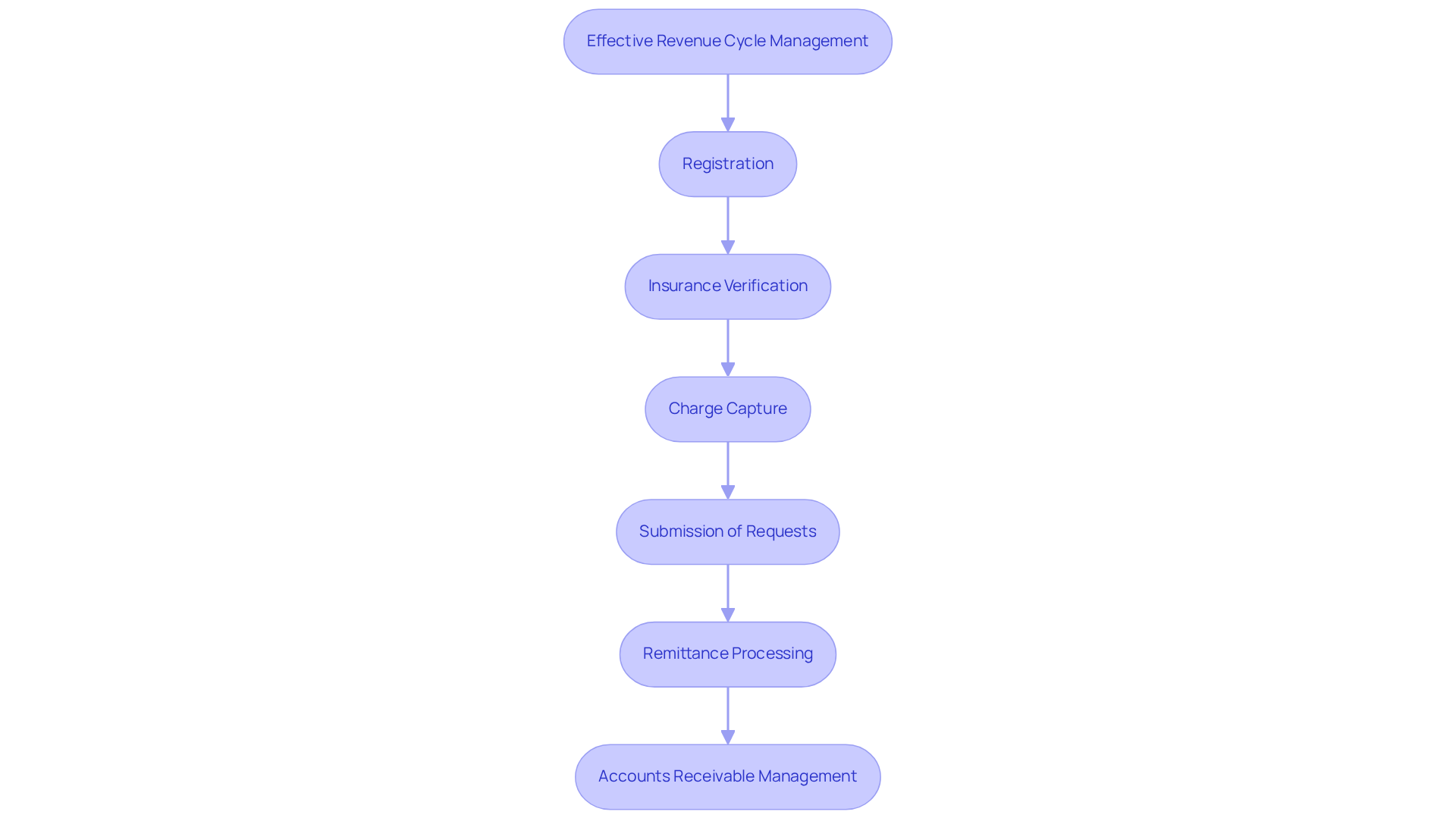
Effective Revenue Cycle Management (RCM) is essential for the financial viability of practices within the healthcare revenue cycle management industry, encompassing several interrelated components. These components include:
- Registration: Accurate and efficient registration processes are crucial for capturing essential information and insurance details. Comprehensive registration reduces mistakes that can result in service rejections, ensuring a more efficient billing process.
- Insurance Verification: Confirming eligibility and benefits before services are rendered helps prevent reimbursement issues and ensures that providers receive compensation for their services. Organizations that prioritize accurate eligibility verification can reduce denials by 20-30%, leading to improved cash flow and faster reimbursement within 30-90 days.
- Charge Capture: This involves accurately documenting all services provided to patients to ensure that all billable items are captured and billed appropriately. Regular audits and the use of integrated coding tools can help prevent missed charges, ensuring that practices capture all potential revenue.
- Submission of Requests: Timely and accurate submission of requests to insurance companies is essential for prompt reimbursement. Delays in submitting requests can lead to prolonged reimbursement timelines, impacting cash flow. Submitting precise, organized submissions aids the revenue cycle significantly, as requests are usually approved on the first attempt, reducing the overall cycle and enhancing the financial outcome.
- Remittance Processing: Efficient handling of payments and adjustments from payers ensures that providers can track their revenue accurately. Automating remittance posting and utilizing analytics can improve financial oversight and reduce the time spent on follow-ups.
- Accounts Receivable Management: Monitoring outstanding claims and following up on unpaid invoices is critical for maintaining cash flow. Effective accounts receivable management not only enhances cash flow but also reduces the administrative burden on healthcare practices, leading to a more sustainable financial model.
By focusing on these elements, healthcare providers can streamline their processes within the healthcare revenue cycle management industry. This not only reduces administrative burdens but also enhances the quality of care provided. Organizations that adopt these strategies often witness remarkable enhancements in both operational efficiency and revenue cycle performance.
Leverage Technology for Optimized Revenue Cycle Management
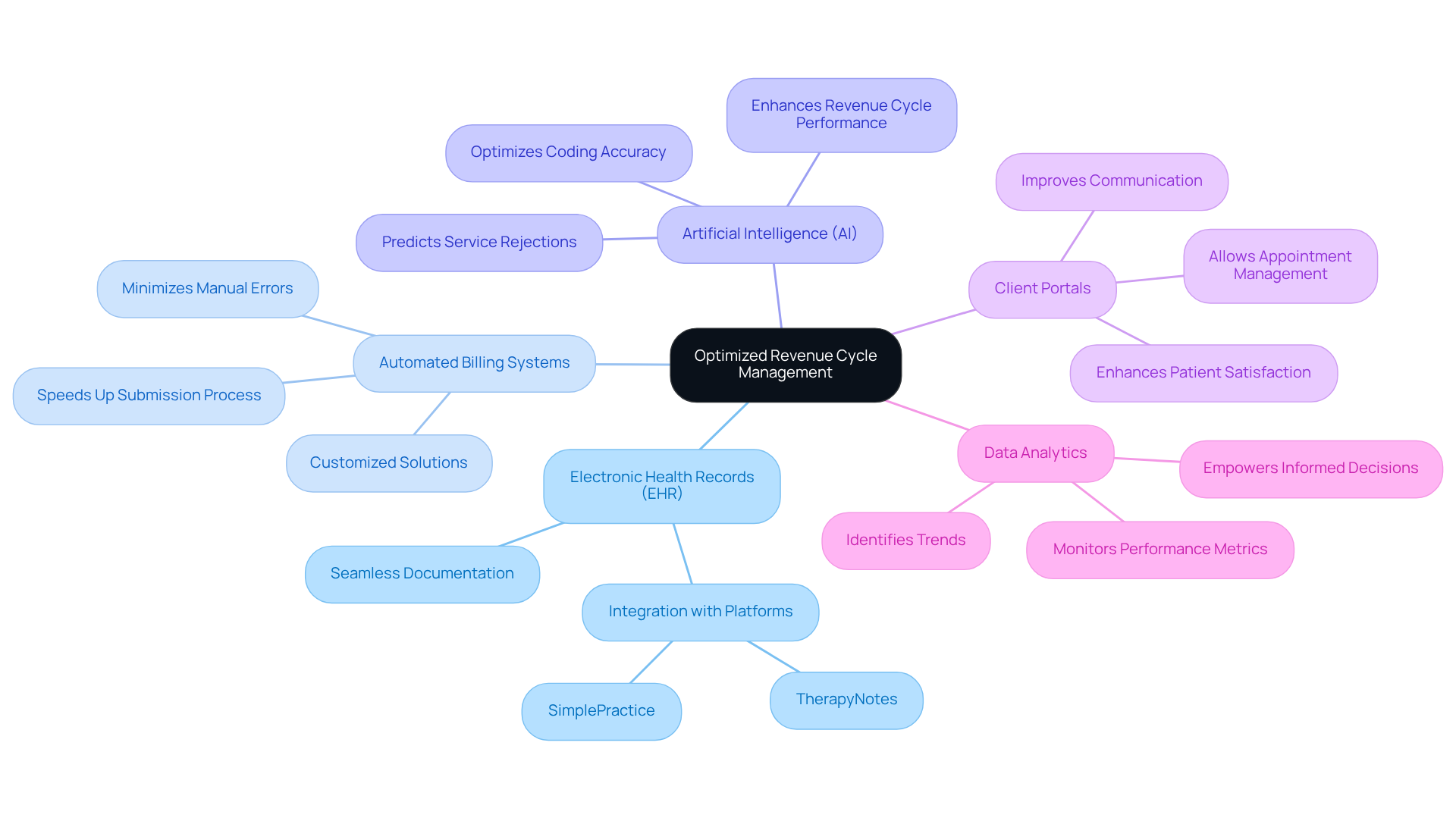
Integrating technology into the healthcare revenue cycle management industry is essential for enhancing the operational efficiency of healthcare practices, particularly those focused on mental and behavioral health. Here are several ways to leverage technology for optimized RCM, as exemplified by Healthcare Partners Consulting & Billing, LLC (HPC):
- Electronic Health Records (EHR): Implementing EHR systems allows for seamless documentation and sharing of information regarding individuals, which can streamline billing and coding processes. HPC integrates with platforms like TherapyNotes and SimplePractice to enhance this functionality.
- Automated Billing Systems: Utilizing automated billing software minimizes manual errors and speeds up the submission process, resulting in quicker reimbursements. HPC’s customized solutions ensure that practices can concentrate on care for individuals while reducing administrative burdens.
- Artificial Intelligence (AI): AI can analyze data to predict service rejections, optimize coding accuracy, and enhance overall revenue cycle performance. HPC’s expertise in this area helps practices navigate complex billing landscapes effectively.
- Client Portals: Offering online client portals enhances communication and allows individuals to manage their appointments, view bills, and make payments, improving satisfaction and cash flow. HPC emphasizes the importance of these tools in fostering better patient-provider relationships.
- Data Analytics: Leveraging data analytics tools can help practices identify trends, monitor performance metrics, and make informed decisions to enhance their RCM strategies. HPC provides detailed financial reports, including claim volumes and rejection rates, to empower practices with actionable insights.
Administrative tasks often consume valuable time that could be spent on patient care. By adopting these technologies, healthcare providers in the healthcare revenue cycle management industry can lessen administrative burdens, enhance accuracy, and ultimately concentrate more on care. This shift allows healthcare providers to prioritize patient interactions over paperwork.
Implement Effective Denial Management Strategies
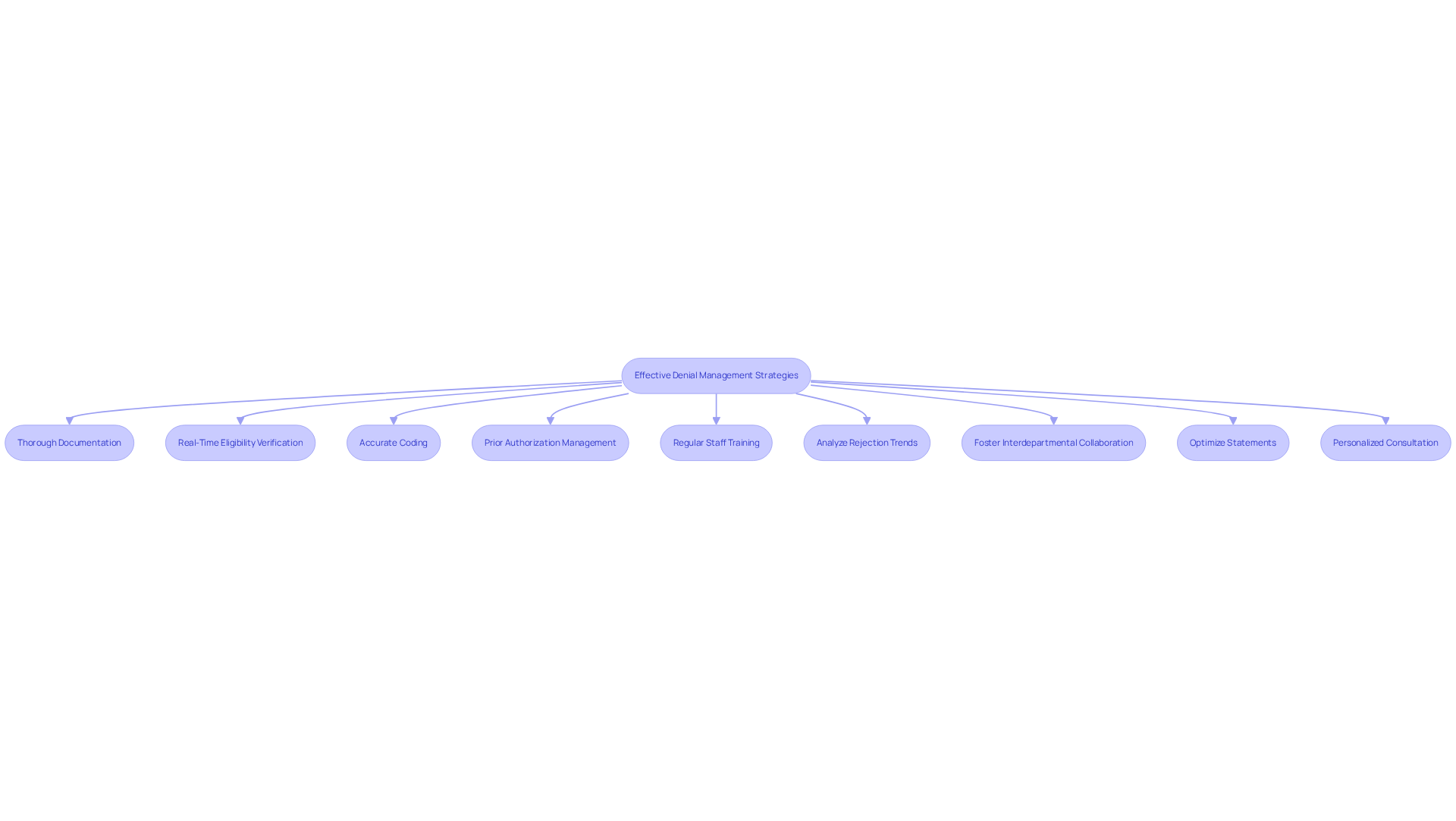
Without effective denial management, healthcare practices risk significant financial instability and operational inefficiencies. Denial management is a critical component of the healthcare revenue cycle management industry that can significantly influence the financial health of a healthcare practice. Implementing effective strategies for managing denials can lead to substantial improvements in revenue integrity. Here are key strategies to consider:
- Thorough Documentation: Ensure that all patient interactions and services are meticulously documented. This offers clear evidence for assertions and supports the justification of services rendered.
- Real-Time Eligibility Verification: Conduct eligibility checks at the time of registration to prevent issues related to coverage. This proactive measure can significantly reduce the likelihood of claim rejections.
- Accurate Coding: Invest in comprehensive training for coding staff to ensure that all services are accurately coded. Accurate coding reduces the risk of rejections arising from mistakes in procedure descriptions.
- Prior Authorization Management: Establish a robust system for managing prior authorizations, ensuring that necessary approvals are secured before services are provided. This can prevent delays and refusals related to authorization issues.
- Regular Staff Training: Implement ongoing training programs for all staff involved in the revenue cycle. Keeping them informed about best practices and regulatory changes is essential for maintaining compliance and reducing errors.
- Analyze Rejection Trends: Regularly review rejection data to identify patterns and root causes. This analysis enables focused interventions that can effectively decrease future refusals.
- Foster Interdepartmental Collaboration: Encourage collaboration among departments involved in the revenue cycle, including billing, clinical, and administrative teams. This teamwork is crucial for identifying and addressing the root causes of denials.
- Optimize Statements: Focus on generating clear and concise statements that address underpayments, unprocessed claims, and aging claims. This transparency can enhance understanding and encourage timely payments.
- Personalized Consultation: Consider scheduling a 30-minute consultation with Healthcare Partners Consulting & Billing, LLC (HPC) to map your current workflow and identify the services that will move the needle fastest for your practice.
Ultimately, neglecting denial management within the healthcare revenue cycle management industry can lead to substantial financial repercussions that hinder a practice’s ability to provide quality care. Organizations that implement these practices have reported a 20-30% reduction in rejections and a 15-25% faster reimbursement cycle within 30-90 days, demonstrating the tangible benefits of effective management. Furthermore, the average expense to revise a rejected claim varies from $25 to over $181, emphasizing the financial consequences of effective claim management. As noted by industry experts, shifting to proactive denial management is essential for long-term success in the evolving healthcare landscape.
Conclusion
In a challenging financial landscape, clinics must master healthcare revenue cycle management to thrive. Implementing effective strategies allows healthcare providers to streamline operations and reduce administrative burdens, enabling a greater focus on quality patient care. Comprehensive revenue cycle management, especially for behavioral and mental health practices, is essential for ensuring timely and accurate compensation for services rendered.
Key components of effective revenue cycle management include:
- Accurate registration
- Thorough insurance verification
- Meticulous charge capture
- Timely claim submissions
- Efficient remittance processing
- Diligent accounts receivable management
Leveraging technology, such as electronic health records and automated billing systems, further enhances these processes, allowing healthcare providers to optimize their revenue cycle performance. Additionally, implementing robust denial management strategies can significantly reduce claim rejections and improve financial stability.
Mastering healthcare revenue cycle management is vital for clinics today. Focusing on these best practices helps healthcare providers navigate financial complexities while keeping patient care at the forefront. Embracing innovation and a compliance-first approach, as exemplified by Healthcare Partners Consulting & Billing, LLC (HPC), can lead to sustainable growth and improved operational efficiency. For clinics, neglecting revenue cycle management can lead to financial instability and hinder patient care quality.
Frequently Asked Questions
What is revenue cycle management (RCM) in healthcare?
Revenue cycle management in healthcare is the comprehensive process of overseeing the financial aspects of care, which includes client registration, insurance verification, charge capture, claim submission, remittance processing, and accounts receivable management.
Why is effective RCM important for healthcare providers?
Effective RCM is crucial as it helps healthcare providers get paid accurately and on time for the services they provide, which is essential for maintaining financial stability and allowing them to focus on delivering quality care.
What challenges is the healthcare revenue cycle management industry facing in 2026?
The industry is facing challenges such as rising rejection rates and increased patient financial responsibility.
How are organizations addressing these challenges in RCM?
Organizations are increasingly adopting automation and predictive analytics to enhance their performance, which can lead to a decrease in claim rejections and improved reimbursement timelines.
What are some strategies for improving RCM performance?
Strategies include optimizing first-pass acceptance rates, implementing real-time claim status tracking, and revamping collections processes with clear estimates and digital payment options.
What impact can proactive claim management strategies have?
Proactive strategies can result in a decrease in rejections by 20-30% and enhance reimbursement timelines by 15-25% within 30-90 days.
How can AI technologies benefit the healthcare revenue cycle management industry?
AI technologies can enhance documentation accuracy and streamline workflows, leading to better financial outcomes for organizations in the healthcare revenue cycle management industry.
What is the ultimate goal of implementing effective RCM strategies?
The ultimate goal is to transform financial challenges into opportunities for growth and stability within healthcare organizations.