Introduction
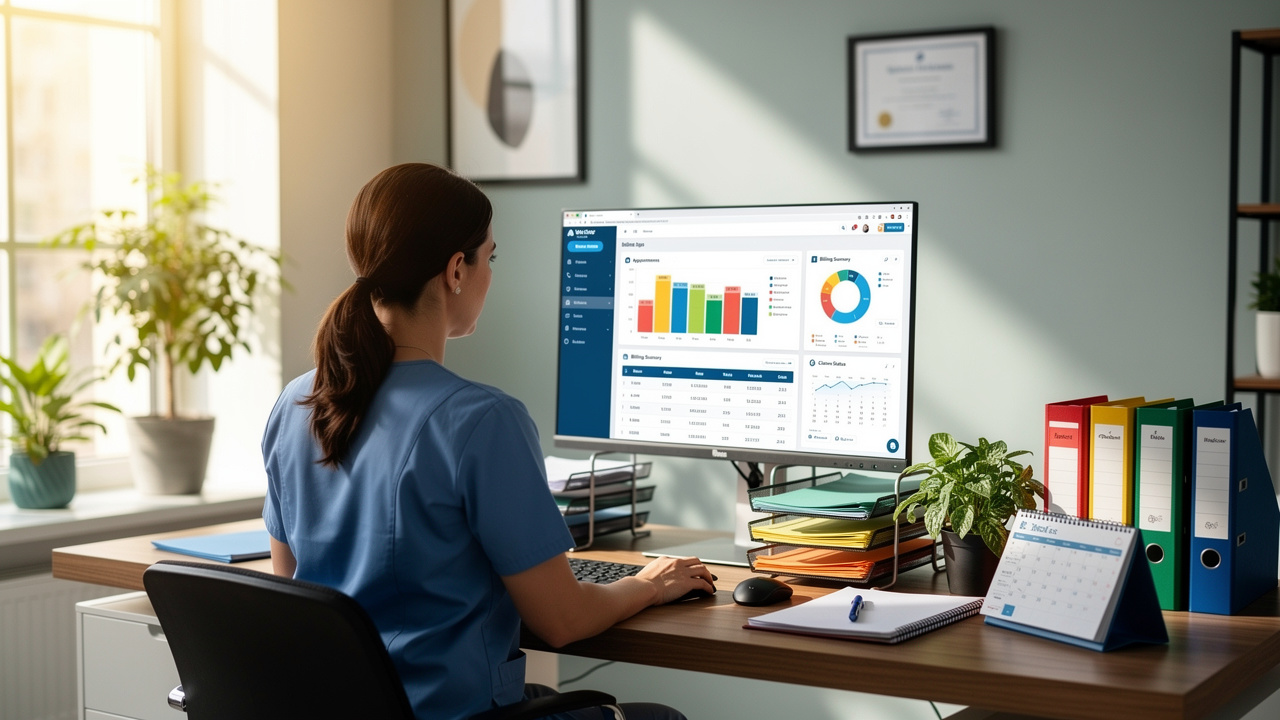
In an era where operational efficiency is paramount, medical practice management software has become indispensable for healthcare providers. By automating essential tasks such as scheduling, billing, and claims management, these systems enable medical professionals to concentrate more on patient care while streamlining administrative processes.
Despite the availability of advanced tools, many practices struggle to implement them effectively, leading to persistent issues such as underpayments and missed appointments. This article delves into the significance of medical practice management software, exploring its features and benefits.
Understanding how to utilize these systems effectively is crucial for overcoming operational challenges and enhancing patient care.
Define Medical Practice Management Software
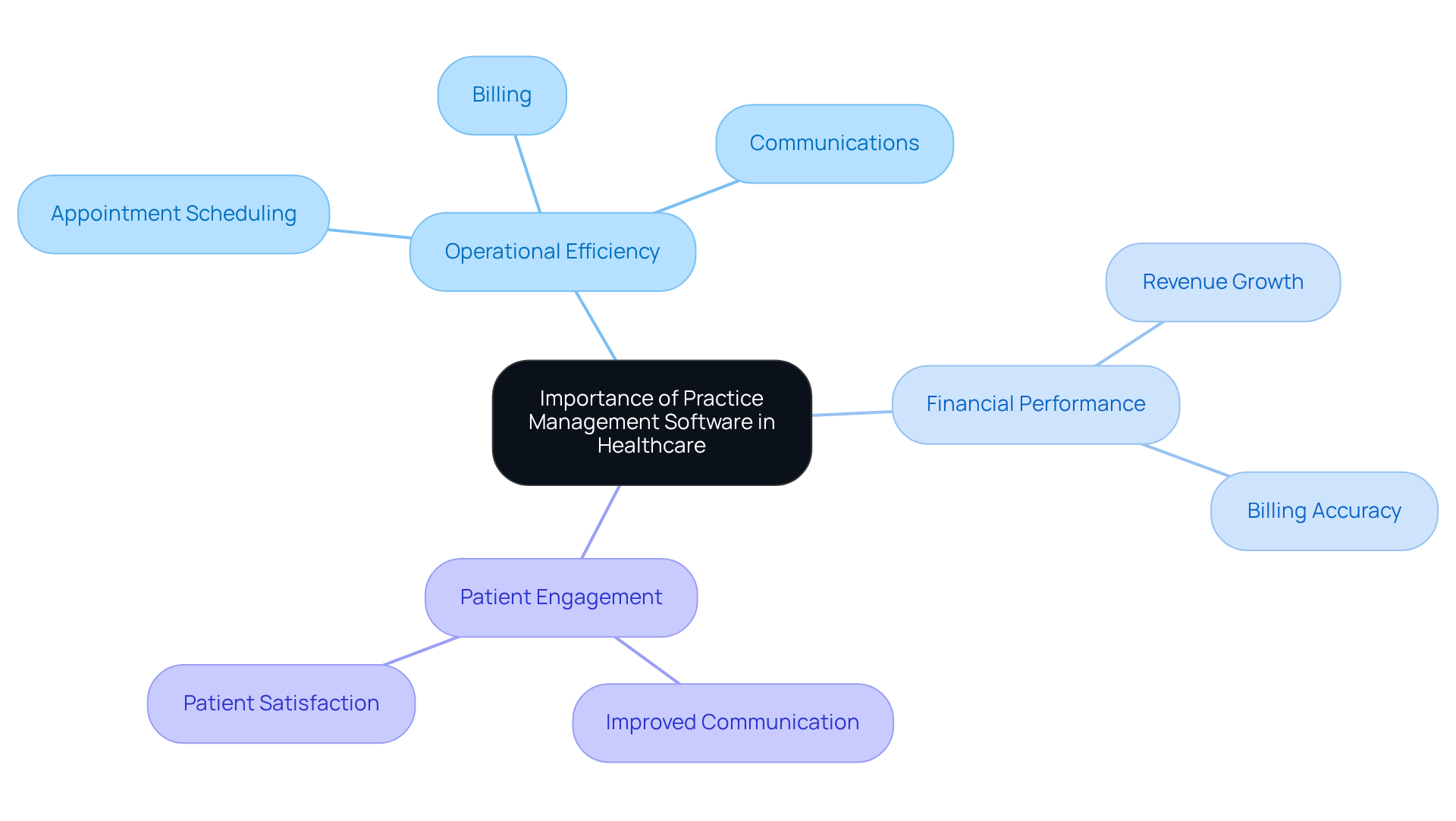
Medical practice management software is essential for optimizing the administrative functions of healthcare providers. This specialized digital solution enhances and automates various operational tasks, including:
- Scheduling
- Billing
- Claims management
- Reporting
HPC consolidates these essential tasks into one platform, allowing medical professionals to focus more on patient care instead of administrative duties. A crucial element of the management system is its capacity to enhance patient statements and claims administration, tackling frequent challenges such as:
- Underpayments
- Unprocessed claims
- Aging claims
These challenges often hinder timely revenue collection and operational efficiency, which are essential for improving billing efficiency.
By 2026, a significant shift is expected, with 25% of healthcare practices likely to adopt new management systems, underscoring their growing importance. The anticipated market expansion is further supported by technological advancements in web-based and cloud-based solutions. For instance, clinics that have implemented the management system have reported enhanced cash flow and payment speed. One clinic noticed faster payment arrivals after using software that generated bills immediately following patient visits. Digital payment alternatives can assist practices in gathering 30% more balances from clients compared to traditional paper statements, demonstrating the financial benefits that can be realized through effective billing practices.
Recent trends indicate that automated reminders and self-scheduling features have significantly reduced no-show rates, which can average between 5-30% depending on the specialty. Real-world examples further demonstrate the effect of management systems on operational efficiency. A small clinic that struggled with excessive paperwork and phone calls improved its workflow by automating appointment reminders and insurance verification, leading to fewer missed visits and smoother operations. Likewise, an urgent care clinic inundated with high visitor volume improved its efficiency by adopting a management system that enabled online scheduling and appointment notifications, resulting in a rise in daily visits without the necessity for extra staff.
Ultimately, the integration of such systems is not merely an operational upgrade but a strategic move towards enhanced patient care and organizational sustainability. Most mid-size organizations achieve full ROI on their investment in medical practice management software within four to six months, making it a financially sustainable option for medical providers. By collaborating with Healthcare Partners Consulting & Billing, LLC (HPC), organizations can further improve their administrative and billing services, ensuring compliance and efficiency in managing statements and claims.
Explain the Importance of Practice Management Software in Healthcare
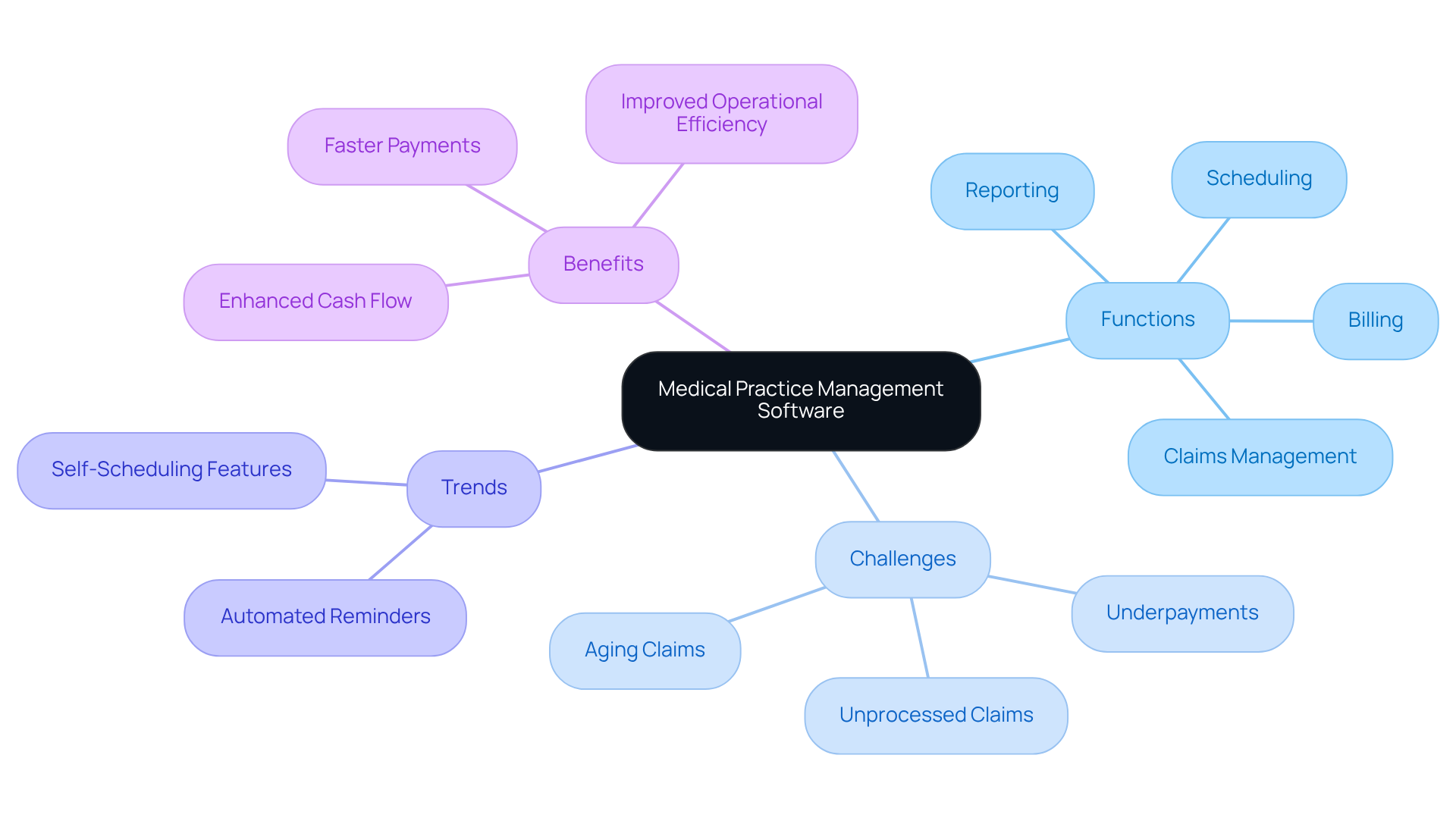
Medical practice management software (PMS) is not just beneficial; it is essential for operational efficiency in the medical field. By automating critical tasks such as appointment scheduling, billing, and communications, medical practice management software alleviates the administrative burden on staff, allowing them to focus more on patient care. This transition enhances data accuracy and ensures compliance with medical regulations, safeguarding patient information and quality care.
In fact, methods utilizing PMS have reported revenue growth of up to 35% through improved billing accuracy and faster reimbursements. As the healthcare landscape continues to evolve, the reliance on medical practice management software will deepen, enabling healthcare providers to enhance both their financial performance and patient engagement.
For instance, clinics that have adopted PMS have experienced significant improvements in engagement and satisfaction among patients, as evidenced by case studies demonstrating enhanced communication and operational efficiency. Notably, Healthcare Partners Consulting offers a quick quiz to assess the profitability of your mental health services, providing tailored recommendations to improve efficiency and billing accuracy. This customized approach not only streamlines administrative tasks but also empowers healthcare providers to concentrate on delivering exceptional care to patients.
Outline Key Features of Medical Practice Management Software
In an era where efficiency is paramount, the right medical practice management software can greatly improve patient care. Key features of such software include:
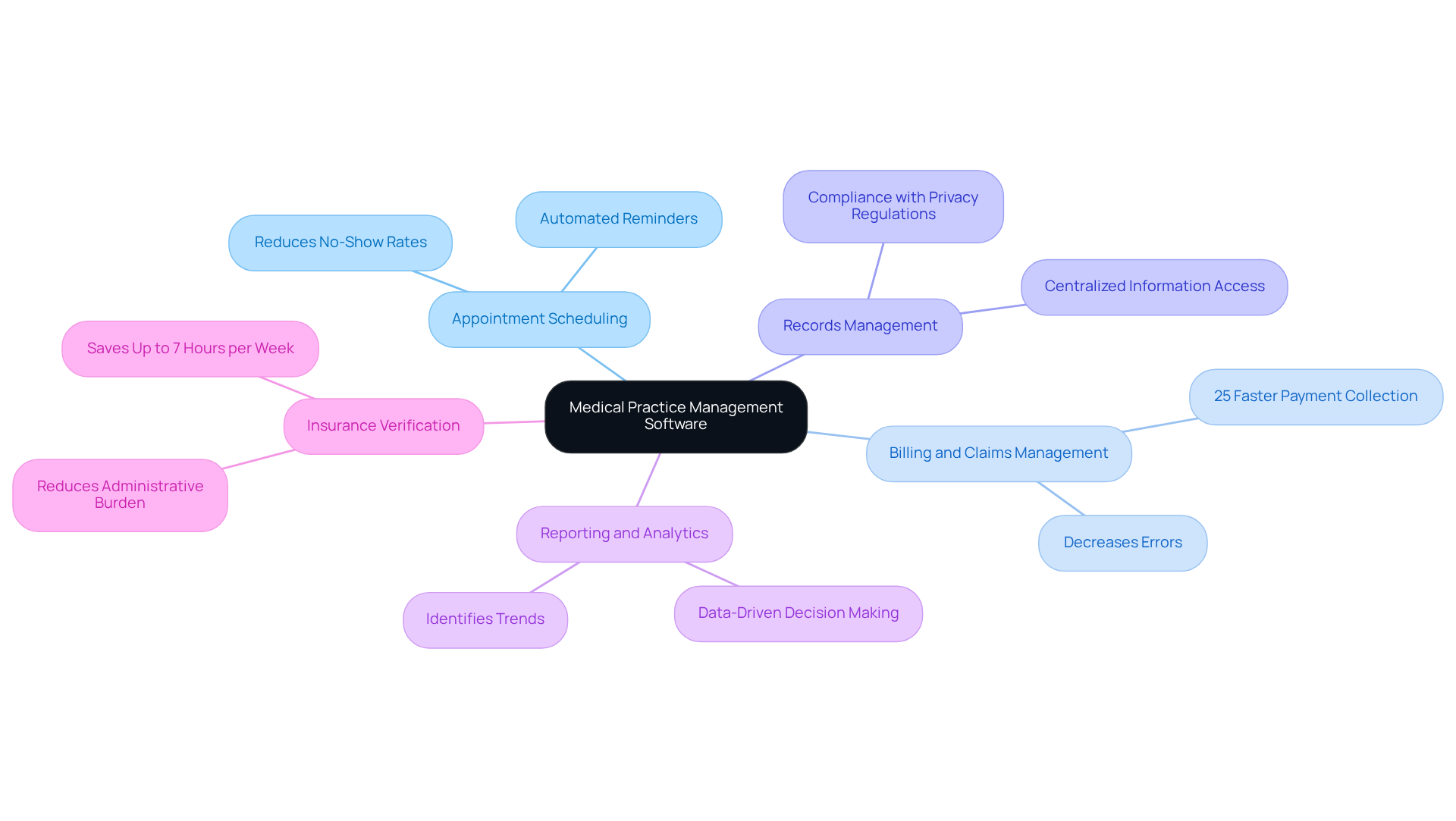
- Appointment Scheduling: This feature streamlines the booking process for patient appointments, significantly reducing no-show rates by up to 38% through automated reminders. Administrative tasks often detract from the time healthcare providers can spend with patients, but practices that utilize medical practice management software often experience smoother operations and improved flow, allowing providers to focus more on care.
- Billing and Claims Management: Automated billing processes ensure timely submission of claims, which can lead to a 25% faster payment collection compared to traditional methods. This efficiency not only decreases errors but also improves revenue recovery for medical providers, particularly those utilizing online payment solutions.
- Records Management: Centralizing information allows healthcare providers to access records easily while maintaining compliance with privacy regulations. This feature supports cleaner workflows and enhances communication across teams, ultimately improving care and operational efficiency.
- Reporting and Analytics: Advanced reporting tools provide insights into operational performance, enabling providers to make data-driven decisions. Practices utilizing customizable reporting can identify trends and optimize workflows, maximizing revenue opportunities and ensuring compliance with industry standards.
- Insurance Verification: Automating the verification of insurance coverage for individuals reduces administrative burdens and enhances the experience. By saving up to 7 hours each week on administrative tasks, healthcare facilities can concentrate more on care, aligning with the compliance-first approach emphasized by Healthcare Partners Consulting.
As operational efficiency increases, healthcare providers can dedicate more time to patient care. Ultimately, the right medical practice management software not only streamlines operations but also enhances the patient experience. Additionally, Healthcare Partners Consulting offers personalized consultations to assist facilities in identifying the optimal solutions tailored to their specific needs, leveraging 39 years of experience in medical and mental health billing and management services nationwide.
Highlight Benefits of Implementing Practice Management Software
The integration of medical practice management software is not merely beneficial; it is essential for modern healthcare operations.
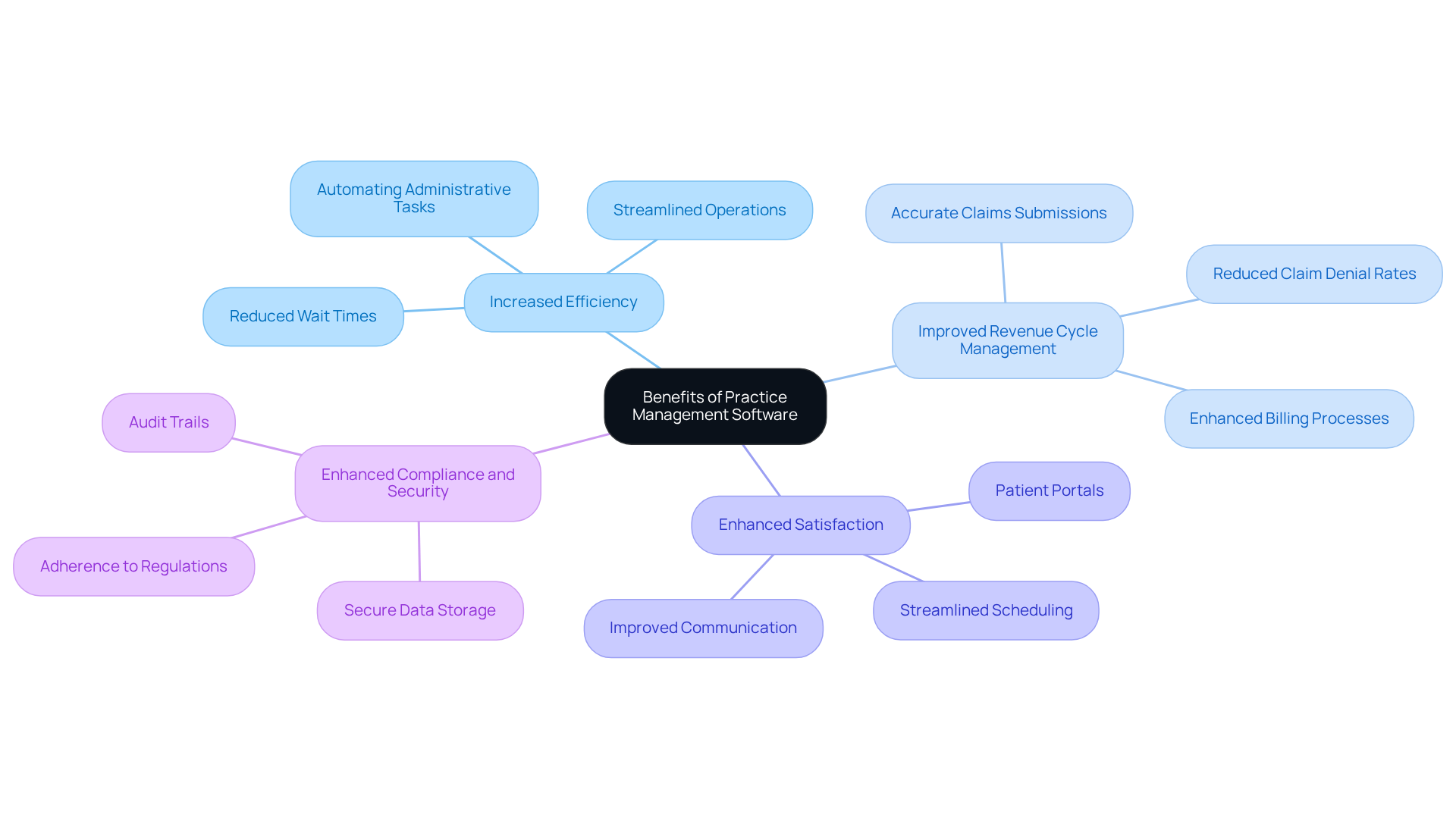
- Increased Efficiency: Automating administrative tasks allows healthcare providers to streamline operations, resulting in faster patient processing and reduced wait times. For instance, advanced management systems have shown a notable decrease in scheduling conflicts, leading to a smoother flow of patients.
- Improved Revenue Cycle Management: Enhanced billing processes and accurate claims submissions facilitate quicker reimbursements and minimize revenue leakage. Effective management of patient statements, including balance follow-up, is crucial in addressing underpayments, unprocessed claims, and aging claims. Recent statistics reveal that effective management strategies can reduce claim denial rates, which have reached 11% in recent years, thereby improving financial health. The medical practice management software market value in North America was USD 6.96 billion in 2024, highlighting the financial implications of adopting such software.
- Enhanced Satisfaction: Streamlined scheduling and improved communication foster a more efficient and satisfying interaction for individuals. With features like online appointment scheduling and patient portals, individuals can easily manage their care, leading to greater satisfaction.
- Enhanced Compliance and Security: MPMS aids organizations in adhering to medical regulations, ensuring that individual data is managed securely and in accordance with laws such as HIPAA. The software incorporates strong security measures, such as secure data storage for individuals and audit trails, that safeguard sensitive information, addressing increasing concerns about data breaches in the medical field.
Access to comprehensive reporting and analytics enables medical providers to make informed choices that can enhance performance and patient outcomes. By utilizing data from the system, organizations can pinpoint trends and areas for enhancement, ultimately resulting in improved resource management and operational efficiency. The global management system market is anticipated to expand at a CAGR of 9.82% during the forecast period of 2026-2034, highlighting the significance of medical practice management software in the medical industry.
These benefits underscore the importance of adopting medical practice management software as a strategic investment in the future of healthcare delivery, enabling practices to focus more on patient care while optimizing their administrative functions. Without embracing MPMS, healthcare practices risk falling behind in efficiency and patient satisfaction, ultimately compromising care quality.
Conclusion
In an era where efficiency and patient care are paramount, medical practice management software emerges as a critical tool for healthcare providers. This software transforms administrative tasks into streamlined processes that enhance both operational efficiency and patient care. By automating scheduling, billing, and claims management, healthcare providers can focus on what truly matters: delivering quality care to patients. As the healthcare landscape evolves, practices that fail to adopt these systems risk falling behind in a rapidly evolving healthcare environment.
The article highlights several key benefits of implementing medical practice management software, including:
- Improved revenue cycle management
- Enhanced patient satisfaction
- Increased operational efficiency
Notable features such as automated appointment reminders and billing processes not only reduce administrative burdens but also contribute to faster payment collections and fewer missed appointments. The financial implications are significant, with many practices reporting a return on investment within just a few months of adopting these systems.
Adopting medical practice management software is a strategic investment in the future of healthcare delivery. As practices strive to enhance patient engagement and operational efficiency, this technology is vital for enhancing patient care and operational efficiency. Healthcare providers are encouraged to consider the integration of these systems to remain competitive and ensure a focus on delivering exceptional patient care.
Healthcare Partners Consulting & Billing, LLC (HPC) offers tailored solutions to help practices optimize their administrative functions and maintain compliance.
Frequently Asked Questions
What is medical practice management software?
Medical practice management software is a digital solution designed to optimize the administrative functions of healthcare providers, automating tasks such as scheduling, billing, claims management, and reporting.
How does this software benefit healthcare providers?
It consolidates essential administrative tasks into one platform, allowing medical professionals to focus more on patient care and improving operational efficiency.
What challenges does medical practice management software help address?
The software tackles challenges like underpayments, unprocessed claims, and aging claims, which can hinder timely revenue collection and billing efficiency.
What is the expected trend for the adoption of medical practice management systems by 2026?
It is anticipated that 25% of healthcare practices will adopt new management systems by 2026, highlighting their growing importance.
What technological advancements are contributing to the growth of these systems?
Advancements in web-based and cloud-based solutions are supporting the market expansion of medical practice management software.
How has the implementation of this software affected cash flow in clinics?
Clinics that have implemented the management system have reported enhanced cash flow and faster payment arrivals, particularly through immediate billing following patient visits.
What financial benefits can practices realize through effective billing practices?
Digital payment alternatives can help practices collect 30% more balances from clients compared to traditional paper statements.
How do automated reminders and self-scheduling features impact patient attendance?
These features have significantly reduced no-show rates, which can average between 5-30% depending on the specialty.
Can you provide an example of how a clinic improved its operations with this software?
A small clinic improved its workflow by automating appointment reminders and insurance verification, leading to fewer missed visits and smoother operations.
What financial return can organizations expect from investing in medical practice management software?
Most mid-size organizations achieve full ROI on their investment within four to six months, making it a financially sustainable option for medical providers.
How can Healthcare Partners Consulting & Billing, LLC (HPC) assist organizations?
HPC can help organizations improve their administrative and billing services, ensuring compliance and efficiency in managing statements and claims.