

Introduction
In the intricate realm of healthcare, the management of accounts receivable (AR) is pivotal for the financial viability of mental health clinics. Mastering AR processes enables facilities to improve cash flow and allows healthcare providers to concentrate on delivering quality patient care. Many clinics encounter challenges in optimizing AR management, prompting the need for effective best practices to ensure financial sustainability.
Understand the AR Management Process in Healthcare
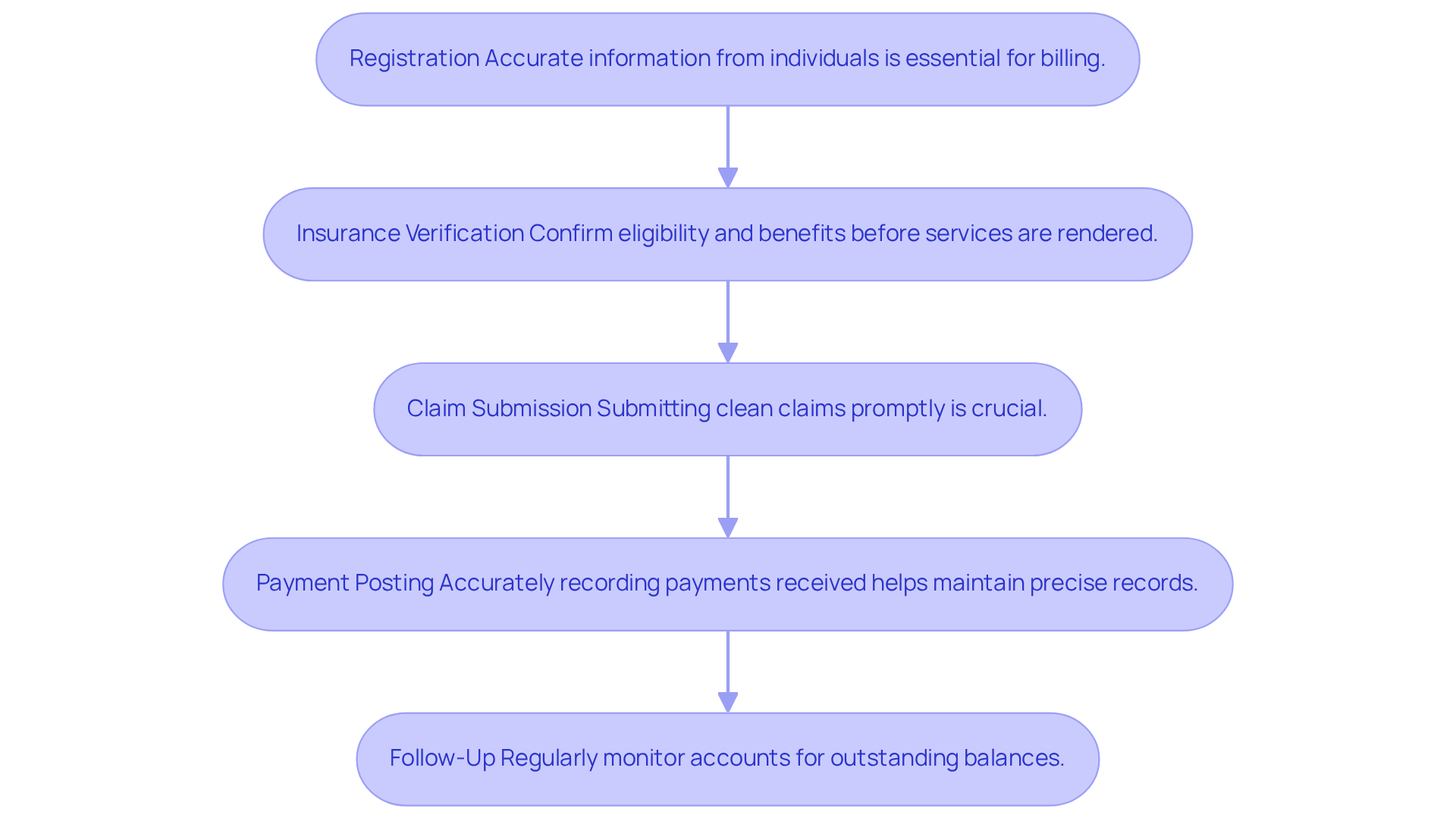
Inaccuracies in accounts receivable management can jeopardize the financial health of healthcare facilities. The AR management process in healthcare encompasses several essential stages, including registration, insurance verification, submission of claims, payment posting, and follow-up on outstanding balances. Every step plays a crucial role in securing timely reimbursements and keeping cash flow healthy.
- Registration: Accurate information from individuals is essential for billing. Ensure that all demographic and insurance details are collected at the first point of contact.
- Insurance Verification: Confirming eligibility and benefits before services are rendered can prevent denials later on.
- Claim Submission: Submitting clean claims promptly is crucial. Utilize standardized coding practices to minimize errors.
- Payment Posting: Accurately recording payments received from both clients and insurers helps maintain precise financial records.
- Follow-Up: Regularly monitor accounts for outstanding balances and follow up with payers and patients to ensure timely payments.
Understanding these stages enables mental wellness facilities to optimize their AR management processes, reduce delays, and enhance financial stability. Ultimately, a streamlined AR process is not just beneficial; it is essential for the sustainability of healthcare operations.
Implement Key Strategies for Optimizing AR Management
Mental health clinics often struggle with AR management, leading to cash flow challenges that can jeopardize their operations. To address these issues, clinics should consider the following strategies:
- Establish Clear Billing Procedures: It is essential to define the billing cycle and ensure that all staff are trained on the procedures to follow. This includes specifying when invoices are sent and how follow-ups are conducted.
- Prioritize Clean Claims: Implementing a rigorous claim scrubbing process is crucial to ensure that all claims are accurate and complete before submission. This practice reduces the likelihood of denials and delays, contributing to a denial reduction of 20-30%.
- Utilize Aging Reports: Regularly reviewing aging reports allows healthcare facilities to identify overdue accounts. This enables them to prioritize follow-ups and manage collections more efficiently, ultimately resulting in quicker reimbursement of 15-25% within 30-90 days.
- Train Staff on Compliance: Ensuring that all staff are aware of compliance requirements related to billing and collections is vital. This reduces the risk of mistakes and improves the establishment’s reputation, promoting a culture of accountability.
- Engage in Continuous Improvement: Regularly assessing accounts receivable processes and seeking feedback from staff can identify areas for improvement. This proactive approach to AR management can lead to substantial enhancements in efficiency and revenue collection, ensuring that healthcare facilities remain competitive in a challenging financial environment.
Without these strategies, clinics risk falling behind in a competitive landscape, ultimately affecting their ability to provide quality care.

Enhance Client Communication and Engagement in AR Management
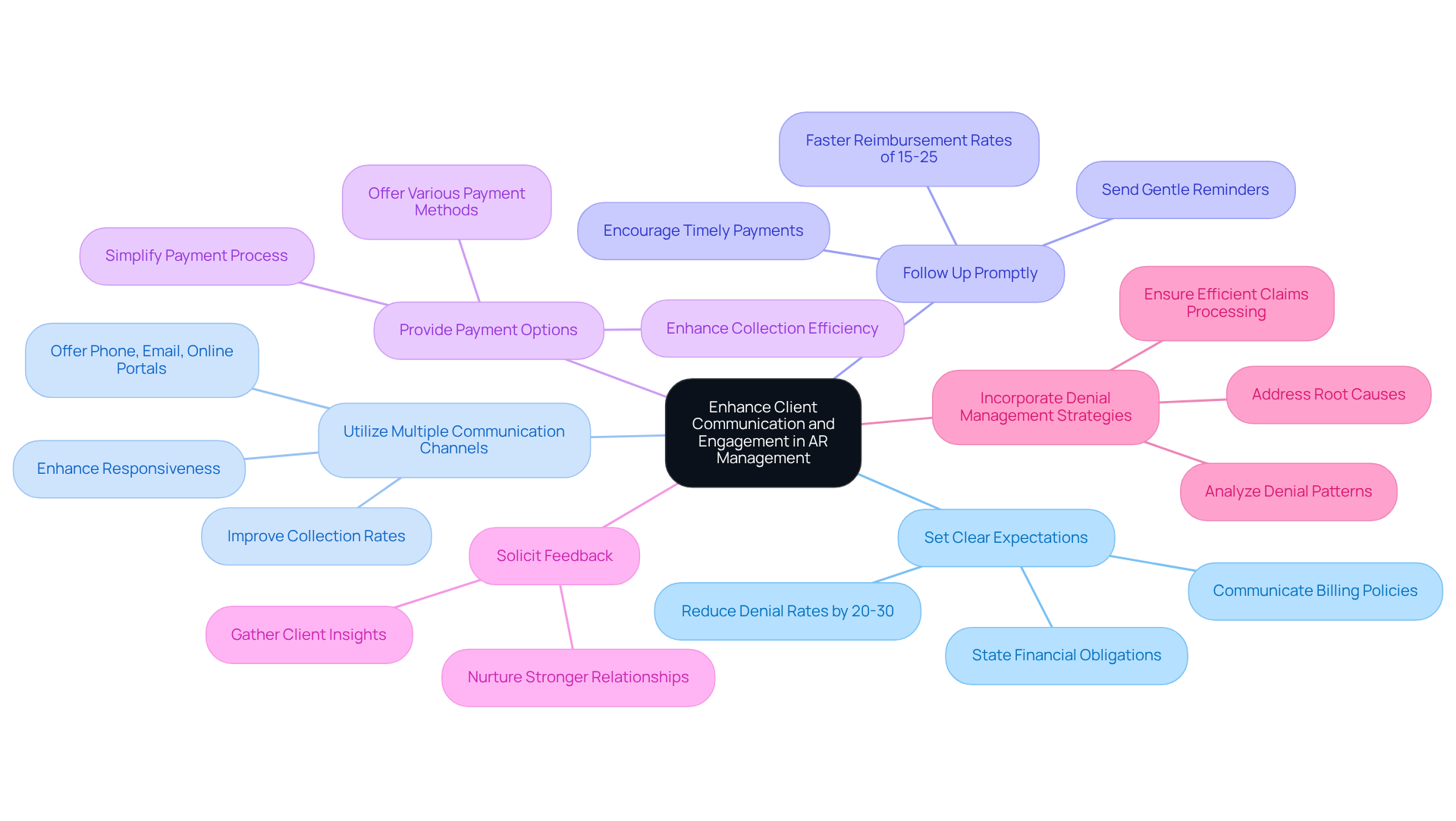
Effective communication is a cornerstone of successful accounts receivable management in mental health clinics. Implementing the following strategies can significantly enhance client engagement and improve financial outcomes:
- Set Clear Expectations: Clearly communicate billing policies and payment expectations to clients from the outset. This includes clearly stating their financial obligations and payment schedules, potentially reducing denial rates by 20-30%. Effective financial communication is crucial for ensuring individuals comprehend their responsibilities, especially in addressing underpayments and unprocessed requests.
- Utilize Multiple Communication Channels: Offer various communication methods, such as phone, email, and online portals. This flexibility can enhance responsiveness and engagement, ultimately improving collection rates. Practices that offer multiple channels for communication experience higher satisfaction and engagement, which is essential for effectively managing aging claims.
- Follow Up Promptly: After sending invoices, quickly reach out to individuals to remind them of outstanding balances. Gentle reminders can encourage timely payments, contributing to faster reimbursement rates of 15-25% within 30-90 days. Without timely payments, cash flow can become strained, impacting the clinic’s operations.
- Provide Payment Options: Offering various payment methods, including online transactions, simplifies the process for individuals, making it easier for them to settle their accounts and enhancing overall collection efficiency. Clients expect convenience and transparency in billing, which this approach provides.
- Solicit Feedback: Ask clients for their thoughts on the billing process regularly. This practice not only offers valuable insights for enhancement but also shows that the organization values their input, nurturing a stronger relationship. Such engagement builds loyalty, which is vital for the clinic’s long-term success.
- Incorporate Denial Management Strategies: Implementing effective denial management strategies is essential for revenue recovery. By analyzing denial patterns and addressing the root causes, healthcare facilities can reduce the frequency of denials and ensure that claims are processed efficiently.
By improving communication and engagement, along with effective denial management, mental wellness facilities can foster better relationships with patients, resulting in enhanced accounts receivable outcomes and overall financial stability through effective AR management. Ultimately, these strategies not only enhance financial outcomes but also strengthen the therapeutic alliance with clients.
Leverage Technology and Automation for Efficient AR Management
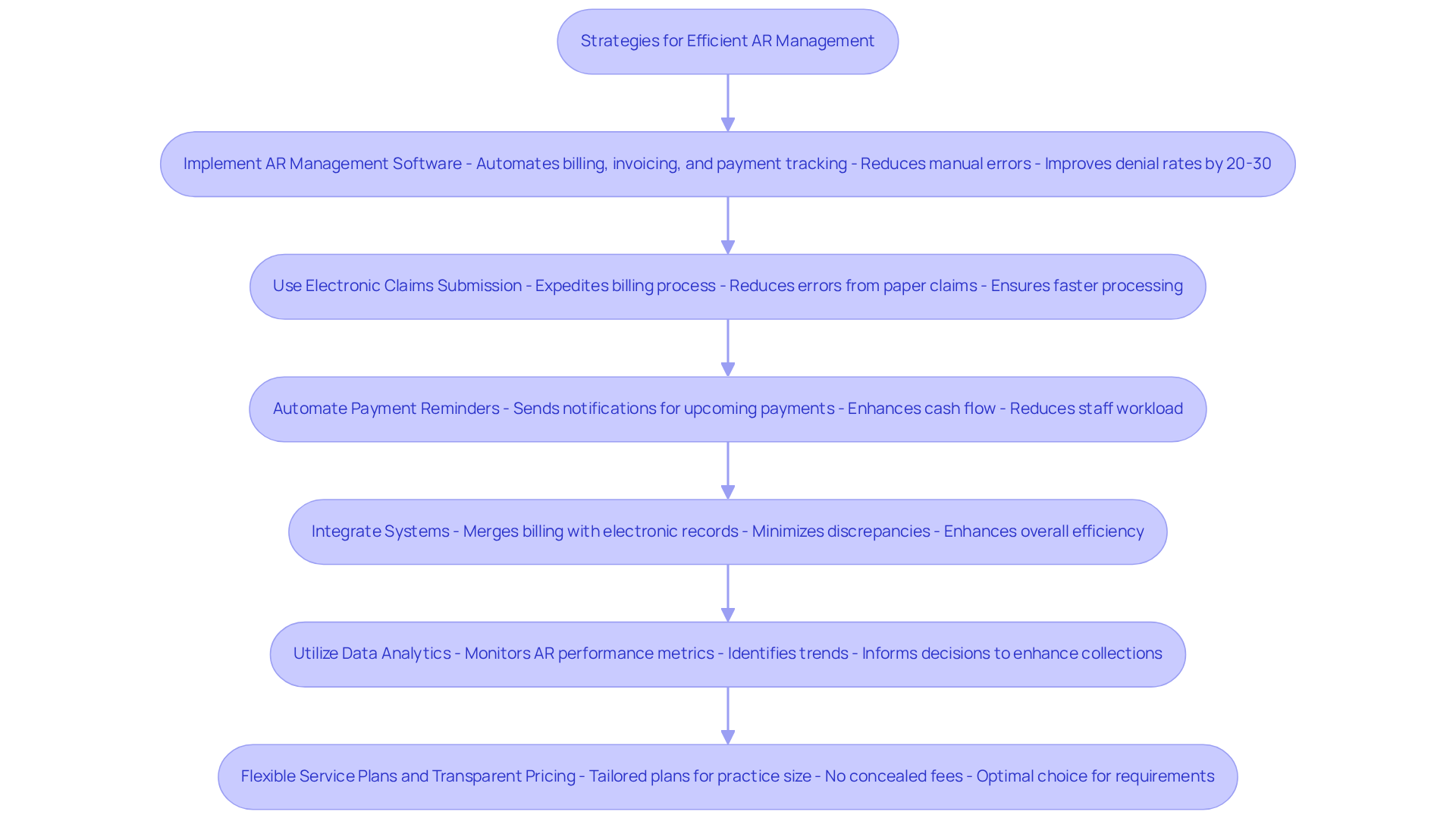
Leveraging technology and automation in AR management can significantly enhance operational efficiency for mental health clinics. However, many clinics face challenges in effectively managing their AR management processes. Here are key strategies to implement:
- Implement AR Management Software: Specialized AR management software, like TherapyNotes, SimplePractice, or Valant, automates billing, invoicing, and payment tracking. This reduces manual errors and streamlines the entire AR process. Industry statistics indicate that this technology can reduce denial rates by 20-30% and accelerate reimbursements by 15-25% within 30-90 days.
- Use Electronic Claims Submission: Transitioning to electronic claims submission expedites the billing process and reduces errors associated with paper claims, ensuring faster processing and improved accuracy. Healthcare Partners Consulting & Billing, LLC (HPC) specializes in this area, providing a compliance-first approach to ensure adherence to payer rules.
- Automate Payment Reminders: Establishing automated notifications for individuals regarding upcoming or overdue payments aids in ensuring timely collections without increasing staff workload, thereby enhancing cash flow. HPC’s customized solutions enable clinics to concentrate on patient care while enhancing financial stability.
- Integrate Systems: Merging billing systems with electronic records facilitates seamless data transfer, minimizing discrepancies and enhancing overall efficiency in the billing process. HPC understands the unique needs of behavioral and mental health practices, ensuring these integrations are tailored accordingly.
- Utilize Data Analytics: Leveraging data analytics allows clinics to monitor AR performance metrics, identify trends, and make informed decisions to enhance collections and reduce denials. Incorporating scorecard-driven adjustments linked to accuracy and denial rates can further demonstrate operational rigor in revenue cycle management.
- Flexible Service Plans and Transparent Pricing: HPC offers flexible service plans tailored to the size of your practice and claim volume, with pricing models that include percentage-based fees, flat rates for defined scopes, or custom subscription packages. This transparency guarantees no concealed fees, enabling healthcare facilities to select the optimal choice for their requirements.
A relevant case study highlights the impact of Billie, an AI billing agent, which has enabled users to reduce time spent on billing inquiries by 85% and achieve a 32% increase in cash flow. Without these technological solutions, mental health clinics risk falling behind in their AR management, which ultimately impacts their ability to provide quality patient care. With 39 years of experience, HPC is dedicated to transforming medical billing workflows, ensuring that practices receive the support they need to thrive.
Conclusion
Effective accounts receivable (AR) management directly impacts the financial stability of mental health clinics. It enables them to focus on what truly matters: patient care. By implementing best practices in AR management, healthcare providers can streamline their processes, reduce administrative burdens, and enhance their overall operational efficiency. This empowerment allows clinics to allocate more resources toward delivering quality care, ultimately benefiting both providers and patients alike.
Throughout the article, key strategies for optimizing AR management have been discussed, including:
- Establishing clear billing procedures
- Prioritizing clean claims
- Utilizing aging reports
- Enhancing client communication
Each of these practices contributes to improved cash flow and reduced denial rates, ensuring that mental health facilities can maintain financial stability. Additionally, leveraging technology and automation plays a significant role in enhancing AR processes, allowing clinics to minimize errors and expedite reimbursements.
In conclusion, the importance of effective AR management in mental health clinics cannot be overstated. By adopting these best practices, healthcare providers can enhance financial outcomes while simultaneously strengthening client relationships. With the evolving healthcare landscape, clinics must prioritize AR management to ensure their success. For clinics looking to improve their billing processes while focusing on patient care, reaching out to Healthcare Partners Consulting & Billing, LLC (HPC) for expert support can provide the necessary guidance to navigate these challenges effectively.
Frequently Asked Questions
What is the AR management process in healthcare?
The AR management process in healthcare includes several essential stages: registration, insurance verification, claim submission, payment posting, and follow-up on outstanding balances. Each stage is crucial for securing timely reimbursements and maintaining healthy cash flow.
Why is accurate registration important in the AR management process?
Accurate registration is important because it ensures that all demographic and insurance details are collected at the first point of contact, which is essential for proper billing.
What role does insurance verification play in the AR management process?
Insurance verification involves confirming eligibility and benefits before services are rendered, which helps prevent claim denials later on.
How can healthcare facilities ensure successful claim submission?
Healthcare facilities can ensure successful claim submission by submitting clean claims promptly and utilizing standardized coding practices to minimize errors.
What is the significance of payment posting in AR management?
Payment posting is significant because it involves accurately recording payments received from both clients and insurers, which helps maintain precise financial records.
How should healthcare facilities handle follow-up on outstanding balances?
Healthcare facilities should regularly monitor accounts for outstanding balances and follow up with payers and patients to ensure timely payments.
What are the benefits of understanding the AR management process?
Understanding the AR management process enables mental wellness facilities to optimize their processes, reduce delays, and enhance financial stability, which is essential for the sustainability of healthcare operations.