
Introduction
For mental health clinics, distinguishing between coding and billing is essential for achieving optimal financial health. While coding translates healthcare services into standardized codes, billing ensures that providers receive the compensation they deserve for their services. As the landscape of mental health billing evolves, particularly with upcoming coding updates, clinics must confront the complexities of coding and billing to avoid financial pitfalls. Mastering these differences can lead to improved financial health and sustainability. Clinics can adopt various strategies to effectively navigate these complexities and enhance their financial outcomes.
Differentiate Between Medical Billing and Coding
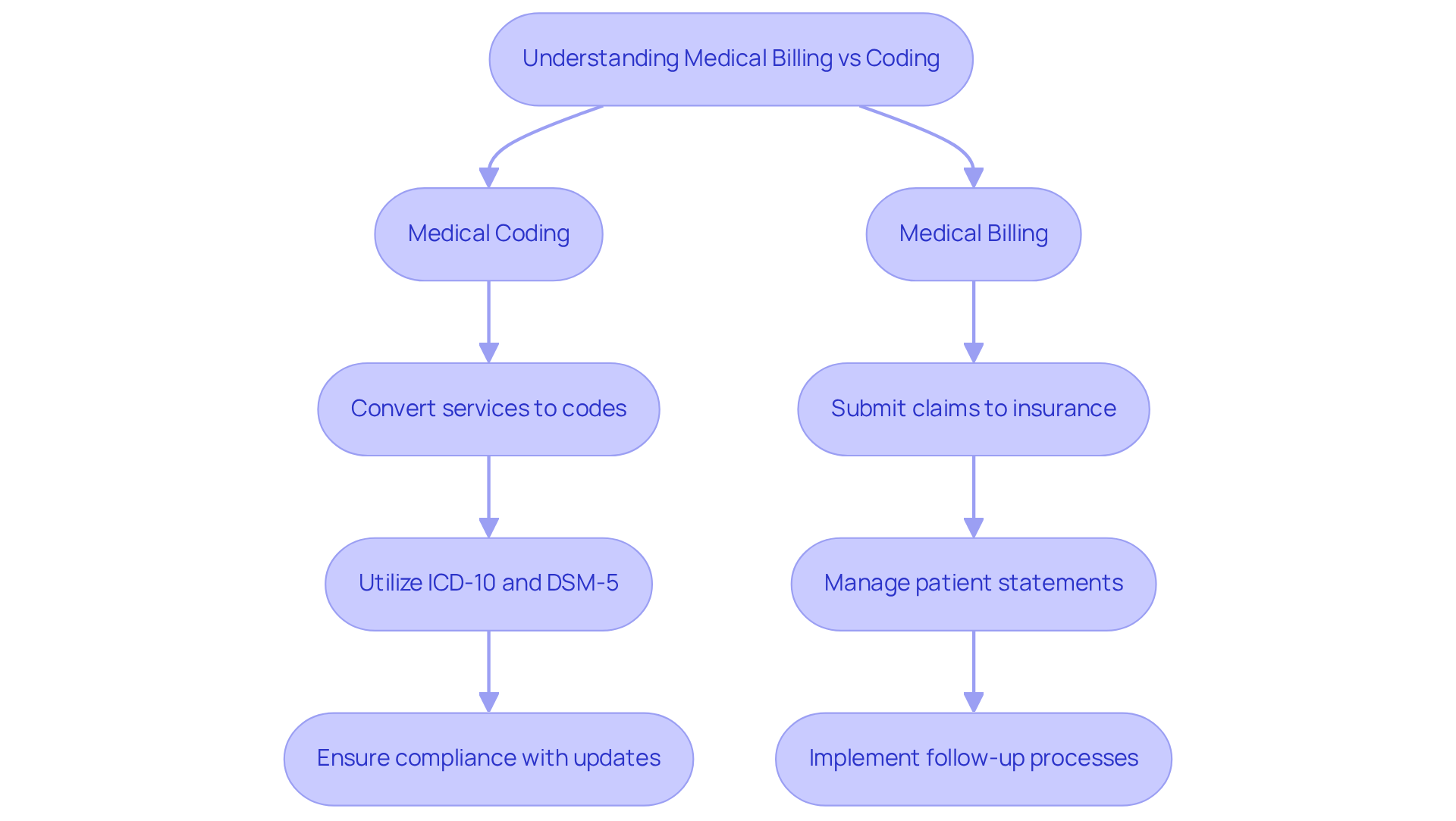
Understanding the distinct roles of coding vs billing is essential for optimizing the healthcare revenue cycle. Medical coding involves converting healthcare services, diagnoses, and procedures into standardized codes, primarily utilizing the ICD-10 and DSM-5 classifications for psychological services. In contrast, medical claims processing is the procedure of submitting requests to insurance companies to ensure that healthcare providers receive compensation for their services.
For mental wellness clinics, comprehending these distinctions is crucial, particularly with the forthcoming 2026 coding updates that must be accomplished by February 16, 2026. Mental wellness invoicing often depends on time-based coding, where the length of therapy sessions directly affects reimbursement rates. This contrasts with traditional medical invoicing, which typically emphasizes procedure-based coding. By mastering the distinctions in coding vs billing, clinics can enhance their financial performance and compliance, effectively navigating the intricacies of their financial processes.
Effective management of patient statements is crucial in addressing underpayments, unprocessed claims, and aging claims. Clinics that implement robust follow-up processes for patient statements often see improved reimbursement rates, as they align their financial practices with the expectations of insurance providers. Specifically, clinics that adopt these practices can reduce denial rates by 20-30% and achieve faster reimbursement cycles of 15-25% within 30-90 days. This approach not only boosts revenue but also fosters transparency in patient communications regarding their statements. Moreover, comprehending the midpoint rule and ensuring that psychotherapy codes (90832, 90834, 90837) accurately represent the actual time spent are crucial for compliance and precise invoicing. By implementing scorecard-driven adjustments tied to claims accuracy, denial rates, and days in accounts receivable, clinics can further demonstrate operational rigor and improve their overall revenue cycle performance. Ultimately, a thorough grasp of the differences between coding vs billing nuances can significantly elevate a clinic’s financial health and operational efficiency.
Establish Training and Certification Standards
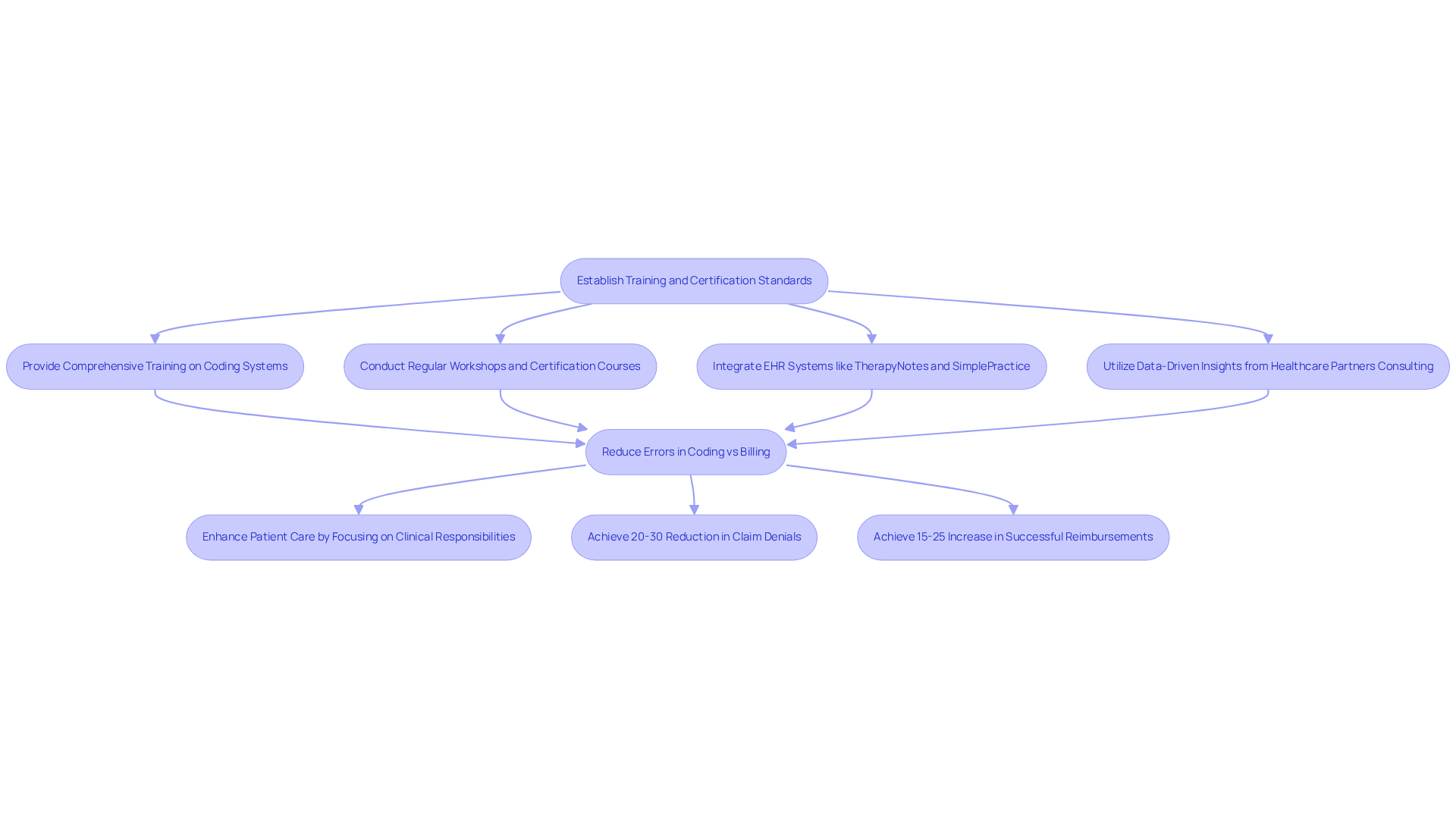
To optimize practices in behavioral clinics regarding coding vs billing and invoicing, establishing rigorous training and certification standards for staff is essential. This includes providing comprehensive training on the specific coding systems used in behavioral services, such as DSM-5 and ICD-10, as well as the complexities of insurance reimbursement processes.
A structured training program significantly reduces errors related to coding vs billing, which are common in psychological practices due to service complexity. Regular workshops and certification courses keep staff informed about the latest coding guidelines and compliance regulations, promoting ongoing professional development.
Clinics prioritizing ongoing education for their staff typically experience a 20-30% reduction in claim denials and a 15-25% increase in successful reimbursements within 30-90 days. Furthermore, integrating with EHR systems like TherapyNotes and SimplePractice can streamline operations and enhance the effectiveness of training programs. By investing in training and utilizing data-driven insights from Healthcare Partners Consulting, providers empower their teams to navigate the revenue landscape confidently, ultimately enhancing patient care by enabling practitioners to concentrate more on their clinical responsibilities.
Utilize Advanced Medical Billing Software
In the realm of psychological well-being clinics, the complexities of billing and administrative tasks often hinder operational efficiency. The implementation of advanced medical invoicing software significantly enhances operational efficiency. This automation minimizes human error and optimizes workflow processes, allowing clinics to focus on patient care.
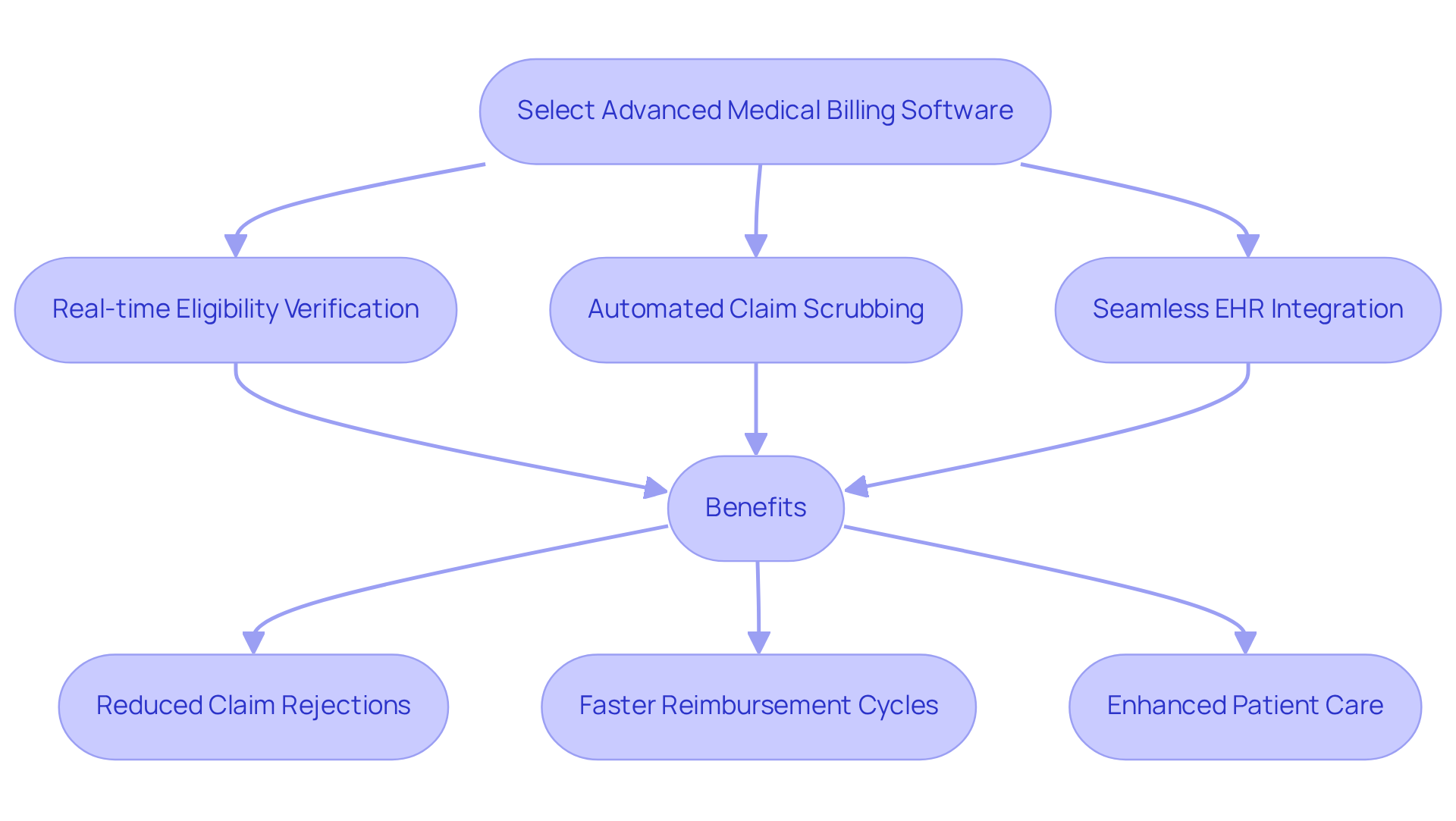
When selecting payment processing software, mental health providers must prioritize features such as:
- Real-time eligibility verification
- Automated claim scrubbing
- Seamless integration with electronic health records (EHR) like TherapyNotes and SimplePractice
These functionalities not only simplify the billing process but also ensure compliance with evolving regulatory standards, including the updated 42 CFR Part 2 privacy rules that will be fully enforceable as of February 16, 2026.
Clinics that utilize software with integrated compliance checks often experience a reduction in claim rejections and faster reimbursement cycles, with rejection reduction rates ranging from 20% to 30% and reimbursement enhancements of 15% to 25% within 30 to 90 days. For instance, Dr. Sarah Mitchell noted that since implementing Healthcare Partners Consulting & Billing, LLC (HPC) solutions, her practice has seen a significant decrease in claim denials and an increase in revenue cycle performance. By investing in the right technology, psychological practices can alleviate administrative burdens, enabling providers to devote more time to patient care while ensuring that their invoicing processes remain efficient and precise.
Additionally, Dr. Michael Rodriguez observed that utilizing specialized billing software from Healthcare Partners Consulting & Billing, LLC (HPC) resulted in a significant enhancement in his clinic’s revenue cycle, illustrating the concrete advantages of implementing advanced billing software customized to the distinct requirements of behavioral services. Ultimately, the right technology not only streamlines operations but also enhances the quality of patient care.
Implement Effective Denial Management Strategies
Clinics face significant challenges in managing denials, which can severely impact their revenue and cash flow. To address these issues effectively, clinics must systematically identify common rejection reasons, analyze trends, and implement corrective actions.
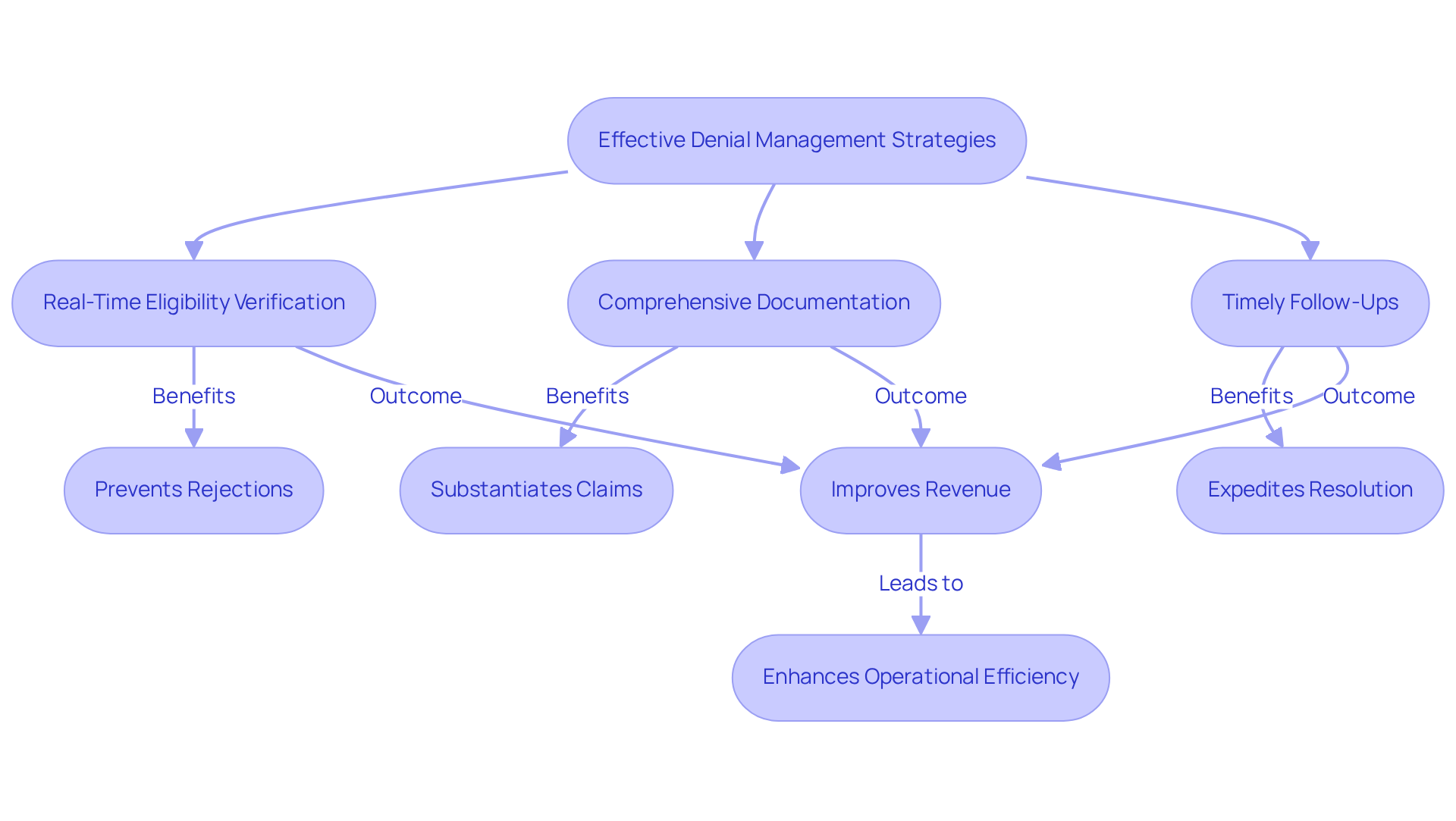
Consider these key strategies for effective denial management:
- Real-Time Eligibility Verification: Confirming that patients’ insurance is active and covers the services provided can prevent many rejections before they occur.
- Comprehensive Documentation: Maintaining thorough and precise documentation of services provided is essential for substantiating claims and defending against refusals.
- Timely Follow-Ups: Regularly following up on denied claims can expedite the resolution process and improve reimbursement rates.
Clinics that implement a structured claims management workflow often see rejection rates decrease by 20-30%. This leads to a higher rate of successful appeals. By proactively addressing issues of refusal, mental health providers can enhance their financial stability and focus on delivering quality patient care. Ultimately, neglecting denial management can jeopardize a clinic’s financial health and hinder its ability to provide quality care. Additionally, integrating patient statements and assessing profitability through tools like the profitability quiz can further support clinics in managing denials effectively. Client testimonials from practitioners such as Dr. Sarah Mitchell and Dr. Michael Rodriguez highlight how implementing these strategies has led to significant revenue increases and reduced administrative burdens.
Conclusion
Navigating the complexities of coding and billing in mental health clinics presents significant challenges that can impact financial performance. While coding translates healthcare services into standardized codes, billing involves submitting claims to insurance companies for reimbursement. Recognizing these distinctions allows clinics to manage the intricacies of mental health billing more effectively, especially with upcoming coding updates and the unique demands of time-based billing practices.
Key insights from this article emphasize the importance of:
- Robust training and certification for staff
- Implementation of advanced billing software
- Necessity of effective denial management strategies
When clinics focus on ongoing education and leverage technology, they can effectively reduce claim denials and improve their reimbursement rates, ultimately enhancing their financial health. Additionally, adopting structured processes for managing patient statements and denials can lead to more streamlined operations and better patient communication.
As mental health clinics strive for operational excellence, embracing these best practices not only safeguards financial health but also enhances the quality of care provided to patients. By investing in training, technology, and effective management strategies, clinics can navigate the intricate landscape of billing and coding with confidence, ensuring they remain compliant and financially viable in a challenging healthcare environment.
Frequently Asked Questions
What is the difference between medical billing and medical coding?
Medical coding involves converting healthcare services, diagnoses, and procedures into standardized codes, primarily using classifications like ICD-10 and DSM-5. Medical billing, on the other hand, is the process of submitting claims to insurance companies to ensure healthcare providers receive payment for their services.
Why is it important for mental wellness clinics to understand the distinctions between coding and billing?
Understanding the differences is crucial for optimizing financial performance and compliance, especially with upcoming coding updates due by February 16, 2026. It allows clinics to navigate their financial processes effectively, particularly since mental wellness invoicing often relies on time-based coding.
How does time-based coding affect reimbursement rates for mental wellness clinics?
In mental wellness clinics, reimbursement rates are directly influenced by the length of therapy sessions, which are coded based on the time spent with patients, unlike traditional medical invoicing that typically focuses on procedure-based coding.
What practices can clinics implement to improve reimbursement rates?
Clinics can enhance reimbursement rates by effectively managing patient statements, addressing underpayments, unprocessed claims, and aging claims. Implementing robust follow-up processes for patient statements can lead to a reduction in denial rates and faster reimbursement cycles.
What impact can adopting strong follow-up processes have on denial rates?
Clinics that adopt strong follow-up processes for patient statements can reduce denial rates by 20-30% and achieve faster reimbursement cycles of 15-25% within 30-90 days.
What are the key psychotherapy codes that clinics should accurately represent for compliance?
The key psychotherapy codes include 90832, 90834, and 90837, which should accurately reflect the actual time spent in therapy sessions to ensure compliance and precise invoicing.
How can clinics demonstrate operational rigor in their financial processes?
Clinics can demonstrate operational rigor by implementing scorecard-driven adjustments tied to claims accuracy, denial rates, and days in accounts receivable, which can improve overall revenue cycle performance.
What is the significance of understanding the midpoint rule in psychotherapy coding?
Understanding the midpoint rule is crucial for ensuring that psychotherapy codes accurately reflect the time spent during sessions, which is essential for compliance and proper reimbursement.