

Introduction
Many clinics grapple with cash flow issues due to mismanagement of accounts receivable and accounts payable. These components significantly impact operational liquidity and the ability to maintain strong vendor relationships. This discussion will clarify the distinctions between AR and AP and explore management strategies that can enhance financial performance.
Effective oversight of AR and AP enables healthcare providers to improve financial health and concentrate on delivering quality patient care. Clinics must implement strategies that align revenue generation with expense management to maximize operational efficiency.
Define Accounts Receivable and Accounts Payable
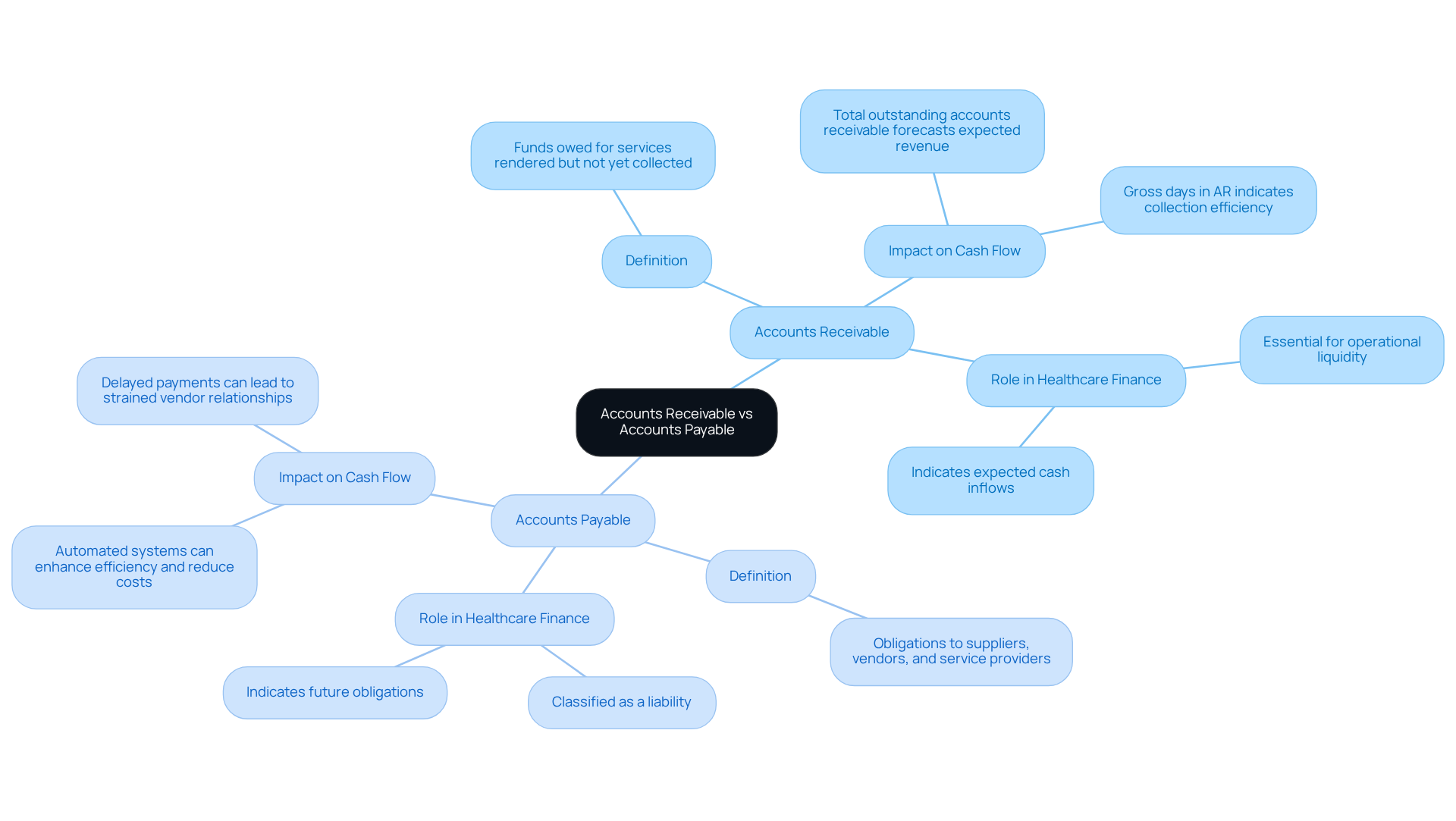
In healthcare finance, understanding accounts receivable vs accounts payable is critical, as accounts receivable represents funds owed for services rendered but not yet collected. This figure is an asset on the balance sheet, indicating expected cash inflows essential for operational liquidity. Conversely, in the discussion of accounts receivable vs accounts payable, Accounts Payable (AP) denotes the obligations a healthcare practice has to suppliers, vendors, and service providers for goods and services received. AP is classified as a liability, indicating future obligations that must be met.
Understanding the distinctions of accounts receivable vs accounts payable is essential for clinics aiming to manage their cash flow effectively. Current statistics show that healthcare organizations handle hundreds or thousands of invoices each month, with many still relying on manual processes, leading to inefficiencies like delayed transactions and lost discounts. For instance, automated accounts payable systems can enhance efficiency, potentially increasing productivity by 3 to 5 times and reducing common sources of approval delays.
Healthcare Partners Consulting & Billing, LLC (HPC) understands the critical nature of these financial elements. Our comprehensive medical billing and administrative solutions are designed to streamline your practice’s revenue cycle management, allowing you to focus on patient care while we manage the complexities of billing and collections. By providing personalized consultations, we help identify the optimal administrative solutions tailored to your practice’s needs, ultimately enhancing patient care and increasing revenue. To explore how we can assist your practice, schedule a 30-minute call with us today to discuss your specific needs and discover the services that will move the needle fastest.
Compare the Processes of Managing AR and AP
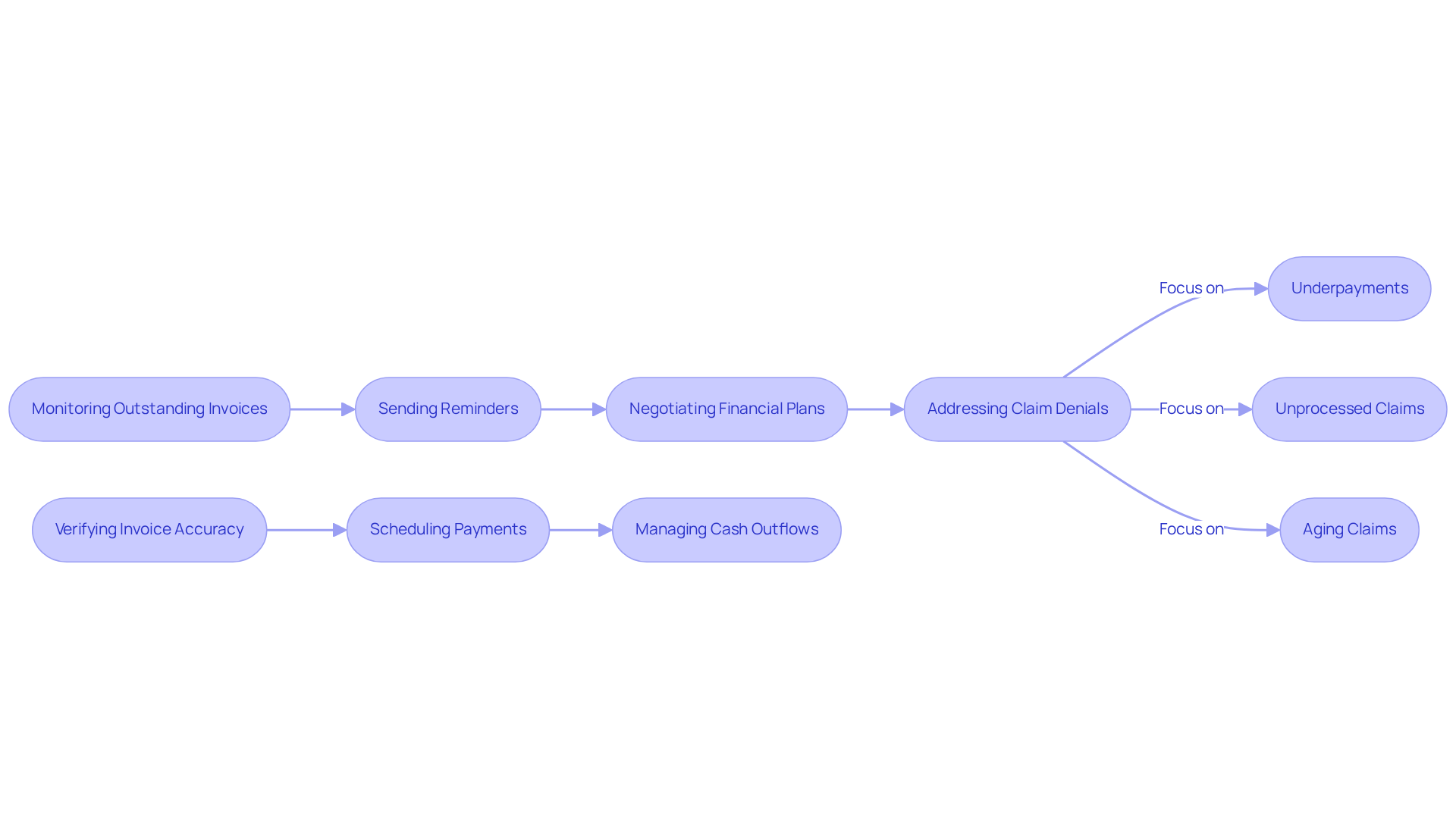
Managing Accounts Receivable presents significant challenges that can impact a healthcare facility’s financial stability. This process involves monitoring outstanding invoices, following up on collections, and ensuring timely payments. Effective AR oversight is essential for enhancing cash flow and reducing days sales outstanding (DSO), particularly in healthcare billing, where claim denials and underpayments can significantly affect revenue. This oversight often includes:
- Sending reminders
- Negotiating financial plans
- Addressing claim denials, particularly focusing on:
- Underpayments
- Unprocessed claims
- Aging claims
In contrast, Accounts Payable oversight focuses on processing invoices and ensuring timely vendor payments to maintain strong supplier relationships. This includes:
- Verifying invoice accuracy
- Scheduling payments
- Managing cash outflows
While both processes aim to optimize financial health, the distinction between accounts receivable vs accounts payable oversight shows that AR is revenue-focused, whereas AP is expense-oriented. Understanding these distinctions allows healthcare facilities to refine their financial strategies and enhance operational efficiency.
Analyze the Financial Impact of AR and AP on Clinics
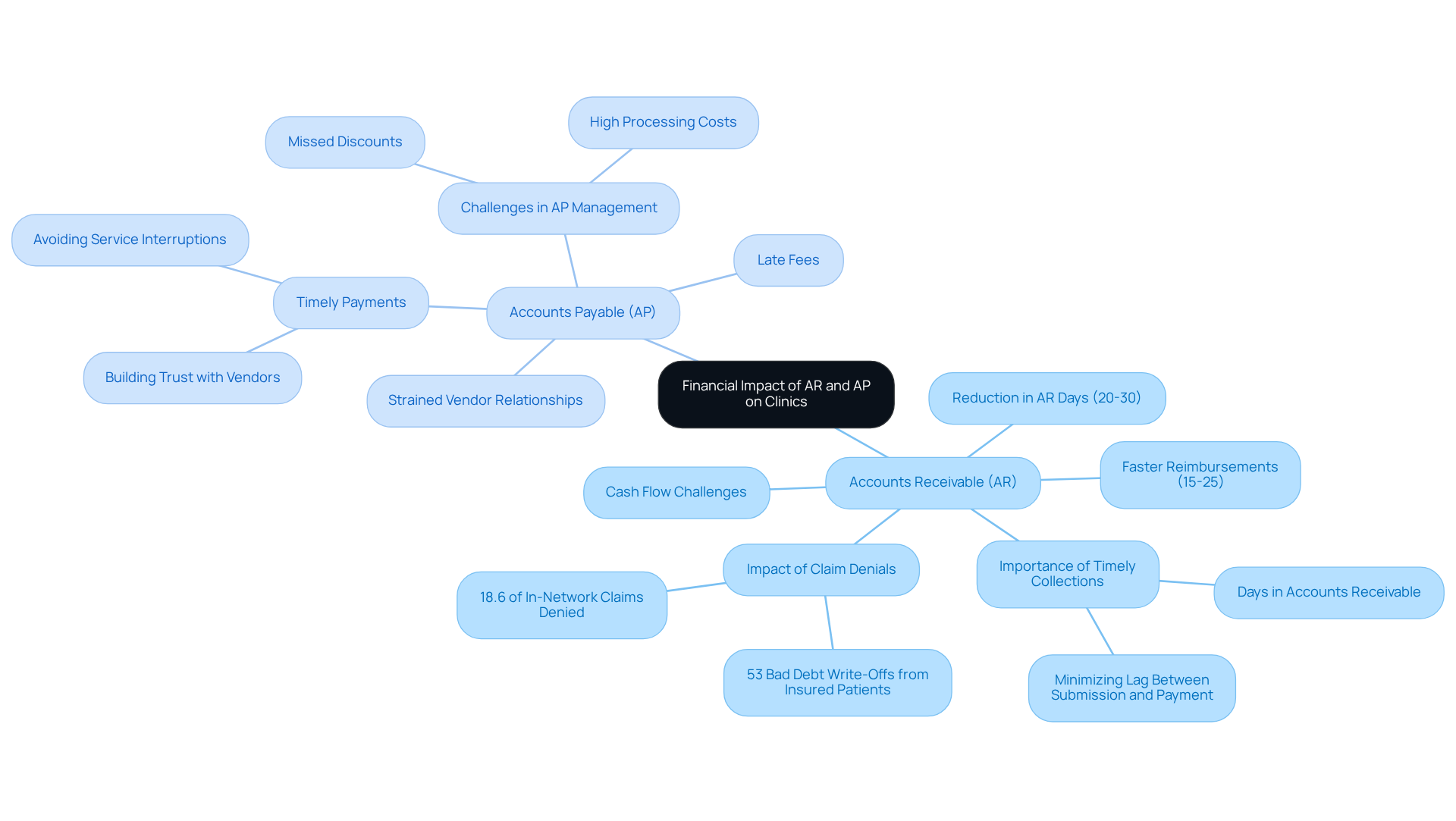
The management of Accounts Receivable (AR) is pivotal for maintaining a healthcare facility’s financial health. Delays in payment collection create cash flow challenges that can jeopardize operational stability. A well-organized AR process not only boosts liquidity; it also helps healthcare facilities tackle financial challenges more effectively. Clinics that implement robust AR strategies can experience a reduction in AR days by 20-30% and faster reimbursements of 15-25% within 30-90 days, significantly improving their revenue cycle performance.
On the other hand, effective management of Accounts Payable (AP) is equally essential. Ineffective AP practices can lead to late fees, strained relationships with vendors, and missed opportunities for early discounts. By ensuring timely payments, healthcare facilities can maintain strong supplier relationships, which are crucial for uninterrupted service delivery. Balancing accounts receivable vs accounts payable is essential for financial well-being, as both directly impact an organization’s operational capabilities and overall success. Ultimately, a strategic approach to managing both AR and AP is vital for sustaining operational excellence in healthcare.
Implement Best Practices for Effective AR and AP Management
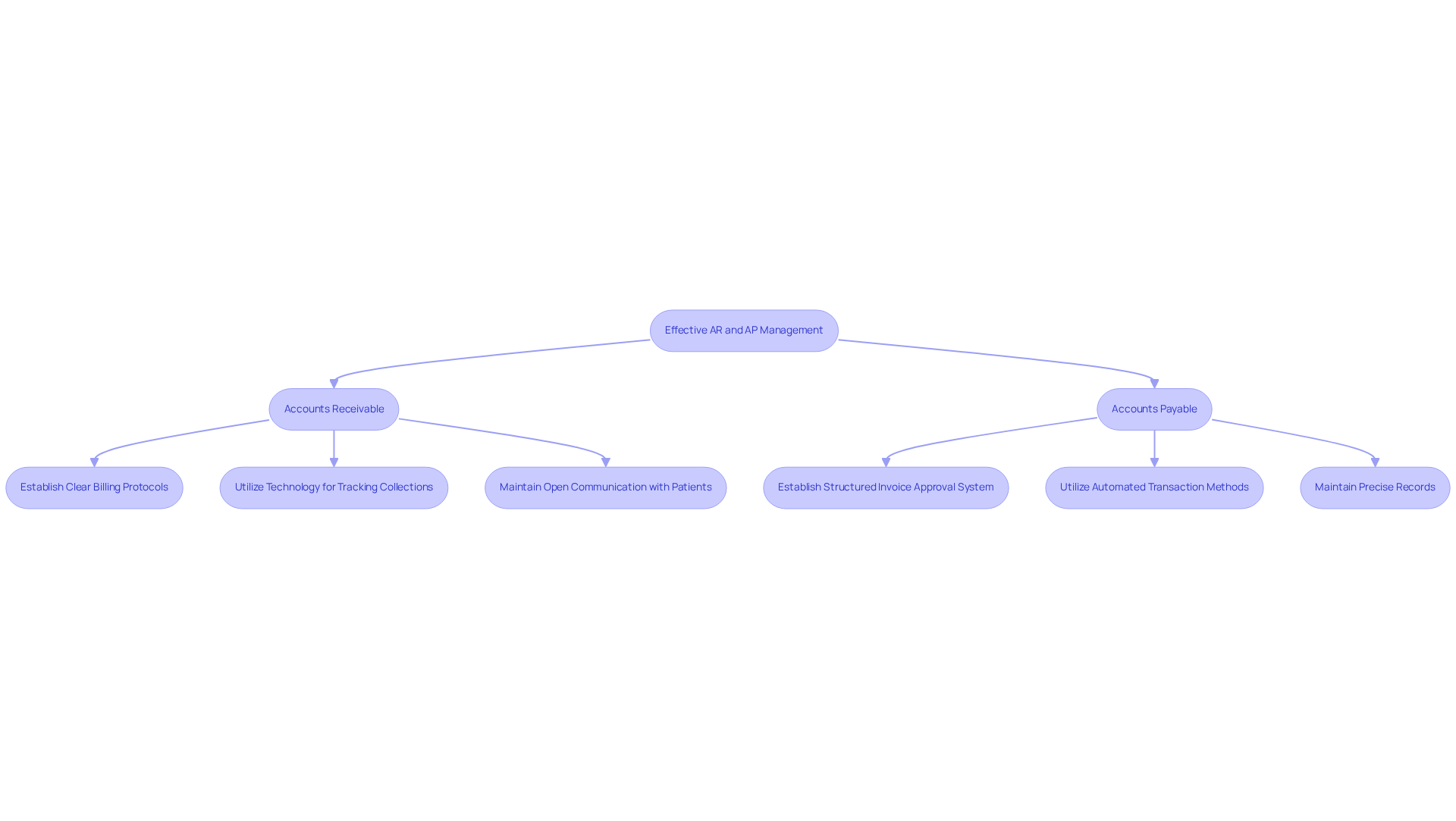
Effective management of accounts receivable vs accounts payable is critical for healthcare facilities to ensure both financial stability and operational efficiency. To achieve this, healthcare facilities should:
- Establish clear billing protocols
- Utilize technology for tracking collections
- Maintain open communication with patients regarding their financial obligations
Regular reviews of aging reports and proactive follow-ups on overdue accounts are essential for improving collection rates. HPC emphasizes the importance of addressing underpayments and unprocessed claims to optimize financial performance, ensuring that clinics can efficiently manage their patient statements and claims.
When considering accounts receivable vs accounts payable, clinics should:
- Establish a structured invoice approval system
- Utilize automated transaction methods
- Maintain precise records
Clinics should prioritize timely payments to avoid late fees and foster strong relationships with suppliers. Conducting regular audits of accounts receivable vs accounts payable activities can reveal inefficiencies and opportunities for improvement, leading to enhanced financial health and superior patient care outcomes. HPC’s comprehensive revenue cycle management services are designed to streamline these processes, allowing healthcare providers to focus more on patient care and less on administrative burdens.
Conclusion
Grasping the distinctions between accounts receivable and accounts payable is essential for healthcare clinics aiming for financial stability and operational efficiency. By recognizing that accounts receivable represents the funds owed to a practice for services rendered, while accounts payable signifies the obligations to vendors and suppliers, clinics can better navigate their financial landscape. This distinction aids cash flow management and allows healthcare providers to concentrate on quality patient care, free from administrative distractions.
The article highlights the importance of effective management strategies for both accounts receivable and accounts payable. Key insights include:
- The necessity of robust AR processes to enhance cash flow and reduce days sales outstanding.
- The critical role of timely AP management to maintain strong supplier relationships.
By implementing best practices such as clear billing protocols, technology utilization, and regular audits, clinics can optimize their financial health and operational capabilities.
Ultimately, managing accounts receivable and accounts payable effectively ensures that healthcare providers can focus on what matters most: patient care. By utilizing revenue cycle management services from Healthcare Partners Consulting & Billing (HPC), clinics can streamline their financial processes, ensuring compliance and a focus on their patients. For further assistance in enhancing your practice’s financial operations, consider reaching out to HPC at info@hpcbilling.com or call 888-517-4992 to explore tailored solutions that can elevate your clinic’s performance.
Frequently Asked Questions
What is accounts receivable in healthcare finance?
Accounts receivable represents funds owed to a healthcare practice for services rendered but not yet collected. It is classified as an asset on the balance sheet, indicating expected cash inflows essential for operational liquidity.
What does accounts payable mean in the context of healthcare?
Accounts payable denotes the obligations a healthcare practice has to suppliers, vendors, and service providers for goods and services received. It is classified as a liability, indicating future obligations that must be met.
Why is it important to understand the differences between accounts receivable and accounts payable?
Understanding the distinctions between accounts receivable and accounts payable is essential for clinics to manage their cash flow effectively, ensuring they can meet their financial obligations while maintaining operational liquidity.
What challenges do healthcare organizations face regarding accounts receivable and accounts payable?
Many healthcare organizations handle hundreds or thousands of invoices each month and often rely on manual processes, leading to inefficiencies such as delayed transactions and lost discounts.
How can automated accounts payable systems benefit healthcare practices?
Automated accounts payable systems can enhance efficiency, potentially increasing productivity by 3 to 5 times and reducing common sources of approval delays.
What services does Healthcare Partners Consulting & Billing, LLC (HPC) offer?
HPC provides comprehensive medical billing and administrative solutions designed to streamline a practice’s revenue cycle management, allowing healthcare providers to focus on patient care while managing billing and collections complexities.
How can I learn more about the services offered by HPC?
You can schedule a 30-minute call with HPC to discuss your specific needs and explore the services that can enhance patient care and increase revenue for your practice.