
Introduction
Effective accounts receivable (AR) management is essential for the financial stability of mental health clinics, yet many face significant challenges in billing and reimbursement. This struggle often leads to delayed payments and increased financial strain. Mastering AR management allows healthcare providers to enhance operational efficiency and prioritize patient care, leading to better financial outcomes. However, with behavioral health practices averaging 52 days in accounts receivable, clinics must consider how to streamline AR processes to reduce delays and maximize revenue.
Define Accounts Receivable Management in Healthcare
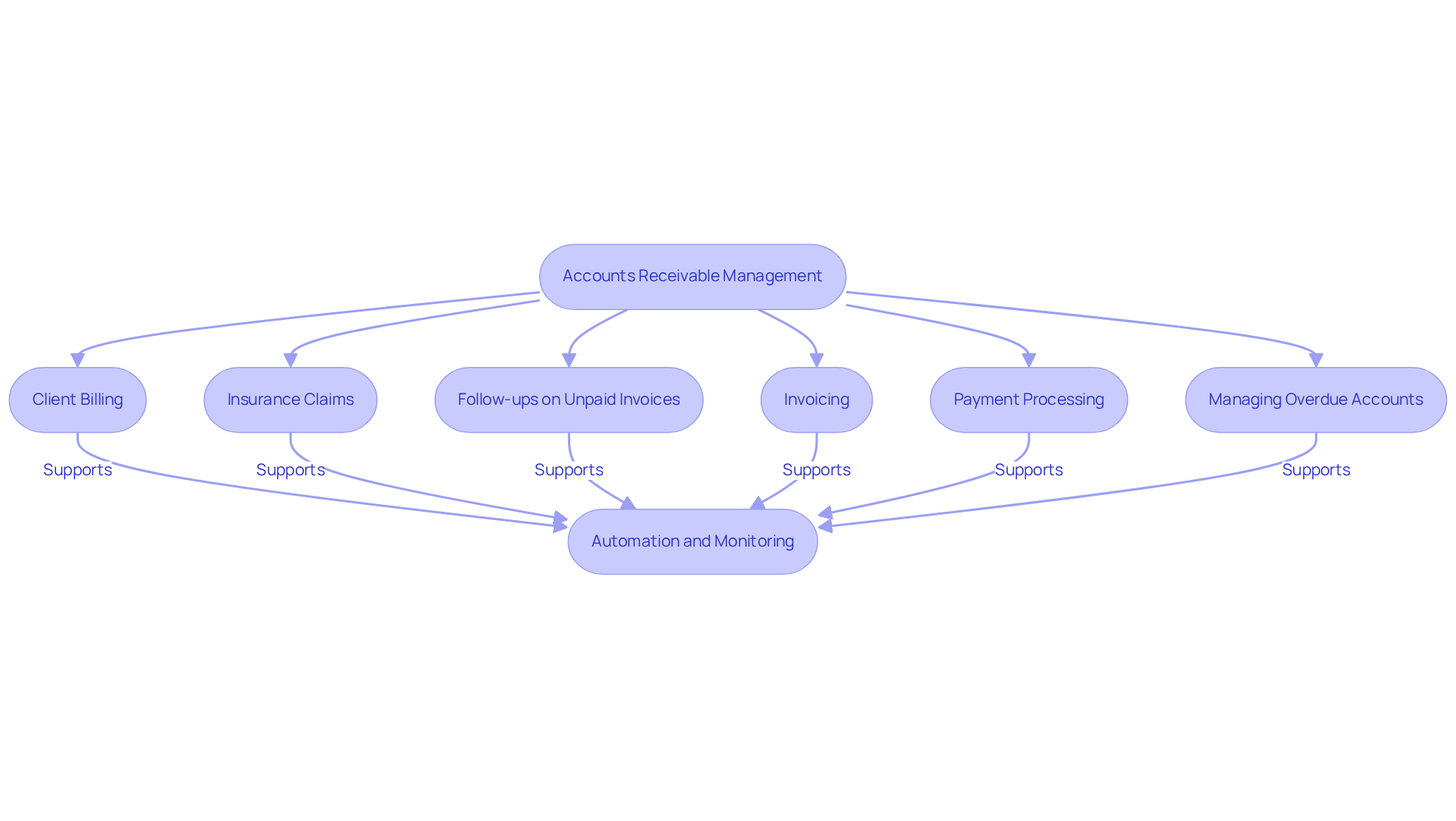
In healthcare, the management of accounts receivable is critical for ensuring financial stability and operational efficiency. AR management services in healthcare involve systematic processes related to tracking and collecting amounts owed to providers for services rendered. This includes direct management of client billing, insurance claims, and follow-ups on unpaid invoices. In mental health facilities, effective accounts receivable oversight is essential due to the complexities of insurance reimbursements and the frequently delayed cycles associated with mental health services. For instance, the average days in accounts receivable for behavioral health practices is approximately 52 days, significantly higher than for general medical practices. Delayed payments can significantly impact revenue, leading to potential operational challenges, with hospitals experiencing a 25% increase in net revenue leakage due to denied claims from 2024 to 2025.
When AR management services are managed effectively, clinics can keep their cash flow steady, which is crucial for operations and providing uninterrupted patient care. It involves various activities such as invoicing, payment processing, and managing overdue accounts, ultimately aiming to minimize the time between service delivery and payment receipt. Practices that implement AR management services to optimize their revenue cycle are seeing reimbursement rates improve significantly, which is crucial for financial health, achieving collections improvements of 15-25% within 30-90 days. Furthermore, implementing scorecard-driven adjustments linked to claims accuracy and denial rates can enhance operational rigor, further supporting financial sustainability in mental health facilities.
Recent case studies highlight the importance of frequent monitoring and automation in AR processes. For example, practices that automate claim status checks and follow-up workflows have seen significant improvements in operational efficiency, reducing idle accounts receivable and enhancing cash flow. As the healthcare sector evolves, the ability to adapt accounts receivable strategies will determine the success of mental health facilities.
Implement Key Strategies for Effective AR Management
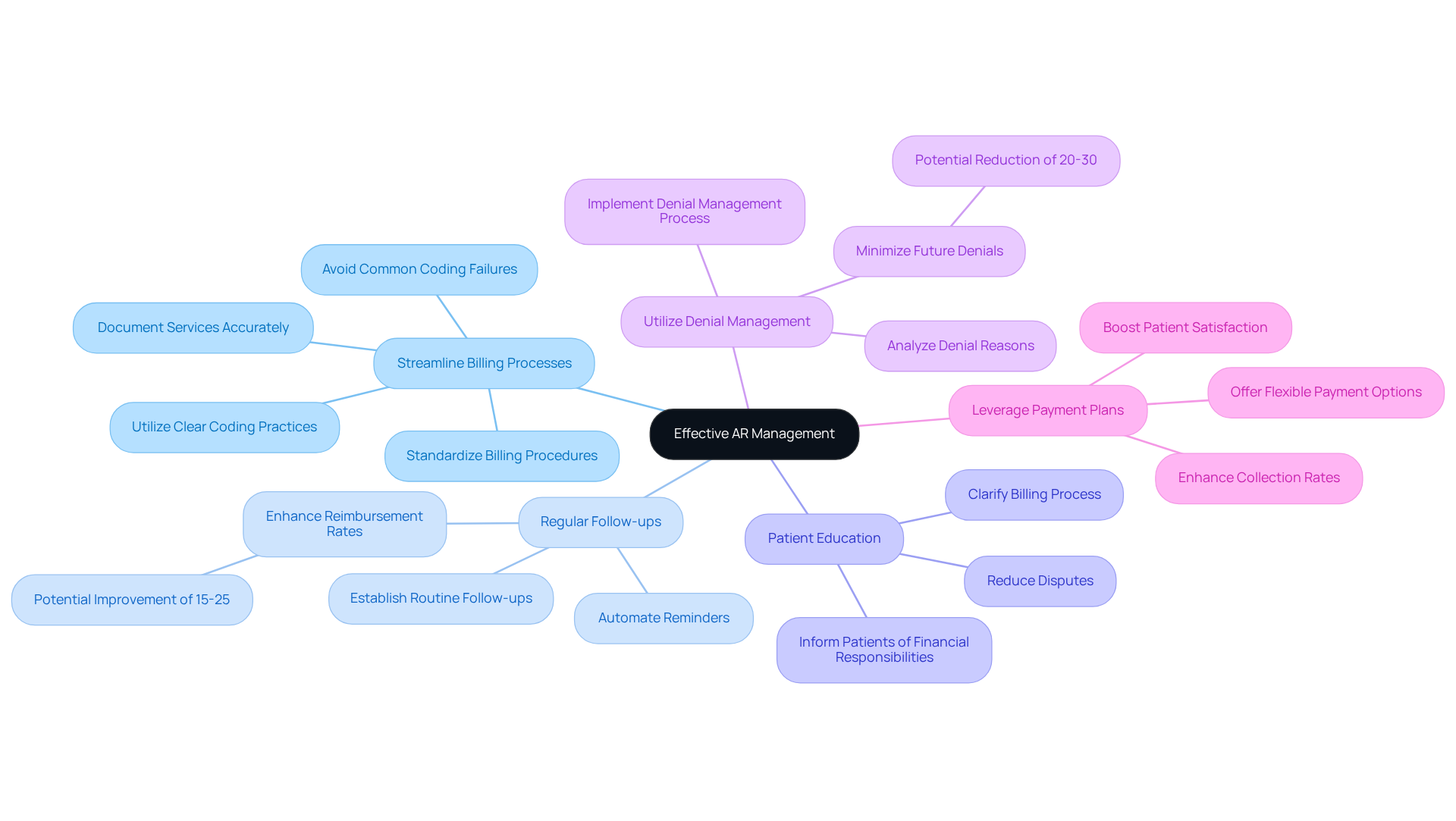
Inadequate AR management services can severely hinder the financial health of mental health clinics. To enhance AR management in these facilities, consider implementing the following key strategies:
- Streamline Billing Processes: Ensure that billing procedures are efficient and standardized. Utilize clear coding practices and ensure that all services rendered are accurately documented to avoid delays in claims processing. Common coding failures, such as errors in time-based psychotherapy billing, can lead to significant revenue loss.
- Regular Follow-ups: Establish a routine for following up on outstanding invoices. Automated reminders for individuals and insurance firms can greatly decrease the duration required to gather funds, potentially enhancing reimbursement rates by 15% to 25% within 30 to 90 days.
- Patient Education: Educate patients about their financial responsibilities and the billing process. Offering clear information about what to anticipate can result in faster transactions and fewer disputes, improving overall collection rates.
- Utilize Denial Management: Implement a robust denial management process to address rejected claims promptly. Analyzing the reasons for denials can help adjust practices accordingly, minimizing future occurrences and potentially reducing denial rates by 20% to 30%.
- Leverage Payment Plans: Provide flexible payment options for individuals who may struggle to pay their bills in full. This method can enhance collection rates and boost satisfaction among individuals, contributing to a healthier financial environment for the practice.
Ultimately, these strategies can transform financial operations by utilizing AR management services, allowing clinics to prioritize patient care more effectively.
Leverage Technology to Enhance AR Management Efficiency
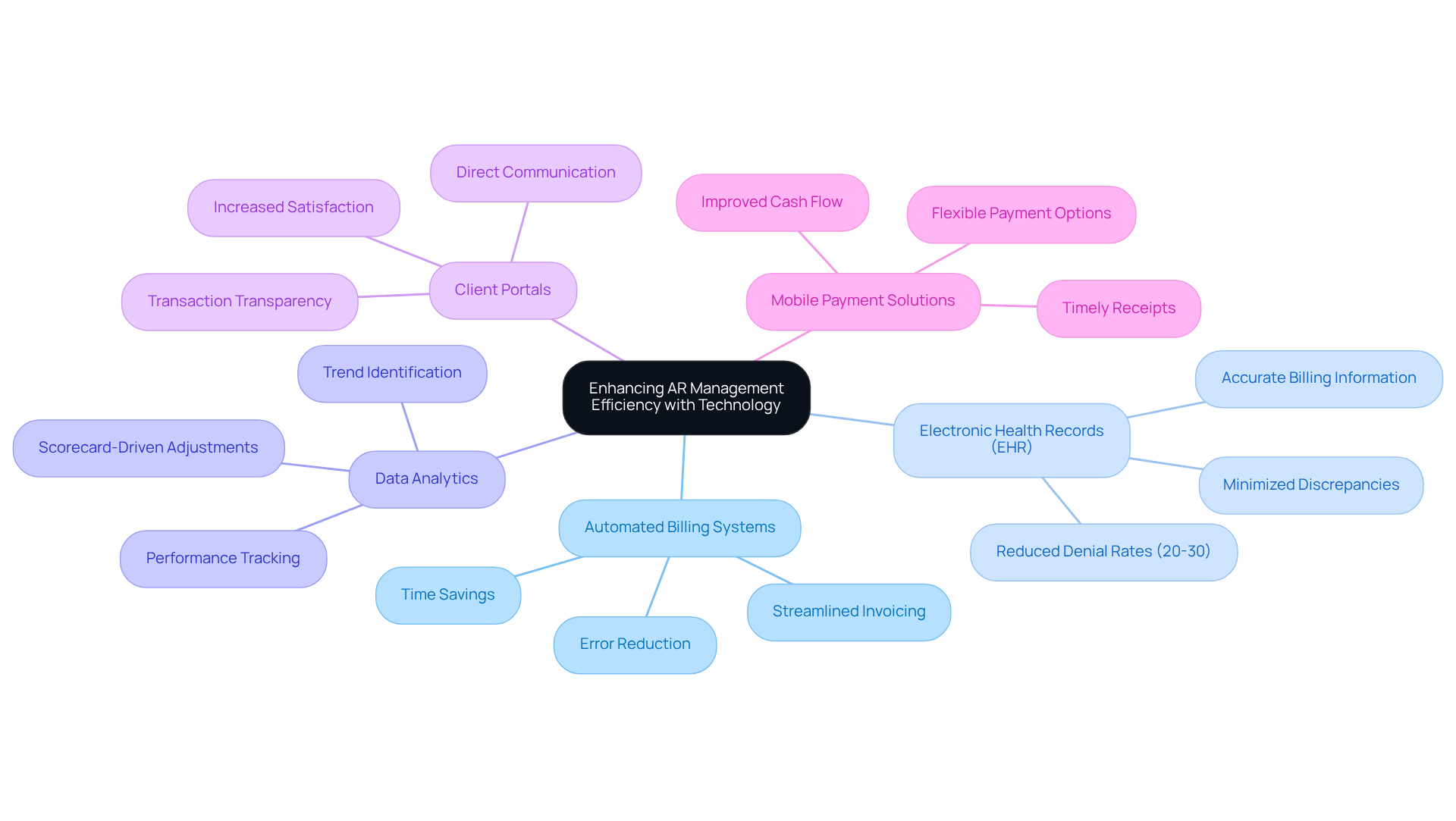
Integrating technology into accounts receivable management presents a pivotal opportunity for mental health clinics to enhance operational efficiency and accuracy. Here are several ways to leverage technology effectively:
- Automated Billing Systems: Implementing automated billing software can streamline the invoicing process, send reminders, and track payments. This reduces manual errors and saves valuable time, contributing to a more efficient revenue cycle.
- Electronic Health Records (EHR): Utilizing integrated EHR systems ensures that billing is based on accurate and up-to-date information regarding individuals’ health. This minimizes discrepancies and enhances the accuracy of claims, which is crucial in reducing denial rates by 20-30%.
- Data Analytics: Utilizing data analytics tools enables healthcare facilities to track essential AR performance metrics, such as days in accounts receivable and collection rates. Analyzing this data helps identify trends and areas for improvement, facilitating scorecard-driven adjustments that enhance operational rigor.
- Client Portals: Providing client portals allows users to view their bills, make transactions, and communicate with the clinic directly. This transparency often leads to quicker transactions and greater satisfaction, as individuals appreciate having control over their billing details.
- Mobile Payment Solutions: Implementing mobile transaction options can facilitate easier exchanges for individuals, increasing the likelihood of timely receipts. With 90% of individuals willing to pay their bills in full if offered flexible payment options, this strategy can greatly improve cash flow.
Manual errors and administrative burdens often hinder the efficiency of accounts receivable processes in mental health clinics. By utilizing these technological solutions, mental health facilities can streamline their AR management services. This reduction in administrative burdens enables a greater focus on patient care. Ultimately, embracing these technological advancements can transform the financial landscape of mental health clinics, allowing them to prioritize patient care more effectively.
Monitor and Adjust AR Management Practices for Continuous Improvement
To maintain effective AR practices, mental health facilities must confront the challenge of continuous monitoring and adjustment. Here are some best practices for continuous improvement:
- Regular Performance Reviews: Conduct monthly or quarterly reviews of AR performance metrics. Analyze key indicators such as collection rates, days in AR, and the percentage of denied claims to identify trends and areas needing attention. Effective oversight can lead to denial reductions of 20-30% and faster reimbursements of 15-25% within 30-90 days.
- Feedback Mechanisms: Establish feedback channels for staff involved in the billing process. Their insights can provide valuable information on challenges faced and potential improvements, fostering a culture of ongoing enhancement.
- Benchmarking: Compare AR performance against industry standards or similar practices. This can help identify gaps and set realistic goals for improvement, ensuring that the clinic remains competitive and financially stable.
- Training and Development: Invest in ongoing training for staff on best practices in AR oversight and updates on billing regulations. Well-informed staff are better equipped to handle billing challenges effectively, which is crucial in a landscape where 63% of healthcare providers report staffing gaps in their RCM departments.
- Adaptation to Changes: Stay informed about changes in healthcare regulations and insurance policies that may impact AR operations. Being proactive in adapting to these changes can prevent future issues and enhance operational efficiency.
Failure to adapt to evolving regulations could jeopardize financial stability and patient care quality.

Conclusion
Effective accounts receivable management is not just a financial necessity; it is a critical component that directly impacts patient care in mental health clinics. By implementing robust AR strategies, clinics can streamline their billing processes, enhance cash flow, and ultimately improve their operational efficiency. By reducing administrative burdens, healthcare providers can focus more on their patients, creating a better environment for care.
The article outlines several key strategies for optimizing AR management, including:
- Streamlining billing processes
- Establishing regular follow-ups
- Educating patients
- Leveraging technology
Each of these strategies plays a crucial role in minimizing delays in payment and improving reimbursement rates. Additionally, continuous monitoring and adjustment of AR practices ensure that clinics remain agile and responsive to the ever-evolving healthcare landscape, which is vital for maintaining financial stability.
In conclusion, effective AR management is crucial for the success of mental health clinics. By adopting best practices and embracing technological advancements, clinics can improve their finances and focus more on patient care. As the healthcare sector continues to evolve, it is imperative for mental health facilities to invest in comprehensive revenue cycle management tailored to their unique needs. Investing in expert AR management services can be the key to unlocking a more patient-centered approach in mental health care.
Frequently Asked Questions
What is accounts receivable management in healthcare?
Accounts receivable management in healthcare involves systematic processes for tracking and collecting amounts owed to providers for services rendered, including client billing, insurance claims, and follow-ups on unpaid invoices.
Why is accounts receivable management important in mental health facilities?
Effective accounts receivable oversight is essential in mental health facilities due to the complexities of insurance reimbursements and frequently delayed payment cycles, which can significantly impact revenue and operational efficiency.
How long is the average accounts receivable period for behavioral health practices?
The average days in accounts receivable for behavioral health practices is approximately 52 days, which is significantly higher than for general medical practices.
What impact do delayed payments have on healthcare revenue?
Delayed payments can lead to revenue loss, with hospitals experiencing a 25% increase in net revenue leakage due to denied claims from 2024 to 2025.
What are the benefits of effective accounts receivable management?
Effective accounts receivable management helps clinics maintain steady cash flow, which is crucial for operations and uninterrupted patient care, and can improve reimbursement rates by 15-25% within 30-90 days.
What activities are involved in accounts receivable management?
Activities involved include invoicing, payment processing, and managing overdue accounts, all aimed at minimizing the time between service delivery and payment receipt.
How can practices enhance their accounts receivable processes?
Practices can enhance their accounts receivable processes by implementing scorecard-driven adjustments linked to claims accuracy and denial rates, as well as automating claim status checks and follow-up workflows.
What role does automation play in accounts receivable management?
Automation in accounts receivable management can lead to significant improvements in operational efficiency, reducing idle accounts receivable and enhancing cash flow.