

Introduction
Effective accounts receivable (AR) management is crucial for the financial health of healthcare clinics, as it directly impacts cash flow and operational efficiency. By implementing best practices in AR oversight, healthcare providers can alleviate administrative burdens, enabling them to focus on providing high-quality patient care. This struggle often results in inefficient cash flow management, consequently challenging clinics in maintaining operational efficiency. By adopting targeted strategies for AR management, healthcare facilities can significantly enhance their revenue cycle and ensure sustainable financial performance.
Understand the Importance of AR Management in Healthcare
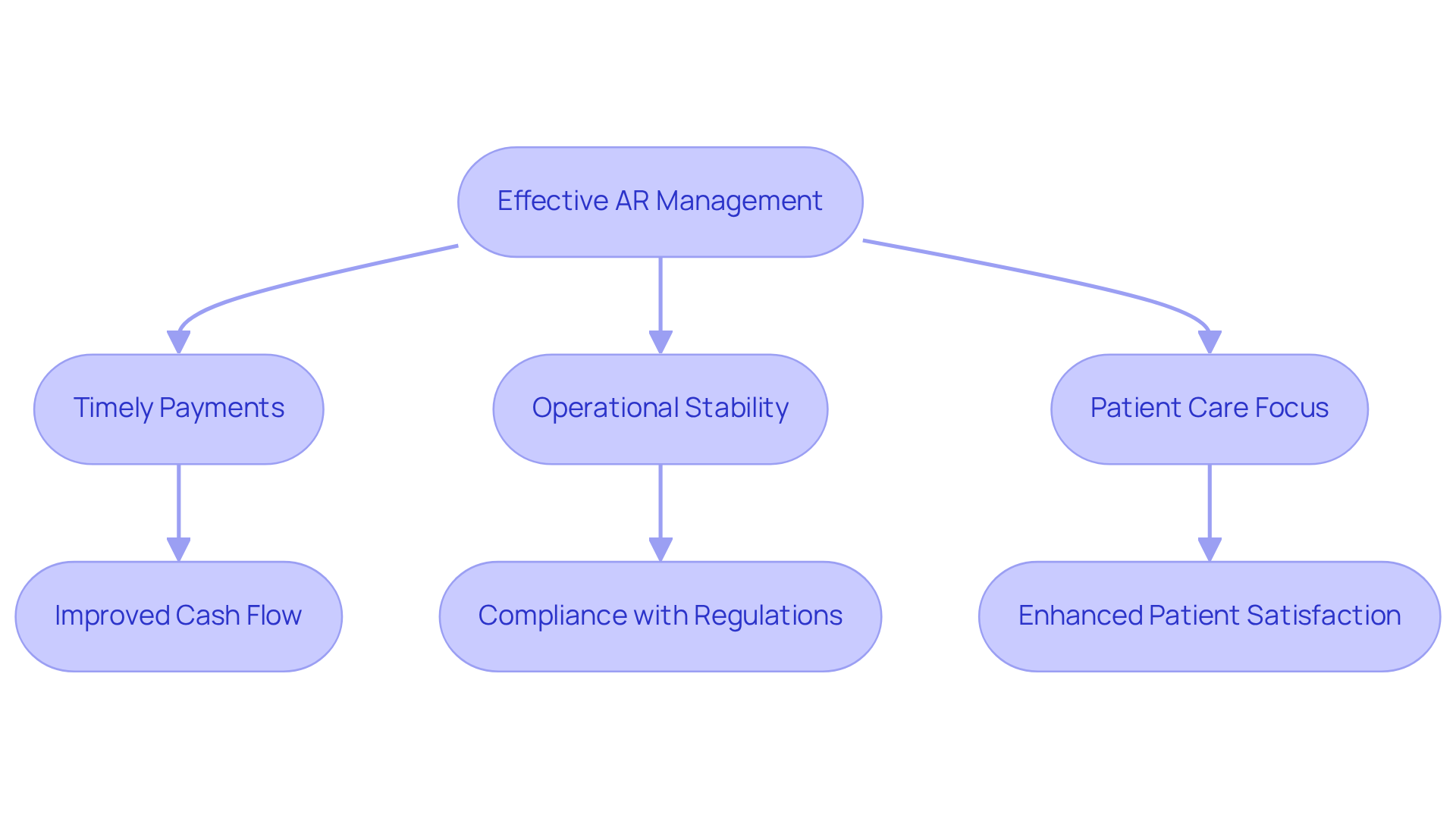
The financial health of healthcare facilities hinges on effective accounts receivable oversight, which directly impacts cash flow and operational stability. Effective accounts receivable oversight ensures timely payments for services, crucial for the economic viability of practices. Ineffective AR oversight can lead to cash flow crises that threaten the very existence of healthcare practices, resulting in delayed payments, extended days in AR, and considerable strain on the practice.
In healthcare, administrative burdens can distract from patient care. By optimizing AR processes, providers can focus on what truly matters: delivering quality care. This proactive approach not only secures financial health but also fosters trust between providers and patients, allowing healthcare facilities to implement strategies that enhance revenue performance and improve patient satisfaction through timely billing and clear communication regarding monetary obligations.
Furthermore, effective AR oversight assists clinics in adhering to healthcare regulations, thus minimizing the risk of audits and penalties. This compliance-first approach is essential for upholding the integrity and reputation of healthcare practices, ensuring they can continue to deliver high-quality care without the distraction of economic instability.
Statistics show that applying optimal practices in AR oversight can result in a 20-30% decrease in claim rejections and speed up reimbursements by 15-25% within 30-90 days. For instance, clinics that utilize scorecard-driven adjustments tied to claims accuracy and denial rates can significantly enhance their operational rigor, leading to improved economic outcomes.
Case studies demonstrate that ongoing staff training on billing regulations and compliance is crucial for effective medical AR management. Cross-training staff can enhance continuity and reduce errors, contributing to better financial performance. By concentrating on these elements, healthcare facilities can not only stabilize their finances but also promote a more patient-centered approach to care.
Implement Key Strategies for Optimizing AR Processes
To optimize accounts receivable processes, healthcare clinics should consider the following key strategies:
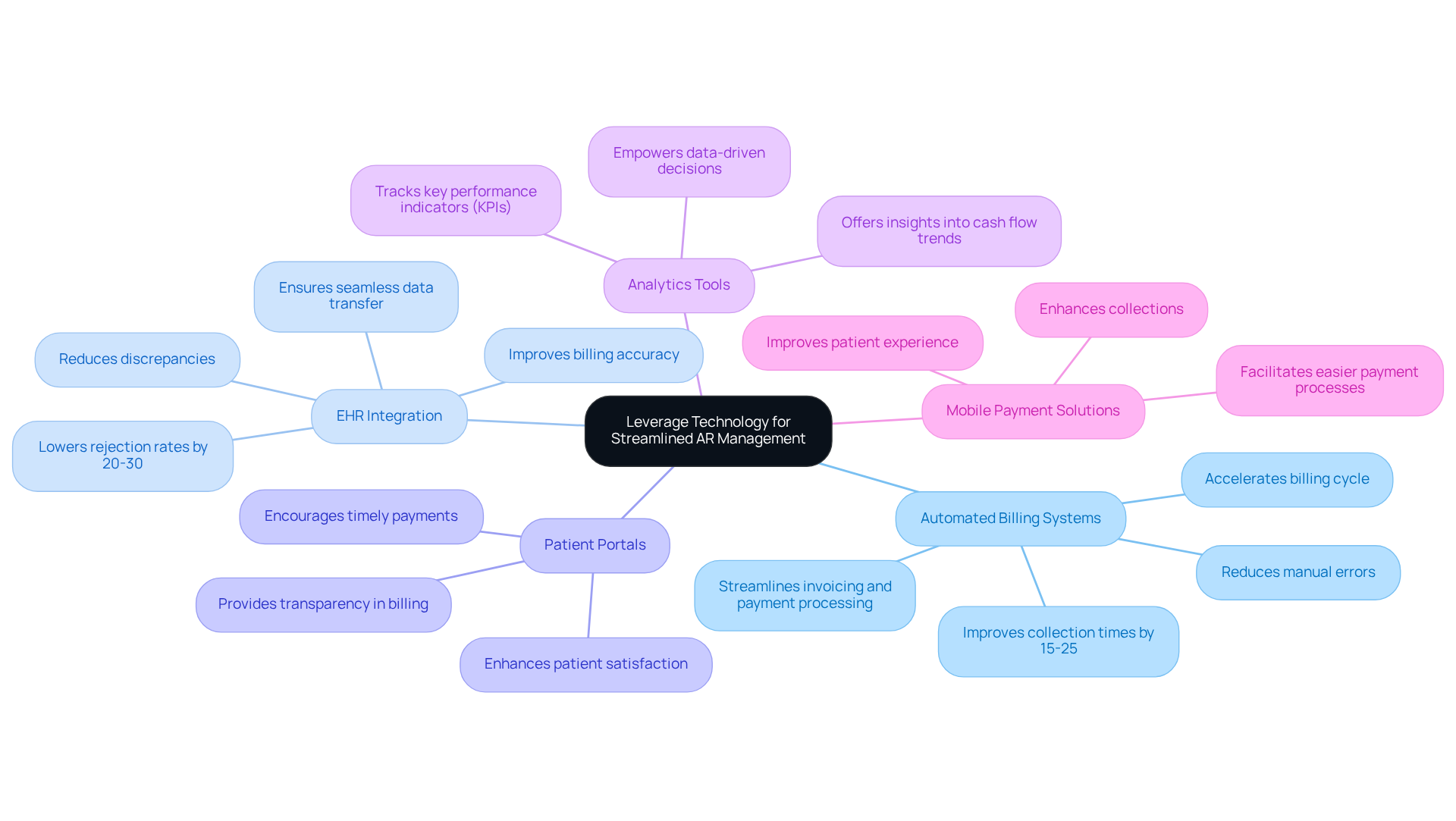
- Standardize Billing Procedures: Establish clear and consistent billing processes to minimize errors and ensure timely submissions. Developing invoice templates and standardizing required patient information can decrease rejection rates by 20-30%.
- Early Verification of Patient Information: Implement a system for verifying patient and insurance information at the point of registration. Accurate data entry reduces the likelihood of claim denials and accelerates the billing process, contributing to faster reimbursement timelines of 15-25% within 30-90 days.
- Regular Monitoring of AR Aging Reports: Conduct monthly reviews of AR aging reports to identify overdue accounts and prioritize follow-ups. This proactive approach helps healthcare facilities tackle issues early, ensuring effective medical AR management of outstanding requests.
- Establish Clear Payment Policies: Communicate payment expectations clearly to patients upfront. This includes outlining payment plans, deadlines, and consequences for late payments, which can help reduce confusion and improve collections.
- Staff Training on AR Best Practices: Regular training on AR best practices enhances staff skills and aligns them with the organization’s financial goals. This training should cover effective communication with patients regarding billing and collections.
Failing to implement these strategies may lead to increased administrative burdens and hinder financial health for healthcare facilities.
Enhance Revenue Recovery Through Effective Denial Management
Effective medical ar management is essential for optimizing accounts receivable in healthcare facilities. To enhance revenue recovery, clinics should adopt the following best practices:
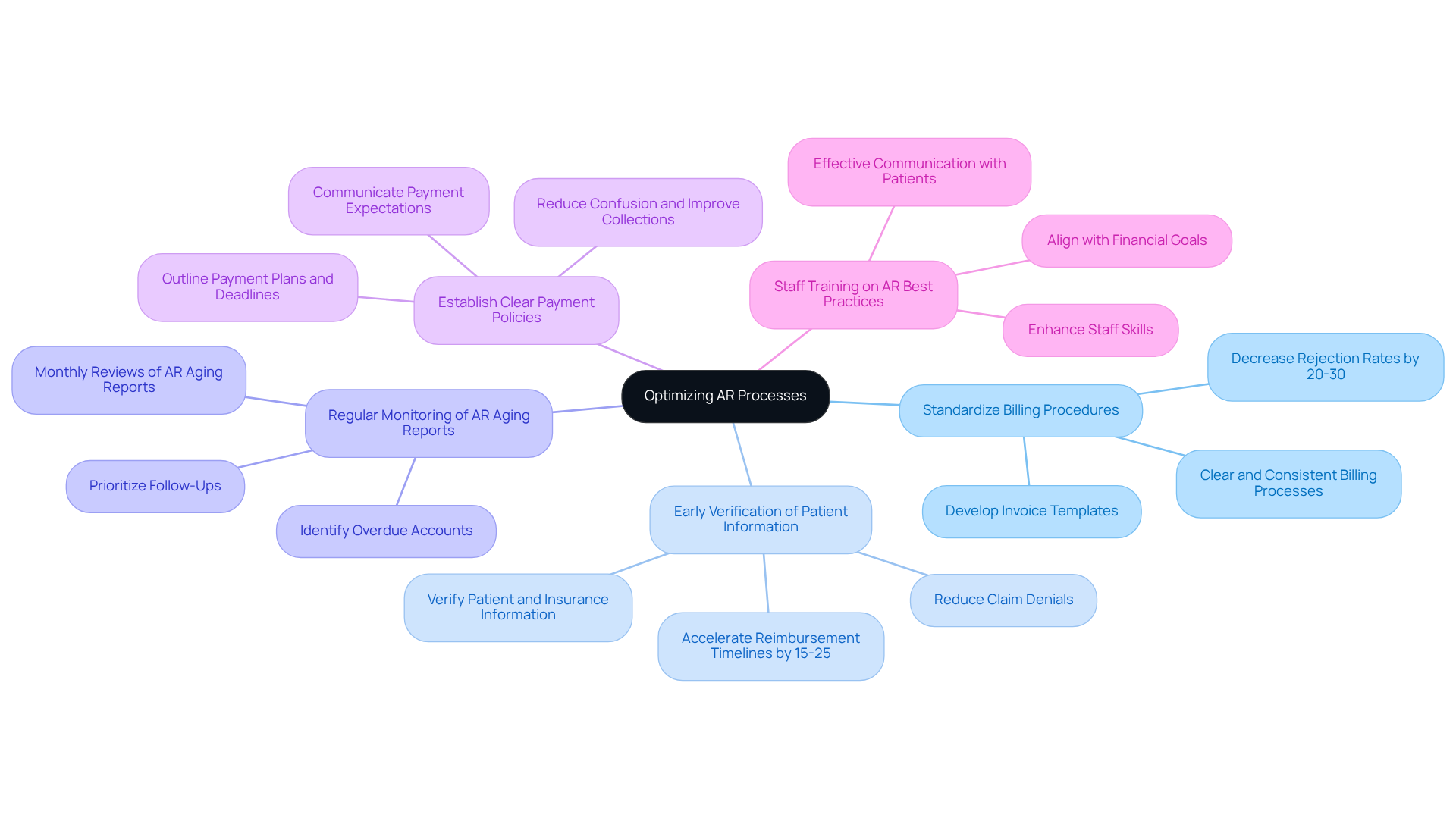
- Analyze Rejection Trends: Regularly review rejection reports to identify patterns and root causes. Understanding the reasons behind claim rejections is crucial for clinics facing rising rejection rates, which have increased to over 15% in recent years.
- Implement a Denial Prevention Program: Focus on avoiding rejections before they happen by ensuring accurate coding, thorough documentation, and real-time eligibility verification. This proactive approach in medical ar management not only reduces denied claims but also enhances overall revenue cycle performance, potentially leading to a 20-30% reduction in denied claims.
- Establish a Clear Appeals Process: Develop a structured process for appealing denied claims, including timelines for submissions, documentation requirements, and designated staff responsible for managing appeals. This clarity can enhance the likelihood of overturning refusals, as final rejection rates drop significantly after appeals, with Medicaid’s final rate at 6% and commercial claims at 3%.
- Train Staff on Claim Management: Provide comprehensive training for billing staff on common claim reasons and effective appeal strategies. Empowering staff with this knowledge can lead to quicker resolutions and improved recovery rates. Organizations that invest in training often see faster reimbursements, achieving improvements of 15-25% within 30-90 days.
- Utilize Technology for Tracking Denials: Leverage technology solutions to track denied claims and automate follow-up processes. This can optimize the rejection handling process, ensuring prompt responses to payers and improving operational efficiency.
By enhancing denial resolution practices within medical ar management, healthcare facilities can recover lost revenue and improve cash flow. It also reduces the administrative burden associated with denied claims. A systematic approach reduces monetary losses and prepares practices to succeed in a complex reimbursement environment.
Leverage Technology for Streamlined AR Management
Healthcare clinics face significant challenges in medical AR management, which often leads to inefficiencies and increased administrative burdens. Incorporating technology into medical AR management can significantly enhance efficiency and reduce these burdens. Consider the following technological solutions:
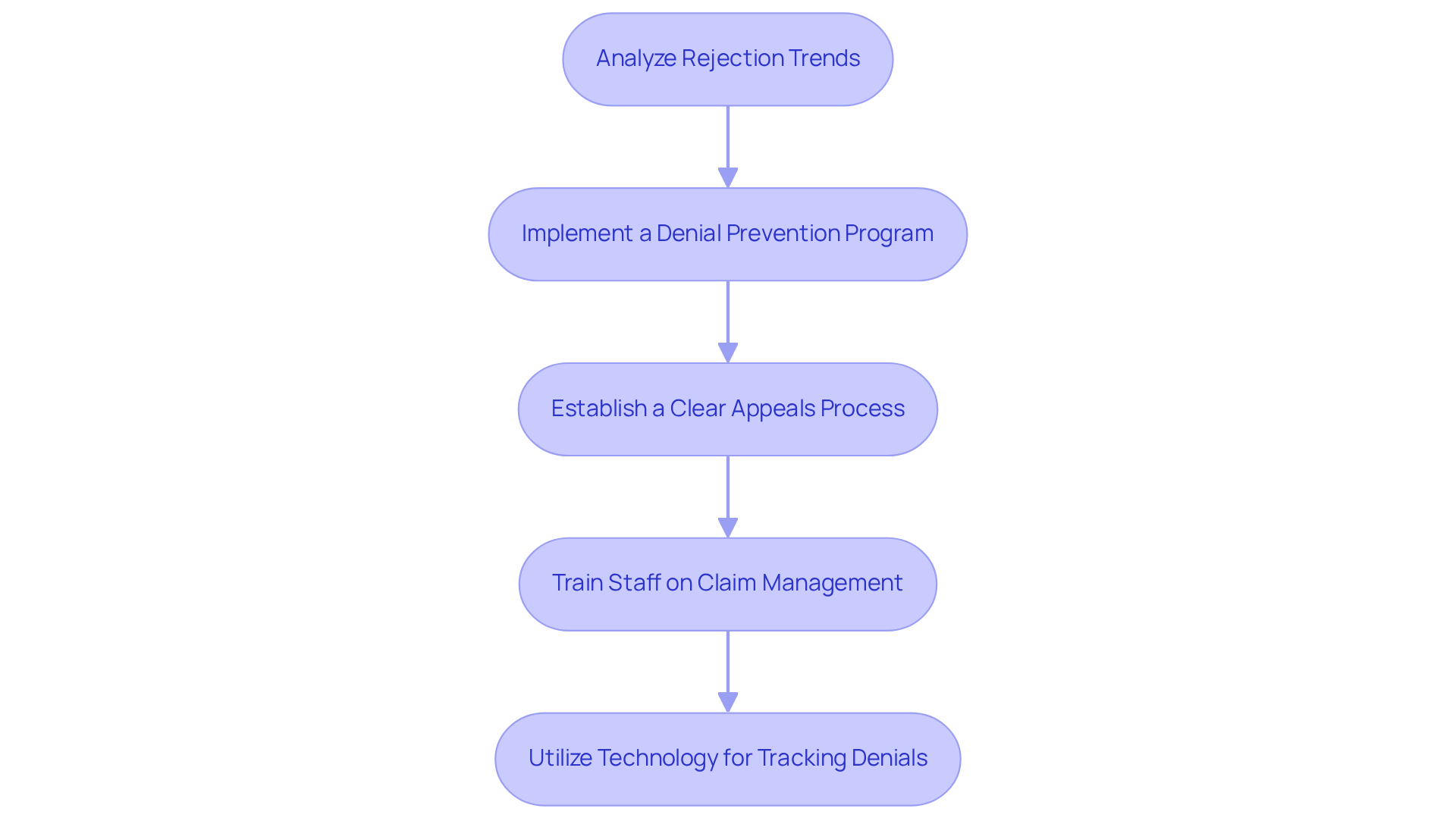
- Automated Billing Systems: Implementing automated billing systems streamlines invoicing, payment processing, and follow-up communications. Automation not only reduces manual errors but also accelerates the billing cycle, leading to faster reimbursements – potentially improving collection times by 15-25% within 30-90 days.
- Electronic Health Records (EHR) Integration: Utilizing EHR systems that integrate with billing software ensures seamless data transfer between clinical and financial operations. This integration reduces discrepancies and improves accuracy in billing, which is essential for sustaining cash flow and lowering rejection rates by 20-30%.
- Patient Portals: Providing patient portals enables individuals to view their bills, make payments, and communicate with the practice regarding their accounts. This transparency not only enhances patient satisfaction but also encourages timely payments, thereby improving overall collections.
- Utilizing analytics tools to track key performance indicators (KPIs) related to medical AR management offers insights into cash flow trends, denial rates, and overall economic health. These tools empower healthcare facilities to make data-driven decisions that can enhance their revenue cycle performance.
- Mobile Payment Solutions: Implementing mobile payment options facilitates easier payment processes for patients. By offering various payment options, healthcare facilities can enhance collections and improve the patient experience, further contributing to financial stability.
Ultimately, embracing these technological solutions can lead to a more efficient revenue cycle, allowing clinics to prioritize patient care over administrative tasks.
Conclusion
The financial health of healthcare clinics hinges on effective accounts receivable management, which directly impacts cash flow and operational stability. Prioritizing AR processes helps healthcare providers reduce administrative burdens, enabling them to concentrate on quality patient care. This strategy improves financial viability and builds trust with patients, leading to higher satisfaction.
The article outlines several best practices for optimizing AR management, including:
- Standardizing billing procedures
- Early verification of patient information
- Regular monitoring of AR aging reports
Additionally, implementing effective denial management strategies and leveraging technology can significantly improve revenue recovery and streamline operations. These strategies collectively contribute to a more efficient revenue cycle, ultimately leading to better financial outcomes for healthcare facilities.
In conclusion, embracing these best practices in AR management is essential for healthcare providers aiming to enhance their operational efficiency and financial stability. When clinics emphasize compliance and transparency, they can better manage the complexities of medical billing while keeping patient care at the forefront. For those seeking to optimize their AR processes, engaging with experts like Healthcare Partners Consulting & Billing, LLC (HPC) can provide tailored solutions that align with the unique needs of behavioral and mental health practices. For further assistance, reach out at info@hpcbilling.com or call 888-517-4992 to explore how HPC can support your practice in achieving financial success.
Frequently Asked Questions
Why is accounts receivable (AR) management important in healthcare?
AR management is crucial in healthcare because it directly impacts cash flow and operational stability, ensuring timely payments for services, which is essential for the economic viability of practices.
What are the consequences of ineffective AR oversight?
Ineffective AR oversight can lead to cash flow crises, delayed payments, extended days in AR, and considerable strain on healthcare practices, potentially threatening their existence.
How does optimizing AR processes benefit healthcare providers?
Optimizing AR processes allows providers to focus on delivering quality care, enhances financial health, fosters trust between providers and patients, and improves patient satisfaction through timely billing and clear communication.
How does effective AR oversight help with compliance in healthcare?
Effective AR oversight assists clinics in adhering to healthcare regulations, minimizing the risk of audits and penalties, and upholding the integrity and reputation of healthcare practices.
What are the potential benefits of applying optimal practices in AR oversight?
Applying optimal practices in AR oversight can lead to a 20-30% decrease in claim rejections and speed up reimbursements by 15-25% within 30-90 days.
What role does staff training play in medical AR management?
Ongoing staff training on billing regulations and compliance is crucial for effective medical AR management, as it enhances continuity, reduces errors, and contributes to better financial performance.
How can healthcare facilities promote a patient-centered approach through AR management?
By concentrating on effective AR management, healthcare facilities can stabilize their finances, allowing them to focus more on patient care and satisfaction.