

Introduction
Clinics face a critical challenge in mastering fee-for-service billing to optimize revenue while ensuring quality patient care. This payment model rewards healthcare providers for each service they provide, but it also brings opportunities and challenges that clinics must navigate strategically. Clinics often struggle to increase patient volume without compromising the quality of care. Failure to navigate these challenges may lead to decreased patient satisfaction and financial instability. Navigating these complexities is crucial for clinics to sustain both financial health and patient trust.
Understand Fee-for-Service Billing Models
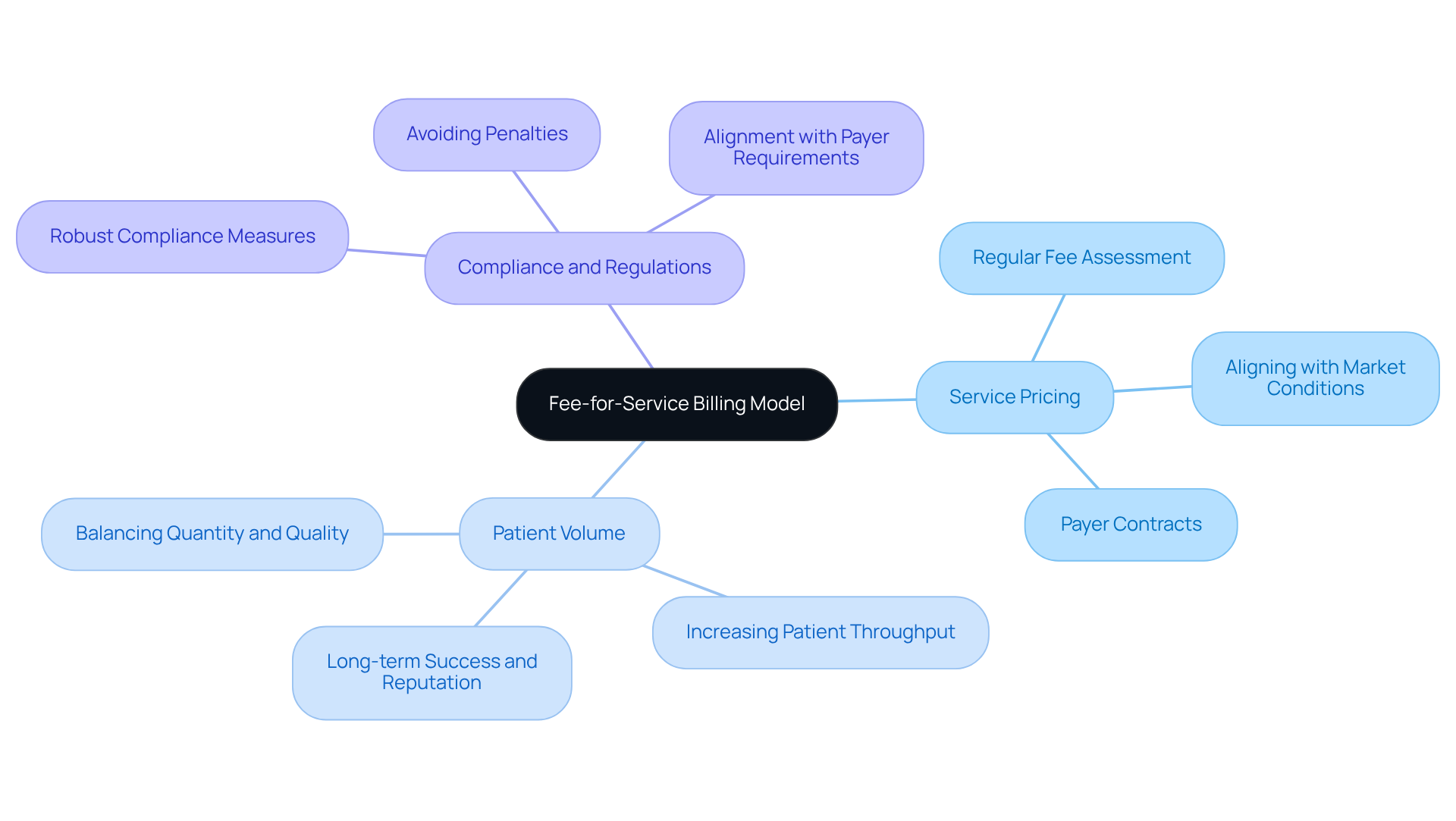
The fee for service in medical billing model serves as a critical payment structure in healthcare, emphasizing reimbursement for each service provided. This model encourages a higher volume of services, rewarding clinicians for each procedure, consultation, or test they conduct. Clinics need to concentrate on several key aspects to navigate the complexities of FFS billing effectively:
- Service Pricing: Each service has a designated fee that should be regularly assessed and adjusted to align with market conditions and payer contracts. This guarantees that healthcare facilities stay competitive and sufficiently rewarded for their services.
- Patient Volume: While FFS can drive higher patient volumes, healthcare facilities must strike a balance between quantity and quality of care. Clinics often struggle to maintain high standards while increasing patient throughput, which is essential for long-term success and reputation.
- Compliance and Regulations: Adhering to healthcare regulations is critical to avoid penalties and secure proper reimbursement. Clinics should implement robust compliance measures to safeguard against invoicing errors and ensure alignment with payer requirements.
Mastering these elements not only enhances operational efficiency but also significantly improves revenue cycle performance. Effective management of fee for service in medical billing invoicing can lead to a reduction in claim denials by 20-30% and accelerate reimbursement timelines by 15-25% within 30-90 days. Ultimately, a strategic approach to FFS can transform financial health and patient outcomes in healthcare facilities.
Ensure Accurate Coding and Compliance
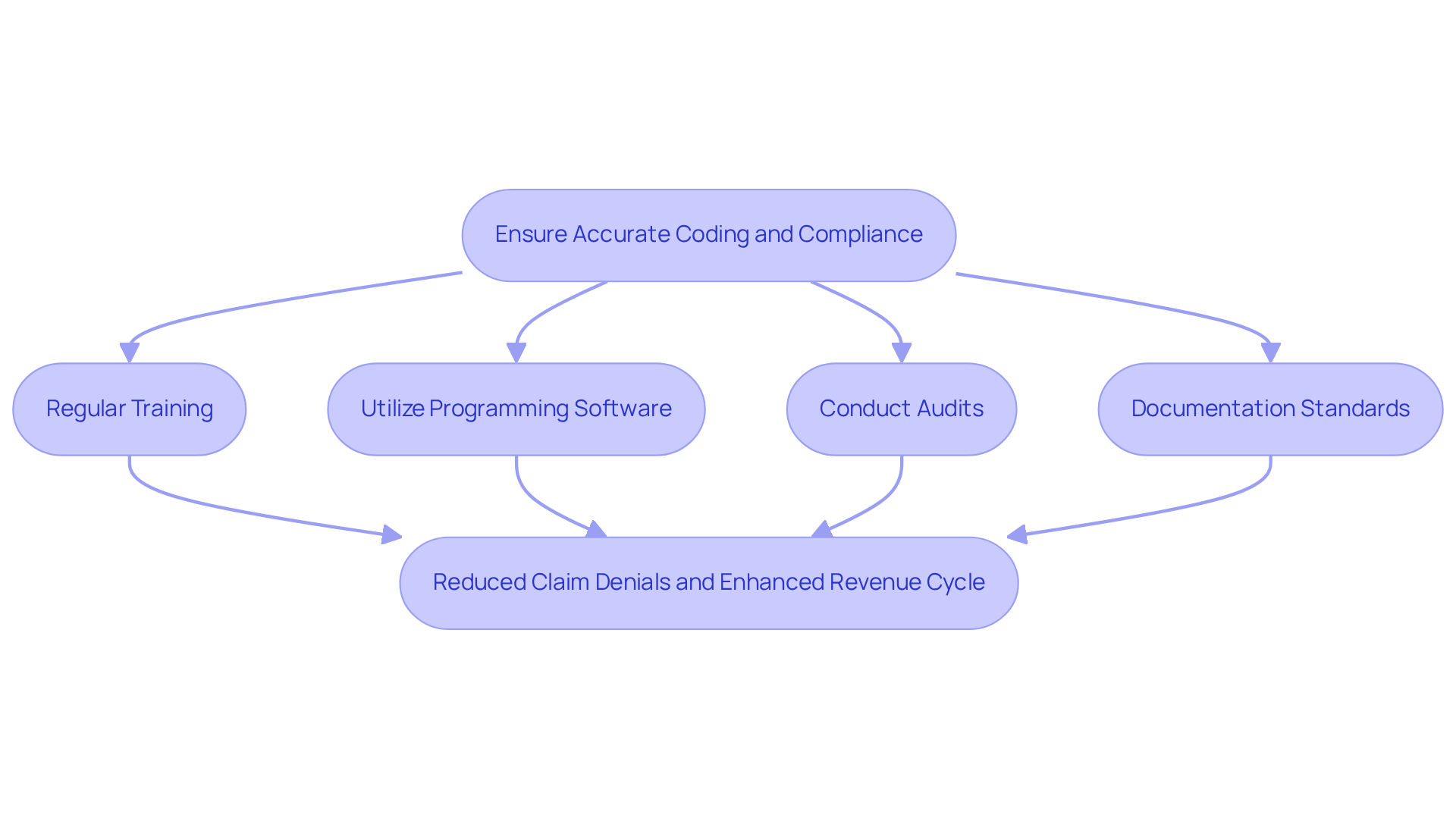
Effective medical reimbursement hinges on precise documentation, which directly impacts payment rates and regulatory compliance. To ensure coding accuracy and compliance, clinics should prioritize the following best practices:
- Regular Training: It’s essential for staff to engage in ongoing training on the latest coding guidelines, including ICD-10 and CPT codes, to stay informed about changes that could impact billing.
- Utilize Programming Software: Implementing advanced programming software can significantly reduce human error by automating the programming process and ensuring that the correct codes are applied consistently.
- Conduct Audits: Regular assessments of practices are vital for identifying discrepancies and areas for enhancement. These audits enable healthcare facilities to proactively tackle issues before they result in claim denials. By implementing regular audits, clinics can reduce denials by 20-30% and achieve faster reimbursements within 15-25% over 30-90 days.
- Documentation Standards: Thorough documentation of all services not only supports the billing process but also provides crucial evidence for claims, helping to meet payer expectations.
By prioritizing accurate coding and compliance, clinics can significantly reduce the risk of claim denials and enhance their overall revenue cycle. Ultimately, the adoption of these best practices can safeguard clinics against financial instability and enhance their operational efficiency.
Leverage Technology for Efficient Billing
The integration of technology is essential for optimizing medical invoicing processes in today’s healthcare landscape. Here are key strategies for leveraging technology to enhance billing efficiency:
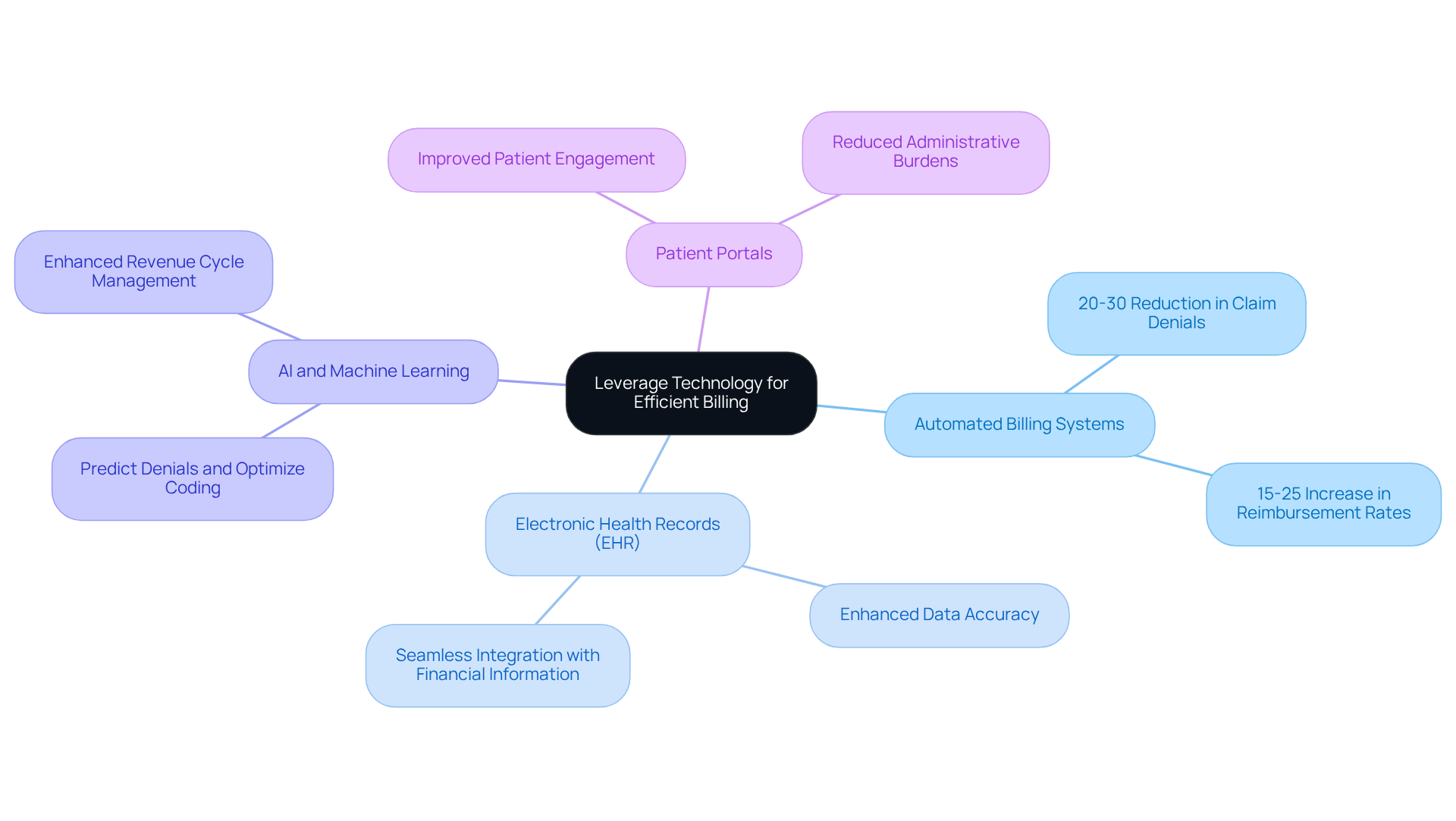
- Automated Billing Systems: Implementing automated billing systems streamlines the claims submission process, significantly reducing the time spent on manual entries and minimizing errors. Clinics implementing these systems have experienced a 20-30% reduction in claim denials and a 15-25% increase in reimbursement rates within 30 to 90 days.
- Electronic Health Records (EHR): Utilizing EHR systems enhances data accuracy and accessibility, facilitating seamless integration between patient records and financial information. This integration enhances operational rigor through scorecard-driven adjustments tied to claims accuracy and denial rates.
- AI and Machine Learning: Advanced technologies like AI analyze financial data to identify patterns, predict denials, and optimize coding practices. These innovations result in enhanced revenue cycle management, allowing practices to adjust to the changing environment of healthcare financial processes.
- Patient Portals: Implementing patient portals for payment inquiries and transactions significantly improves patient engagement while reducing administrative burdens on staff. By facilitating direct communication and payment options, healthcare facilities can enhance collection rates and sustain positive patient relationships.
By integrating these technological advancements, clinics can enhance their financial operations, reduce administrative burdens, and focus more effectively on delivering high-quality patient care. Embracing these advancements not only streamlines operations but also positions clinics to deliver superior patient care in a competitive environment.
Invest in Staff Training and Development
Effective performance in financial roles hinges on ongoing employee training. Here are best practices for investing in staff training:
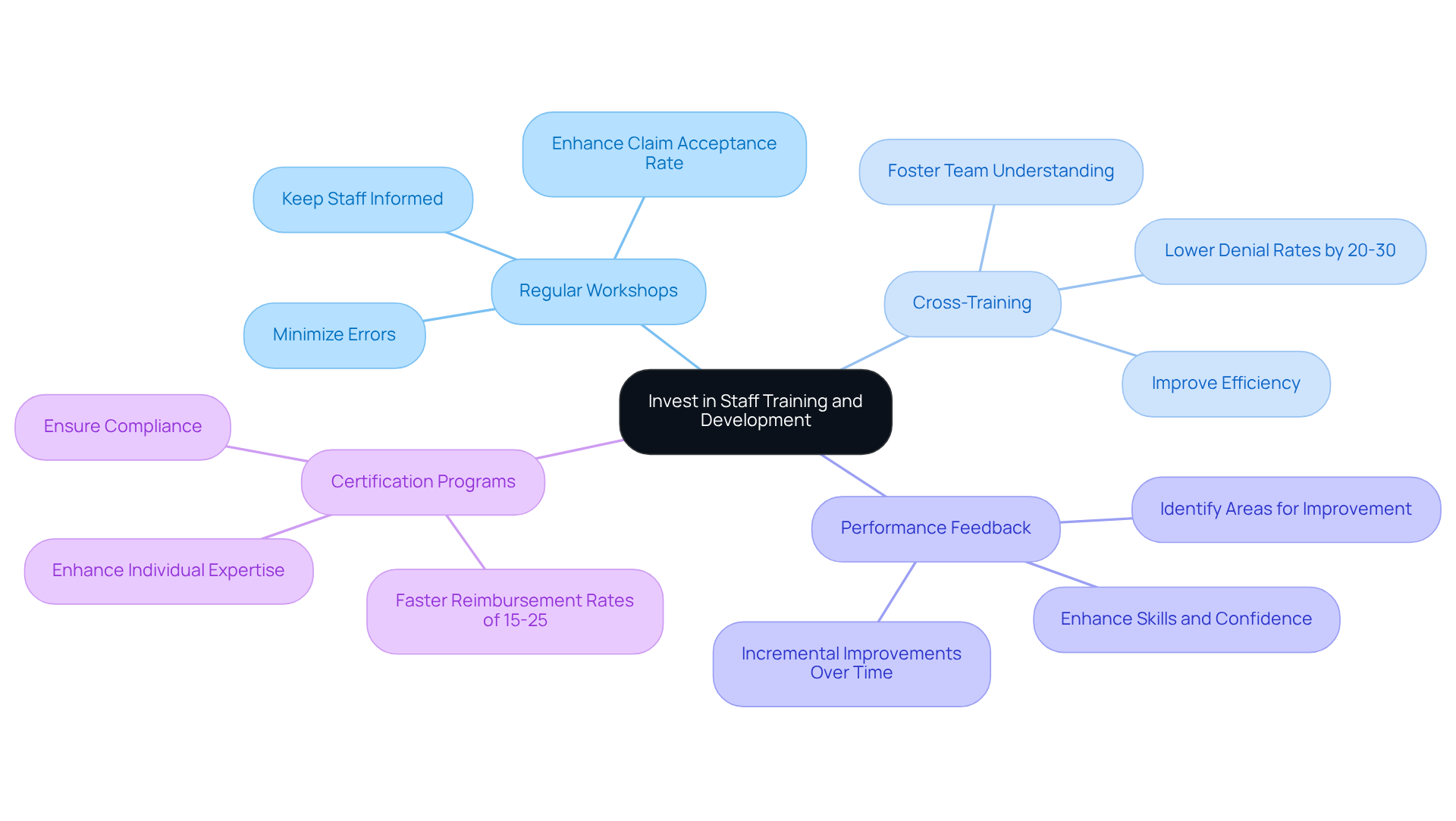
- Regular Workshops: Conduct frequent workshops and training sessions to keep staff informed about the latest billing regulations, coding practices, and technological advancements. This approach not only ensures compliance but also minimizes errors, leading to a higher claim acceptance rate. By integrating the operational backbone services offered by Healthcare Partners Consulting & Billing, LLC (HPC), clinics can further enhance their revenue cycle efficiency.
- Cross-Training: Encourage cross-training among team members to foster a deeper understanding of various roles within the billing process. This not only enhances teamwork but also improves overall efficiency, as team members can seamlessly support one another during peak times or absences. Research indicates that cross-trained teams can effectively lower denial rates by 20-30%, which is particularly important for addressing underpayments and unprocessed claims.
- Performance Feedback: Implement a structured system for providing constructive feedback on performance. Regular feedback enables team members to identify areas for improvement, resulting in enhanced skills and increased confidence in their roles. This aligns with the observation that effective training produces incremental improvements over time rather than overnight transformation.
- Certification Programs: Assist personnel in pursuing relevant certifications in medical billing and coding. These certifications not only enhance individual expertise but also contribute to the overall success of the practice by ensuring that the team is well-versed in compliance and best practices, ultimately leading to faster reimbursement rates of 15-25% within 30-90 days.
By prioritizing staff training and development, clinics can expect to see a reduction in claim denials and improved financial outcomes. This commitment to training not only mitigates risks but also enhances financial performance. The dedication to ongoing education not only enhances compliance but also boosts the overall efficiency of financial operations, ultimately resulting in improved patient experiences. This strategy complements the tailored revenue cycle management services provided by Healthcare Partners Consulting & Billing, LLC (HPC) for behavioral and mental health practices. Additionally, integrating with EHR and practice management platforms like TherapyNotes and SimplePractice can further streamline operations and enhance billing accuracy.
Conclusion
Mastering fee-for-service billing is crucial for clinics striving to enhance both their revenue cycle and patient care. Focusing on accurate coding, compliance, and technology enables healthcare providers to effectively navigate the complexities of fee-for-service billing. Empowering healthcare providers by reducing administrative burdens allows them to focus on delivering high-quality patient care.
Key practices discussed include:
- The importance of regular staff training
- The integration of advanced technology
- The necessity of maintaining compliance with healthcare regulations
These strategies not only improve operational efficiency but also significantly reduce claim denials and accelerate reimbursement timelines. By implementing these best practices, clinics can expect to see a marked improvement in their financial health and patient outcomes. This improvement not only enhances financial stability but also elevates the quality of care provided to patients.
Ultimately, mastering fee-for-service billing goes beyond financial gain; it creates an environment where healthcare providers can truly thrive. For those seeking to enhance their billing processes, engaging with experts like Healthcare Partners Consulting & Billing, LLC (HPC) can lead to tailored solutions that not only improve billing processes but also support the overarching goal of superior patient care.
Frequently Asked Questions
What is the fee-for-service (FFS) billing model in healthcare?
The fee-for-service billing model is a payment structure where healthcare providers are reimbursed for each individual service they provide, such as procedures, consultations, or tests.
What are the key aspects clinics need to focus on for effective FFS billing?
Clinics should concentrate on service pricing, patient volume, and compliance with regulations to navigate the complexities of FFS billing effectively.
How should service pricing be managed in the FFS model?
Each service should have a designated fee that is regularly assessed and adjusted to align with market conditions and payer contracts to ensure competitiveness and adequate compensation.
What challenges do clinics face regarding patient volume in the FFS model?
While FFS can drive higher patient volumes, clinics must balance the quantity of patients with the quality of care to maintain high standards and a good reputation.
Why is compliance important in the FFS billing model?
Adhering to healthcare regulations is critical to avoid penalties and secure proper reimbursement, necessitating robust compliance measures to prevent invoicing errors and ensure alignment with payer requirements.
What are the potential benefits of mastering FFS billing?
Effective management of FFS billing can lead to a reduction in claim denials by 20-30% and accelerate reimbursement timelines by 15-25% within 30-90 days, ultimately improving financial health and patient outcomes in healthcare facilities.