
Introduction
Recruiting qualified mental health staff presents a distinct set of challenges that clinics must navigate to ensure effective patient care. High turnover rates, a limited candidate pool, and an increasingly competitive job market underscore the importance of understanding these hurdles for successful recruitment. Clinics face the dual challenge of not only attracting but also retaining skilled professionals in this demanding environment. This article explores practical strategies for overcoming recruitment barriers, fostering a supportive workplace, and implementing ongoing professional development, ultimately paving the way for a thriving mental health practice.
Identify Recruitment Challenges in Mental Health Clinics
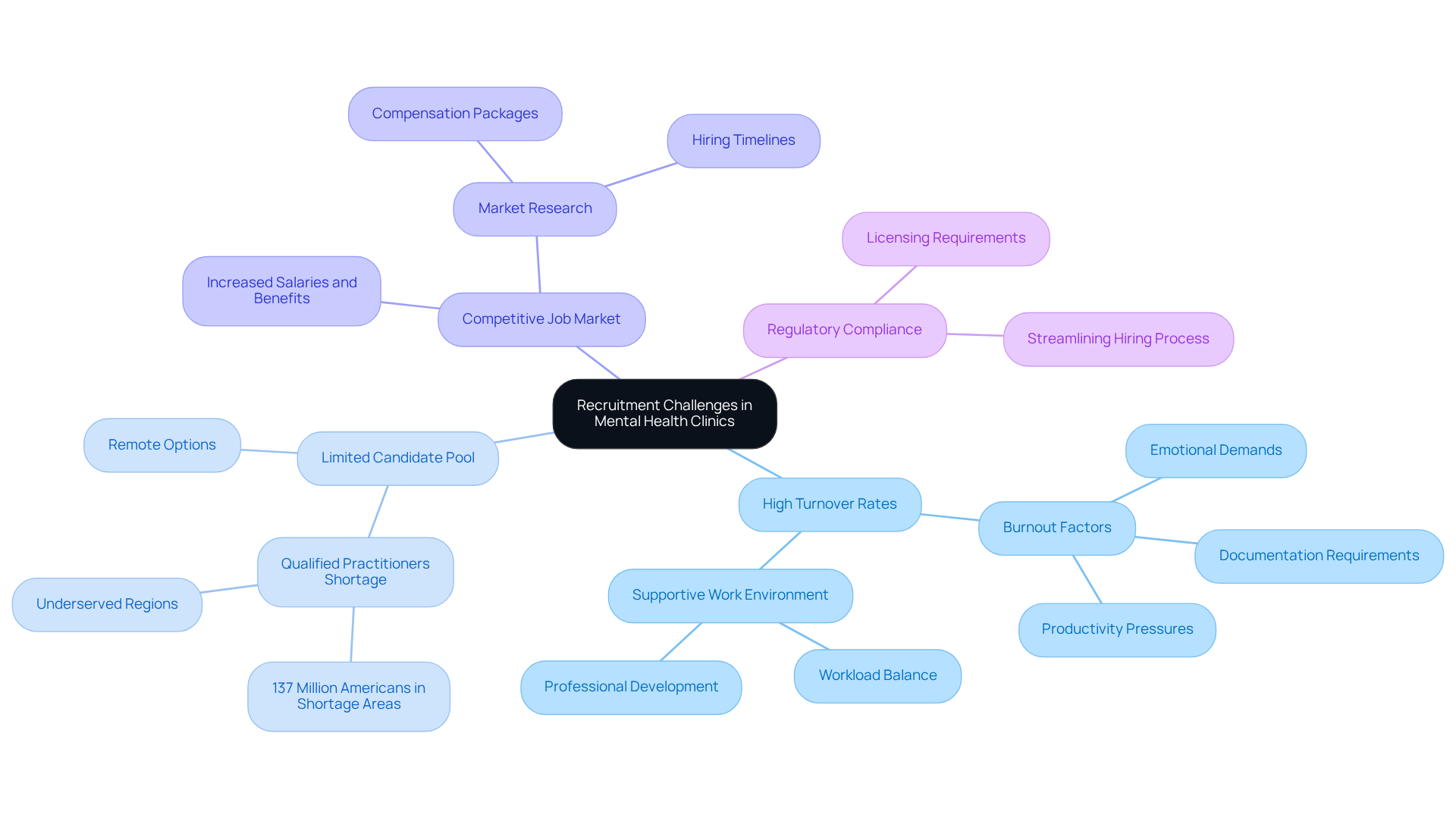
To effectively understand how to recruit mental health staff, it is essential to first identify the specific challenges your clinic encounters. Common recruitment challenges include:
- High Turnover Rates: Burnout among mental health professionals is a significant issue, contributing to high turnover rates. Emotional demands, documentation requirements, and productivity pressures exacerbate this problem, making it crucial to create a supportive work environment that prioritizes workload balance and professional development. High turnover in behavioral care is driven by these emotionally demanding factors, leading to costly recruitment cycles.
- Limited Candidate Pool: The U.S. is facing a significant lack of qualified psychological practitioners, with 137 million Americans residing in designated Professional Shortage Areas. This statistic underscores the severity of the shortage, making it challenging to find suitable candidates, particularly in underserved regions. Expanding your search to include remote options can help mitigate this issue.
- Competitive Job Market: Clinics are vying for the same talent, leading to increased salaries and benefits. To attract top candidates, it is essential to investigate what other facilities are providing and ensure your compensation packages are competitive. The demand for psychological services continues to rise, affecting hiring timelines and patient access to care, further intensifying competition for talent.
- Regulatory Compliance: Navigating licensing and regulatory requirements can complicate the hiring process. Familiarizing yourself with these regulations will streamline recruitment and ensure that candidates meet necessary qualifications. Understanding the complexities involved in compliance is crucial for effective hiring.
By proactively tackling these challenges, facilities can create a more effective strategy on how to recruit mental health staff that not only attracts but also retains qualified mental health professionals. Additionally, partnering with Healthcare Partners Consulting can streamline operations through expert medical billing solutions, ensuring compliance and accuracy in revenue management. This enables medical facilities to lessen administrative loads, allowing them to concentrate more on recruitment and staff development.
Develop Targeted Recruitment Strategies
To effectively address recruitment challenges, consider implementing the following targeted strategies:
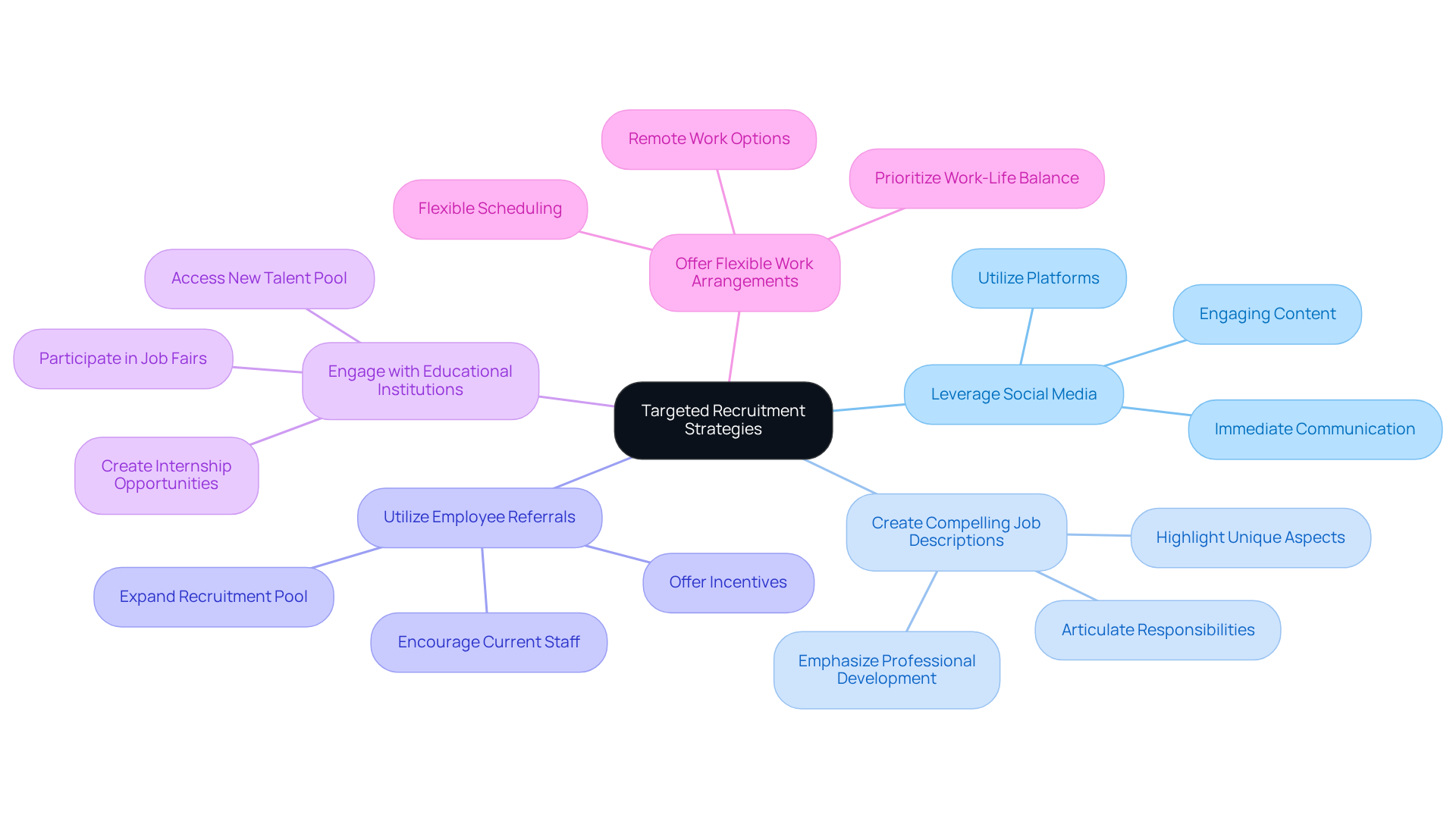
- Leverage Social Media: Utilize platforms such as LinkedIn, Facebook, and Twitter to connect with potential candidates. Share engaging content that reflects your practice’s culture and values, resonating with like-minded professionals. Since 90% of job seekers use social media for their job search, this approach can significantly expand your reach.
- Create Compelling Job Descriptions: Clearly articulate the responsibilities, qualifications, and benefits associated with the position. Highlight unique aspects of your clinic, such as a supportive work environment and opportunities for professional development, to attract top talent.
- Utilize Employee Referrals: Encourage your current staff to refer candidates by offering incentives. Employees often possess networks within the field and can help identify suitable candidates, thereby enhancing your recruitment pool.
- Engage with Educational Institutions: Form partnerships with universities and training programs to create internship opportunities or participate in job fairs. This strategy allows you to access a new talent pool eager to begin their careers in psychology.
- Offer Flexible Work Arrangements: Consider providing remote work options or flexible scheduling to attract candidates who prioritize work-life balance. This flexibility is increasingly important to healthcare professionals, particularly in the current landscape where burnout is prevalent.
By applying these strategies, you can improve your understanding of how to recruit mental health staff and effectively attract qualified wellness professionals to your clinic. Additionally, partnering with Healthcare Partners Consulting can streamline your onboarding process, ensure compliance, and reduce administrative burdens, allowing you to focus on strategic growth and delivering quality care.
Establish a Supportive Work Environment and Competitive Compensation
Establishing a nurturing work atmosphere and providing attractive remuneration are essential for attracting and retaining psychological support personnel. Consider the following strategies:
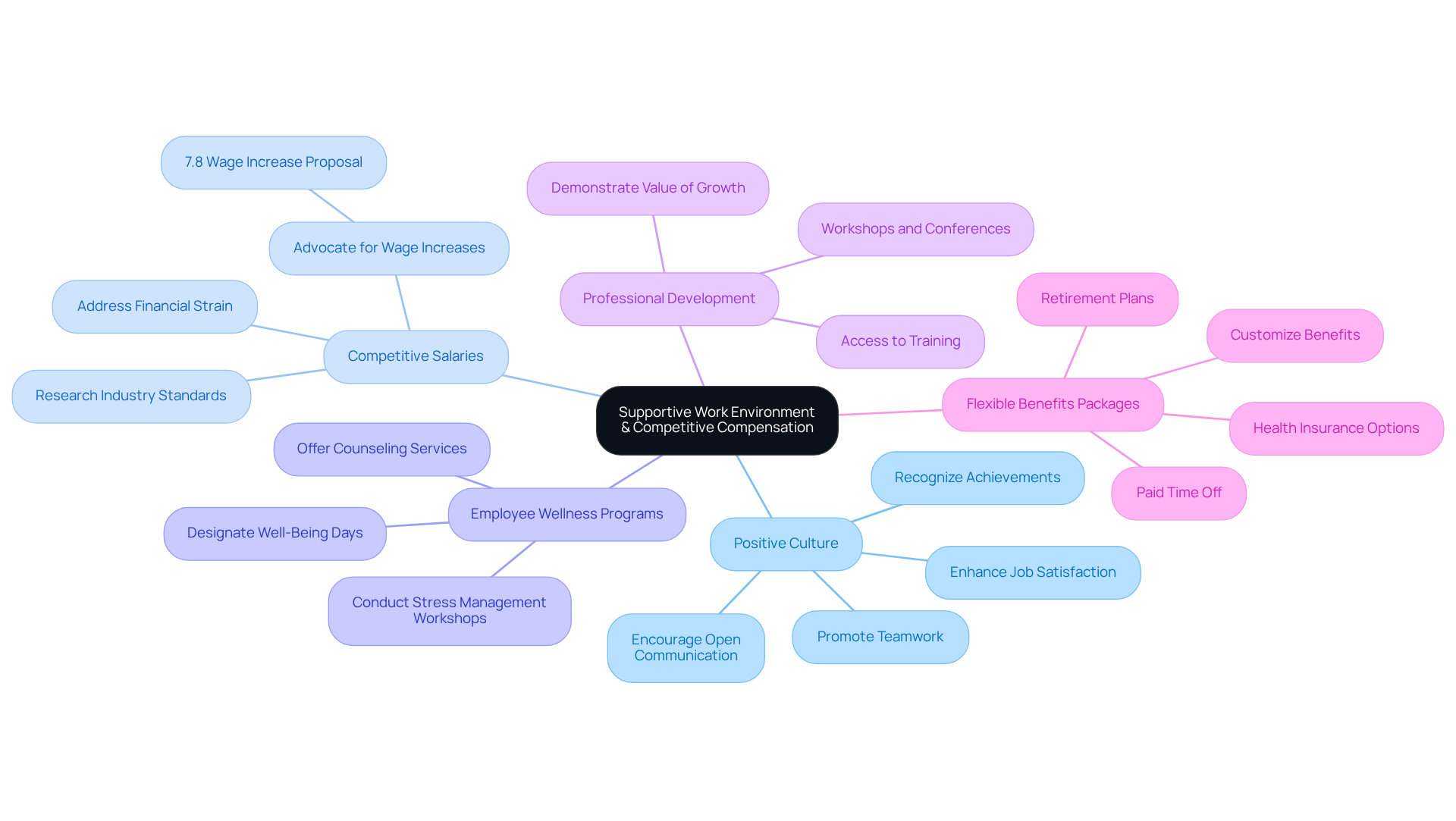
- Foster a Positive Culture: Encourage open communication, teamwork, and recognition of achievements. A positive workplace culture significantly enhances job satisfaction and employee retention, which is crucial in a sector facing a 40% turnover rate among behavioral specialists. The NIATx model emphasizes improving workforce processes, which can effectively address this turnover issue.
- Provide Competitive Salaries: Research industry standards for salaries in your region. As of 2026, psychological support professionals earn an average of under $20 an hour, translating to approximately $38,000 per year. Advocating for a 7.8% wage increase for psychological care providers reflects ongoing discussions about remuneration and can enhance your clinic’s appeal to prospective employees, particularly in a market where financial strain affects 23% of workers.
- Implement Employee Wellness Programs: Support your staff’s psychological well-being by offering wellness initiatives, such as counseling services, stress management workshops, and designated well-being days. Organizations that prioritize employee well-being observe a direct correlation with productivity and retention, underscoring the importance of mental well-being as a core business strategy.
- Offer Professional Development Opportunities: Invest in your employees’ growth by providing access to training, workshops, and conferences. This not only enhances their skills but also demonstrates that you value their professional development, which is vital for fostering loyalty in a competitive job market.
- Flexible Benefits Packages: Consider offering a variety of benefits, such as health insurance, retirement plans, and paid time off. Customizing benefits to meet the diverse needs of your team can significantly improve job satisfaction and retention rates.
By concentrating on these areas, clinics can cultivate an environment that attracts top talent and encourages long-term commitment, ultimately enhancing the quality of care provided to patients.
Implement Continuous Training and Professional Development
To ensure that your mental health team remains competent and engaged, it is essential to implement continuous training and professional development. Consider the following effective strategies:
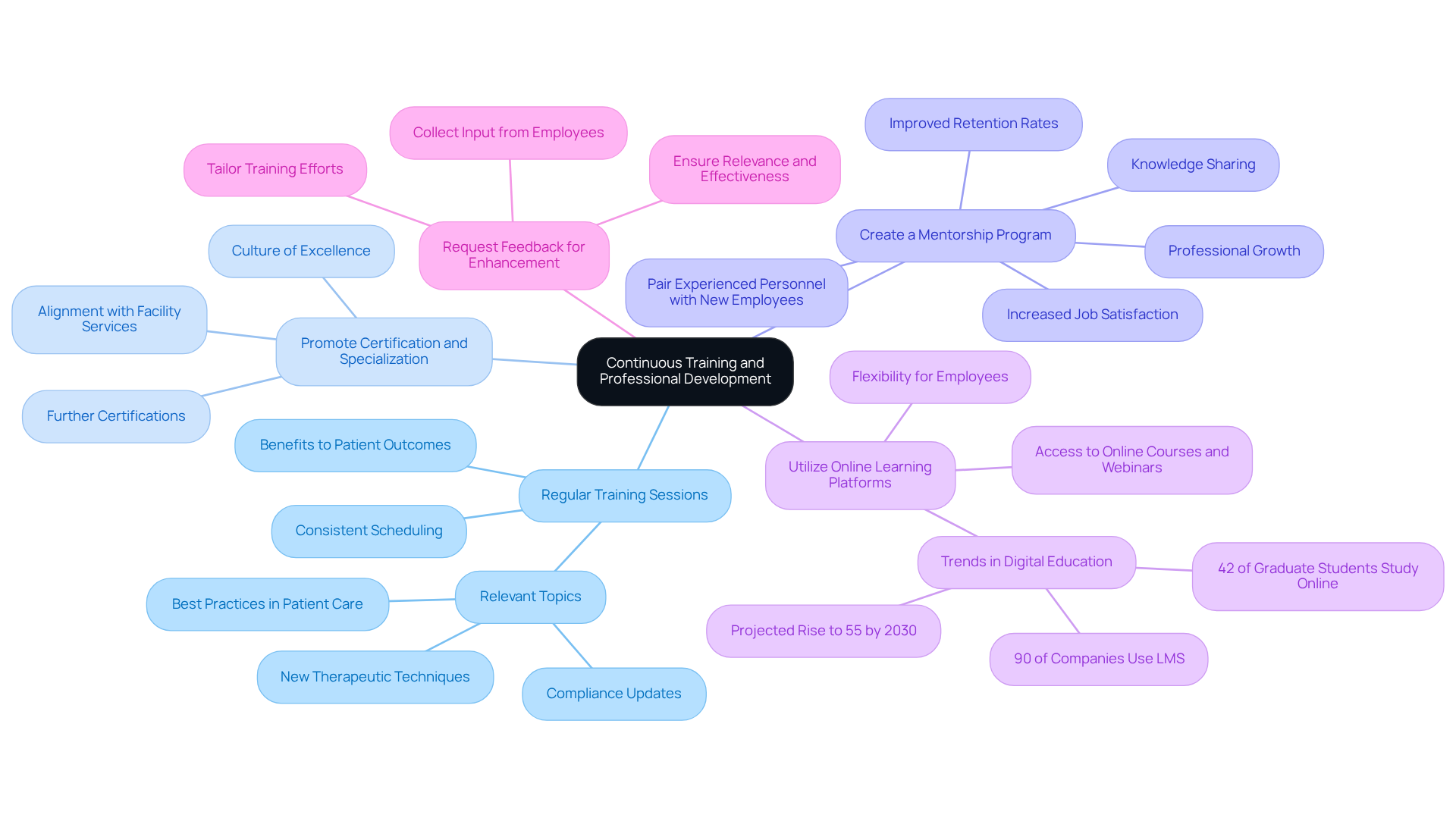
- Regular Training Sessions: Schedule consistent training sessions that cover relevant topics, including new therapeutic techniques, compliance updates, and best practices in patient care. This approach not only keeps employees informed but also enhances their skills, ultimately benefiting patient outcomes.
- Promote Certification and Specialization: Assist personnel in obtaining further certifications or specializations that align with your facility’s services. This initiative not only enhances their expertise but also adds significant value to your clinic, fostering a culture of excellence.
- Create a Mentorship Program: Establish a mentorship program that pairs experienced personnel with newer employees. This initiative promotes knowledge sharing and professional growth, leading to increased job satisfaction and improved retention rates.
- Utilize Online Learning Platforms: Provide access to online courses and webinars that employees can complete at their convenience. With 90% of companies utilizing learning management systems, this flexibility encourages participation and supports ongoing learning. Furthermore, as 42% of graduate students currently study fully online, with projections indicating this will rise to 55% by 2030, it underscores the trend towards digital education in the mental health sector.
- Request Feedback for Enhancement: Regularly collect input from employees regarding training programs and identify areas where they feel further training is required. This practice helps tailor your training efforts to meet their specific needs, ensuring that professional development remains relevant and effective.
By prioritizing continuous training and professional development, facilities can maintain a skilled workforce that is well-equipped to deliver high-quality care, ultimately enhancing the overall effectiveness of the practice. Continuing education is increasingly essential across many industries, making it crucial for mental health clinics to invest in their staff’s growth.
Conclusion
Recruiting mental health staff presents unique challenges that necessitate a strategic approach. By comprehending the complexities involved – such as high turnover rates, a limited candidate pool, and a competitive job market – clinics can formulate effective recruitment strategies. These strategies not only attract qualified professionals but also enhance employee retention. Establishing a supportive work environment and offering competitive compensation further solidifies a clinic’s capacity to draw in top talent while ensuring their long-term commitment.
The article delineates several key strategies for successful recruitment, including:
- Leveraging social media
- Crafting compelling job descriptions
- Fostering partnerships with educational institutions
Moreover, promoting a positive workplace culture and investing in continuous professional development are essential for maintaining a motivated and skilled workforce. These elements work synergistically to address the pressing need for mental health professionals, particularly in underserved areas where demand is critical.
Ultimately, the significance of a well-rounded recruitment strategy cannot be overstated. Clinics must prioritize the well-being of their staff, provide competitive benefits, and commit to ongoing training and development. By doing so, they not only enhance their recruitment outcomes but also contribute to the overall quality of care provided to patients. Embracing these best practices will ensure that mental health clinics are well-equipped to meet future challenges and continue to serve their communities effectively.
Frequently Asked Questions
What are the common recruitment challenges faced by mental health clinics?
Common recruitment challenges include high turnover rates due to burnout, a limited candidate pool due to a shortage of qualified practitioners, a competitive job market, and regulatory compliance issues.
How do high turnover rates affect mental health clinics?
High turnover rates, driven by burnout and emotional demands, lead to costly recruitment cycles and can negatively impact the continuity of care for patients.
What contributes to the limited candidate pool for mental health positions?
The U.S. has a significant shortage of qualified psychological practitioners, with 137 million Americans living in designated Professional Shortage Areas, making it difficult to find suitable candidates, especially in underserved regions.
How does the competitive job market impact recruitment in mental health clinics?
Clinics are competing for the same talent, which results in increased salaries and benefits. To attract top candidates, clinics need to offer competitive compensation packages and understand what other facilities are providing.
What role does regulatory compliance play in the recruitment process?
Navigating licensing and regulatory requirements can complicate hiring. Familiarizing oneself with these regulations is essential to ensure candidates meet necessary qualifications and to streamline the recruitment process.
How can clinics improve their recruitment strategies for mental health staff?
Clinics can improve their recruitment strategies by addressing the identified challenges, creating a supportive work environment, expanding candidate searches to include remote options, and ensuring competitive compensation packages.
How can partnering with Healthcare Partners Consulting benefit mental health clinics?
Partnering with Healthcare Partners Consulting can streamline operations through expert medical billing solutions, ensuring compliance and accuracy in revenue management, which allows clinics to focus more on recruitment and staff development.