
Introduction
Navigating the complexities of ICD-10 code E78.5, which relates to unspecified hyperlipidemia, presents significant challenges for healthcare providers. This code facilitates accurate reporting; however, misapplication can lead to significant financial repercussions for healthcare providers. Ultimately, the ability to effectively document and train staff on E78.5 will determine the financial health of healthcare organizations.
How can providers leverage effective documentation, staff training, and technology to enhance their billing processes and avoid the pitfalls associated with E78.5?
Understand ICD-10 Code E78.5 and Its Relevance in Medical Billing
The ICD-10 code for ‘Hyperlipidemia, unspecified’ is critical for accurate medical billing, yet it carries risks if not used judiciously. This code is essential for accurate medical billing, allowing healthcare providers to report cases of hyperlipidemia in the absence of comprehensive lipid profiles. However, caution is necessary; relying too heavily on this code without adequate documentation can result in significant financial setbacks for healthcare providers.
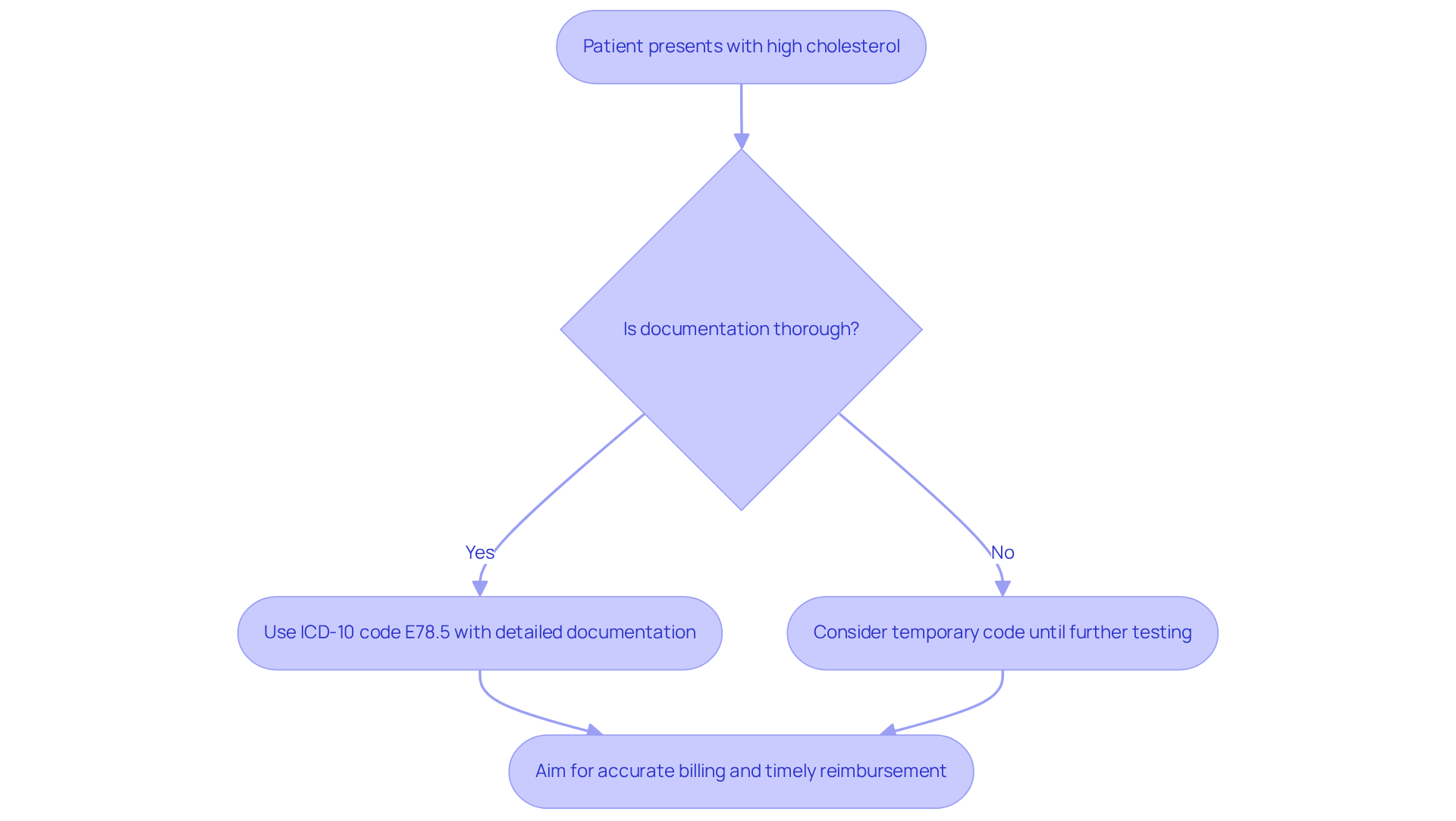
For instance, if a patient shows high cholesterol but lacks thorough documentation, a temporary code may be suitable until further testing clarifies the diagnosis. This situation highlights how crucial meticulous documentation is in clinical practice to justify the use of this code.
Experts emphasize that using codes such as the ICD-10 code E78.5 without sufficient justification can complicate approval processes and postpone reimbursements. Thus, providers should aim to detail the type of hyperlipidemia whenever feasible, associating it with suitable CPT codes to improve the chances of successful reimbursements. Implementing these best practices can significantly reduce the risk of payment rejections and ensure timely reimbursement for healthcare services.
Implement Accurate Coding Practices for E78.5 in Billing
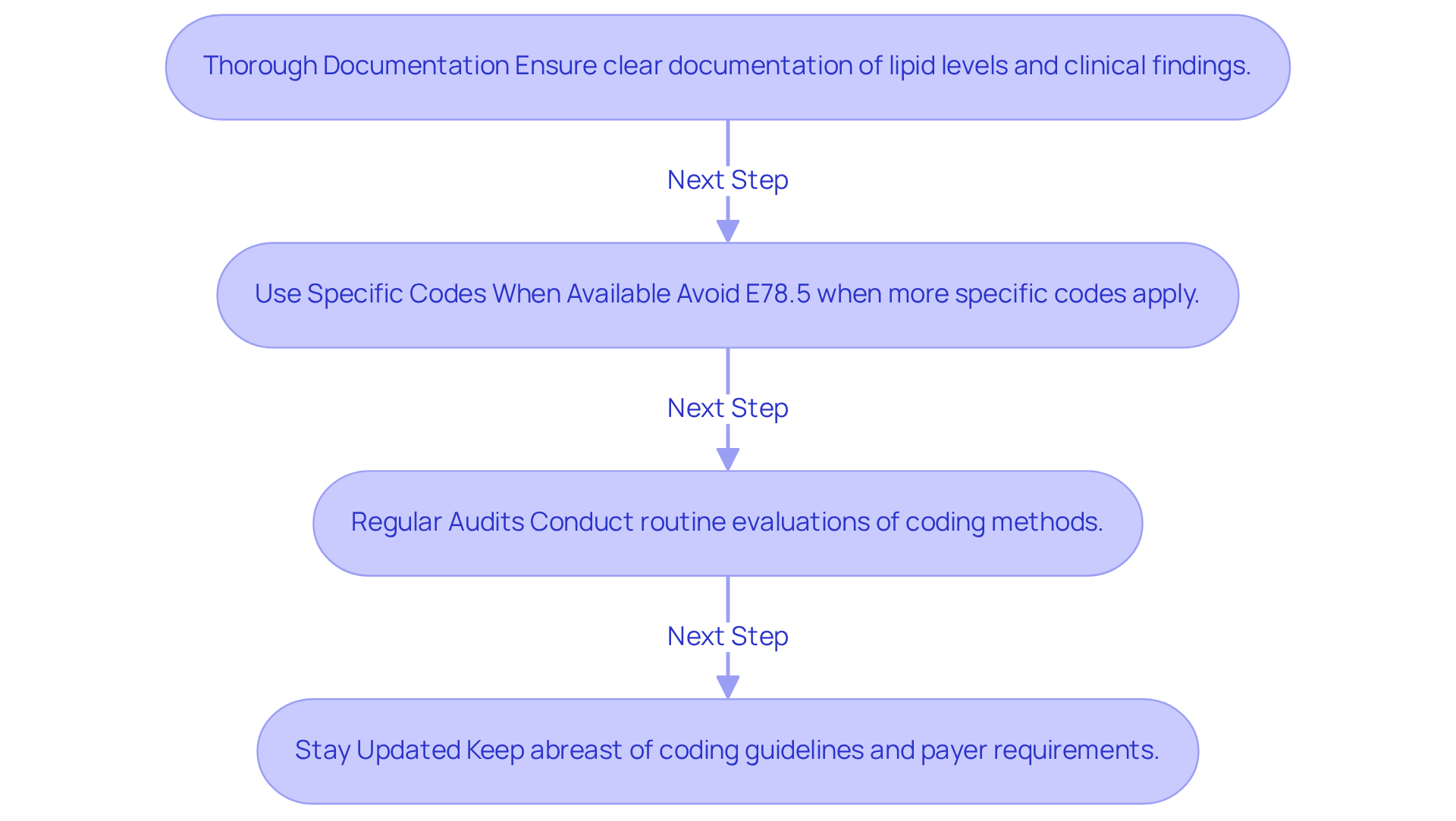
To ensure accurate coding for E78.5, healthcare providers must adhere to established guidelines that enhance billing practices:
- Thorough Documentation: It is essential to ensure that all patient records clearly document lipid levels and any relevant clinical findings. This comprehensive documentation supports the use of icd 10 code e78.5 and can significantly prevent claim denials, particularly in the context of underpayments and aging claims. It’s crucial to recognize that effective documentation goes beyond regulatory requirements; it serves as a foundation for successful billing practices, especially in optimizing patient statements.
- Use Specific Codes When Available: Avoid using E78.5 when more specific codes, such as E78.0 for pure hyperlipidemia or E78.2 for mixed hyperlipidemia, can be applied. Employing specific codes improves billing precision and more accurately represents the patient’s condition, which is essential for efficient management of requests and minimizing overdue submissions.
- Regular Audits: Performing routine evaluations of coding methods is essential to recognize trends of misuse or excessive dependence on unspecified codes. This proactive strategy can assist in rectifying practices before they result in significant financial consequences, especially regarding unaddressed requests. Regular audits can significantly reduce the risk of denial of requests, thereby supporting revenue recovery efforts.
- Stay Updated: Keeping abreast of changes in coding guidelines and payer requirements is vital for ensuring compliance and optimizing reimbursement. Implementing these practices enhances billing precision and reduces the risk of claim denials. This ultimately leads to faster reimbursement solutions. In 2026, the average claim denial rate in the healthcare industry exceeds 10%, with 1 in 7 claims denied, resulting in over 200 million rejections annually in the U.S. Failure to implement these guidelines may lead to increased claim denials, jeopardizing financial health.
Train Staff on Best Practices for ICD-10 Coding and Billing Compliance
Without adequate training, healthcare providers risk significant revenue loss due to billing errors, making effective ICD-10 classification essential. Educating personnel on optimal methods for ICD-10 classification and billing compliance entails several key strategies:
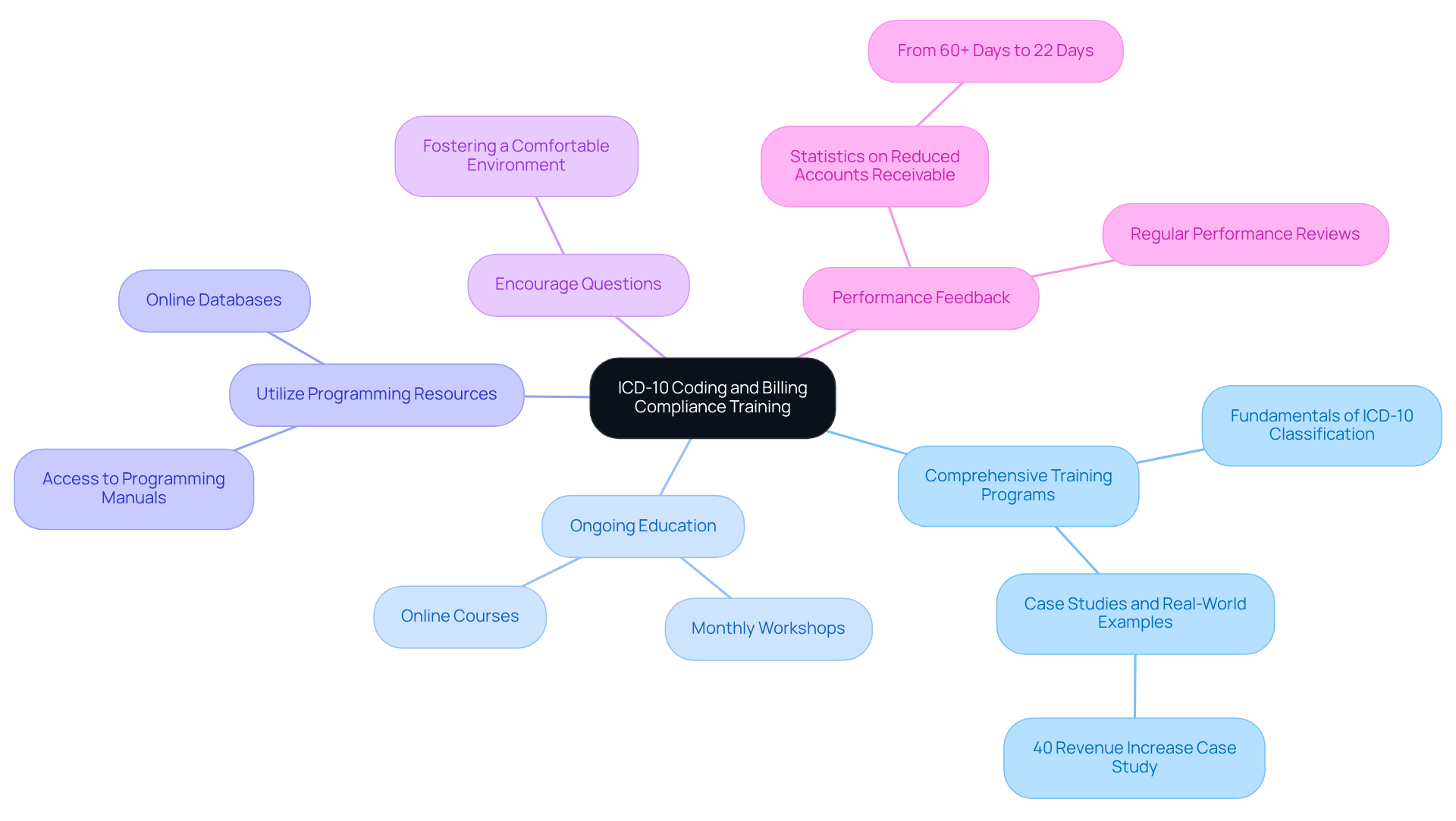
- Comprehensive Training Programs: Create training programs that encompass the fundamentals of ICD-10 classification, with a focus on the specifics of the ICD 10 code E78.5. Include case studies and real-world examples to illustrate common pitfalls and best practices. For instance, a case study on the successful shift to ICD-10 classification demonstrated a 40% revenue increase within six months, highlighting the significance of effective training.
- Ongoing Education: Implement continuous education initiatives, such as monthly workshops or online courses, to keep staff updated on programming changes and compliance requirements. As highlighted by healthcare training experts, “Ongoing education is essential for ensuring compliance and improving job satisfaction among professionals in the field.”
- Utilize Programming Resources: Provide access to programming materials, such as programming manuals and online databases, to assist staff in making informed programming decisions.
- Encourage Questions: Foster an environment where staff feel comfortable asking inquiries about programming methods. This approach can help clarify doubts and reinforce learning.
- Performance Feedback: Regularly review programming performance and provide constructive feedback to staff. This practice can help identify areas for enhancement and reinforce proper programming practices. Statistics show that clients have reduced accounts receivable from over 60 days to 22 days through effective training and compliance measures.
Ultimately, the commitment to staff education not only enhances compliance but also safeguards the financial health of healthcare organizations.
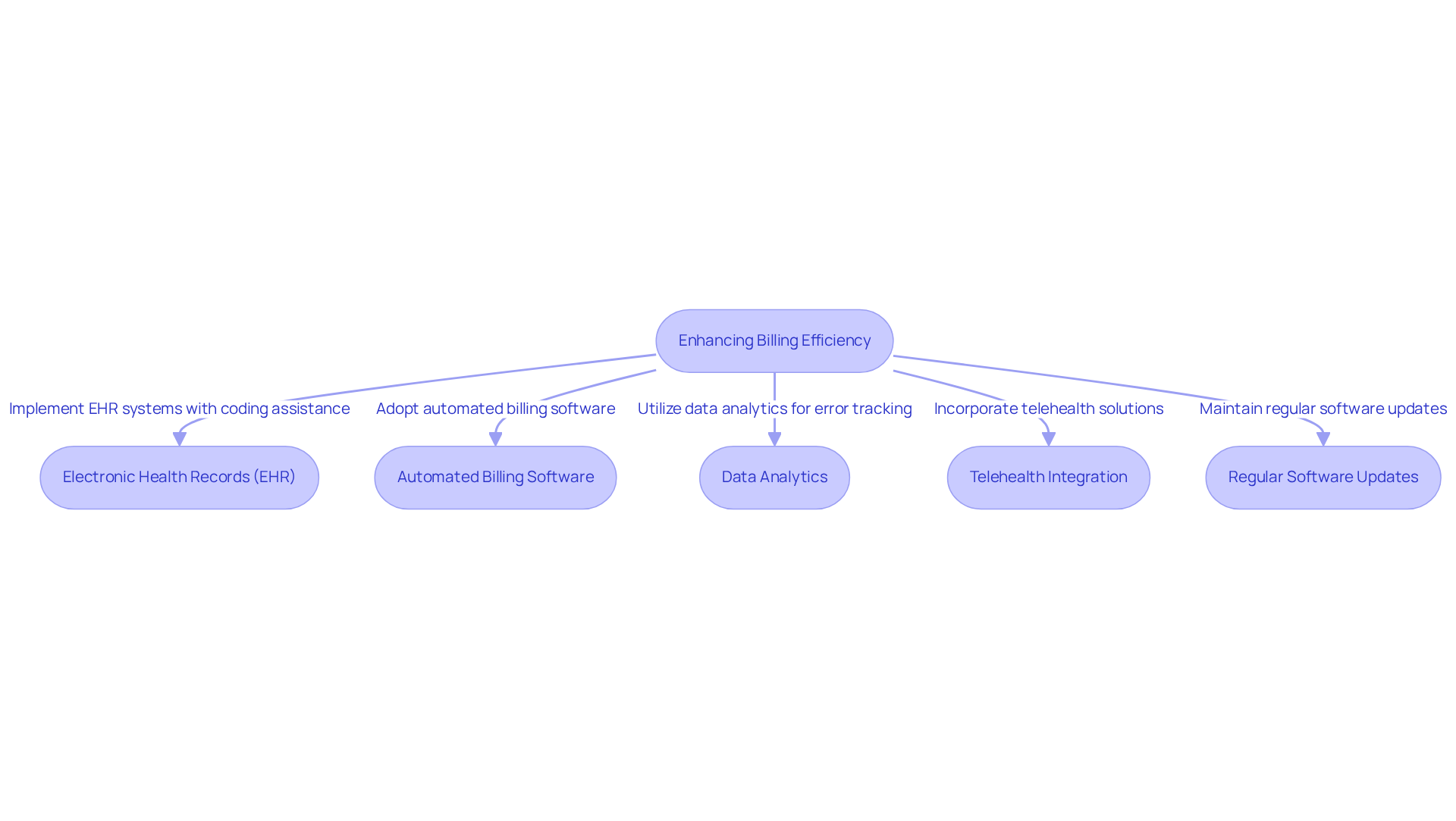
Leverage Technology to Enhance Billing Efficiency for E78.5
Billing inefficiencies in healthcare can lead to significant revenue loss, making it essential for providers to adopt effective strategies.
- Electronic Health Records (EHR): Consider implementing EHR systems equipped with coding assistance tools that suggest appropriate codes based on clinical documentation. This significantly reduces the risk of errors.
- Automated Billing Software: Consider implementing automated billing software to streamline your submissions process. This technology tracks claims, manages denials, and ensures timely submissions, thereby improving overall efficiency.
- Data Analytics: Utilize data analytics to track programming patterns and identify common error regions. This insight can guide targeted training efforts, enhancing overall programming accuracy.
- Telehealth Integration: For mental health providers, incorporating telehealth solutions can enhance the documentation of patient interactions, ensuring that all pertinent information is recorded for precise classification.
- Regular Software Updates: Maintain regular updates for all billing and coding software to comply with the latest coding guidelines and payer requirements.
By embracing these strategies, healthcare providers not only enhance their billing efficiency but also position themselves for sustainable growth in a competitive landscape.
Conclusion
The effective management of ICD-10 code E78.5 is essential for healthcare providers to optimize billing practices and secure timely reimbursements. This code, which represents unspecified hyperlipidemia, is crucial in medical billing and requires careful handling to prevent financial pitfalls. Balancing the use of this code with thorough documentation and specific coding practices is vital for safeguarding against claim denials and optimizing revenue.
Key strategies discussed include:
- The importance of meticulous documentation
- The use of specific codes when applicable
- Regular audits of coding practices
- Ongoing staff training
Each of these elements contributes to reducing errors and improving billing efficiency. Moreover, leveraging technology, such as electronic health records and automated billing software, can significantly enhance the accuracy and speed of the billing process, further supporting the financial health of healthcare organizations.
Failing to adopt best practices for ICD-10 code E78.5 can jeopardize fiscal stability in healthcare organizations. Providers are encouraged to implement these strategies proactively, ensuring that their coding practices are not only accurate but also aligned with the latest guidelines. By doing so, they can mitigate risks, enhance billing efficiency, and ultimately support better patient care through improved financial management.
Frequently Asked Questions
What is the ICD-10 code E78.5 used for?
The ICD-10 code E78.5 is used for ‘Hyperlipidemia, unspecified’ and is critical for accurate medical billing.
Why is the ICD-10 code E78.5 important in medical billing?
It allows healthcare providers to report cases of hyperlipidemia when comprehensive lipid profiles are not available, facilitating accurate billing.
What risks are associated with using the ICD-10 code E78.5?
Relying too heavily on this code without adequate documentation can lead to significant financial setbacks for healthcare providers, including complications in approval processes and delayed reimbursements.
What should providers do if a patient shows high cholesterol but lacks thorough documentation?
In such cases, a temporary code may be used until further testing clarifies the diagnosis, emphasizing the importance of meticulous documentation.
How can providers improve their chances of successful reimbursements when using the ICD-10 code E78.5?
Providers should aim to detail the type of hyperlipidemia whenever possible and associate it with suitable CPT codes to enhance reimbursement success.
What best practices can reduce the risk of payment rejections in medical billing?
Implementing meticulous documentation and accurately associating ICD-10 codes with appropriate CPT codes can significantly reduce the risk of payment rejections and ensure timely reimbursement for healthcare services.