

Introduction
Mastering medical billing rates is crucial for mental health clinics aiming to ensure financial viability while providing essential patient services. These rates directly impact healthcare providers’ income and shape patient access to essential services. Clinics often struggle to set competitive rates that reflect the quality of care they provide, navigating the complexities of billing to ensure sustainability and competitiveness.
Clinics must explore effective strategies to optimize their billing rates and enhance revenue cycle management. Without effective strategies for managing billing rates, clinics risk jeopardizing their financial stability and the quality of care they offer.
Define Medical Billing Rates and Their Importance
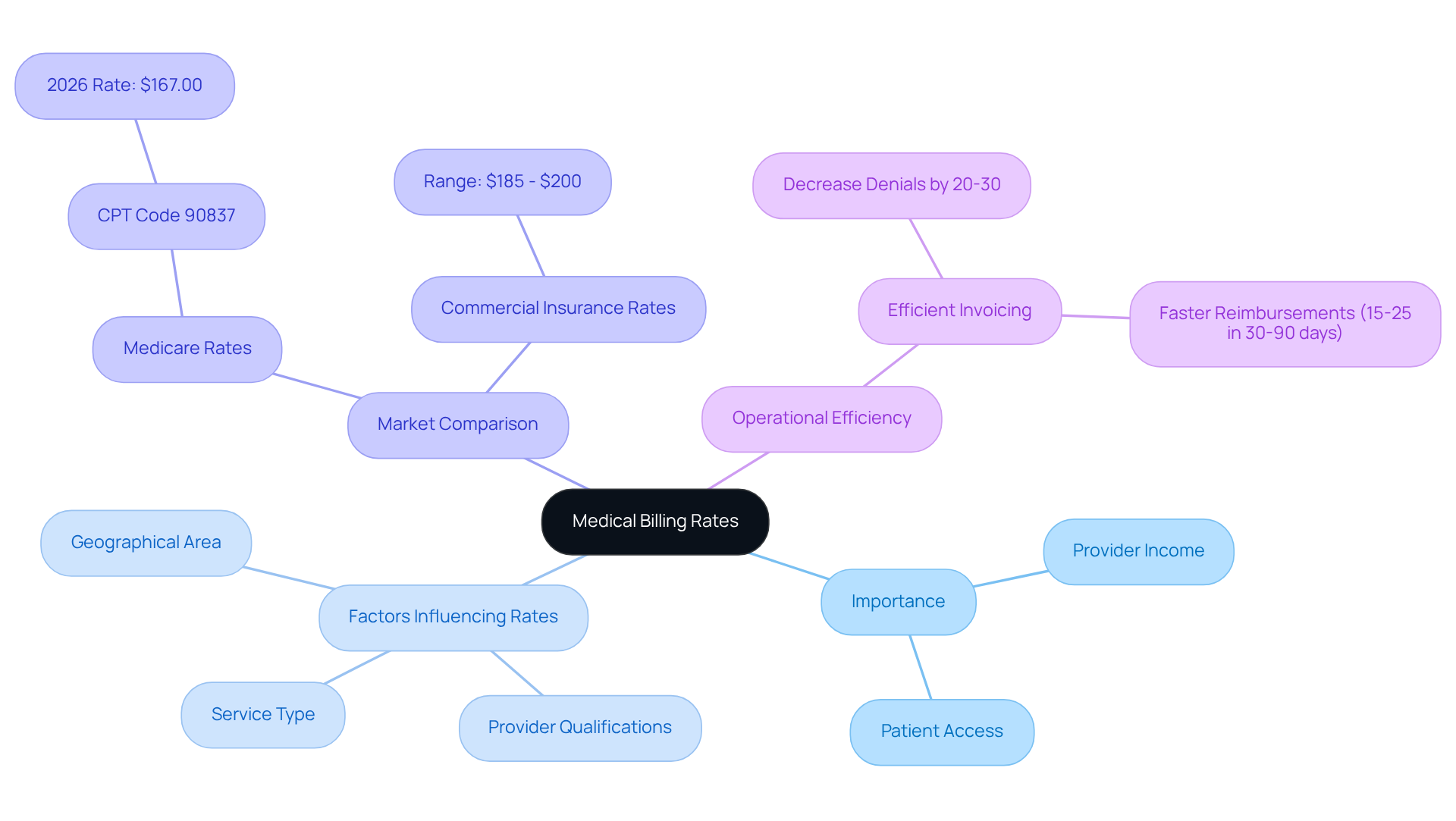
Medical billing rate charges are a critical component of healthcare finance, influencing both provider income and patient access to services. These charges represent the fees billed by healthcare providers for services delivered, which are subsequently submitted to insurance companies for reimbursement. They can fluctuate considerably depending on elements such as the kind of service offered, the qualifications of the provider, and the geographical area of the practice, especially in high-cost regions like Atlanta, Georgia.
Understanding these figures is crucial for mental health organizations, as the medical billing rate directly impacts their income and operational viability. For example, facilities that set their charges below market rates often struggle to cover their operational costs, while those charging excessively may discourage potential customers. In 2026, Medicare reimbursement for a 60-minute therapy session (CPT code 90837) is established at $167.00, while commercial insurance charges can vary from $185 to $200 for the same service. This disparity emphasizes the significance of aligning service fees, including the medical billing rate, with market standards to ensure financial sustainability.
Understanding pricing structures also enables clinics to negotiate improved agreements with insurance companies, ensuring equitable remuneration for their services based on the medical billing rate. Case studies show that practices that align their reimbursement figures with market benchmarks can utilize their volume to negotiate enhanced contracts, potentially boosting income per session.
Furthermore, efficient invoicing methods can result in a decrease in denial occurrences by 20-30% and quicker reimbursements within 15-25% in 30-90 days. Operational efficiency is vital for maintaining a robust revenue cycle, enabling healthcare facilities to concentrate on delivering quality patient care. Ultimately, the establishment of the medical billing rate is a strategic necessity that underpins both financial health and the quality of patient care.
Explore Factors Influencing Medical Billing Costs
Understanding the multifaceted factors that influence the medical billing rate is crucial for mental health clinics aiming to enhance their financial performance. Several key elements significantly impact these costs:
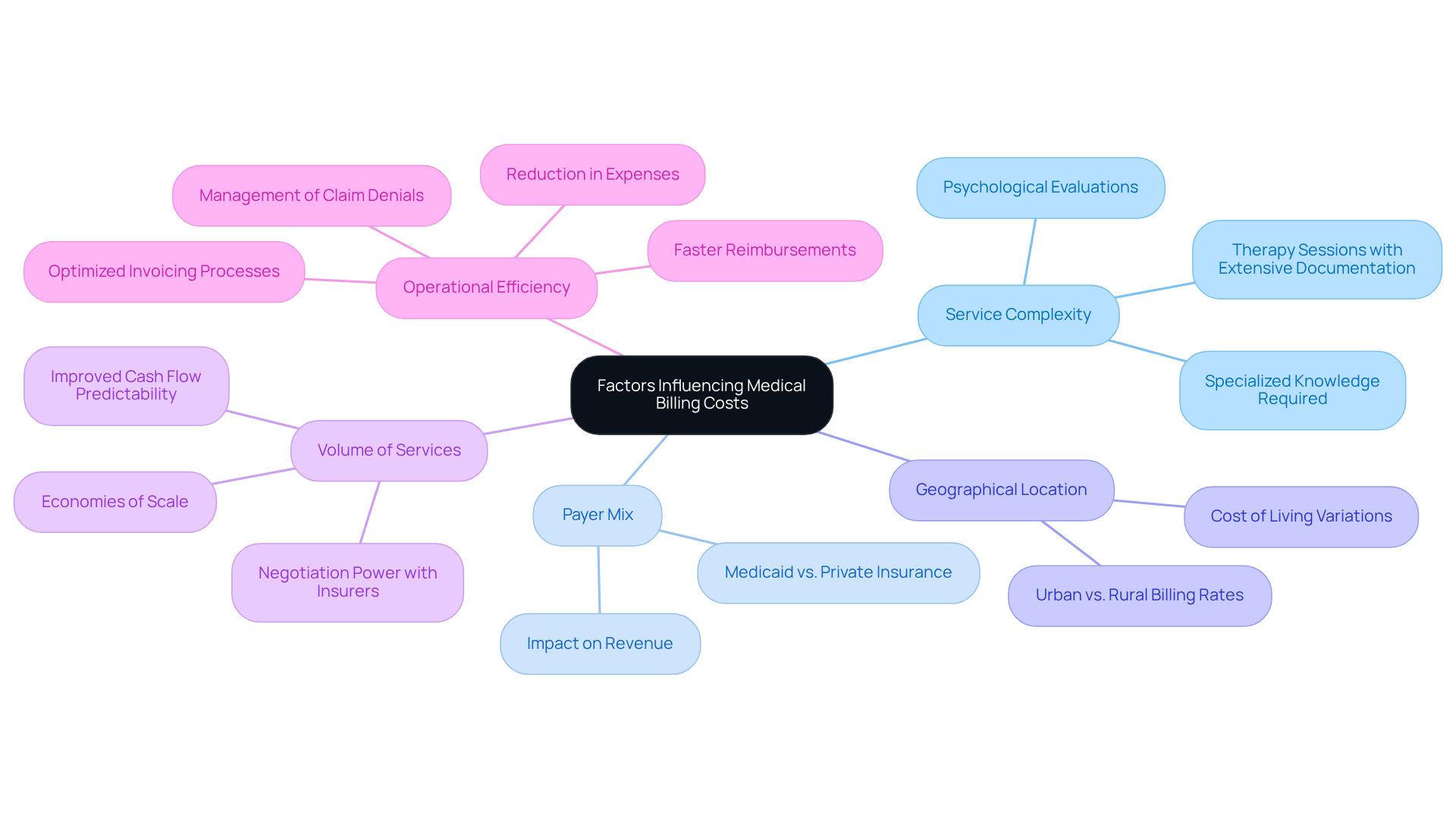
- Service Complexity: More intricate services, such as psychological evaluations or therapy sessions requiring extensive documentation, typically command higher charges. This complexity necessitates specialized knowledge and thorough coding practices to ensure accurate reimbursement.
- Payer Mix: The types of insurance accepted by the clinic can significantly influence billing amounts. For instance, the medical billing rate for Medicaid often results in lower reimbursements compared to private insurance, affecting overall revenue.
- Geographical Location: Billing amounts can vary based on the cost of living in a specific area. Clinics in urban settings may have a higher medical billing rate compared to those in rural areas due to increased operational costs.
- Volume of Services: Increased patient volumes can lead to economies of scale, allowing clinics to negotiate better terms with insurers. Higher service volume often correlates with improved cash flow predictability and operational efficiency, which can positively impact the medical billing rate.
- Operational efficiency can be enhanced by clinics that optimize their invoicing processes and effectively manage claim denials, ultimately leading to a reduction in expenses and a better medical billing rate, positively impacting their financial outcomes. Research shows that effective billing practices can reduce denial rates by 20-30%. Additionally, they can expedite reimbursements by 15-25% within 30 to 90 days. HPC offers tailored administrative support services, including scheduling and insurance claims assistance. This enables mental health practices to focus on patient care while enhancing their financial management.
Comprehending these factors allows mental health organizations to strategically position themselves in the market, ensuring they remain competitive while maximizing income. By concentrating on operational rigor, such as implementing scorecard-driven adjustments linked to claims accuracy, denial rates, and days in accounts receivable, healthcare facilities can improve their financial cycle performance. Furthermore, to better evaluate profitability, HPC provides a quick quiz that assists in uncovering concealed financial leaks and offers tailored suggestions for improved efficiency and accuracy in invoicing. By addressing these factors, mental health clinics can not only improve their financial outcomes but also ensure sustainable growth in a competitive landscape.
Analyze Medical Billing Pricing Models
To optimize revenue cycle management, mental health clinics should evaluate various medical billing pricing models:
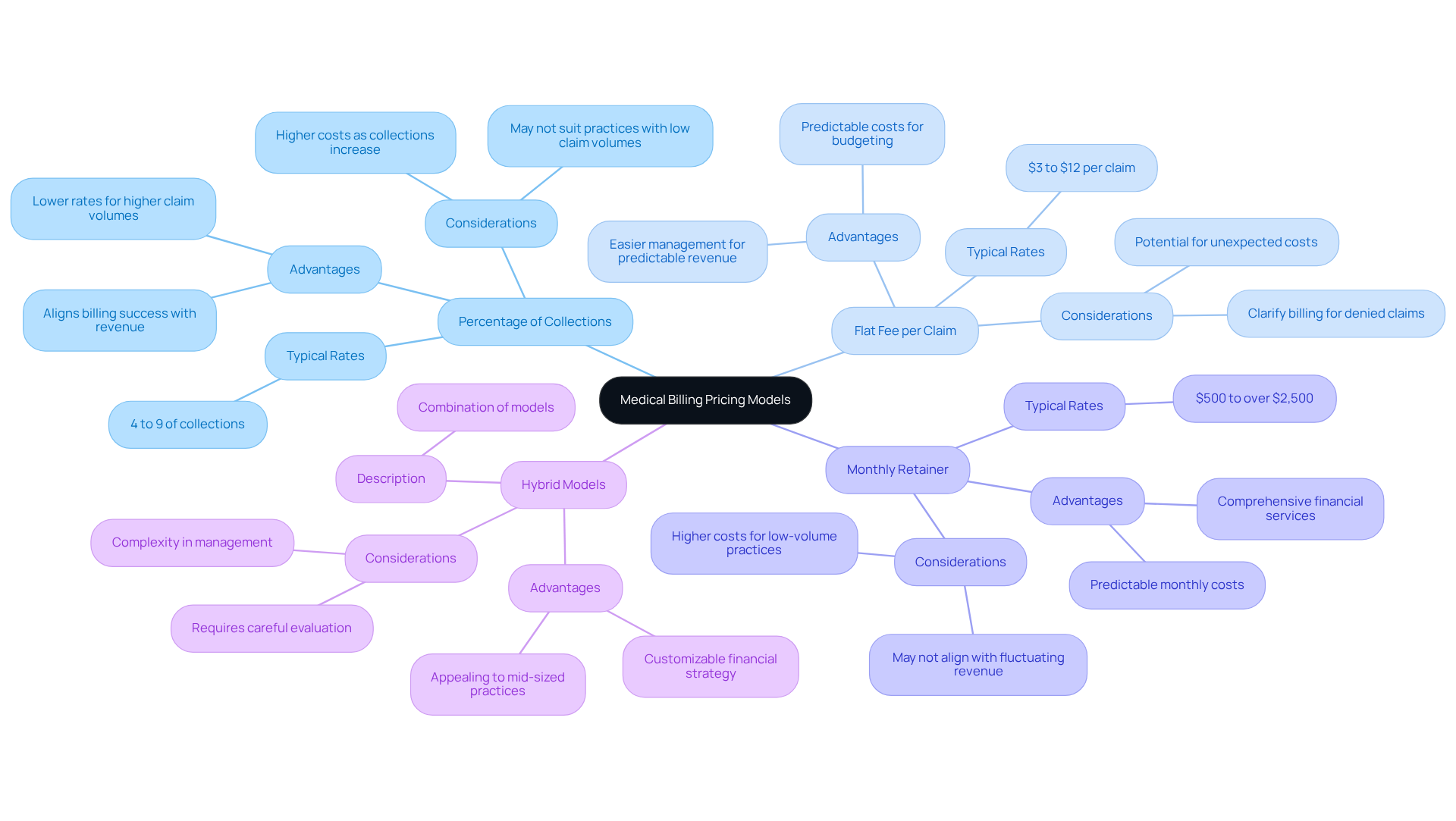
- Percentage of Collections: This model charges a percentage of the total amount collected from insurance claims. Typically, this percentage ranges from 4% to 9%. It aligns the billing service’s success with the revenue of the healthcare facility, making it a popular choice among providers. Clinics with higher claim volumes may benefit from lower rates due to economies of scale, improving financial efficiency overall.
- Flat Fee per Claim: Under this model, healthcare facilities pay a fixed fee for each claim submitted, usually between $3 and $12. This method can be beneficial for healthcare facilities with predictable revenue volumes, facilitating easier budgeting and cost management. Practices should clarify the billing process for denied or corrected claims to prevent unexpected costs.
- Monthly Retainer: Some practices choose a monthly charge that encompasses all financial services, typically ranging from $500 to over $2,500. This model provides predictable costs but may not align with fluctuating revenue, particularly for practices experiencing seasonal variations in patient volume.
- Hybrid Models: A combination of the above models can also be utilized, allowing healthcare facilities to customize their financial strategy to their specific needs. For instance, a hybrid model might include a lower percentage of collections combined with a base monthly fee, appealing to mid-sized practices seeking cost control and scalability.
Each model has its advantages and disadvantages, and the decision relies on factors such as the facility’s size, patient volume, financial objectives, and the medical billing rate. For example, practices that implement advanced coding strategies can enhance their financial health by maximizing reimbursements and minimizing errors, potentially achieving a 20-30% reduction in claim denials and faster reimbursement cycles of 15-25% within 30-90 days. Examining these models assists healthcare facilities in streamlining their financial processes and improving income, allowing them to concentrate more on providing high-quality patient care.
Healthcare Partners Consulting & Billing, LLC (HPC) provides tailored administrative support services to assist healthcare facilities in managing patient statements efficiently, addressing underpayments, unprocessed claims, and aging claims. HPC’s expertise enables healthcare facilities to streamline financial processes and increase revenue, allowing a greater focus on quality patient care.
Implement Strategies for Negotiating Medical Billing Rates
Negotiating medical payment terms presents significant challenges for mental health clinics, yet effective strategies can lead to improved outcomes. Here are some effective approaches:
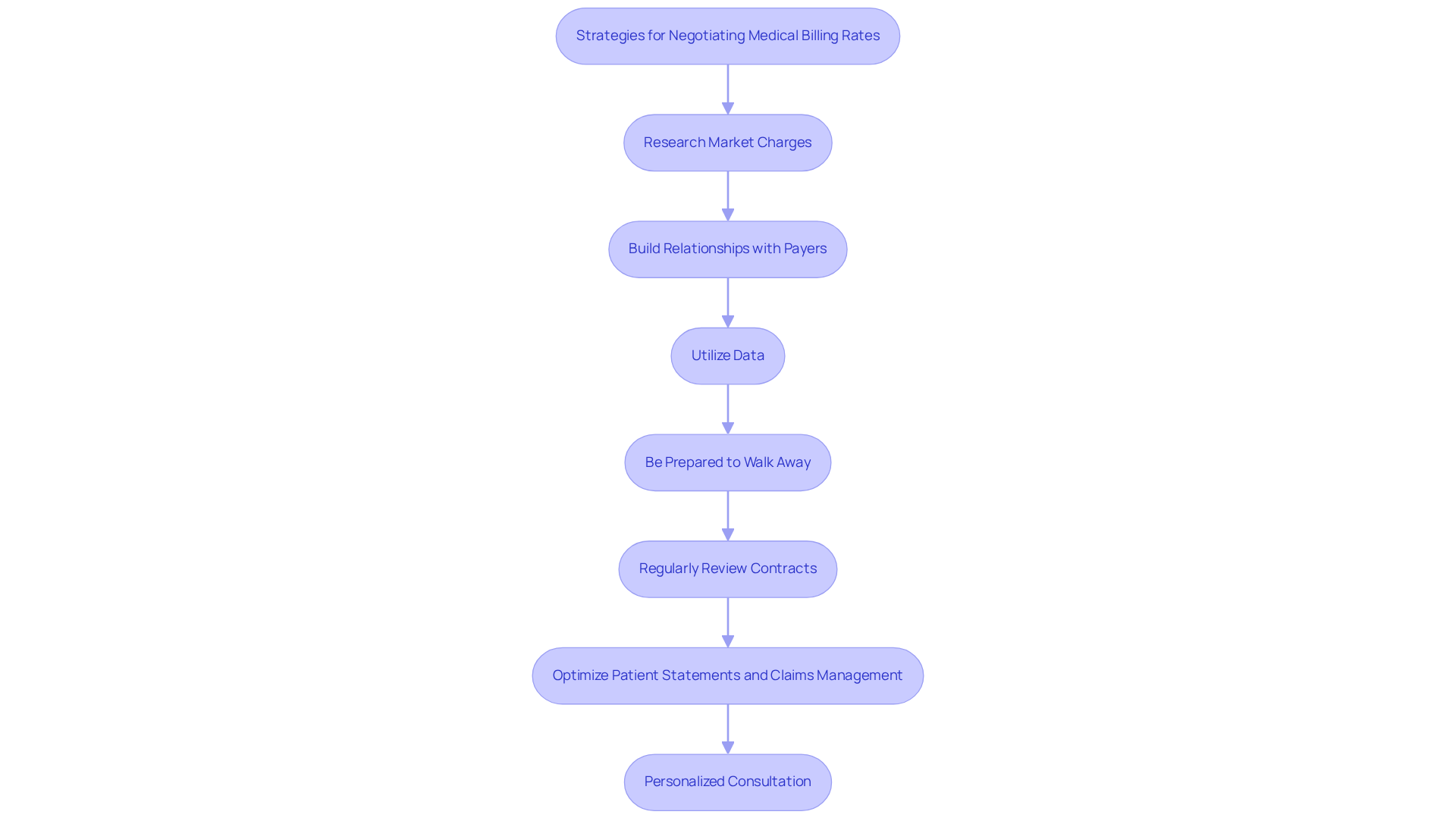
- Research Market Charges: Understand the average billing amounts for similar services in your area. For example, psychotherapy reimbursement amounts for individual sessions can range from $78.93 to $167, depending on the payer and location. This knowledge provides a solid foundation for negotiation.
- Build Relationships with Payers: Establishing strong relationships with insurance representatives can facilitate smoother negotiations and better outcomes. Interacting with payers can create opportunities for improved compensation, particularly if you can showcase positive results on standardized measures.
- Utilize Data: Employ information from your practice’s performance, such as patient volume and claim denial statistics, to bolster your argument for increased compensation. For instance, facilities that can demonstrate shorter wait times and prompt access to care are more likely to attract insurer partnerships, resulting in enhanced reimbursement rates.
- Be Prepared to Walk Away: If negotiations do not satisfy your practice’s financial needs, be willing to explore other payer options or adjust your service offerings. This flexibility can empower you to seek better terms that align with your operational goals.
- Regularly Review Contracts: Periodically assess your contracts with payers to ensure they remain competitive and reflect any changes in your clinic’s services or market conditions. This proactive approach can help identify opportunities for renegotiation, especially if your medical billing rate falls below market averages.
- Optimize Patient Statements and Claims Management: Addressing underpayments, unprocessed claims, and aging claims is crucial for maintaining a healthy revenue cycle. Implementing effective claims management strategies, including regular follow-ups on outstanding claims and leveraging technology for tracking, can reduce payment processing times and improve net collection performance.
- Personalized Consultation: Schedule a 30-minute consultation with Healthcare Partners Consulting & Billing, LLC (HPC), a veteran-owned firm with 39 years of expertise in medical and mental health billing. HPC can help map your current workflow and identify the services that will move the needle fastest for your practice, ensuring you focus on patient care while HPC handles the administrative burdens.
By implementing these strategies, mental health organizations can enhance their negotiating power, potentially leading to improved reimbursement rates and overall financial well-being. Ultimately, the right negotiation strategies can transform your clinic’s financial landscape, ensuring sustainability and growth.
Conclusion
Navigating the complexities of medical billing rates is critical for mental health clinics aiming to achieve financial stability. Understanding and managing these rates allows healthcare providers to improve their revenue cycle management and concentrate on delivering quality patient care. This article emphasizes the need for billing practices to align with market standards to maintain sustainability.
Key factors influencing medical billing costs include:
- Service complexity
- Payer mix
- Geographical location
- Operational efficiency
Recognizing these elements enables clinics to negotiate better agreements with insurance companies. Implementing effective billing practices can significantly reduce denial rates and expedite reimbursements, ultimately improving financial outcomes. Additionally, exploring various pricing models and employing negotiation strategies can empower clinics to optimize their revenue streams.
In conclusion, the journey toward mastering medical billing rates is not merely about numbers; it is about empowering healthcare providers to thrive in a challenging landscape. Engaging with experts in medical billing can significantly enhance a clinic’s operational efficiency and financial outcomes.
Frequently Asked Questions
What are medical billing rates?
Medical billing rates are the fees charged by healthcare providers for services delivered, which are submitted to insurance companies for reimbursement.
Why are medical billing rates important?
They influence provider income and patient access to services, impacting the operational viability of healthcare organizations.
What factors can affect medical billing rates?
Factors include the type of service offered, the qualifications of the provider, and the geographical area of the practice.
How do medical billing rates vary by location?
Medical billing rates can fluctuate significantly, especially in high-cost regions like Atlanta, Georgia.
What is the Medicare reimbursement rate for a 60-minute therapy session in 2026?
The Medicare reimbursement for a 60-minute therapy session (CPT code 90837) is established at $167.00.
How do commercial insurance charges compare to Medicare rates for therapy sessions?
Commercial insurance charges for the same 60-minute therapy session can vary from $185 to $200, highlighting a disparity with Medicare rates.
How can understanding medical billing rates benefit mental health organizations?
It helps organizations align their service fees with market standards, ensuring financial sustainability and operational efficiency.
What is the impact of aligning reimbursement figures with market benchmarks?
Practices that align their figures can negotiate better contracts with insurance companies, potentially increasing income per session.
How can efficient invoicing methods affect revenue cycles?
Efficient invoicing can reduce denial occurrences by 20-30% and lead to quicker reimbursements within 15-25% in 30-90 days.
Why is establishing a medical billing rate considered a strategic necessity?
It underpins both the financial health of healthcare facilities and the quality of patient care they provide.