
Introduction
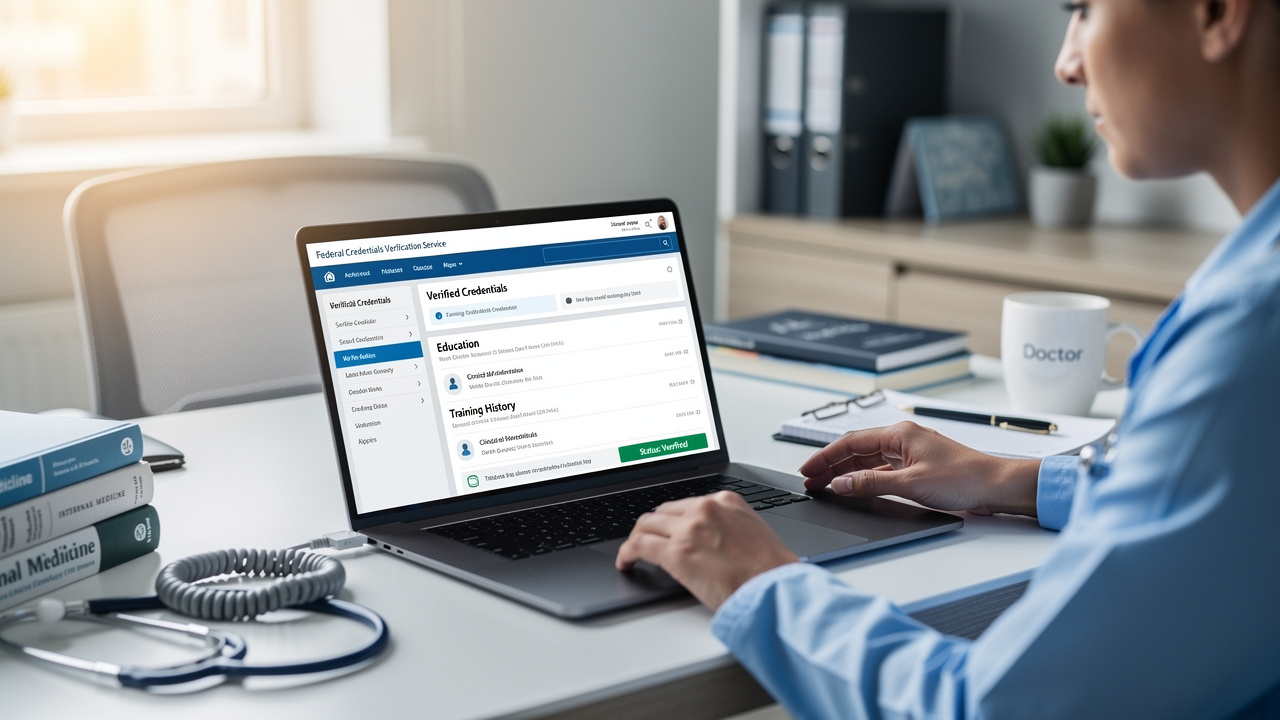
Navigating the complexities of healthcare credentialing presents significant challenges for providers, particularly in the mental health sector. The Federal Credentials Verification Service (FCVS) emerges as a vital tool, streamlining the verification process and allowing clinics to prioritize patient care. This transition not only simplifies the verification process but also allows clinics to enhance compliance with state regulations while significantly reducing administrative burdens.
However, how can clinics effectively navigate the FCVS application process to maximize its benefits and ensure timely licensure?
Define the Federal Credentials Verification Service (FCVS)
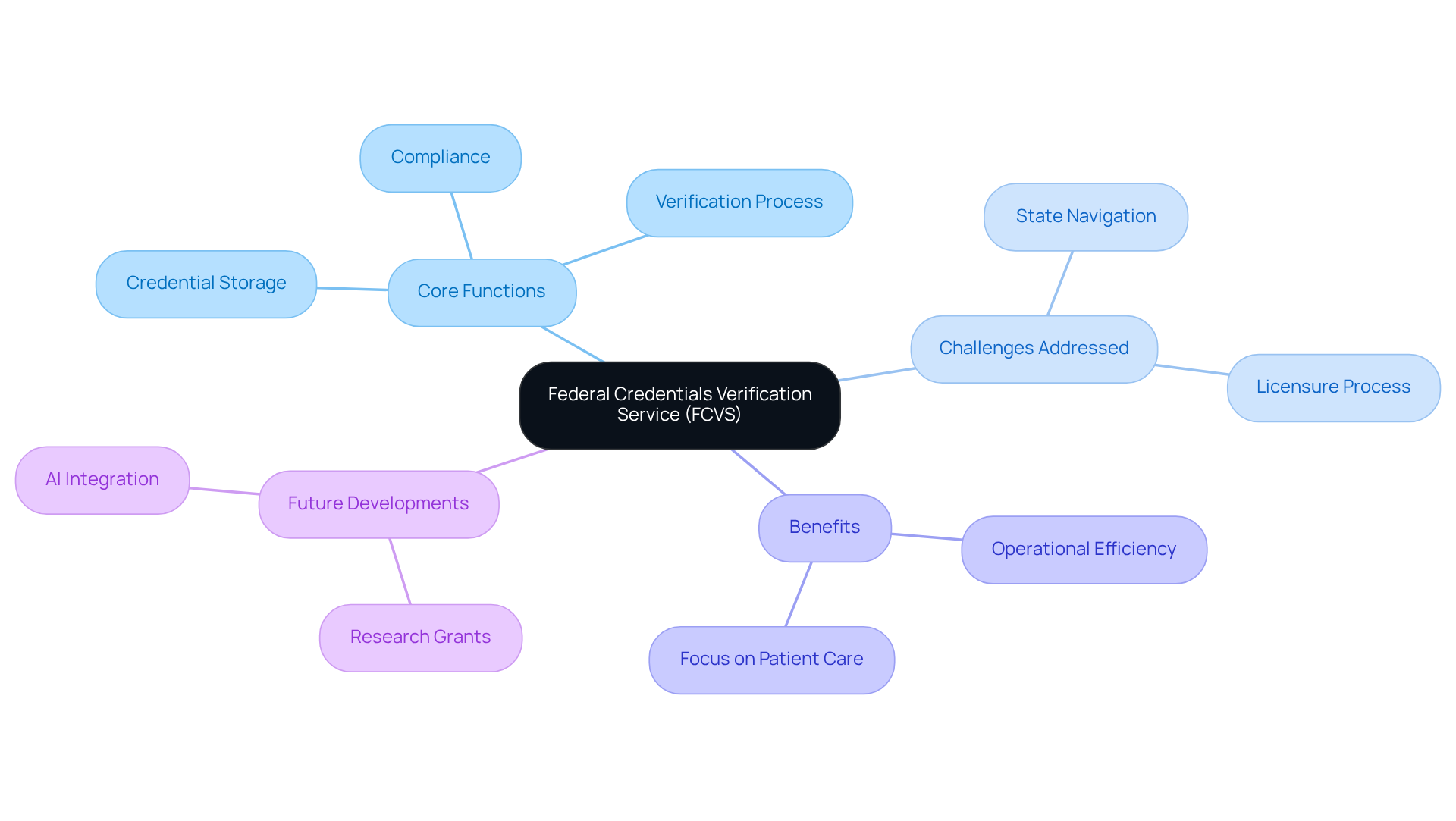
The complexities of credential verification for healthcare professionals are addressed by the federal credentials verification service, significantly streamlining the process. It allows physicians and physician assistants to store and verify their core credentials, such as medical education, postgraduate training, and examination history, in one secure location.
Healthcare professionals often face significant challenges in navigating the complex credential verification process across multiple states, which the federal credentials verification service effectively addresses. By employing the federal credentials verification service, healthcare providers can ensure compliance with state regulations and expedite the licensure process, enabling a greater focus on patient care.
In 2026, the FSMB Foundation announced grants totaling nearly $350,000 awarded to five recipients to support research on workforce needs, emphasizing the ongoing commitment to enhancing certification processes. Moreover, organizations utilizing AI in primary source verification have reported a decrease in turnaround time by an average of 68%, highlighting the effectiveness of this approach in improving operational efficiency.
As healthcare regulations evolve, adopting a centralized verification system may prove essential for maintaining compliance and operational excellence.
Create an FCVS Profile: Step-by-Step Guide
Navigating the registration process for the FCVS can be challenging, especially for first-time users who may feel overwhelmed by the requirements.
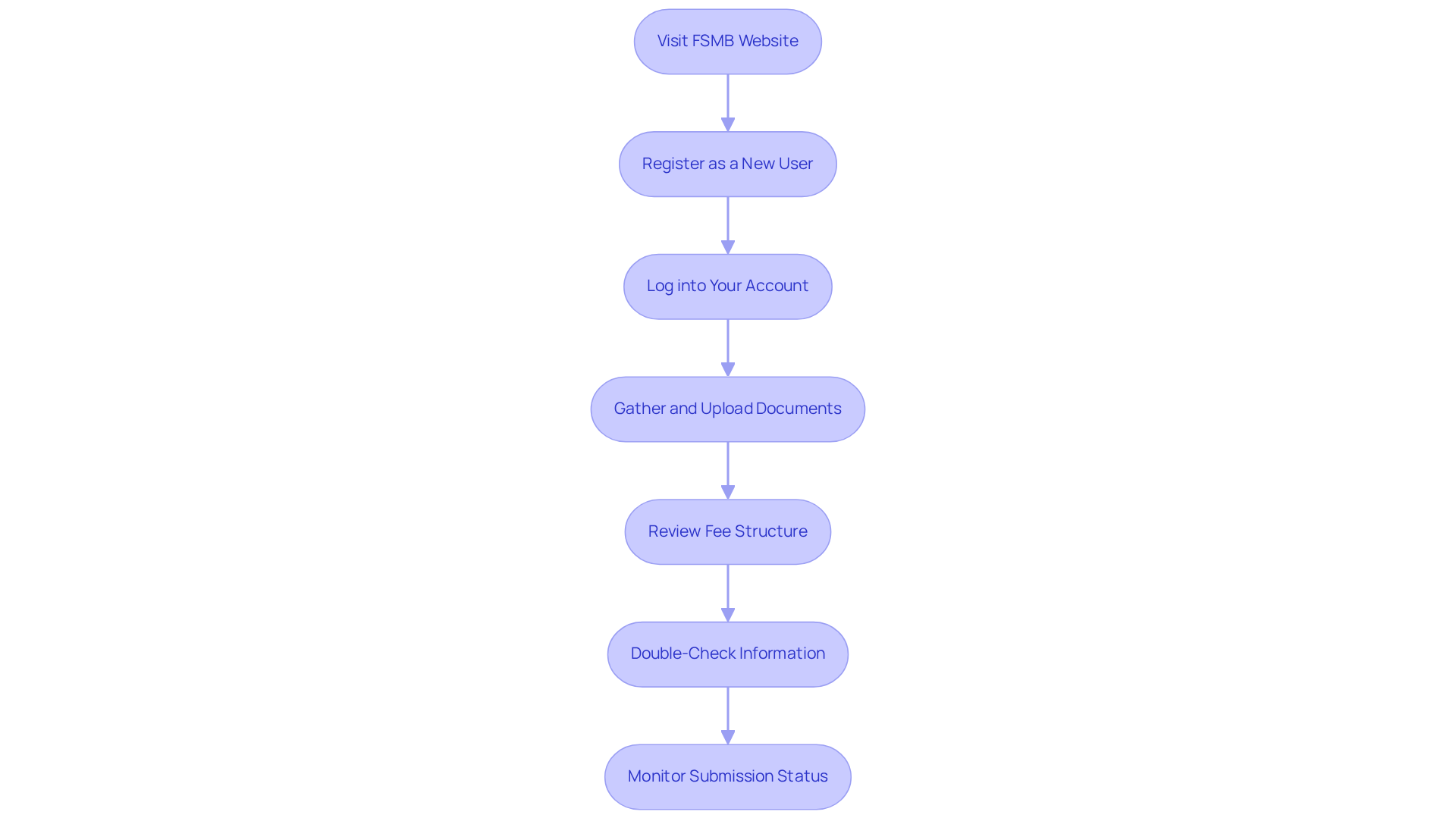
- Start by visiting the FSMB website: Go to www.fsmb.org, where you can easily find the FCVS section.
- Register as a New User: Click on the registration link and fill out the required information, including your name, email address, and contact details.
- Once registered, log into your account: Proceed to complete the online registration form, ensuring you provide comprehensive details about your education, training, and work history.
- Gather and upload the necessary documents: This includes your medical diploma, transcripts, and proof of residency. Ensure clarity and legibility for each file.
- Review the fee structure carefully: Make the required payment, keeping a record of your transaction for future reference.
- Before submitting your request: Take a moment to double-check all entered information and uploaded documents for accuracy.
- After submission: Monitor the status of your request through your account, and be sure to check regularly for any updates or requests for additional information.
Failure to adhere to these steps may result in unnecessary delays, underscoring the importance of careful preparation and attention to detail.
Understand the FCVS Application Timeline and Expectations
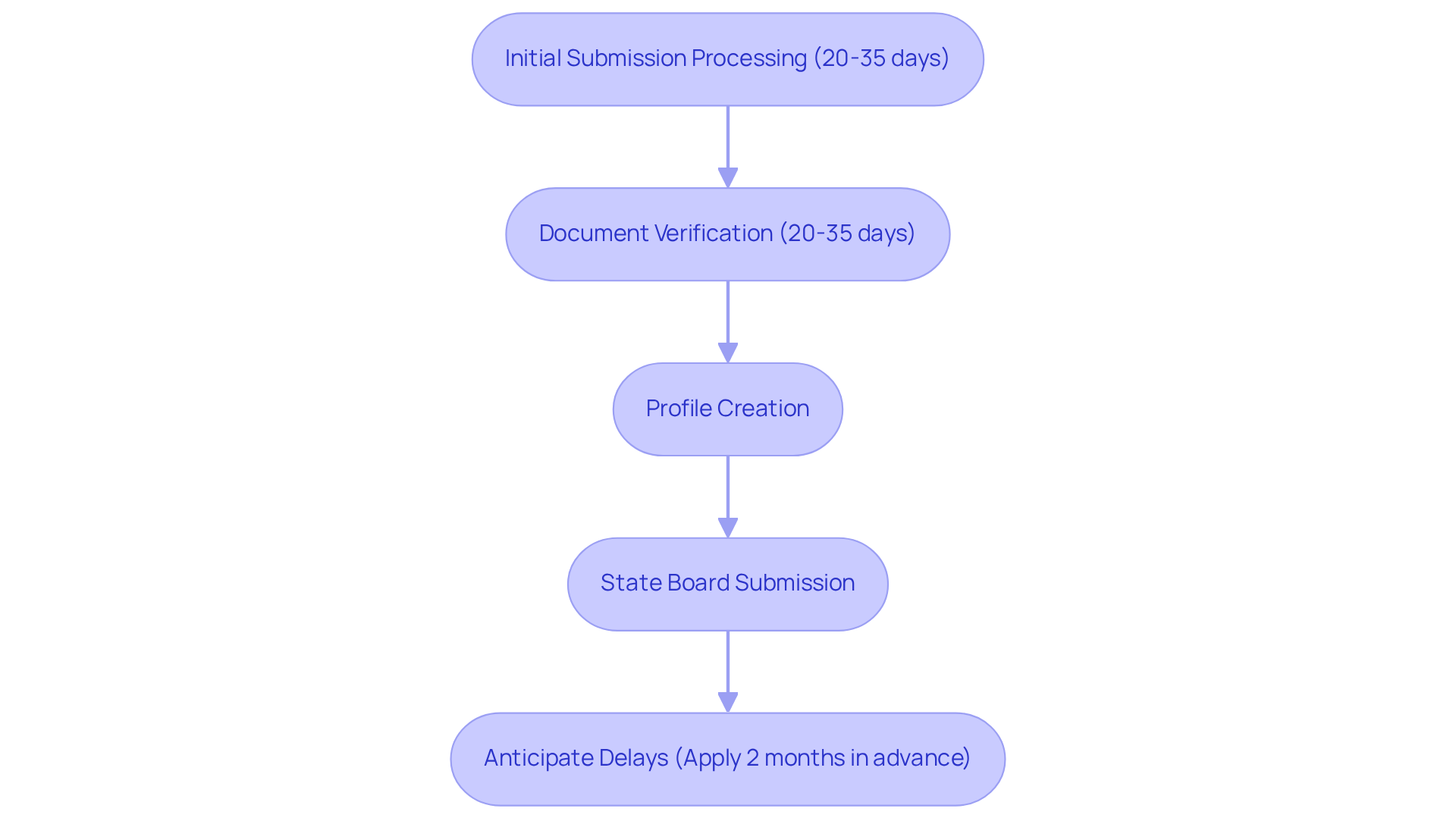
Understanding the federal credentials verification service application process is essential for obtaining timely licensure in the medical field. The FCVS application process consists of several key stages, each with specific timelines:
- Initial Submission Processing: After submission, the organization typically handles your initial request within 20 to 35 days. The FSMB estimates that the initial credentialing process may take six to ten weeks to reach a state medical board. This duration may vary based on the completeness of your application and the responsiveness of your educational institutions.
- Document Verification: Following initial processing, the organization will verify your credentials with primary sources. The federal credentials verification service may take an additional 20 to 35 days for verification, depending on how quickly your schools and training programs respond.
- Profile Creation: Once all documents are verified, your profile will be established. You will receive a notification when your profile is ready for use.
- State Board Submission: After your profile is complete, you can specify which state medical boards should receive your profile. Boards can access your profile via the federal credentials verification service for up to one year after its release, so it’s crucial to plan accordingly to ensure timely licensure.
- Anticipate Delays: Candidates should apply at least two months prior to the required submission date for their profiles to state boards. The FSMB explicitly encourages applicants to apply well in advance due to unpredictable delays.
Case Studies in Mental Health Clinics: Clinics that utilized the system noted a reduction in administrative burdens, allowing them to focus more on patient care. Specifically, these clinics experienced a denial reduction of 20-30% and faster reimbursement rates of 15-25% within 30-90 days, enhancing their overall revenue cycle performance.
Industry Expert Insights: Specialists advise that candidates prepare their profiles during less busy clinical periods to ensure readiness. This proactive approach can significantly reduce the time spent on verification and help avoid common pitfalls that lead to delays, such as incomplete documentation or name inconsistencies across records.
For tailored consultation on how Healthcare Partners Consulting can support you with the credentialing system, please reach out at info@hpcbilling.com or call 888-517-4992. We are available nationwide, Monday-Friday, to help streamline your administrative tasks and enhance your practice efficiency. Delaying your application could jeopardize your ability to practice when you are ready.
Explore the Benefits of FCVS for Mental Health Clinics
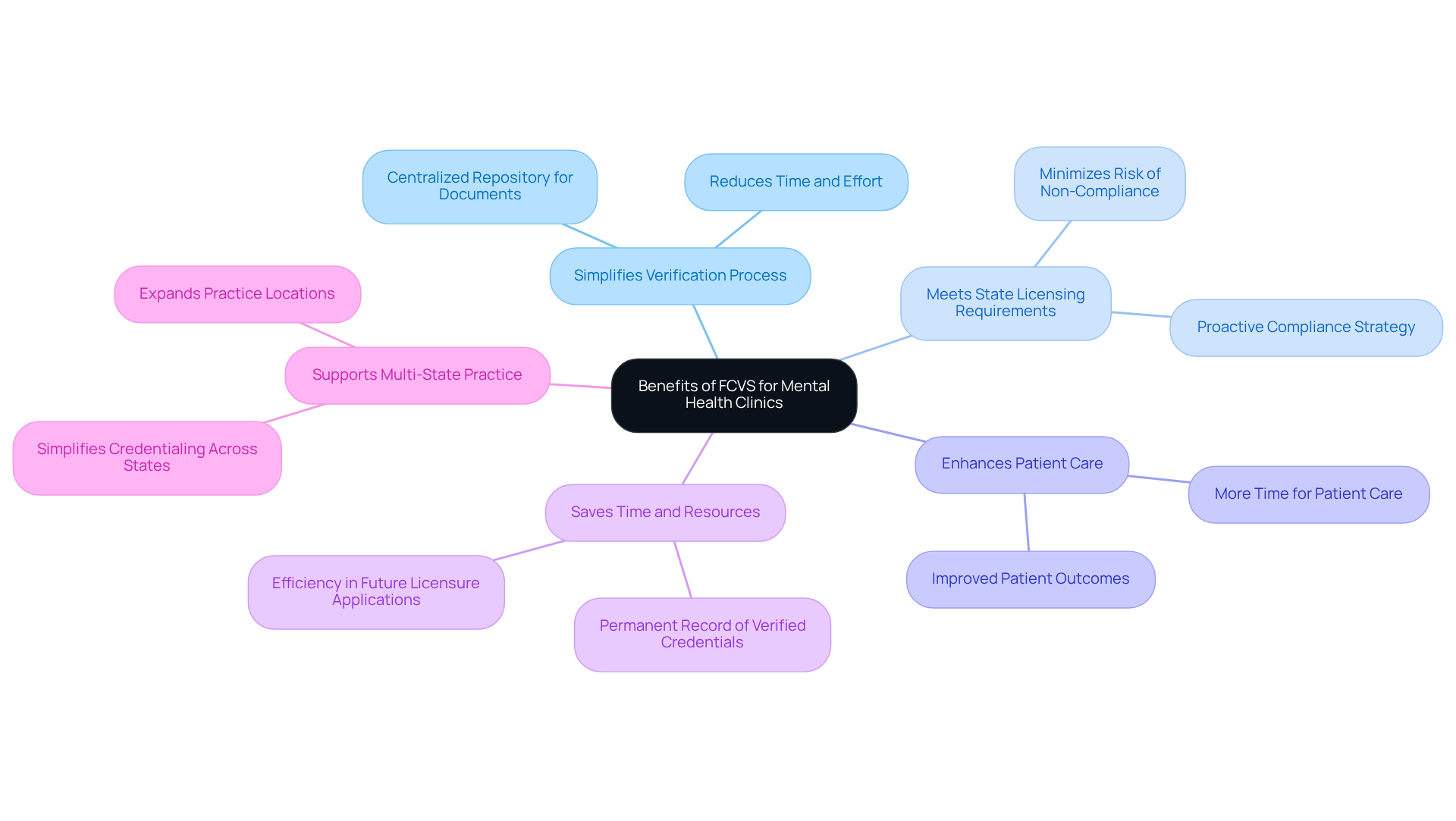
The complexities of provider credentialing in mental health clinics are addressed by the Federal Credentials Verification Service. This system simplifies the verification process by providing a centralized repository for essential documents. Clinics often face delays and complications in verifying provider credentials; the federal credentials verification service reduces the time and effort required for verification, allowing clinics to expedite their onboarding of new providers.
Utilizing the federal credentials verification service enables mental health clinics to efficiently meet state licensing requirements, thereby minimizing the risk of non-compliance and potential penalties. This proactive compliance strategy is essential for maintaining operational integrity.
By optimizing the verification system, healthcare providers can allocate more time to patient care instead of administrative duties. This shift enhances patient outcomes and boosts clinic productivity.
The organization maintains a permanent record of verified credentials, which can be reused for future licensure applications. This feature saves clinics both time and resources, allowing them to focus on delivering quality care.
For mental health professionals aiming to practice across multiple states, the federal credentials verification service provides a significant advantage by simplifying the credentialing process. This flexibility allows providers to expand their practice locations and better serve diverse patient populations. Ultimately, this system not only streamlines operations but also enhances the quality of care provided to patients.
Conclusion
The Federal Credentials Verification Service (FCVS) is essential for healthcare providers, particularly in mental health, as it streamlines the credential verification process. By centralizing essential documentation, FCVS enhances compliance with state regulations and allows healthcare professionals to dedicate more time to patient care rather than administrative tasks. Empowering providers is essential for creating a healthcare environment focused on patient outcomes.
Throughout the article, key insights were shared regarding the step-by-step process of creating an FCVS profile, the expected timelines for application, and the significant benefits that mental health clinics can reap from utilizing this service. The reduction in administrative burdens, faster reimbursement rates, and improved compliance are just a few advantages that underscore the importance of adopting FCVS. Additionally, a proactive credentialing approach enhances practice efficiency, benefiting both providers and patients.
In conclusion, adopting the Federal Credentials Verification Service is not merely a procedural necessity; it is a strategic move that enhances the operational efficiency of healthcare practices. By streamlining credentialing processes, healthcare providers can focus on what truly matters – delivering high-quality care to their patients. For those looking to optimize their practice and navigate the complexities of credentialing, reaching out to Healthcare Partners Consulting & Billing, LLC (HPC) can provide the necessary support and expertise. The adoption of FCVS not only simplifies credentialing but also positions healthcare providers to deliver superior patient care, a necessity in today’s complex healthcare landscape.
Frequently Asked Questions
What is the Federal Credentials Verification Service (FCVS)?
The Federal Credentials Verification Service (FCVS) is a system that streamlines the credential verification process for healthcare professionals, allowing physicians and physician assistants to store and verify their core credentials, such as medical education, postgraduate training, and examination history, in one secure location.
What challenges do healthcare professionals face regarding credential verification?
Healthcare professionals often encounter significant challenges in navigating the complex credential verification process across multiple states, which the FCVS effectively addresses.
How does the FCVS benefit healthcare providers?
By employing the FCVS, healthcare providers can ensure compliance with state regulations and expedite the licensure process, allowing them to focus more on patient care.
What recent developments have occurred related to the FCVS?
In 2026, the FSMB Foundation announced grants totaling nearly $350,000 awarded to five recipients to support research on workforce needs, highlighting a commitment to enhancing certification processes.
How has the use of AI impacted primary source verification in healthcare?
Organizations utilizing AI in primary source verification have reported a decrease in turnaround time by an average of 68%, indicating improved operational efficiency.
Why is a centralized verification system important for healthcare?
As healthcare regulations evolve, adopting a centralized verification system like the FCVS may be essential for maintaining compliance and achieving operational excellence.