
Introduction
Accurate diagnosis coding for tick bites is essential for both financial stability and quality patient care. It plays a pivotal role in ensuring healthcare providers receive the reimbursement they deserve while enhancing patient care. With tick-borne illnesses on the rise, the need for precise coding practices has never been more critical. These errors often result in claim denials, causing significant financial setbacks.
What strategies can practices adopt to implement a two-code system that addresses these challenges and enhances their revenue cycle?
Understand the Importance of Accurate Tick Bite Diagnosis Coding
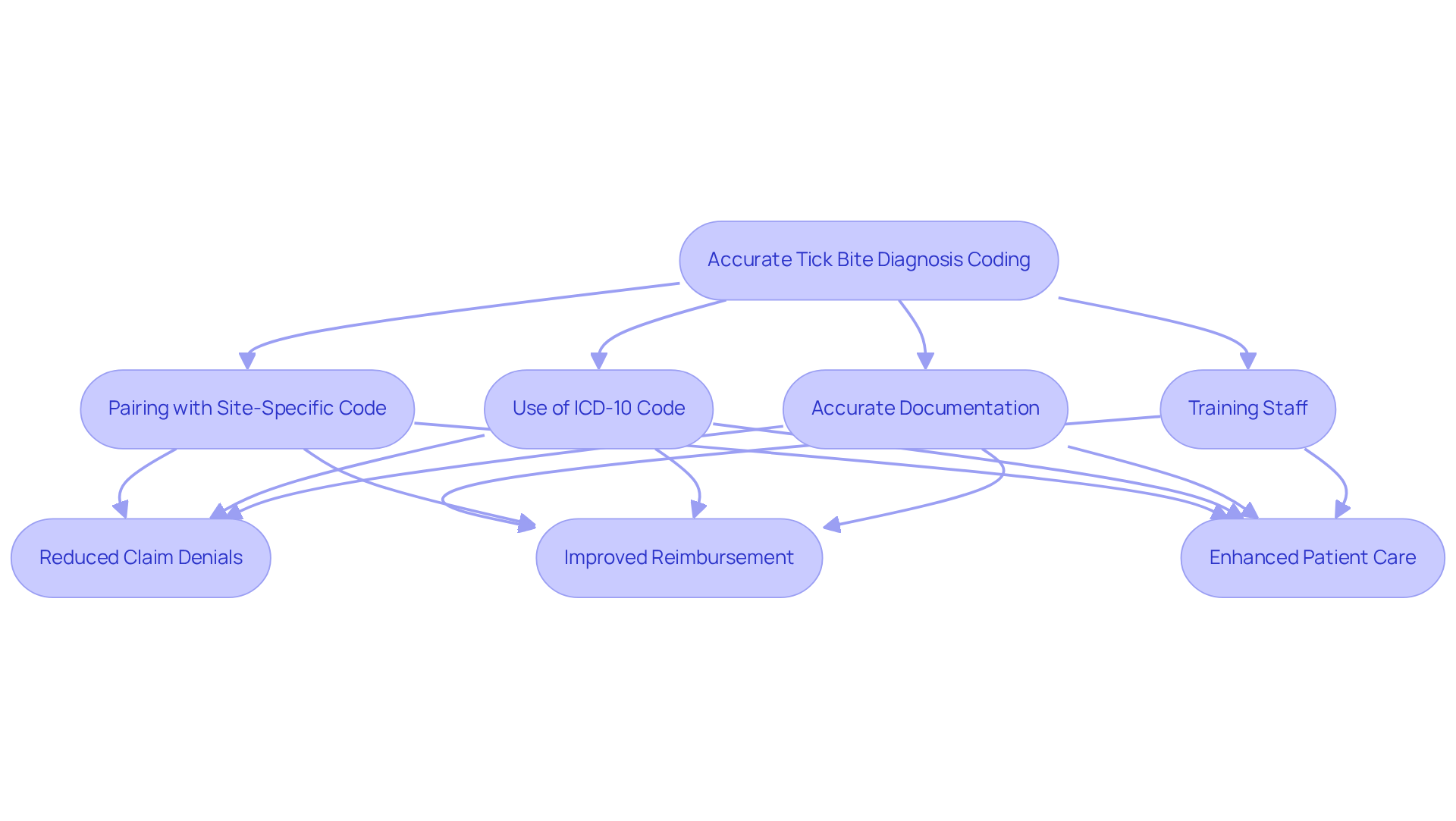
Accurate documentation of tick bites is critical for effective healthcare delivery and the appropriate use of the tick bite diagnosis code for reimbursement. Primarily, it ensures that healthcare providers receive appropriate reimbursement for the services provided. The ICD-10 code W57.XXXA is commonly used for a nonvenomous insect bite during the initial encounter, but it is essential to pair this with a site-specific injury code to fully capture the patient’s condition. This dual documentation approach facilitates proper billing and enhances patient care by ensuring comprehensive records of the injury and the tick removal process, which are vital for accurate billing and minimizing claim denials.
Furthermore, accurate programming plays a crucial role in tracking and managing tick-borne illnesses, which are becoming more prevalent. By utilizing the correct codes, medical providers contribute valuable data to public health efforts, aiding in the understanding and management of these conditions. Accurate coding is not just a billing necessity; it is a crucial element of effective patient management and service delivery, ultimately influencing reimbursement rates and operational efficiency.
Healthcare Partners Consulting & Billing, LLC (HPC) offers personalized consultations to help identify effective administrative solutions for healthcare practices. By outlining your current workflow during a 30-minute call, HPC can guide you toward services that will improve your billing efficiency and address issues such as underpayments and delayed payments. Schedule a meeting today to take the first step toward improving your practice’s financial health.
Training staff on programming and documentation standards can reduce claim denials by 20-30% and improve reimbursement timelines by 15-25% within 30-90 days. Additionally, with emergency room visits for tick bites currently higher than normal across many regions of the U.S., except for the South Central United States, the urgency of implementing accurate tick bite diagnosis code practices cannot be overstated. As a veteran-owned business with 39 years of experience, HPC is committed to empowering medical professionals by eliminating administrative burdens, enabling them to concentrate on patient care.
Implement the Two-Code Requirement for Tick Bite Claims
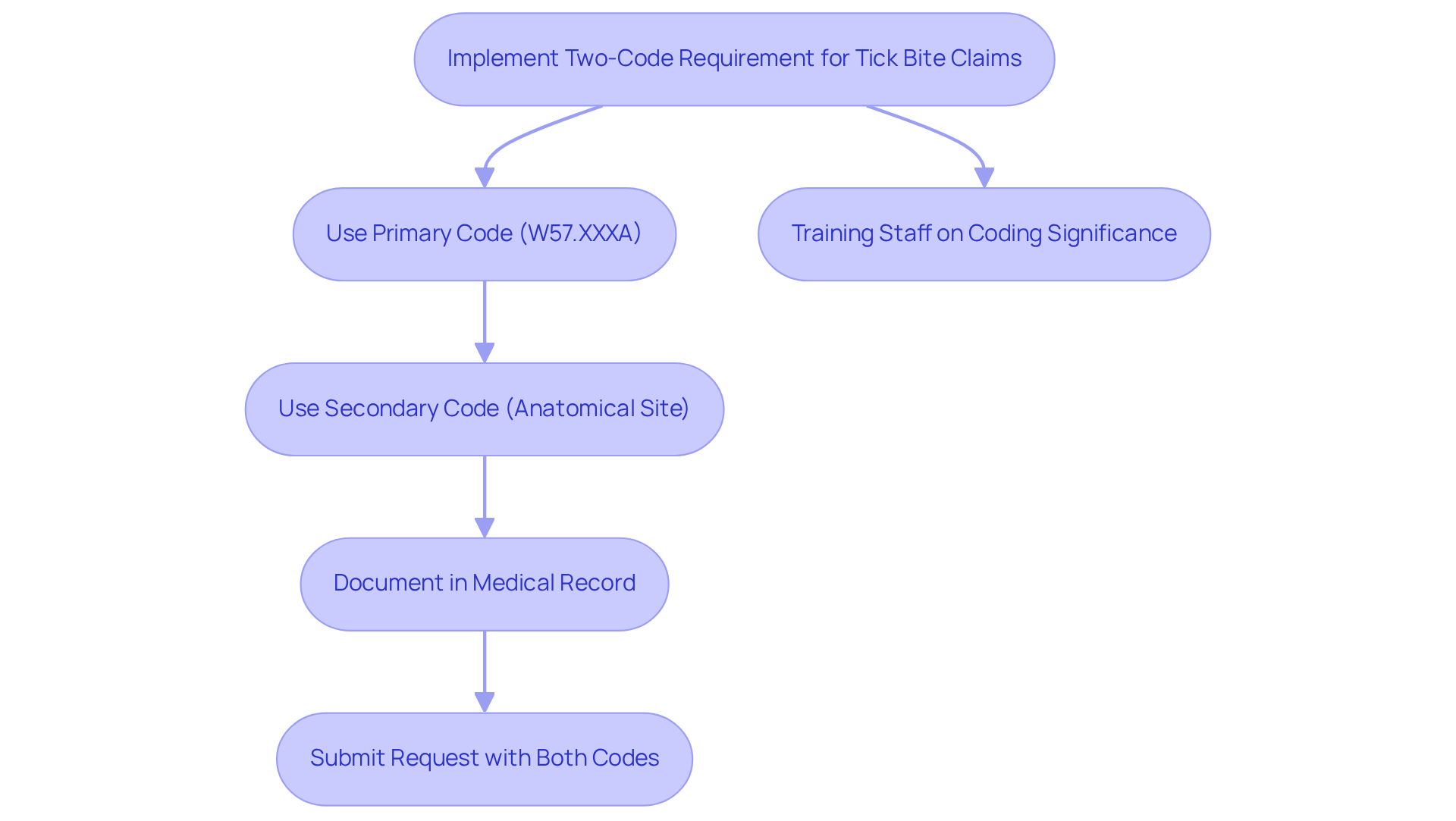
To ensure accurate documentation of tick bites, healthcare professionals must implement a two-code system that includes the tick bite diagnosis code. The primary code, W57.XXXA, serves as the tick bite diagnosis code, while the secondary code specifies the anatomical site of the bite, such as S60.96XA for unspecified site injuries. This dual coding approach is crucial. It captures a comprehensive view of the patient’s condition and ensures all pertinent details are documented.
For instance, if a patient presents with a tick bite on the upper arm, the provider should accurately document this in the medical record and utilize both codes when submitting the request. This practice enhances claim accuracy and reduces the risk of denials from incomplete documentation. Training staff on the significance of this coding method can lead to improved billing efficiency, resulting in faster reimbursements and enhanced patient care.
Medical practitioners who have adopted this two-code system report significant improvements in their billing processes. By implementing this approach, practices have seen a reduction in denials by 20-30% and quicker reimbursement times of 15-25% within 30-90 days. Such enhancements highlight the essential role of accurate documentation in optimizing revenue cycle performance and ensuring that healthcare providers can concentrate on delivering quality patient care. Ultimately, this meticulous approach not only safeguards revenue but also prioritizes patient well-being.
Avoid Common Coding Errors to Enhance Claim Success
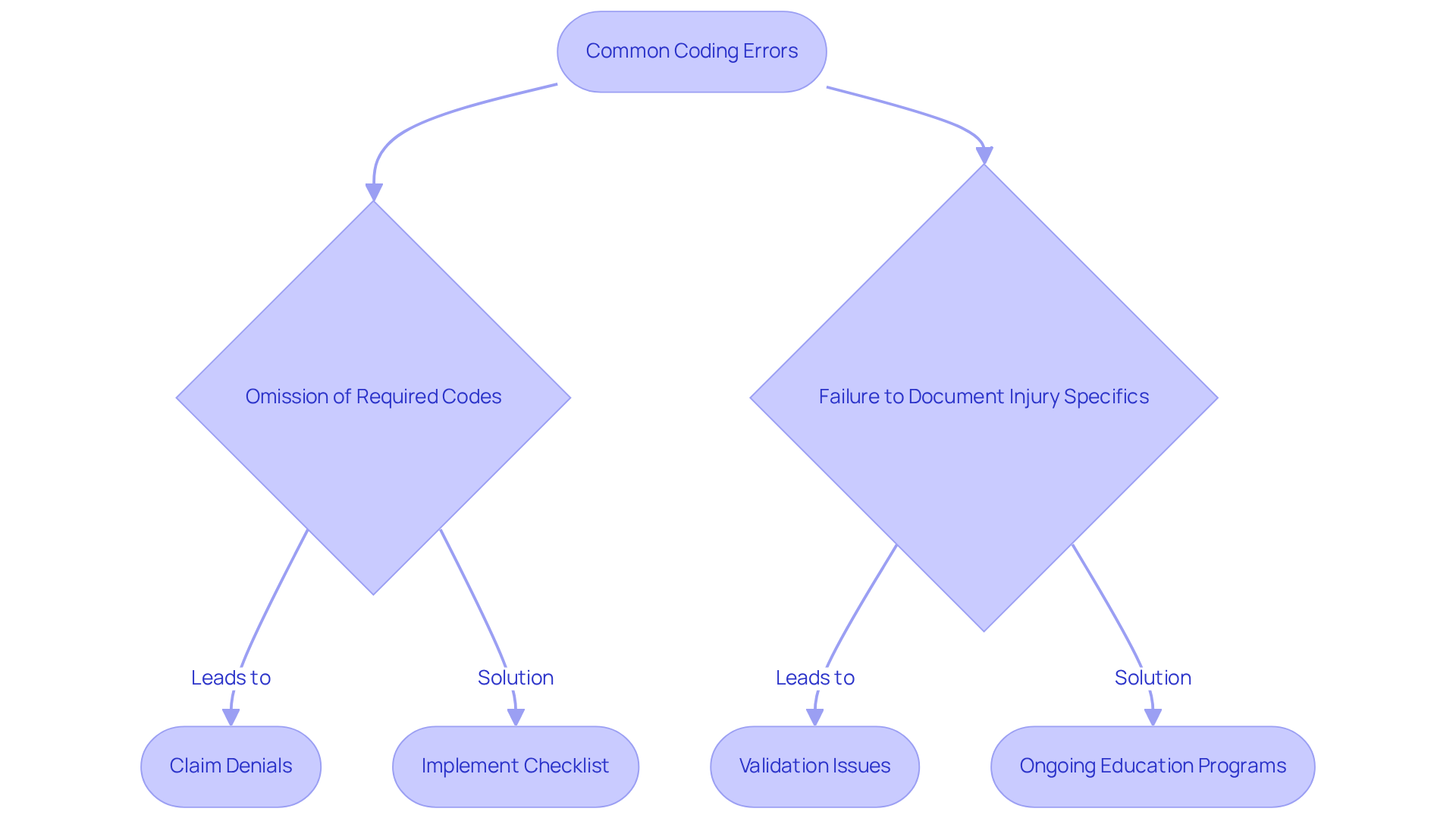
Frequent programming mistakes significantly hinder the effectiveness of tick bite claims. A common error is the omission of required codes, particularly the tick bite diagnosis code W57, which is crucial for documenting tick bites. Omitting necessary codes often leads to claim denials. Additionally, using outdated or incorrect site-specific codes can result in reimbursement issues. To mitigate these challenges, healthcare providers should implement a comprehensive checklist for documenting tick bites, ensuring that records include the precise body site, laterality, clinical details, and the appropriate tick bite diagnosis code, along with both primary and secondary codes in every submission.
Another prevalent error is the failure to document the specifics of the injury in the patient’s medical record. Comprehensive documentation is essential for validating assertions and ensuring adherence to regulatory guidelines. Providers should prioritize ongoing education and training programs for their staff to meticulously verify entries and maintain accurate records to minimize errors. By fostering a culture of precision and diligence in coding practices, medical organizations can improve their success rates, potentially decreasing denials by 20-30% and achieving quicker reimbursements within 15-25% of 30-90 days, ultimately enhancing their overall revenue cycle.
To improve administrative efficiency, we at Healthcare Partners Consulting provide tailored consultations to assist in identifying the most effective solutions tailored to your practice’s needs. Schedule a 30-minute call with us to discuss your practice and map your current workflow. We can point you toward services that will move the needle fastest, ensuring that your billing processes are as efficient and compliant as possible. This approach not only streamlines billing but also allows healthcare providers to focus on delivering quality patient care.
Stay Informed on Coding Updates and Best Practices
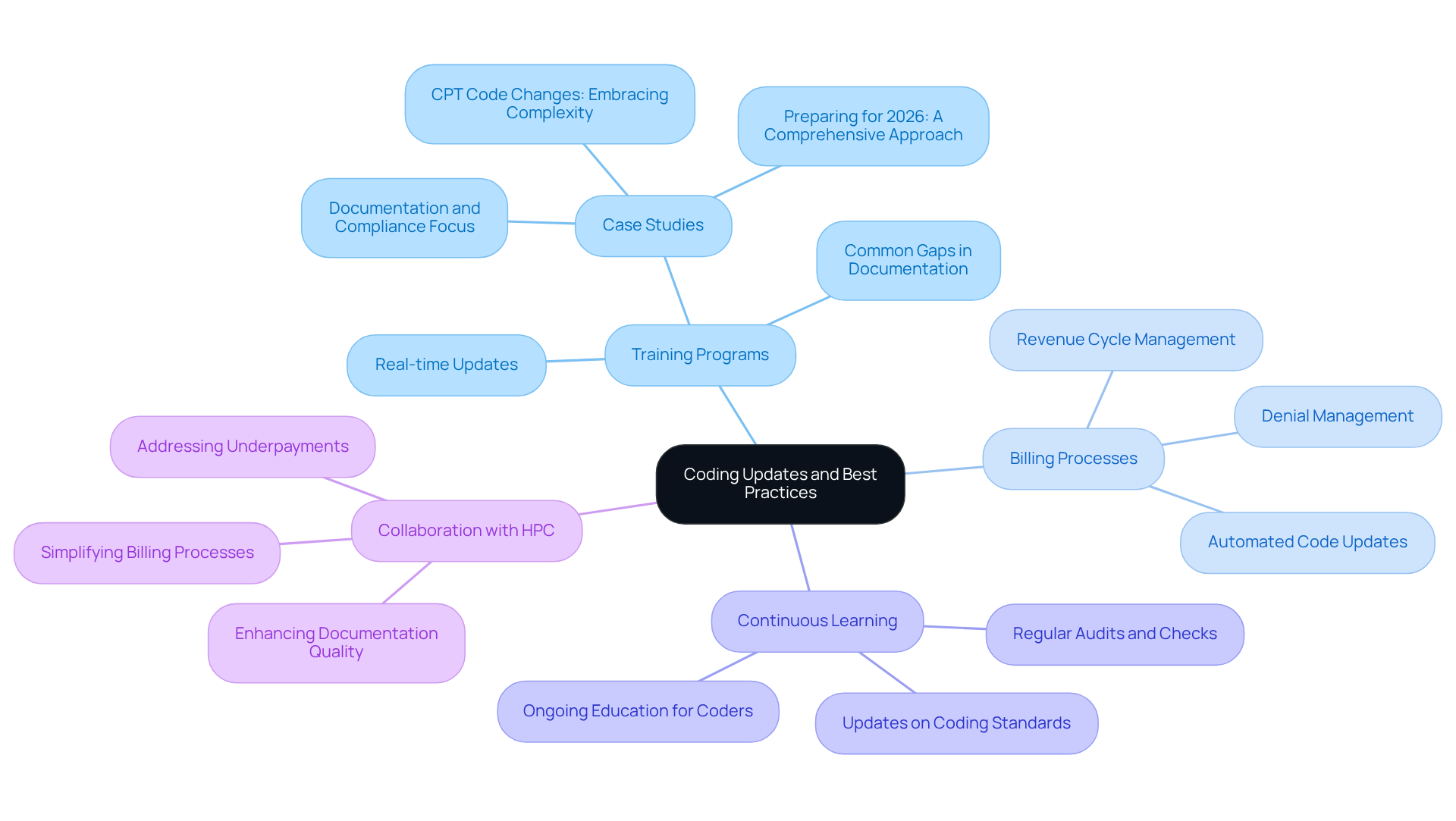
In the evolving landscape of medical classification, staying abreast of the latest revisions to the tick bite diagnosis code is crucial for healthcare providers. Regular training sessions and workshops are essential for enhancing staff knowledge and ensuring compliance. Effective training programs often include real-time updates and practical case studies, which have been demonstrated to improve coding accuracy and reduce denial rates by 20-30%. Additionally, practices that utilize advanced coding software may experience faster reimbursement timelines, with improvements of 15-25% within 30-90 days.
Healthcare Partners Consulting & Billing, LLC (HPC) offers comprehensive revenue cycle management services tailored specifically for behavioral and mental health practices, including credentialing and re-credentialing across payers. When healthcare professionals partner with HPC, they can simplify their billing processes, ensuring clean submissions and quick follow-up, which are vital for optimizing revenue recovery. HPC’s expertise in addressing underpayments, unprocessed claims, and aging claims further enhances the efficiency of the billing process.
Healthcare providers should also consider subscribing to reputable newsletters and joining professional organizations that offer valuable resources and insights into evolving practices. Establishing a routine for reviewing programming practices and policies is essential to ensure adherence to the latest regulations. This proactive approach minimizes the risk of coding errors and enhances the overall efficiency of the billing process.
Creating a culture of continuous learning not only boosts success rates but also enhances patient care. By prioritizing ongoing education and implementing scorecard-driven adjustments tied to claims accuracy and days in accounts receivable, practices can demonstrate operational rigor and maintain strong relationships with insurers. Furthermore, collaboration between providers and billing teams, such as those at HPC, is vital to ensure that documentation meets payer expectations, ultimately contributing to a more effective revenue cycle and better financial outcomes for healthcare providers.
Conclusion
Accurate tick bite diagnosis coding is crucial for optimizing reimbursement and improving patient care. By implementing a dual coding system that includes both the primary tick bite diagnosis code and a site-specific injury code, healthcare providers can significantly improve their billing accuracy and reduce claim denials. This careful approach safeguards revenue and effectively manages tick-borne illnesses, benefiting healthcare providers and patients alike.
Throughout the article, key insights were shared on the importance of accurate documentation, common coding errors to avoid, and the necessity of ongoing staff training. Implementing a two-code requirement and maintaining a culture of continuous learning can significantly improve claim success rates by reducing denials and accelerating reimbursement timelines. Additionally, partnering with experienced billing consultants like Healthcare Partners Consulting & Billing, LLC (HPC) can further streamline billing processes and enhance operational efficiency.
The impact of accurate tick bite coding extends beyond financial metrics; it is integral to the overall quality of patient care. When healthcare providers focus on precise coding practices, they not only ensure compliance but also enhance patient outcomes and operational success. For those looking to enhance their billing practices and ensure compliance, scheduling a consultation with HPC could be the first step toward achieving greater efficiency and success in healthcare delivery.
Frequently Asked Questions
Why is accurate documentation of tick bites important?
Accurate documentation of tick bites is critical for effective healthcare delivery and appropriate reimbursement for services provided. It ensures healthcare providers receive proper compensation and enhances patient care through comprehensive records of injuries and the tick removal process.
What is the ICD-10 code used for a nonvenomous insect bite?
The ICD-10 code commonly used for a nonvenomous insect bite during the initial encounter is W57.XXXA. It is important to pair this code with a site-specific injury code.
How does accurate coding impact public health?
Accurate coding plays a crucial role in tracking and managing tick-borne illnesses, contributing valuable data to public health efforts and aiding in the understanding and management of these conditions.
What services does Healthcare Partners Consulting & Billing, LLC (HPC) provide?
HPC offers personalized consultations to help healthcare practices identify effective administrative solutions, improve billing efficiency, and address issues like underpayments and delayed payments.
How can training staff on programming and documentation standards benefit healthcare practices?
Training staff can reduce claim denials by 20-30% and improve reimbursement timelines by 15-25% within 30-90 days.
What is the current trend regarding emergency room visits for tick bites in the U.S.?
Emergency room visits for tick bites are currently higher than normal across many regions of the U.S., except for the South Central United States, highlighting the urgency of implementing accurate tick bite diagnosis code practices.
What is the experience of Healthcare Partners Consulting & Billing, LLC?
HPC is a veteran-owned business with 39 years of experience, committed to empowering medical professionals by eliminating administrative burdens so they can focus on patient care.