

Introduction
Revenue cycle management (RCM) is often underestimated in its importance, yet it plays a pivotal role in both financial performance and patient care quality. By streamlining processes such as patient registration, insurance verification, and denial management, healthcare providers can significantly enhance operational efficiency and focus more on delivering exceptional care.
Claim rejections due to front-end errors create significant financial challenges for healthcare practices. Implementing robust RCM practices can transform these challenges into opportunities for enhanced revenue and patient care.
This article outlines best practices for implementing effective RCM services, enabling healthcare providers to navigate billing complexities while prioritizing patient outcomes.
Define Revenue Cycle Management in Healthcare
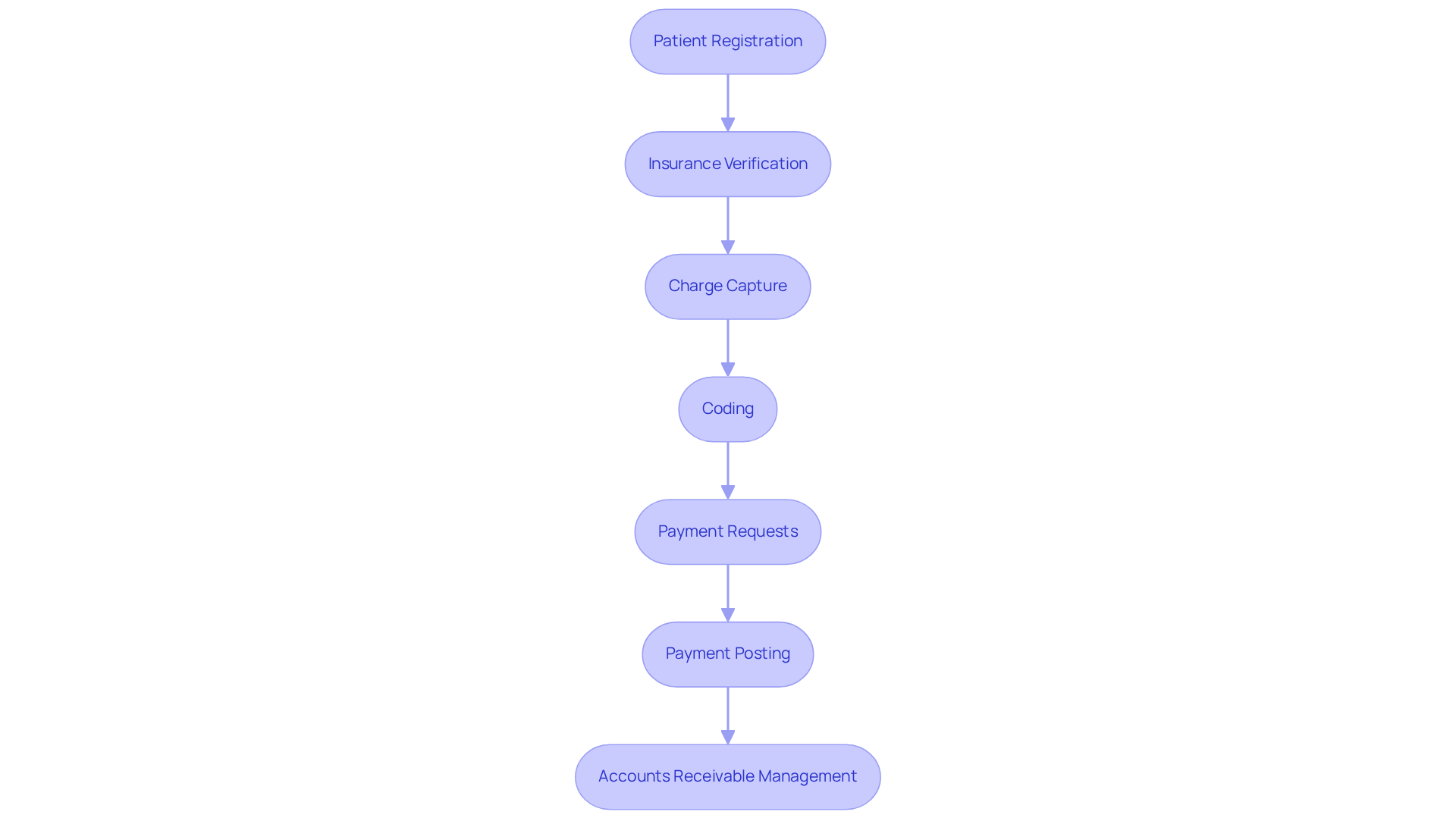
Revenue cycle management services for healthcare are not merely a billing function; they represent a strategic process that significantly influences financial outcomes and care quality. This process includes key stages:
- Patient registration
- Insurance verification
- Charge capture
- Coding
- Payment requests
- Payment posting
- Accounts receivable management
Managing these stages effectively is essential for securing timely reimbursements, minimizing rejections, and enhancing financial performance. In 2026, statistics show that over 60% of rejections arise from front-end mistakes, highlighting the necessity for careful attention to detail in the RCM process. Organizations implementing intelligent automation strategies can expect a 20-30% reduction in rejections and faster reimbursements, typically within 30 to 90 days. Case studies, such as OhioHealth’s implementation of Patient Access Curator™, demonstrate the effectiveness of proactive denial management, resulting in a 42% reduction in claim denials. Ultimately, the effectiveness of revenue cycle management services for healthcare can determine a healthcare provider’s capacity to deliver exceptional patient care while maintaining financial health.
Identify Key Components of Revenue Cycle Management
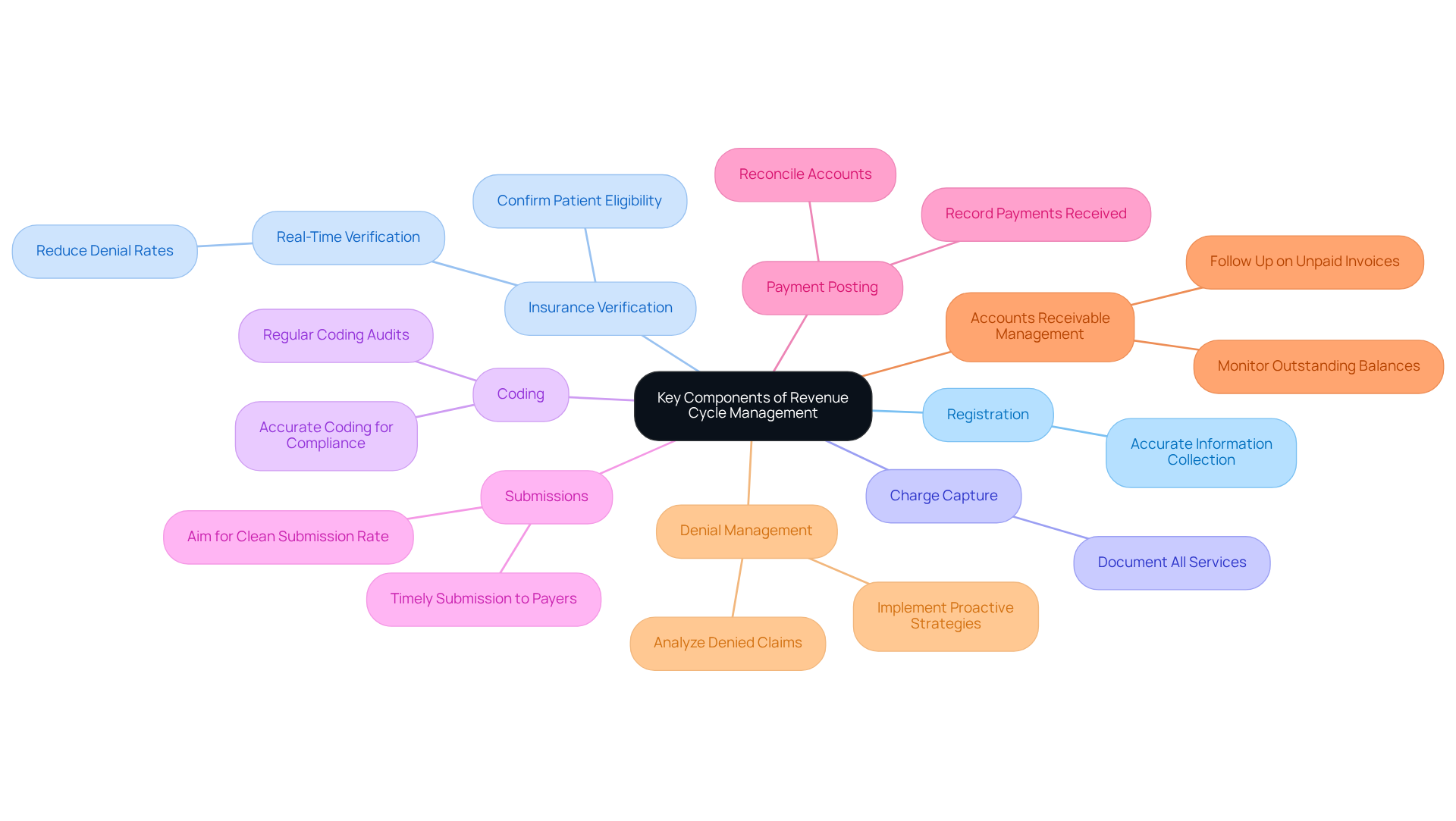
Effective revenue cycle management services for healthcare are essential for practices aiming to enhance operational efficiency and ensure financial sustainability. The key components of RCM include:
- Registration: Accurate collection of individual information is vital for effective billing and insurance verification, laying the groundwork for a smooth revenue cycle.
- Insurance Verification: Confirming patient eligibility and benefits before services are rendered is essential to prevent claim rejections, which can exceed 15% of claims initially submitted. Practices that implement real-time eligibility verification can lower rejection rates from the national average of over 10% to below 5%.
- Charge Capture: Ensuring all services provided are documented and billed correctly maximizes revenue potential and minimizes the risk of lost income.
- Coding: Accurate coding of diagnoses and procedures is crucial for compliance and reimbursement, with regular coding audits recommended to catch errors before they lead to denials.
- Submissions: Timely and precise submission of requests to payers is essential to accelerate payments, with practices striving for a clean submission rate above 95% to improve cash flow.
- Payment Posting: Recording payments received and reconciling accounts helps maintain accurate financial records, ensuring that practices can track their income effectively.
- Accounts Receivable Management: Monitoring outstanding balances and following up on unpaid invoices is vital for cash flow stability, with a target of keeping days in accounts receivable under 35 days.
- Denial Management: Analyzing and addressing denied claims is essential for improving revenue recovery. Implementing a proactive denial management program can reduce denial rates by 20-30%, significantly impacting overall financial performance.
How can healthcare providers enhance their RCM processes? By concentrating on these key elements, they can achieve improved financial health and greater satisfaction among patients with the help of revenue cycle management services for healthcare. Healthcare Partners Consulting & Billing, LLC (HPC), a veteran-owned company with 39 years of experience, offers flexible service plans tailored to the size of your practice and claim volume, ensuring that you receive the support you need. By adopting a modern patient financial experience-complete with clear cost estimates, multiple payment channels, and digital statements-practices can achieve faster reimbursement. This approach can improve collection rates by 15-25% within 30 to 90 days. Ultimately, implementing revenue cycle management services for healthcare can transform financial outcomes and elevate the standard of care provided to patients.
Utilize Metrics to Measure RCM Success
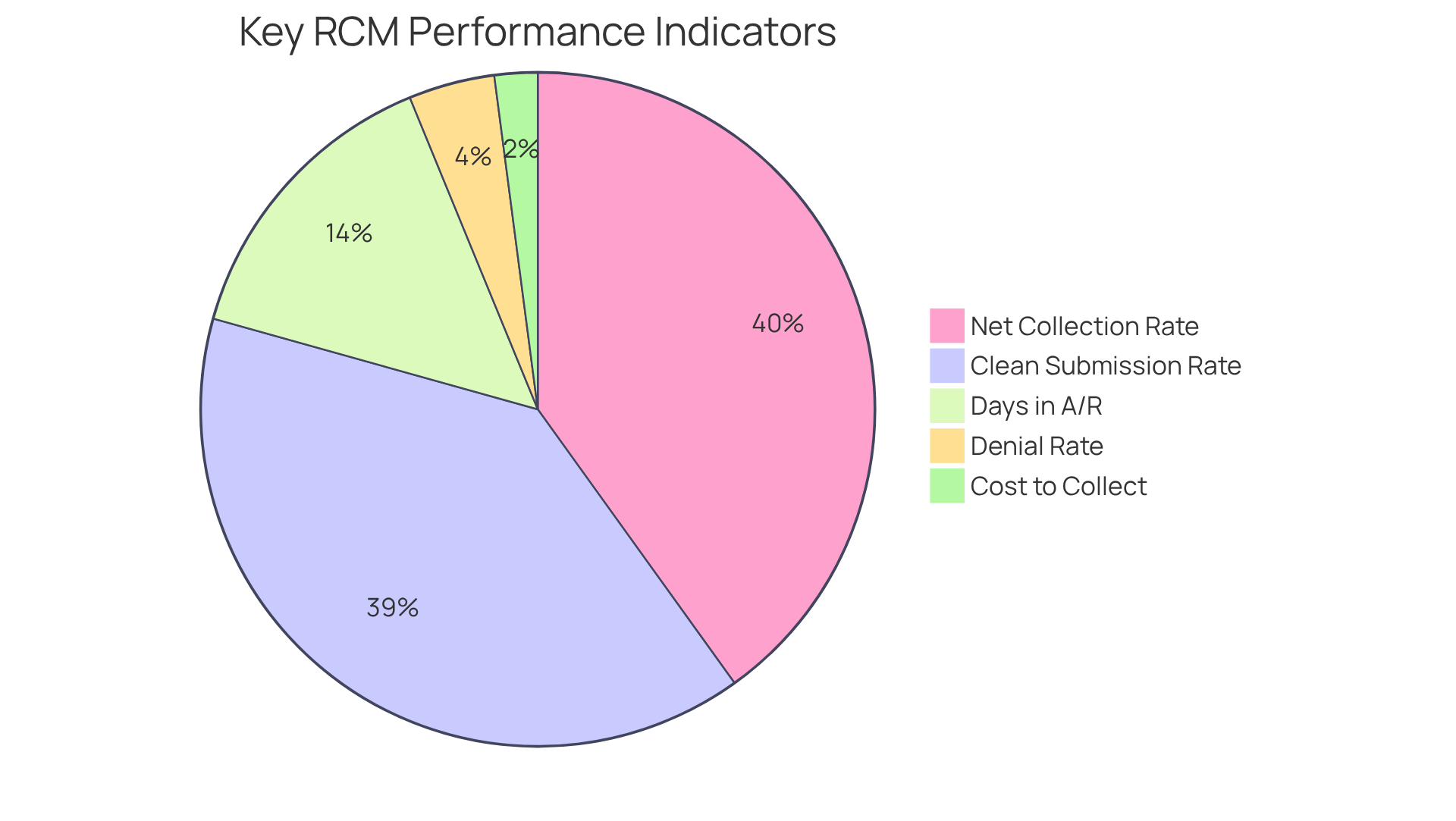
To accurately assess the effectiveness of Revenue Cycle Management (RCM), healthcare providers must prioritize specific key performance indicators (KPIs):
- Days in Accounts Receivable (A/R): This metric tracks the average number of days it takes to collect payments after services are rendered. The industry benchmark suggests that exceeding 30 to 40 days in A/R necessitates prompt action to prevent loss of income. A lower number signifies efficient billing practices and improved cash flow. This efficiency can be achieved through personalized consultations from Healthcare Partners Consulting & Billing, LLC (HPC), which help map your current workflow and identify the services that will drive the most significant improvements.
- Net Collection Rate (NCR): This measures the percentage of collectible income that is actually collected. An overall net collection rate of 95-99% is regarded as average performance, while rates below 95% may indicate areas requiring enhancement in cycle management. A high NCR signifies effective cycle processes and minimizes financial leakage, which can be improved by HPC’s specialty-focused services designed for mental and behavioral health practices.
- Denial Rate: Monitoring the percentage of submissions rejected by payers helps identify issues in the billing process that need to be addressed. Roughly 90% of reimbursement refusals can be avoided, yet over 35% of providers do not contest these issues, leading to lost revenue. Working together with payers can improve how denials are handled, a strategy that Healthcare Partners Consulting actively promotes with their dedicated billing teams.
- Clean Submission Rate: This metric indicates the percentage of submissions made without errors. A clean claim rate above 95% is ideal, while rates below 90% necessitate a revamp of billing processes. Higher rates indicate improved coding and documentation practices, resulting in quicker payments and enhanced cycle performance, which HPC supports through their flexible service plans and proven cycle improvements.
- Cost to Collect (CTC): Understanding the expenses related to collecting payments can assist healthcare providers in identifying inefficiencies in their financial cycle processes. The ideal CTC figures for revenue collection fall between 3 to 6%. A high CTC may indicate inefficient workflows or reliance on manual operations, which can lead to errors and increased operational costs. Healthcare Partners Consulting’s transparent pricing models and personalized service teams can help optimize these costs.
Regularly tracking these metrics allows healthcare organizations to gain crucial insights into their revenue cycle management services for healthcare performance. This enables them to make informed choices that enhance operational efficiency and care for individuals, ultimately resulting in improved financial health and sustainability. By leveraging these insights, healthcare organizations can significantly enhance their operational efficiency and financial sustainability.
Leverage Technology and Automation for RCM Efficiency
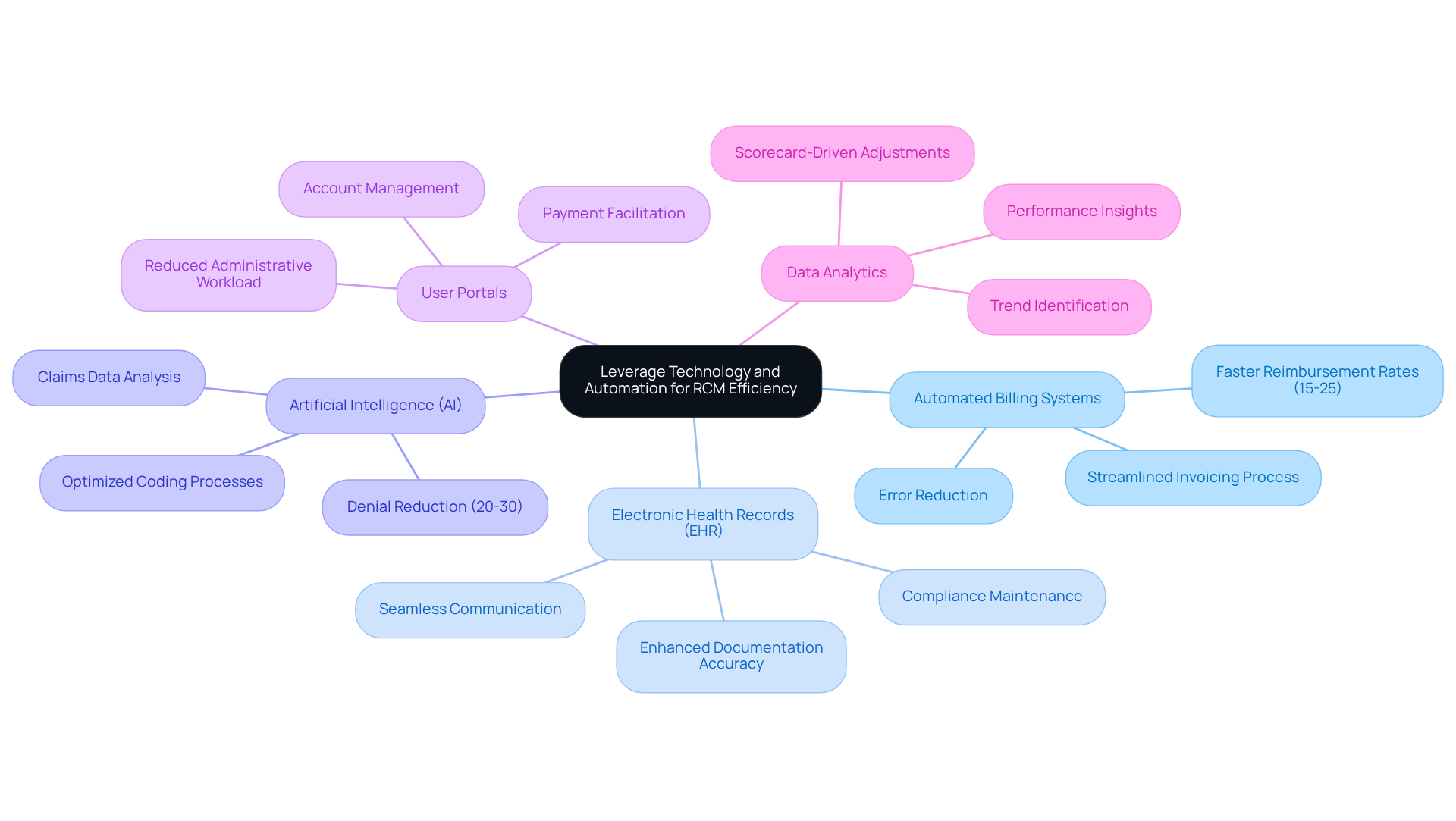
In the absence of technology, revenue cycle management services for healthcare can become a cumbersome and error-prone process that hinders healthcare organizations from achieving optimal efficiency. Incorporating technology and automation into RCM can lead to substantial improvements in efficiency and accuracy. Here are several strategies to consider:
- Automated Billing Systems: Implementing automated billing solutions streamlines the invoicing process, significantly reducing errors and ensuring timely submissions. This can lead to faster reimbursement rates, with studies indicating improvements of 15-25% within 30-90 days.
- Electronic Health Records (EHR): Utilizing EHR systems enhances documentation accuracy and facilitates seamless communication between clinical and administrative teams, which is crucial for maintaining compliance and improving operational efficiency.
- Artificial Intelligence (AI): AI can analyze claims data, predict rejections, and optimize coding processes. Early adopters of AI in RCM have reported denial reductions of 20-30%, showcasing its potential to improve revenue recovery.
- User Portals: Providing online user portals enables individuals to manage their accounts, view statements, and make payments. This not only enhances the patient experience but also reduces administrative workload, allowing staff to focus on more strategic tasks.
- Data Analytics: Leveraging data analytics tools provides insights into revenue cycle performance, helping healthcare providers identify trends and areas for improvement. This data-driven approach can lead to scorecard-driven adjustments related to claims accuracy and rejection rates, ensuring operational rigor.
Ultimately, the integration of technology in revenue cycle management services for healthcare not only streamlines operations but also allows healthcare providers to prioritize patient care over administrative tasks.
Implement Effective Denial Management Strategies
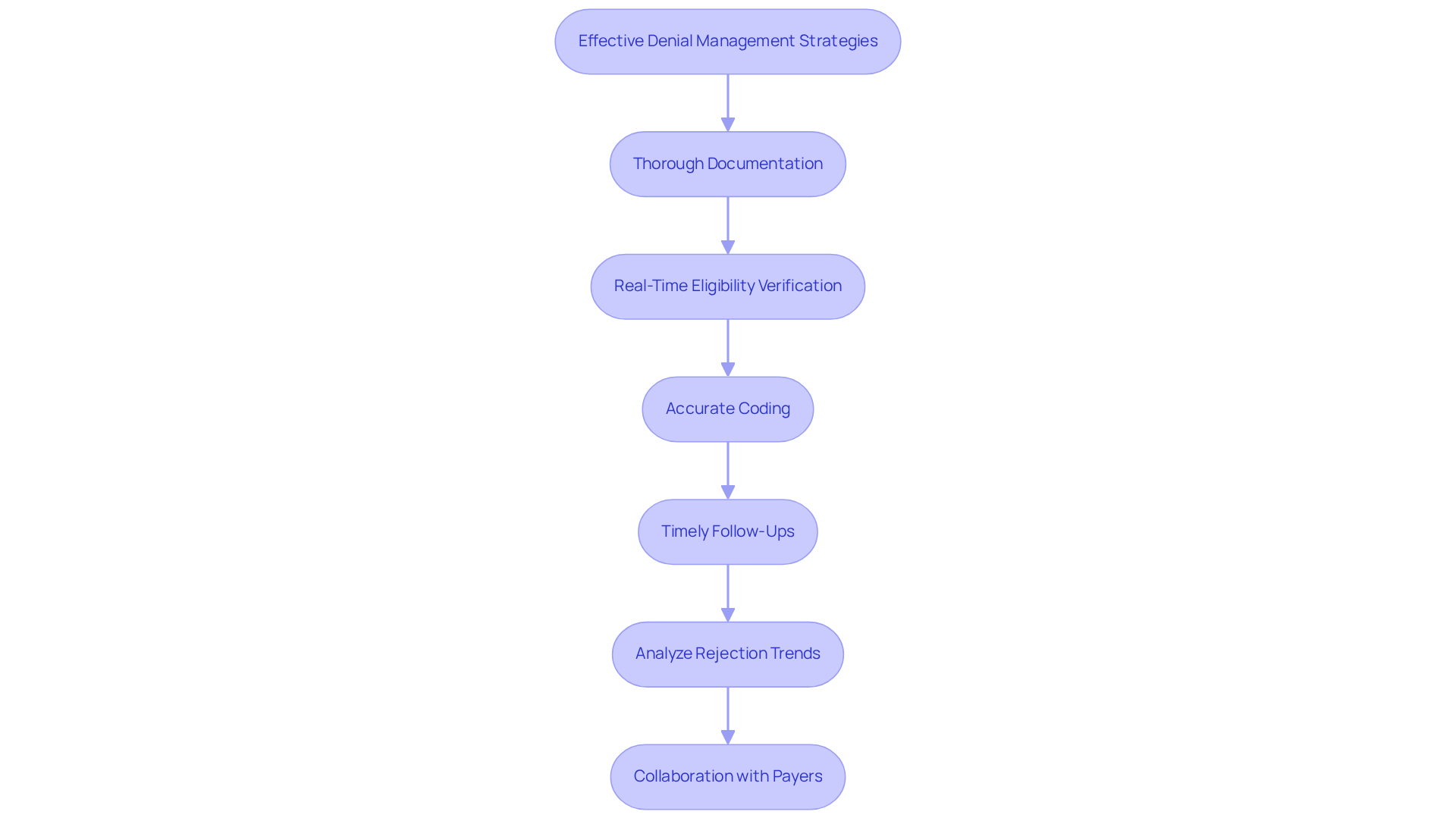
Without effective revenue cycle management services for healthcare, providers risk significant revenue loss and operational inefficiencies due to poor denial management strategies. To effectively manage denials and enhance revenue recovery, healthcare providers should implement the following strategies:
- Thorough Documentation: Carefully record all patient interactions and services to support assertions and reduce rejection risks.
- Real-Time Eligibility Verification: Conduct insurance eligibility and benefits verification at the point of service to avert billing complications later.
- Accurate Coding: Invest in comprehensive training for coding staff to ensure precise coding of diagnoses and procedures, thereby reducing instances of claim rejections.
- Timely Follow-Ups: Develop a systematic approach for promptly addressing denied requests, facilitating necessary corrections and resubmissions.
- Analyze Rejection Trends: Regularly assess rejection data to uncover patterns and root causes, enabling targeted process enhancements.
- Collaboration with Payers: Build robust relationships with insurance payers to streamline communication and expedite the resolution of denied claims.
Implementing these strategies allows healthcare providers to enhance their denial management processes effectively, which is crucial for revenue cycle management services for healthcare, leading to a potential reduction in denials by 20-30% and faster reimbursement timelines of 15-25% within 30-90 days. This positions healthcare providers for sustainable operational success.
Conclusion
Healthcare providers face increasing pressure to optimize their revenue cycle management (RCM) to ensure financial viability and high-quality patient care. By streamlining processes like patient registration, insurance verification, and denial management, organizations can significantly reduce administrative burdens. This allows practitioners to concentrate on delivering exceptional patient care.
The article emphasizes a compliance-first approach in RCM, highlighting the necessity for accurate coding, timely submissions, and proactive denial management strategies. The integration of technology and automation further enhances these processes, leading to improved cash flow and reduced claim rejections. With the support of specialized services from Healthcare Partners Consulting & Billing, LLC (HPC), practices can achieve a more efficient revenue cycle, ultimately benefiting both their financial health and patient satisfaction.
In conclusion, the implementation of comprehensive revenue cycle management services is not just a financial necessity but a strategic imperative for healthcare providers. By prioritizing operational efficiency and leveraging technology, practices can transform their revenue cycle processes, ensuring sustainability and a higher standard of care. Ultimately, the strategic implementation of RCM services enables healthcare providers to focus on their core mission: delivering exceptional patient care. For further assistance, consider reaching out to HPC at info@hpcbilling.com or call 888-517-4992 to explore tailored solutions for your practice.
Frequently Asked Questions
What is revenue cycle management (RCM) in healthcare?
Revenue cycle management in healthcare is a strategic process that encompasses various stages, including patient registration, insurance verification, charge capture, coding, payment requests, payment posting, and accounts receivable management. It significantly influences financial outcomes and the quality of care provided.
Why is effective RCM important for healthcare providers?
Effective RCM is essential for securing timely reimbursements, minimizing claim rejections, and enhancing financial performance. It can determine a healthcare provider’s ability to deliver exceptional patient care while maintaining financial health.
What are the key components of revenue cycle management?
The key components of RCM include:
- Registration: Accurate collection of patient information.
- Insurance Verification: Confirming patient eligibility and benefits.
- Charge Capture: Documenting and billing all services provided.
- Coding: Accurate coding of diagnoses and procedures.
- Submissions: Timely submission of payment requests to payers.
- Payment Posting: Recording and reconciling payments received.
- Accounts Receivable Management: Monitoring outstanding balances and unpaid invoices.
- Denial Management: Analyzing and addressing denied claims.
How can healthcare providers reduce claim rejections?
Providers can reduce claim rejections by implementing real-time eligibility verification, which can lower rejection rates from over 10% to below 5%. Additionally, focusing on accurate coding and timely submissions can further minimize rejections.
What impact can intelligent automation have on RCM?
Organizations that implement intelligent automation strategies can expect a 20-30% reduction in claim rejections and faster reimbursements, typically within 30 to 90 days.
What is the significance of denial management in RCM?
Denial management is crucial for improving revenue recovery. A proactive denial management program can reduce denial rates by 20-30%, significantly enhancing overall financial performance.
How can healthcare practices improve their financial health through RCM?
By concentrating on key components of RCM, such as accurate registration, insurance verification, and proactive denial management, healthcare practices can achieve improved financial health and greater patient satisfaction.
What role does Healthcare Partners Consulting & Billing, LLC (HPC) play in RCM?
HPC offers flexible service plans tailored to the size of practices and claim volume, providing support to enhance RCM processes. They focus on modernizing the patient financial experience to achieve faster reimbursements and improved collection rates.