

Introduction
Neglecting denial management in healthcare billing can lead to significant financial losses for practices. Optimizing denial management allows healthcare providers to recover lost revenue and improve operational efficiency, enabling a greater focus on patient care. With rising denial rates and complex payer requirements, practices must navigate these challenges to ensure timely reimbursements and maintain compliance. This article will provide an analysis of best practices for denial management, presenting strategies that can help providers enhance their workflows and financial outcomes.
Define Denial Management in Healthcare Billing
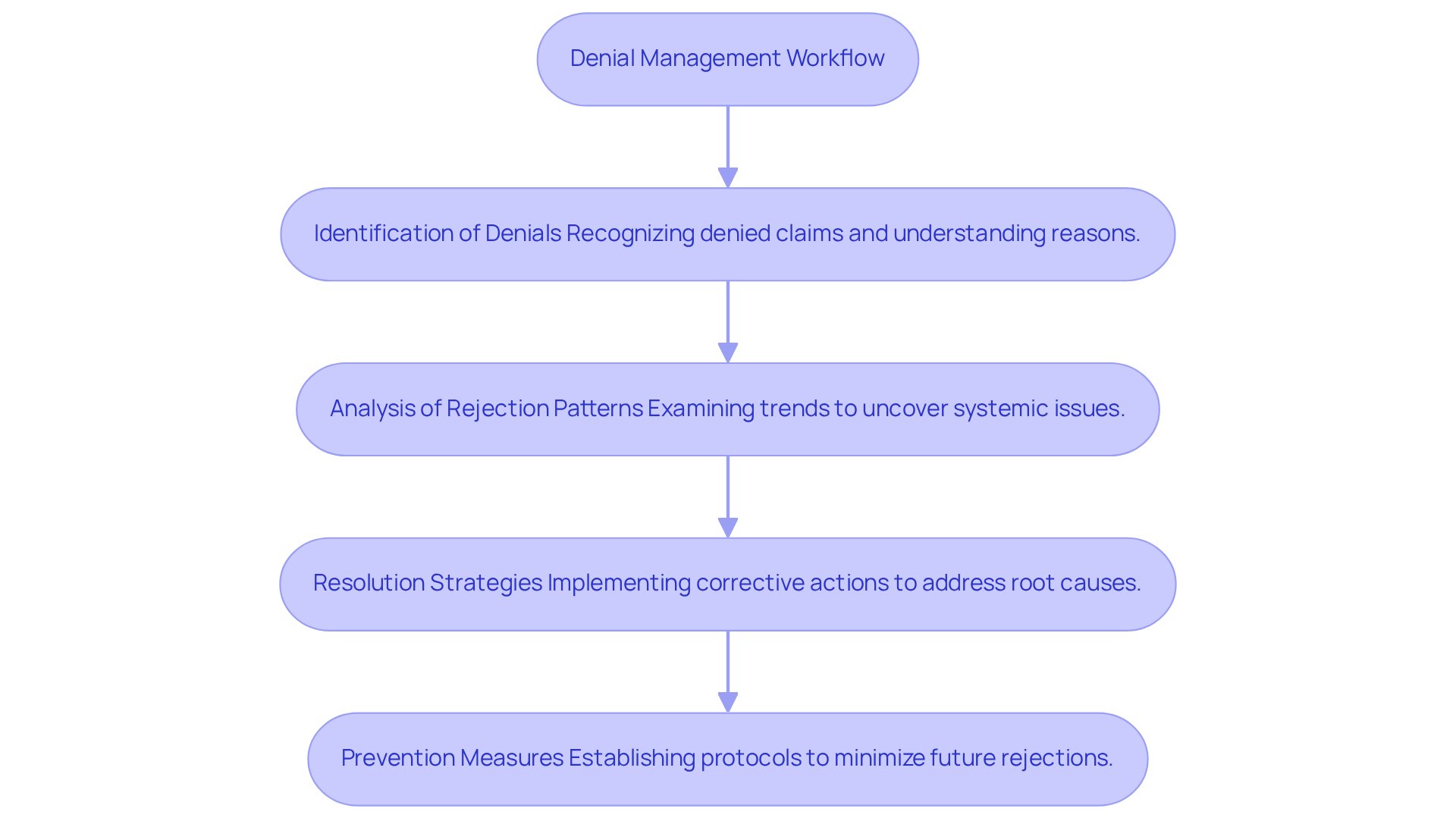
The denial management workflow in medical billing represents a critical challenge for healthcare providers, necessitating a systematic approach to manage rejected claims effectively. This process is essential for safeguarding the financial stability of healthcare practices, directly impacting revenue generation and operational effectiveness. Key activities involved in denial management include:
- Identification of Denials: Recognizing when a claim has been denied and understanding the underlying reasons.
- Analysis of Rejection Patterns: Examining trends in rejections to uncover systemic issues within the billing process.
- Resolution Strategies: Implementing corrective actions to address the root causes of refusals, which includes appealing denials and correcting submission errors. Healthcare Partners Consulting underscores the necessity of promptly appealing appropriate rejections to recover earned revenue.
- Prevention Measures: Establishing protocols to minimize future rejections through enhanced documentation, coding accuracy, and compliance with payer requirements.
Current statistics emphasize the urgency of effective claim resolution. With rejection rates on the rise, healthcare providers face increasing pressure to resolve claims efficiently, with the estimated initial rejection rate for U.S. medical services in 2026 projected at 12.6%, leading to approximately 806 million denied claims annually and a staggering cost of about $262 billion. By effectively addressing refusals through the denial management workflow, healthcare providers can enhance their revenue cycle management and secure timely reimbursements, allowing for greater focus on patient care. Implementing strategies within the denial management workflow can result in a 20-30% decrease in refusals and accelerate reimbursement by 15-25% within 30-90 days, highlighting the significance of this process in enhancing operational performance. By prioritizing the denial management workflow, healthcare providers can turn operational challenges into opportunities for improved financial performance. For personalized consultation to identify optimal administrative solutions tailored to your operations, consider scheduling a meeting with Healthcare Partners Consulting.
Implement Key Steps in the Denial Management Process
Delays in cash flow can hinder operational efficiency and financial stability, making an effective denial management workflow crucial for healthcare providers. To optimize denial management, healthcare providers should implement the following key steps:
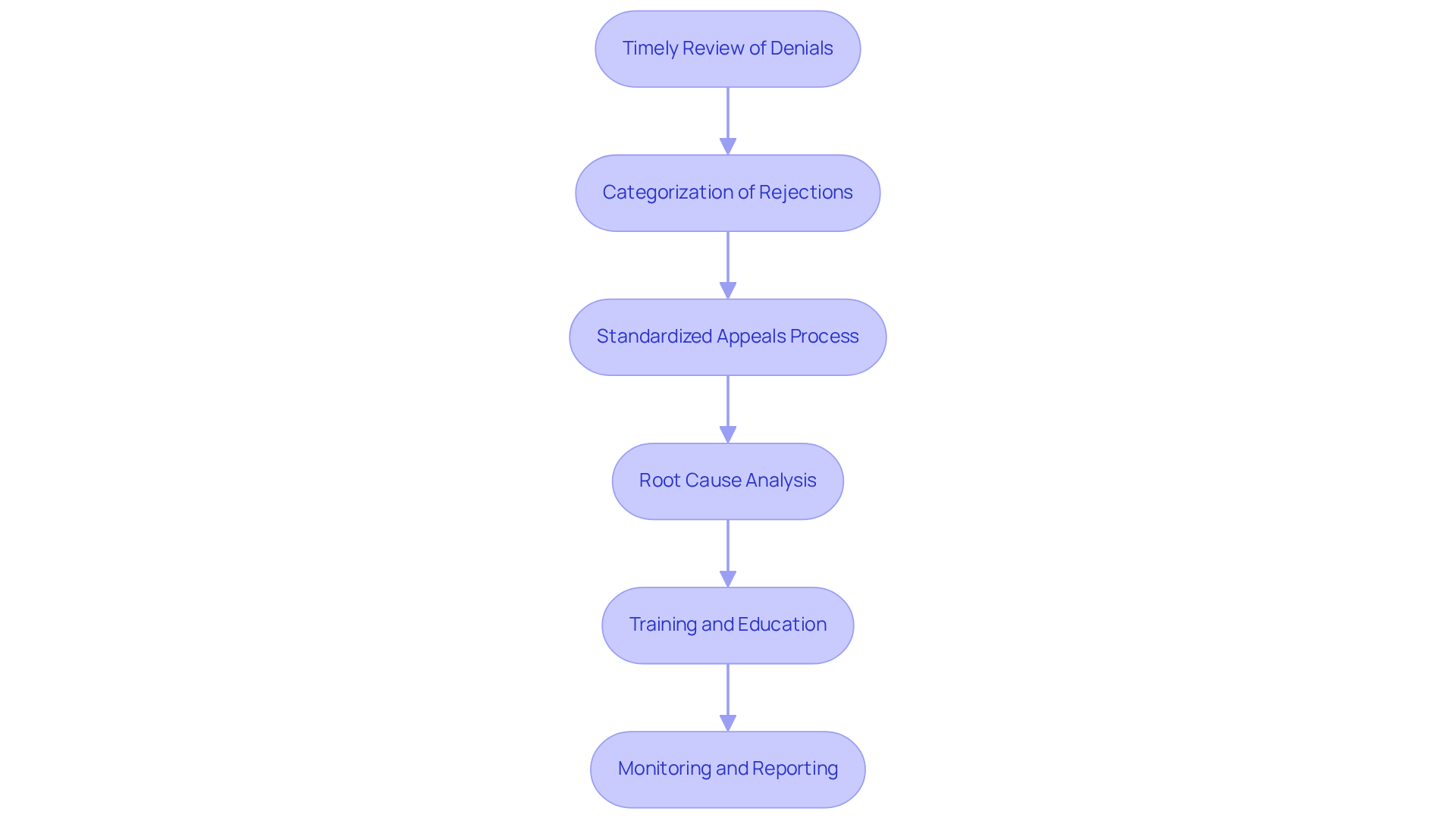
- Timely Review of Denials: Establish a routine for promptly reviewing denied claims. This practice allows for quicker resolutions and minimizes the impact on cash flow, ensuring that revenue is not unnecessarily delayed.
- Categorization of Rejections: Classify rejections by type-such as eligibility, coding errors, or lack of prior authorization-to identify patterns and prioritize resolution efforts effectively. This targeted approach can lead to significant enhancements in rejection rates.
- Standardized Appeals Process: Develop a standardized process for appealing denied claims, including templates and checklists. This ensures consistency and thoroughness in submissions, which can enhance the likelihood of successful appeals.
- Root Cause Analysis: Conduct a thorough examination of the reasons behind refusals to identify systemic issues. Examining documentation methods and coding precision can uncover hidden issues that, when resolved, can lead to a decrease in future rejections.
- Training and Education: Regularly instruct staff on optimal methods for documentation and coding. This proactive measure aids in minimizing mistakes that result in refusals, promoting a culture of precision and adherence within the organization.
- Monitoring and Reporting: Implement a system for tracking rejection metrics, such as rejection rates and appeal success rates. Consistent monitoring enables organizations to assess the effectiveness of their refusal strategies and implement data-informed modifications to enhance performance.
Ultimately, these strategies can transform the denial management workflow into a proactive financial safeguard for healthcare practices.
Leverage Technology and Analytics for Enhanced Denial Management
Without technology, claims management processes can become cumbersome and error-prone. Incorporating technology and analytics into the denial management workflow significantly enhances both efficiency and accuracy. Here are key strategies to consider:
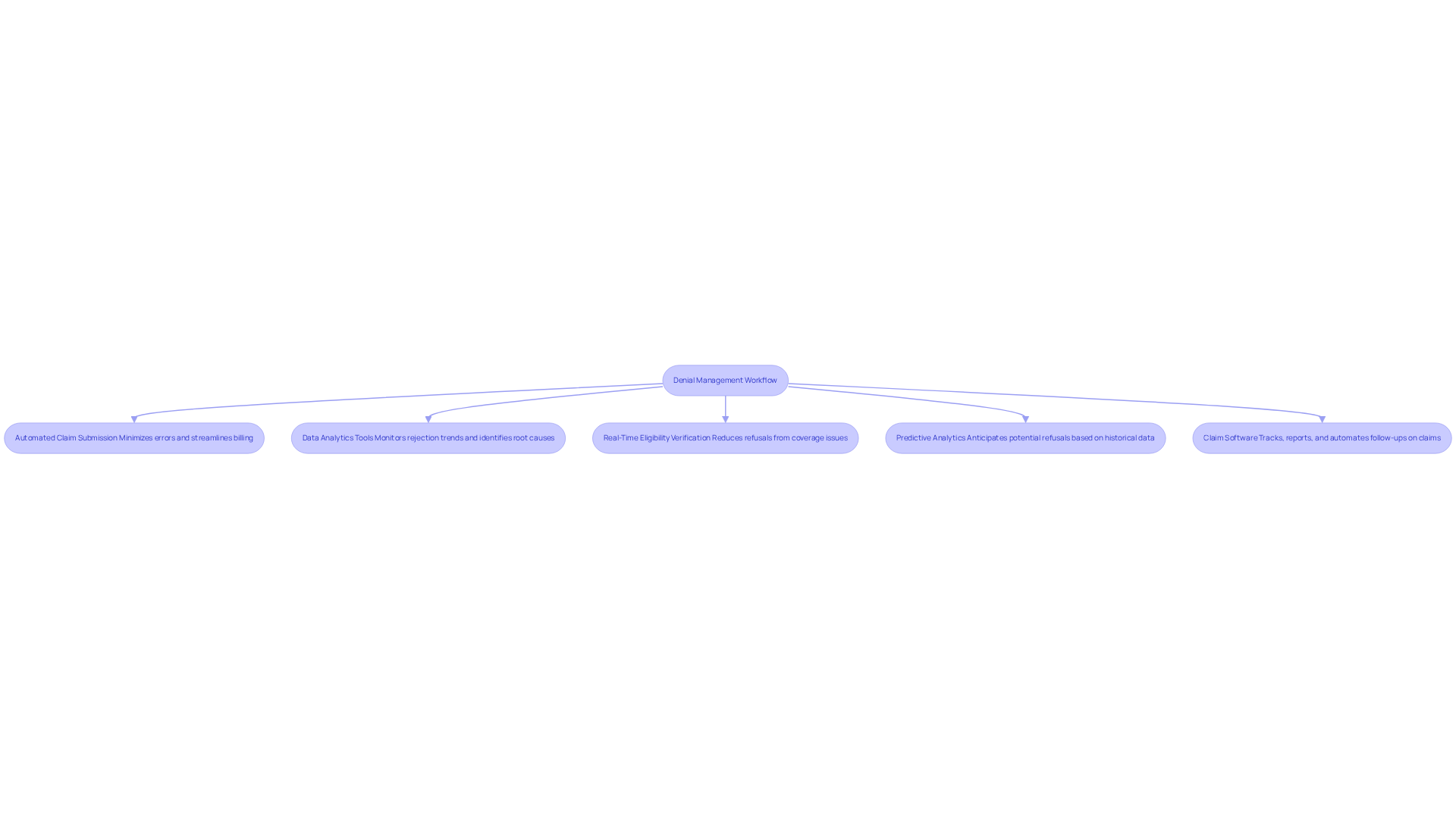
- Automated Claim Submission: Leverage electronic health records (EHR) and automated claim submission tools to minimize errors and streamline the billing process, which is crucial for maintaining compliance and reducing administrative burdens.
- Data Analytics Tools: Implement analytics software to monitor rejection trends and identify root causes. This data-driven approach guides the denial management workflow, helps prioritize training areas, and ultimately leads to a decrease in rejection rates by 20-30%.
- Real-Time Eligibility Verification: Utilize technology for real-time patient eligibility verification, which reduces the chances of refusals arising from coverage issues. This proactive measure is essential for ensuring a smoother denial management workflow during claim submissions.
- Predictive Analytics: Utilize predictive analytics to anticipate potential risk of refusals based on historical data. This enables providers to take proactive measures in the denial management workflow, enhancing revenue recovery and minimizing the time spent on reworking claims.
- Claim Software: Invest in specialized claim software that offers features such as tracking, reporting, and automated follow-ups on rejected claims. Such tools can lead to faster reimbursement times of 15-25% within 30-90 days, improving overall revenue cycle performance.
The implementation of these strategies not only streamlines processes but also significantly enhances the denial management workflow and boosts financial performance.
Establish Continuous Improvement Practices in Denial Management
Inefficient denial management workflow processes can lead to significant revenue loss for healthcare providers, making continuous improvement essential. To achieve sustained success in denial management, healthcare providers must embrace continuous improvement practices, which include:
- Regular Process Audits: Periodic audits of denial management processes help identify inefficiencies and areas for enhancement, ensuring that workflows remain effective and compliant. This includes reviewing appeal processes to maximize revenue recovery.
- Feedback Mechanisms: Establishing channels for staff feedback fosters a culture of open communication and collaboration, allowing for real-time adjustments to processes based on frontline insights. Engaging staff can lead to valuable insights on effectively addressing underpayments and unprocessed claims in the denial management workflow.
- Performance Metrics: Defining and monitoring key performance indicators (KPIs) such as rejection rates, appeal success rates, and time to resolution is crucial for assessing the effectiveness of oversight strategies. Tracking these metrics can help identify trends and areas needing attention.
- Training and Development: Investing in ongoing education keeps staff informed about optimal methods, regulatory changes, and emerging technologies, which is essential for maintaining high standards in claims processing and ensuring compliance with payer rules.
- Stakeholder Involvement: Engaging all relevant stakeholders-including billing staff, clinicians, and administrative personnel-ensures a comprehensive approach to continuous improvement, aligning efforts across the organization.
Ultimately, these enhancements to the denial management workflow can transform administrative efficiency, allowing providers to focus more on quality patient care. Healthcare Partners Consulting & Billing, LLC (HPC) offers personalized consultations to help identify optimal administrative solutions tailored to the unique needs of behavioral and mental health practices.

Conclusion
In an era of rising claim denials, optimizing denial management workflows is critical for healthcare providers. Implementing a structured approach to managing denied claims safeguards financial health. It also allows practices to focus on delivering quality patient care. The emphasis on a compliance-first strategy ensures that providers can navigate the complexities of billing while adhering to payer requirements.
Key strategies discussed include:
- Timely review and categorization of denials
- The establishment of standardized appeals processes
- The integration of technology and analytics
These practices not only streamline the denial management workflow but also foster a culture of continuous improvement. By regularly auditing processes and engaging staff in feedback mechanisms, healthcare providers can identify inefficiencies and enhance their operational performance, ultimately leading to improved financial outcomes.
Effective denial management is essential for financial stability in healthcare. As healthcare providers face increasing rejection rates, adopting these best practices is crucial for maintaining financial stability and ensuring timely reimbursements. Taking a proactive stance on denial management helps practices turn challenges into real opportunities, allowing them to focus on what truly matters-providing exceptional care to patients. For tailored solutions that align with the unique needs of behavioral and mental health practices, consider reaching out to Healthcare Partners Consulting & Billing, LLC (HPC) for expert guidance.
Frequently Asked Questions
What is denial management in healthcare billing?
Denial management in healthcare billing refers to the systematic approach used by healthcare providers to manage rejected claims effectively, which is crucial for maintaining financial stability and operational effectiveness.
What are the key activities involved in denial management?
Key activities in denial management include identifying denials, analyzing rejection patterns, implementing resolution strategies, and establishing prevention measures to minimize future rejections.
How do healthcare providers identify denied claims?
Healthcare providers identify denied claims by recognizing when a claim has been rejected and understanding the underlying reasons for the denial.
Why is it important to analyze rejection patterns?
Analyzing rejection patterns helps uncover systemic issues within the billing process, allowing healthcare providers to address the root causes of denials.
What resolution strategies can be implemented for denied claims?
Resolution strategies include appealing denials, correcting submission errors, and taking corrective actions to address the reasons for refusals.
What prevention measures can be taken to minimize future rejections?
Prevention measures involve enhancing documentation, ensuring coding accuracy, and complying with payer requirements to reduce the likelihood of future claim denials.
What are the current statistics regarding claim rejections in the U.S.?
The estimated initial rejection rate for U.S. medical services in 2026 is projected at 12.6%, leading to approximately 806 million denied claims annually, with a cost of about $262 billion.
How can effective denial management impact revenue cycle management?
By effectively addressing refusals, healthcare providers can enhance their revenue cycle management, secure timely reimbursements, and focus more on patient care.
What potential improvements can be achieved through denial management strategies?
Implementing strategies within the denial management workflow can lead to a 20-30% decrease in refusals and accelerate reimbursement by 15-25% within 30-90 days.
How can healthcare providers seek personalized consultation for denial management?
Healthcare providers can schedule a meeting with Healthcare Partners Consulting for personalized consultation to identify optimal administrative solutions tailored to their operations.