Introduction
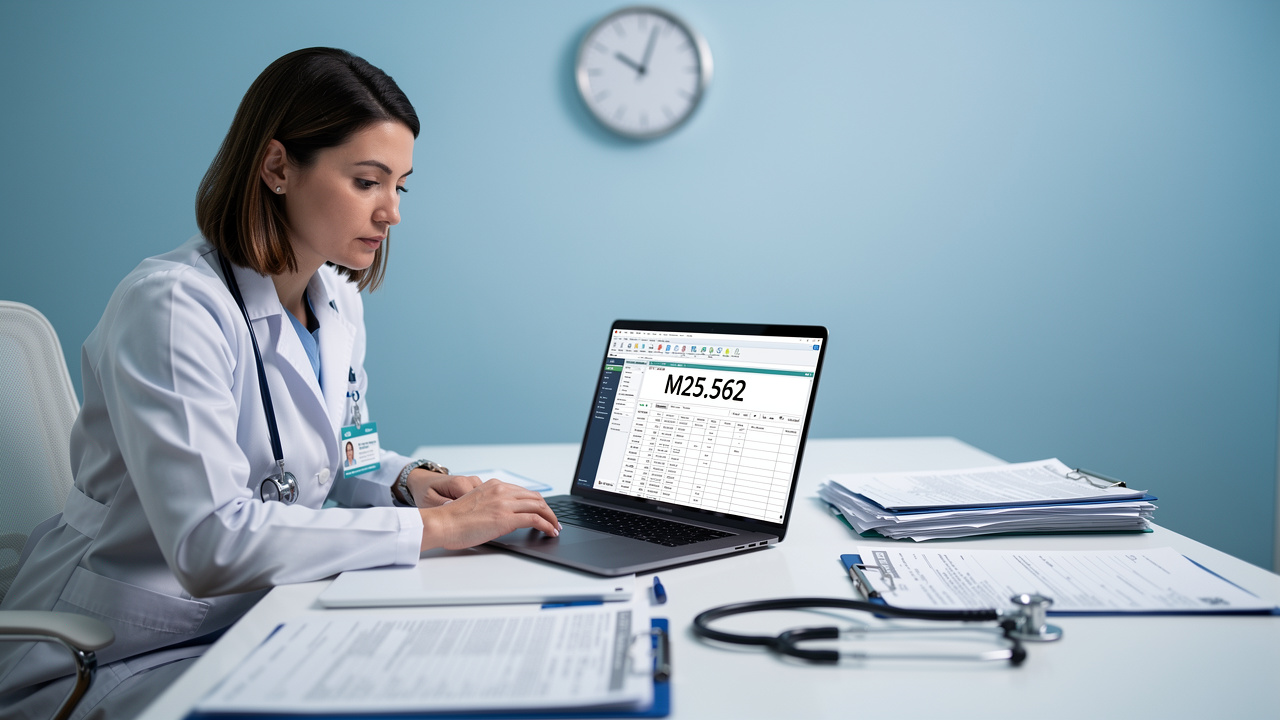
Accurate coding is essential for effective healthcare management, especially for mental health clinics facing the intricacies of billing and compliance. The ICD-10 code M25.562, which designates pain in the left knee, serves as a critical touchpoint for ensuring that patient conditions are properly documented and reimbursed. By mastering the nuances of this code, healthcare providers can not only enhance their operational efficiency but also focus more on patient care rather than administrative burdens. Clinics often struggle with coding accuracy, which can lead to significant financial repercussions.
How can they avoid common pitfalls that jeopardize both their financial health and patient outcomes?
Understand ICD-10 Code M25.562: Definition and Importance
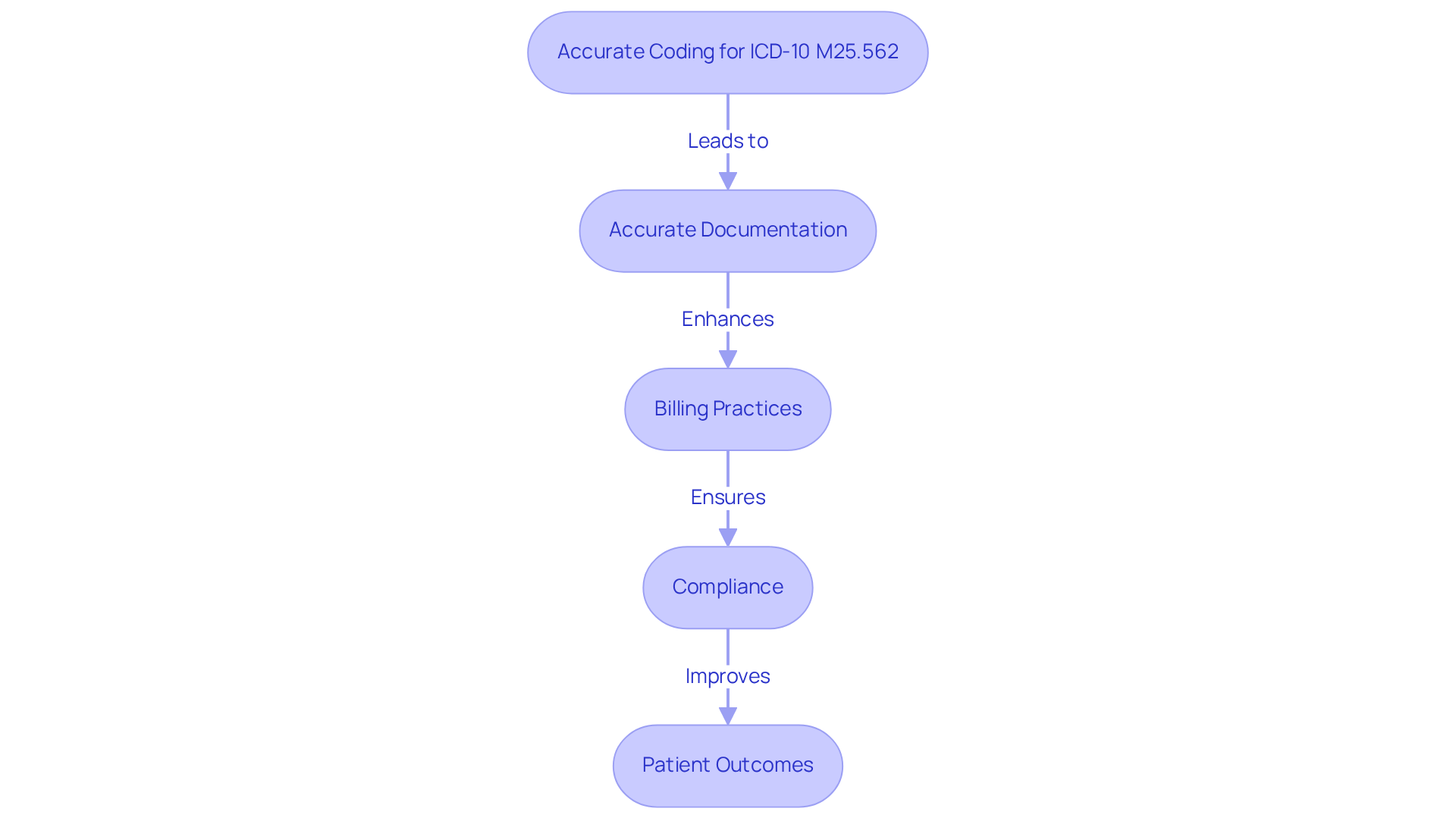
Accurate coding, including the ICD-10 designation M25.562 for pain in the left knee, is essential for effective healthcare management. This code is particularly important for healthcare providers dealing with musculoskeletal disorders commonly encountered in clinical settings. Understanding and accurately documenting this code is essential for effective billing practices, ensuring that the patient’s condition is accurately represented in medical records. Applying M25.562 correctly ensures appropriate reimbursement and enhances the tracking of treatment outcomes and patient care.
Precise documentation serves as the foundation for efficient management, enabling healthcare facilities to maintain compliance and enhance their revenue cycle. Implementing precise coding practices can reduce claim denials by 20-30% and expedite reimbursements by 15-25% within 30-90 days. However, many mental health facilities struggle with administrative challenges that threaten their financial sustainability.
Moreover, case studies highlight the importance of transitioning from symptom classifications to definitive diagnoses once a condition is established. For example, using M25.562 without a clear assessment and plan can suggest weak medical necessity, which may result in claim denials. Therefore, thorough documentation that includes laterality, chronicity, and the cause of knee pain is imperative. By aligning diagnosis codes with CPT codes and payer guidelines, mental health clinics can ensure compliance and enhance their operational rigor, ultimately supporting better patient outcomes and financial health.
Healthcare Partners Consulting & Billing, LLC (HPC) offers tailored consultations to help you identify the best administrative solutions for your practice. By assessing your practice’s workflow, HPC can provide quick quizzes and personalized recommendations that enhance efficiency and billing accuracy, ensuring that your practice maximizes profitability while minimizing administrative burdens. Ultimately, the integration of precise coding practices can transform the financial landscape of mental health facilities, ensuring their long-term viability.
Apply M25.562 Correctly: Documentation and Billing Best Practices
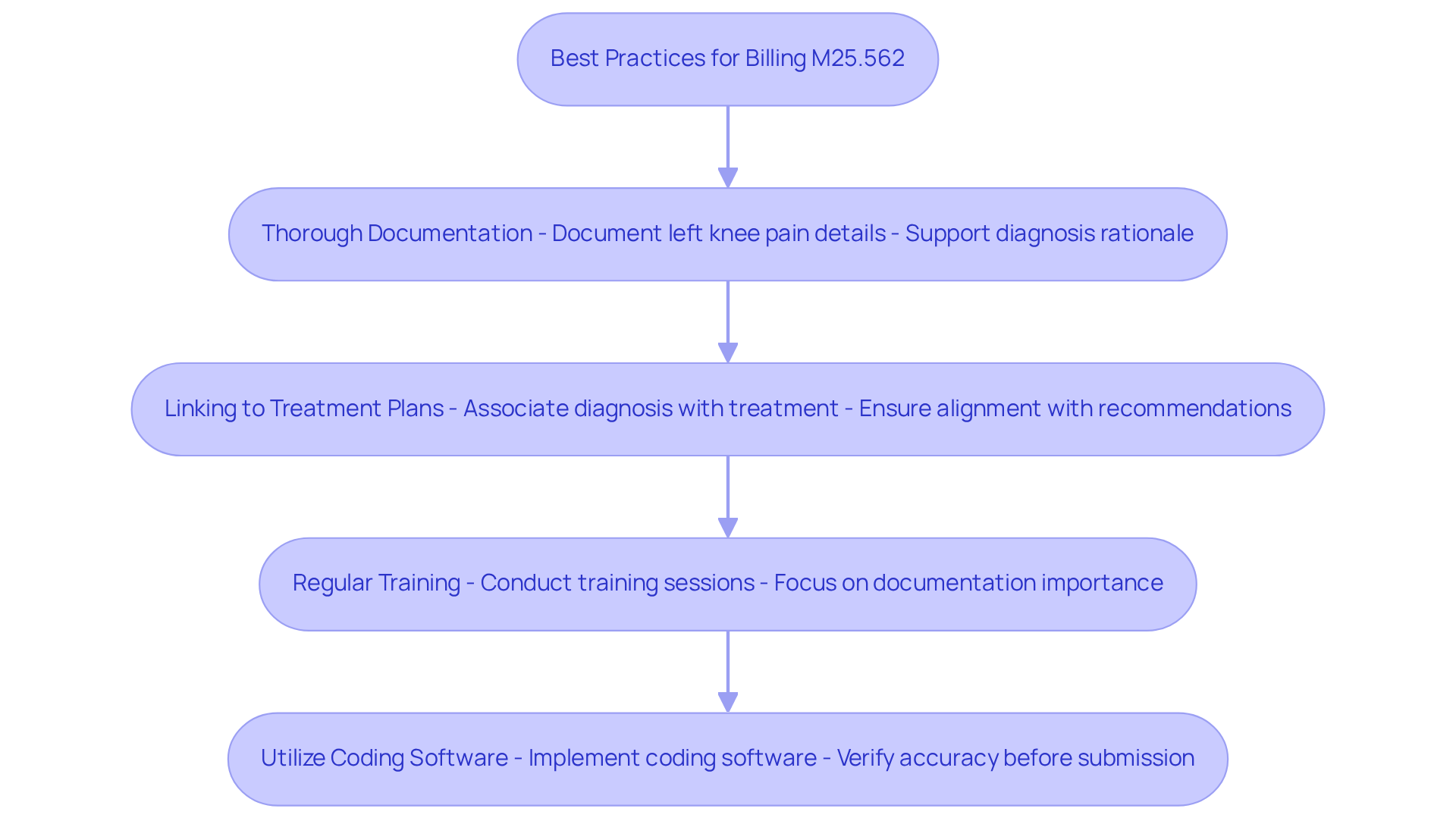
To ensure accurate billing for ICD-10 code M25.562, mental health clinics must implement best practices in documentation and coding:
- Thorough Documentation: Ensure that clinical notes clearly document the patient’s left knee pain, including the onset, duration, and any relevant medical history. This documentation should support the use of M25.562 and provide a clear rationale for the diagnosis, which is crucial for accurate billing.
- Linking to Treatment Plans: When billing, associate the diagnosis reference with the treatment plan. For instance, if physical therapy is recommended for knee pain, the documentation should reflect this connection, ensuring that the treatment aligns with the diagnosis.
- Regular Training: Conduct regular training sessions for staff on the importance of accurate documentation and the specifics of M25.562. This can help reduce errors and improve compliance, ultimately addressing underpayments and unprocessed claims effectively.
- Utilize Coding Software: Implement coding software that can assist in verifying the accuracy of codes before submission. This technology can help catch potential errors that may lead to claim denials, ensuring a smoother claims management process.
Clinics often struggle with claim denials due to inaccurate coding and documentation. By following these guidelines, clinics can enhance their billing processes. This minimizes the risk of denials and ensures fair compensation for services rendered. Additionally, partnering with Healthcare Partners Consulting & Billing, LLC (HPC), a veteran-owned organization with 39 years of expertise, can enhance healthcare billing. Their comprehensive revenue cycle management is specifically designed for behavioral and mental health services. Ultimately, these strategies not only enhance billing accuracy but also contribute to the financial health of the clinic.
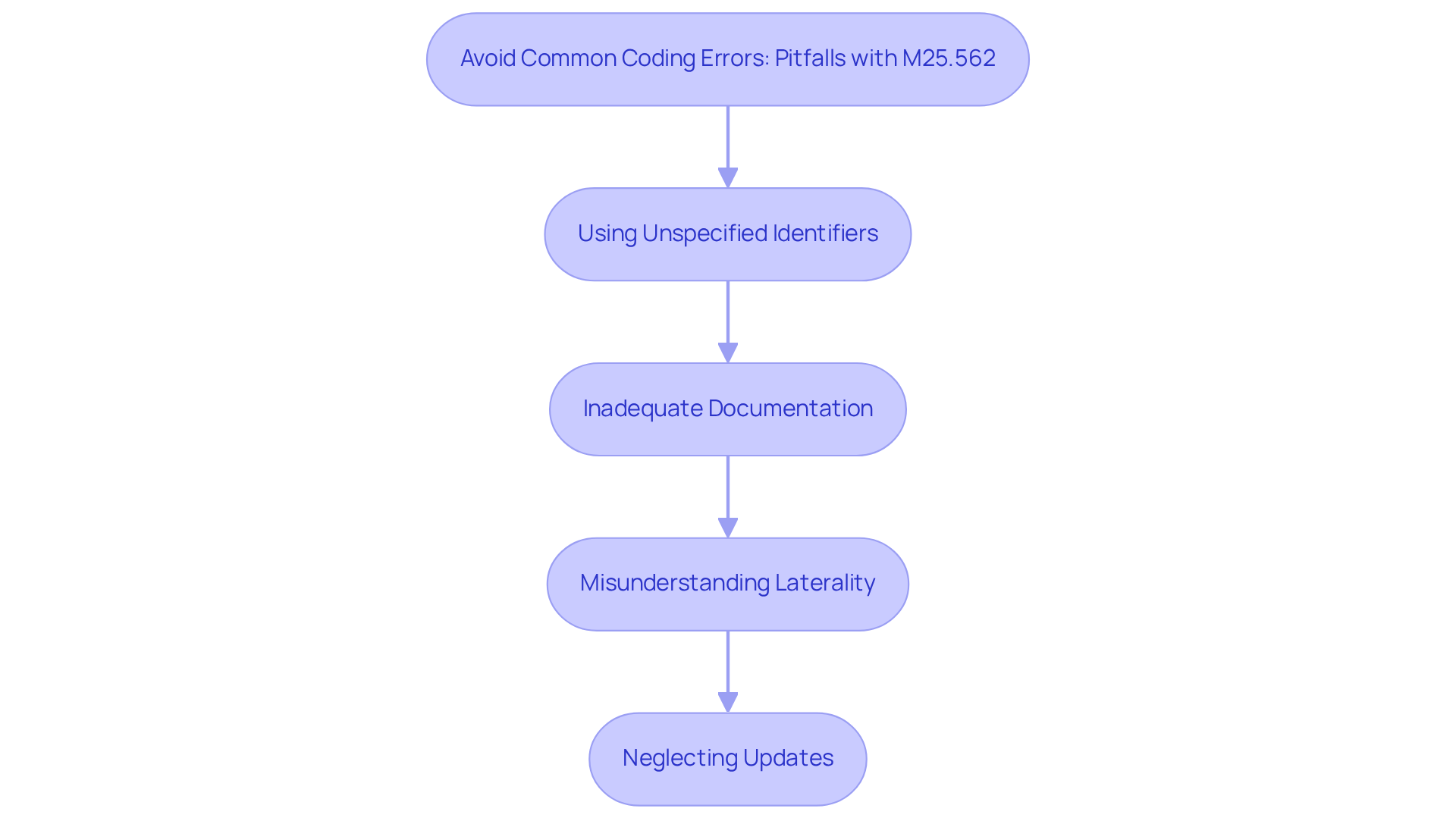
Avoid Common Coding Errors: Pitfalls with M25.562
Mental health clinics face critical challenges in accurately classifying ICD-10 codes, especially the code M25.562. To navigate these challenges effectively, it is essential to avoid common errors that can lead to significant financial losses.
- Using unspecified identifiers: Avoid using unspecified identifiers like M25.569 (pain in unspecified knee) when M25.562 is applicable. This oversight may result in significant financial losses.
- Inadequate documentation: It’s crucial to ensure that clinical notes are detailed and align with the diagnosis. Failing to document the specifics of the patient’s condition can result in coding errors, as documentation must support the billed items to justify treatment.
- Misunderstanding laterality: Clearly indicate laterality in documentation. Utilizing M25.562 while failing to specify that the pain is in the left knee can lead to misunderstandings and billing complications, potentially triggering denial messages related to time discrepancies.
- Neglecting updates: Stay informed about updates to programming guidelines and regulations. Regularly assess programming practices to ensure adherence to the latest standards, as failure to adapt can lead to substantial revenue loss.
Addressing these pitfalls is essential for optimizing billing processes and ensuring financial stability.
Enhance Practice Efficiency: The Impact of Accurate M25.562 Coding
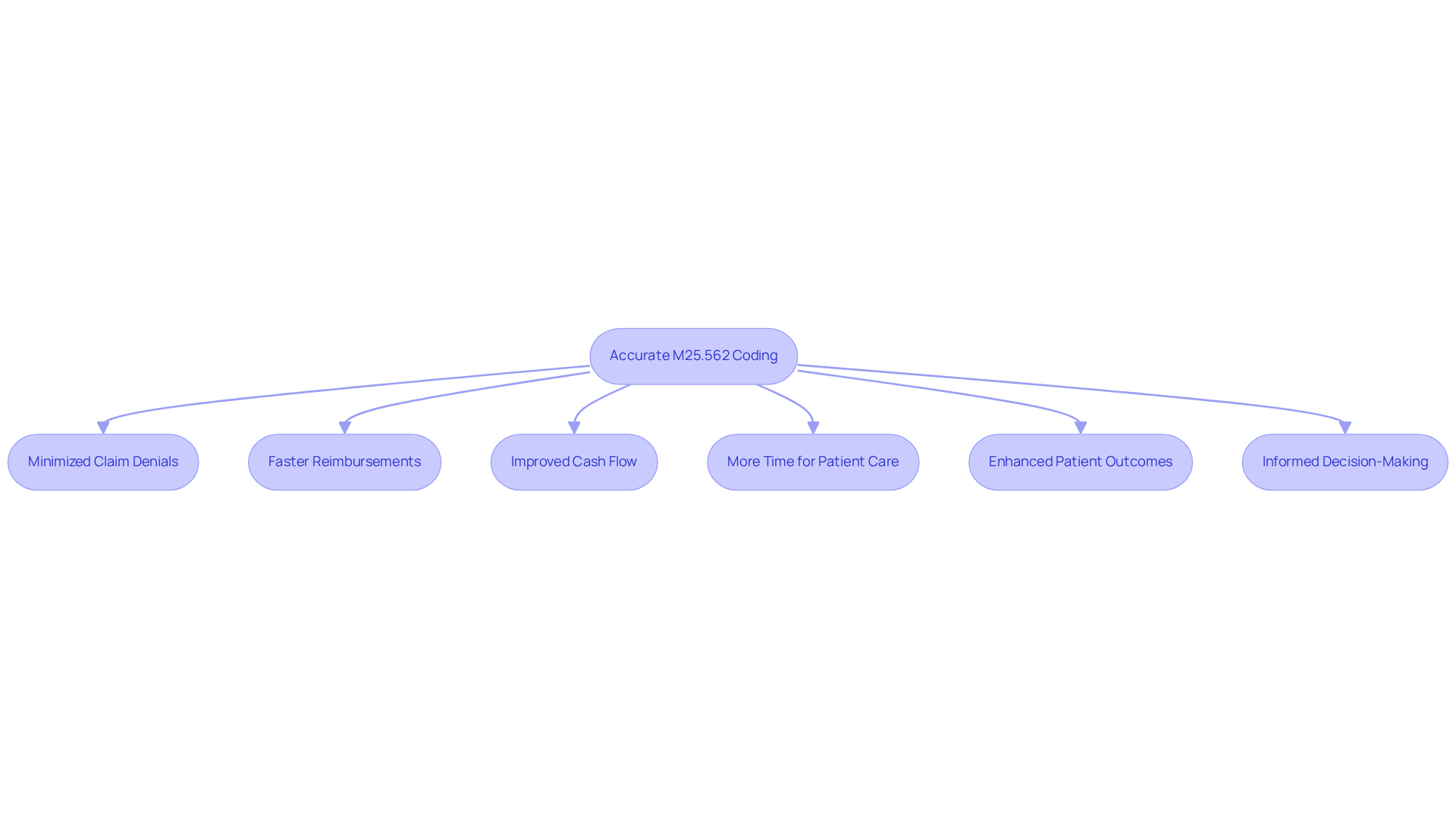
Inaccurate coding can lead to significant delays in reimbursements and hinder patient care, making the precise coding of the ICD-10 code M25.562 essential for mental health clinics. Accurate coding minimizes claim denials, which can lead to a reduction in denial rates by 20-30%. This results in faster reimbursements, typically processed within 30-90 days, thereby improving cash flow and allowing clinics to allocate resources more effectively. By taking the ‘Discover Your Mental Health Practice Profitability Score’ quiz, practices can identify hidden revenue leaks and optimize their billing processes with personalized recommendations from Healthcare Partners Consulting & Billing, LLC (HPC).
By minimizing administrative burdens through accurate classification, healthcare providers can allocate more time to patient care instead of administrative duties. This shift not only enhances patient outcomes but also increases overall satisfaction.
Accurate programming generates valuable data that can be analyzed to identify trends in patient care and operational efficiency. Clinics can utilize this data to make informed decisions regarding resource allocation and service offerings, ultimately enhancing performance.
Maintaining precise documentation methods is crucial for adherence to healthcare regulations, which aids in minimizing the likelihood of audits and penalties. This commitment to accuracy cultivates a culture of integrity and transparency within the organization.
Ultimately, the commitment to accurate coding practices can transform operational efficiency, ensuring clinics thrive in a competitive landscape.
Conclusion
Accurate coding, particularly with the ICD-10 code M25.562 for pain in the left knee, is essential for mental health clinics aiming to enhance operational efficiency and financial health. By focusing on precise documentation and billing practices, healthcare providers can significantly reduce administrative burdens, allowing them to concentrate on delivering quality patient care. The integration of effective coding strategies not only ensures compliance but also fosters a culture of integrity and transparency within the practice.
Key insights from this article emphasize the importance of:
- Thorough documentation
- Regular staff training
- The use of coding software to minimize errors and claim denials
By avoiding common pitfalls such as inadequate documentation and misunderstanding laterality, clinics can improve their billing processes and ensure fair compensation for their services. Partnering with Healthcare Partners Consulting & Billing, LLC (HPC) can further empower practices by providing tailored solutions that enhance revenue cycle management, specifically designed for behavioral and mental health services.
In conclusion, a commitment to accurate coding practices serves as a strategic approach that can significantly enhance the financial stability of mental health clinics. By prioritizing these best practices, healthcare providers can optimize their operations, improve patient outcomes, and ultimately thrive in a competitive environment. By adopting these strategies, mental health clinics can ensure they remain financially viable while prioritizing patient care. For further assistance, reach out to Healthcare Partners Consulting & Billing, LLC at info@hpcbilling.com or call 888-517-4992 to explore how tailored solutions can benefit your practice.
Frequently Asked Questions
What is the ICD-10 code M25.562 used for?
The ICD-10 code M25.562 is used to designate pain in the left knee, which is essential for effective healthcare management, particularly for musculoskeletal disorders.
Why is accurate coding important in healthcare?
Accurate coding is crucial for effective billing practices, ensuring that a patient’s condition is accurately represented in medical records, which leads to appropriate reimbursement and better tracking of treatment outcomes.
How can precise documentation impact claim denials and reimbursements?
Implementing precise coding practices can reduce claim denials by 20-30% and expedite reimbursements by 15-25% within 30-90 days.
What challenges do mental health facilities face regarding administrative tasks?
Many mental health facilities struggle with administrative challenges that threaten their financial sustainability, impacting their ability to manage coding and billing effectively.
What is the significance of transitioning from symptom classifications to definitive diagnoses?
Transitioning to definitive diagnoses is important because using codes like M25.562 without a clear assessment can suggest weak medical necessity, potentially leading to claim denials.
What factors should be included in thorough documentation for knee pain?
Thorough documentation should include laterality, chronicity, and the cause of knee pain to ensure compliance and enhance operational rigor.
How can aligning diagnosis codes with CPT codes benefit mental health clinics?
Aligning diagnosis codes with CPT codes and payer guidelines helps ensure compliance, supports better patient outcomes, and enhances the financial health of mental health clinics.
What services does Healthcare Partners Consulting & Billing, LLC (HPC) offer?
HPC offers tailored consultations to help practices identify administrative solutions, enhance efficiency, and improve billing accuracy, ultimately maximizing profitability while minimizing administrative burdens.