

Introduction
Emergency physician services billing involves navigating a complex landscape that can significantly affect the financial health of healthcare practices. Mastering billing fundamentals, implementing efficient systems, and adopting effective denial management strategies are essential for providers to enhance revenue cycles and prioritize patient care. Navigating the complexities of compliance and payer guidelines poses significant challenges for emergency physicians. This article outlines four best practices that enable healthcare providers to successfully navigate billing intricacies, leading to improved financial outcomes and enhanced patient satisfaction.
Understand the Fundamentals of Emergency Physician Billing
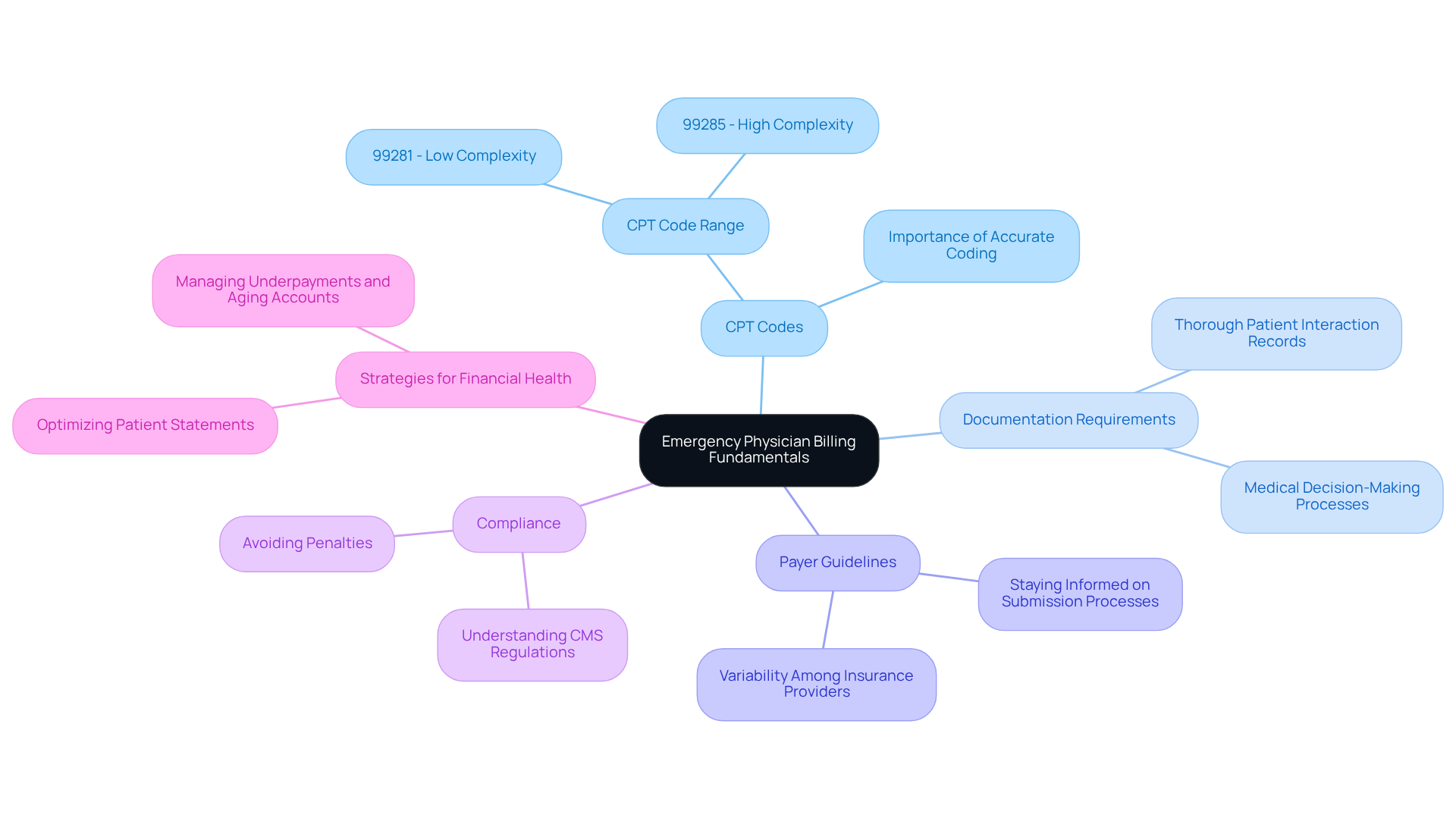
Emergency physicians encounter unique challenges in emergency physician services billing that can significantly impact their practice’s financial health. Key components include:
- CPT Codes: Familiarize yourself with the specific CPT codes applicable in emergency medicine, ranging from 99281 to 99285. These codes indicate different levels of service complexity and are essential for precise invoicing.
- Documentation Requirements: Accurate and detailed documentation is vital for justifying billed services. Ensure that all patient interactions are thoroughly recorded, including the medical decision-making processes involved in each case.
- Payer Guidelines: Different insurance providers may impose varying invoicing requirements. Staying informed about these guidelines is essential for successful submission processes and reducing denials.
- Compliance: Understanding compliance regulations, particularly those set by CMS, is essential to avoid penalties and ensure proper reimbursement.
Mastering these fundamentals enables emergency physicians to enhance their emergency physician services billing accuracy and efficiency. This improvement leads to better revenue cycles. Additionally, targeted strategies for optimizing patient statements and managing financial processes – such as addressing underpayments, unprocessed submissions, and aging accounts – can enhance financial health. Consultations can identify effective administrative solutions tailored to healthcare practices, allowing providers to focus on patient care rather than administrative tasks.
Implement Efficient Billing Systems and Technologies
To improve billing efficiency, many practices struggle with outdated processes that hinder financial performance. Consider the following strategies:
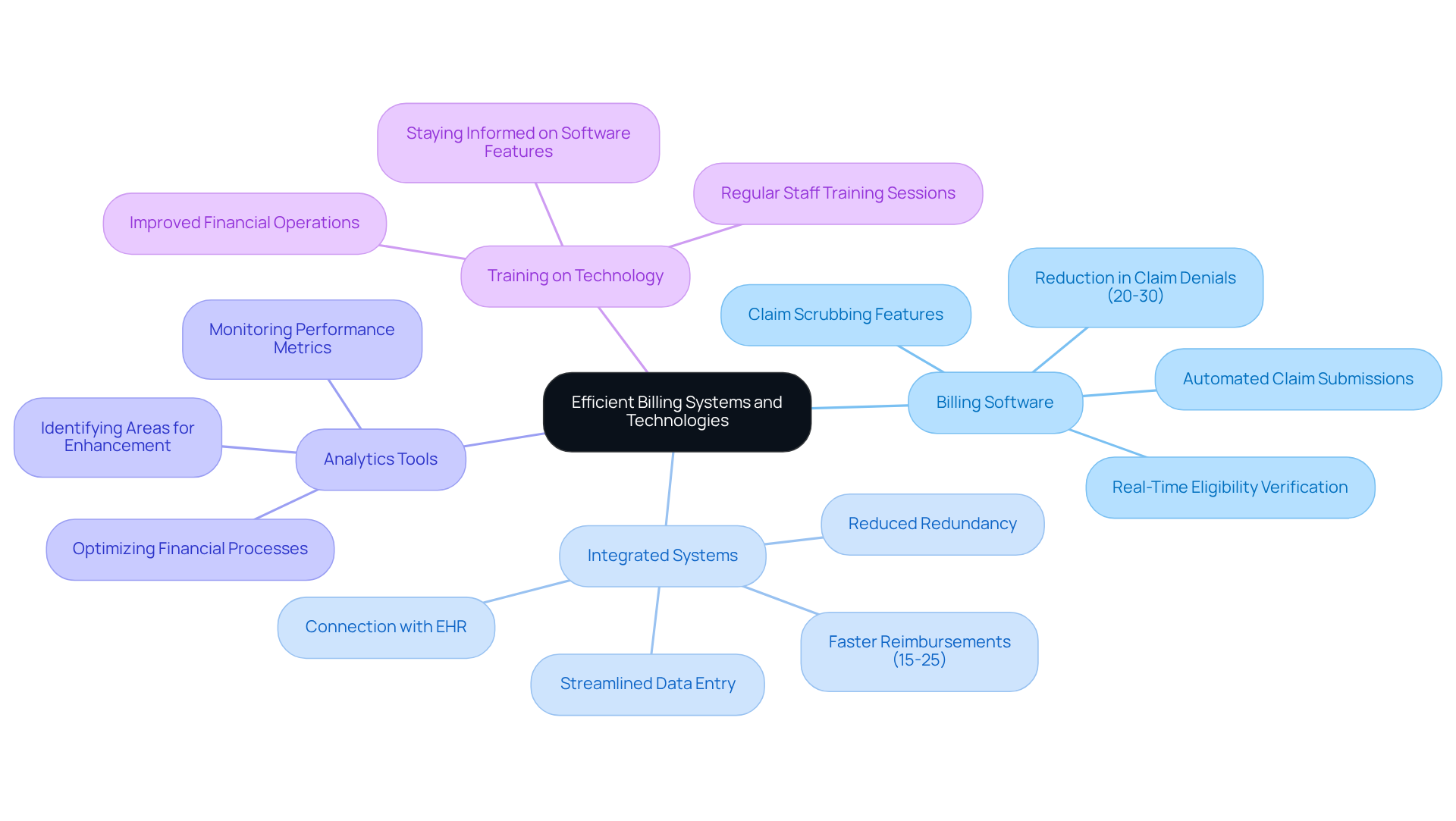
- Billing Software: Invest in specialized billing software that automates claim submissions, tracks payments, and manages denials. Look for features like real-time eligibility verification and claim scrubbing to minimize errors, which can lead to a 20-30% reduction in claim denials. Healthcare Partners Consulting & Billing, LLC (HPC) offers solutions that integrate seamlessly with platforms like TherapyNotes and SimplePractice, ensuring a smooth workflow tailored to your practice’s needs.
- Integrated Systems: Utilize integrated systems that connect financial processes with electronic health records (EHR) to streamline data entry and reduce redundancy. This integration ensures that payment information is accurate and up-to-date, facilitating faster reimbursements of 15-25% within 30-90 days. HPC’s adaptable service plans can be tailored to accommodate the size of your practice and volume of submissions.
- Analytics Tools: Implement analytics tools to monitor performance metrics, such as claim denial rates and average time to payment. These insights can assist in identifying areas for enhancement and optimizing financial processes, contributing to improved revenue cycle management.
- Training on Technology: Make sure your staff is well-trained on the financial systems you use. Regular training sessions can assist staff in staying informed about software features and optimal methods, resulting in more effective financial operations.
Ultimately, the right strategies can transform billing challenges into opportunities for growth and patient focus.
Adopt Effective Denial Management Strategies
To effectively manage denials and optimize patient statements, implement the following best practices:
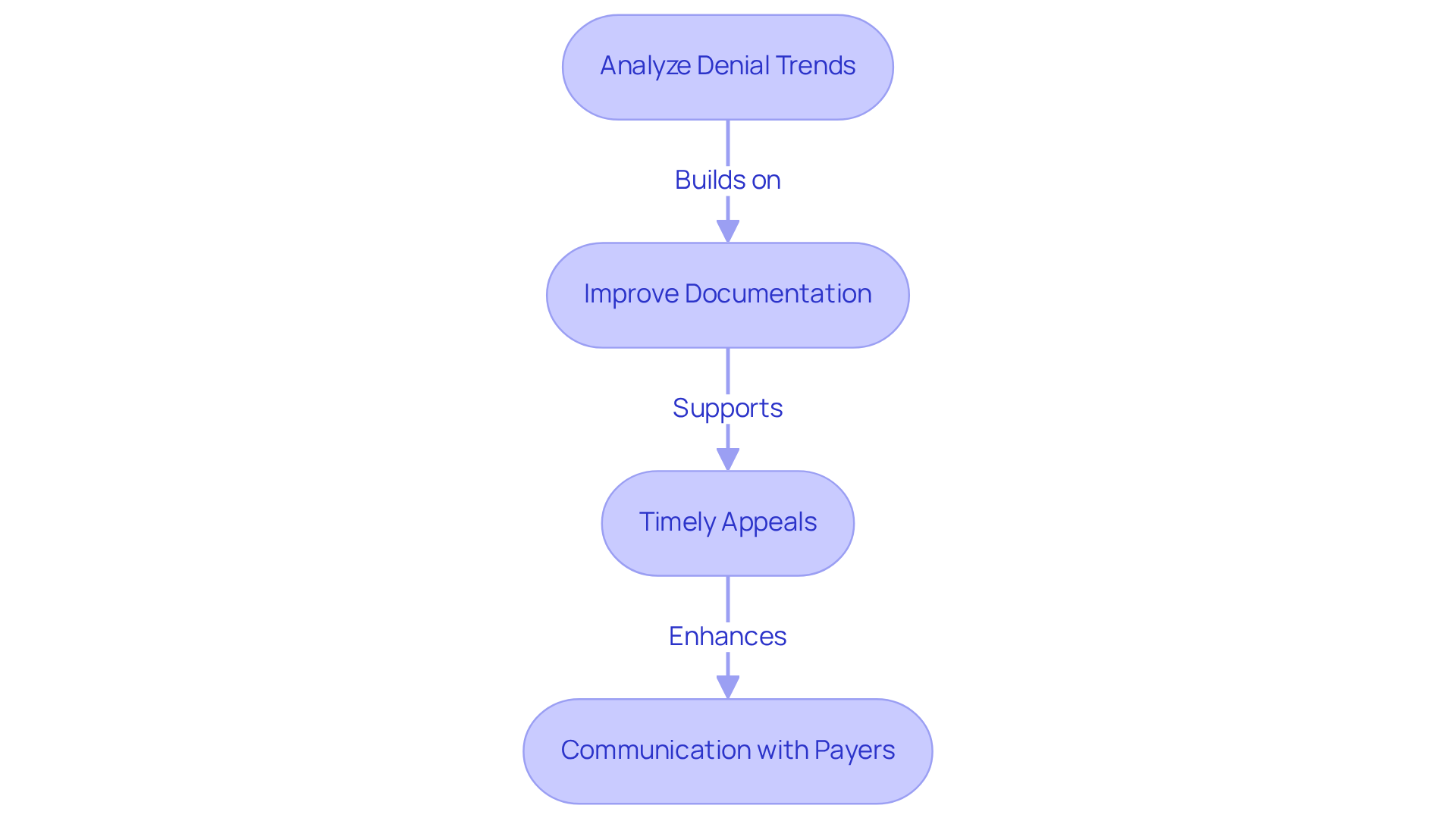
- Analyze Denial Trends: Regularly review denial reports to identify common reasons for denials. Comprehending these trends can assist you in addressing systemic issues and preventing future occurrences, particularly concerning underpayments and aging requests.
- Improve Documentation: Ensure that all documentation meets payer requirements. Incomplete or inaccurate documentation is a leading cause of denials. Train staff to provide thorough notes that support the services billed, which is essential for addressing unprocessed requests and ensuring accurate patient statements.
- Timely Appeals: Develop a streamlined process for contesting denied requests. Ensure that appeals are submitted promptly and include all necessary documentation to support the case, thereby reducing the likelihood of underpayments and enhancing the management of patient statements.
- Communication with Payers: Establish open lines of communication with insurance payers. Understanding their requirements and maintaining a good relationship can facilitate smoother claims processing and resolution of issues, ultimately enhancing the management of patient statements.
Ultimately, the proactive management of denials can transform the financial health of emergency physician services billing practices.
Invest in Staff Training and Development for Billing Excellence
Without a well-trained billing team, practices risk financial instability and inefficiency. To foster billing excellence, prioritize the following training initiatives:
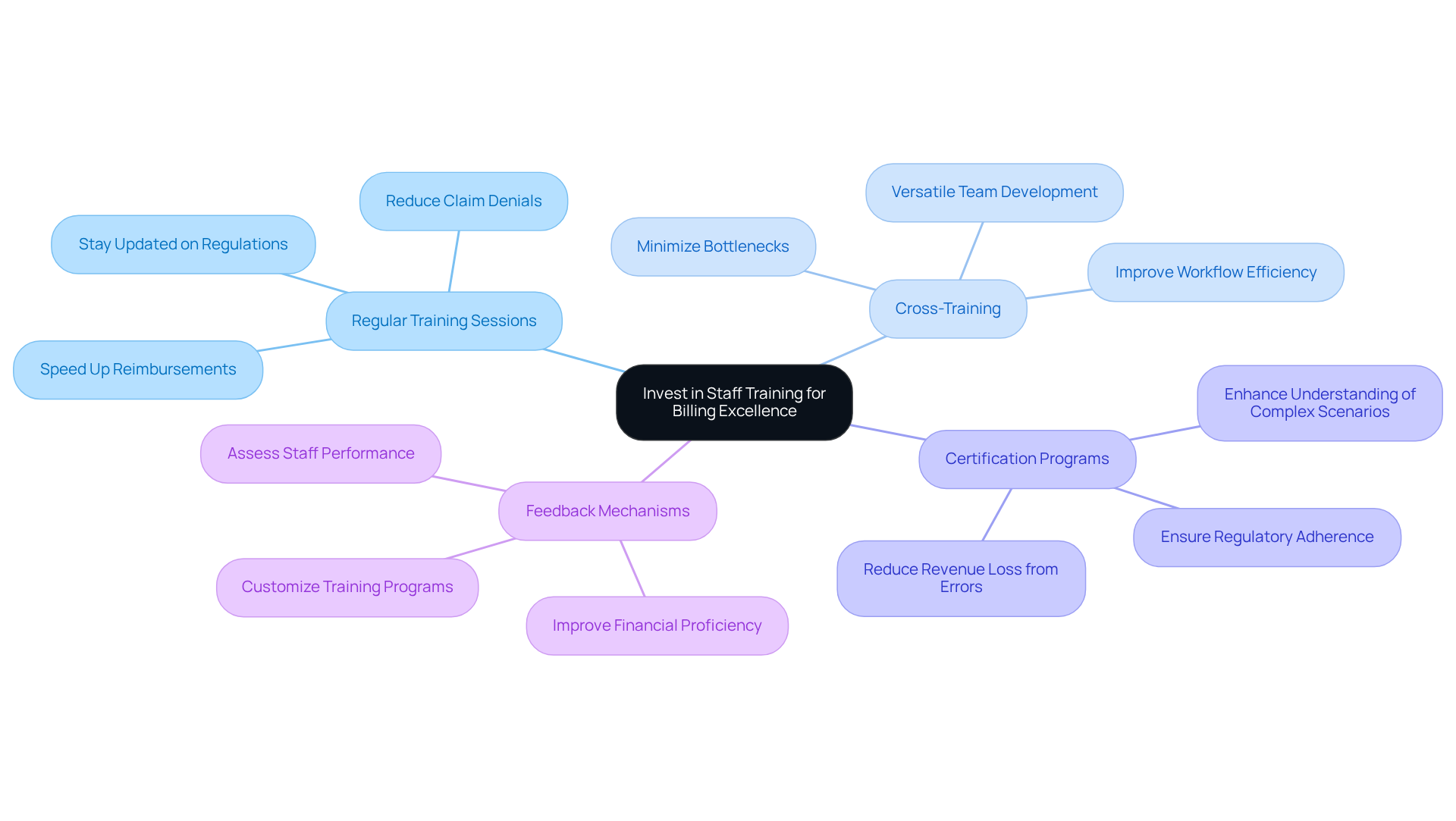
- Regular Training Sessions: Conduct ongoing training sessions to keep staff updated on the latest billing regulations, coding updates, and compliance requirements. This helps them manage financial tasks with greater accuracy, reducing claim denials by 20-30% and speeding up reimbursements by 15-25% within 30-90 days.
- Cross-Training: Promote cross-training among staff members to develop a versatile team capable of managing various financial functions. This flexibility improves workflow efficiency and minimizes bottlenecks, contributing to a more resilient invoicing process.
- Certification Programs: Assist staff in obtaining relevant certifications in medical coding. Certified professionals are more likely to comprehend complex financial scenarios and ensure adherence to regulations, which is essential in reducing errors that can result in revenue loss.
- Feedback Mechanisms: Implement feedback mechanisms to assess staff performance and identify areas for improvement. Regular assessments can assist in customizing training programs to meet specific requirements and improve overall financial proficiency, ensuring that the team stays aligned with optimal methods.
Ultimately, a commitment to staff development is not just beneficial; it is essential for sustaining financial viability in emergency physician services billing practices.
Conclusion
The complexities of emergency physician services billing can jeopardize the financial stability of practices. By mastering billing fundamentals, implementing efficient systems, managing denials, and investing in staff training, practices can enhance their revenue cycle management. These strategies enable healthcare providers to concentrate on their primary goal: delivering exceptional patient care.
Key insights from this article highlight the importance of understanding CPT codes, documentation requirements, and payer guidelines to ensure compliance and reduce denials. The integration of advanced billing technologies and analytics tools can streamline processes, while effective denial management strategies can transform challenges into opportunities for financial growth. Additionally, prioritizing staff training fosters a culture of excellence, ensuring that billing teams are equipped to navigate the complexities of emergency physician billing.
A commitment to these best practices not only secures the financial viability of emergency physician services but also upholds the core values of integrity and transparency in healthcare. By embracing these strategies, practices can not only secure their financial future but also elevate the standard of patient care they provide. For tailored solutions that align with these best practices, consider reaching out to Healthcare Partners Consulting & Billing, LLC (HPC) at info@hpcbilling.com or call 888-517-4992.
Frequently Asked Questions
What are the key components of emergency physician billing?
The key components include understanding CPT codes, documentation requirements, payer guidelines, and compliance regulations.
What are CPT codes and why are they important in emergency medicine?
CPT codes, ranging from 99281 to 99285, indicate different levels of service complexity in emergency medicine and are essential for precise invoicing.
Why is accurate documentation crucial in emergency physician billing?
Accurate and detailed documentation is vital for justifying billed services and must include thorough records of patient interactions and medical decision-making processes.
How do payer guidelines affect emergency physician billing?
Different insurance providers have varying invoicing requirements, so staying informed about these guidelines is essential for successful submission processes and reducing denials.
What role does compliance play in emergency physician billing?
Understanding compliance regulations, particularly those set by CMS, is essential to avoid penalties and ensure proper reimbursement.
How can mastering billing fundamentals benefit emergency physicians?
Mastering these fundamentals enhances billing accuracy and efficiency, leading to better revenue cycles for emergency physician practices.
What strategies can improve financial health in emergency physician practices?
Targeted strategies include optimizing patient statements, managing underpayments, addressing unprocessed submissions, and handling aging accounts.
How can consultations help emergency physician practices?
Consultations can identify effective administrative solutions tailored to healthcare practices, allowing providers to focus more on patient care rather than administrative tasks.