
Introduction
Misunderstandings regarding Explanation of Benefits (EOB) and medical bills can create significant challenges for mental health clinic owners navigating healthcare finances. An EOB summarizes insurance claim processing, detailing coverage and individual responsibilities, while a bill presents the actual amount owed to the provider. This distinction impacts clinic operations and shapes patient experiences and trust. By ensuring clarity, clinic owners can foster trust and improve operational efficiency.
Define EOB and Bill: Understanding the Basics
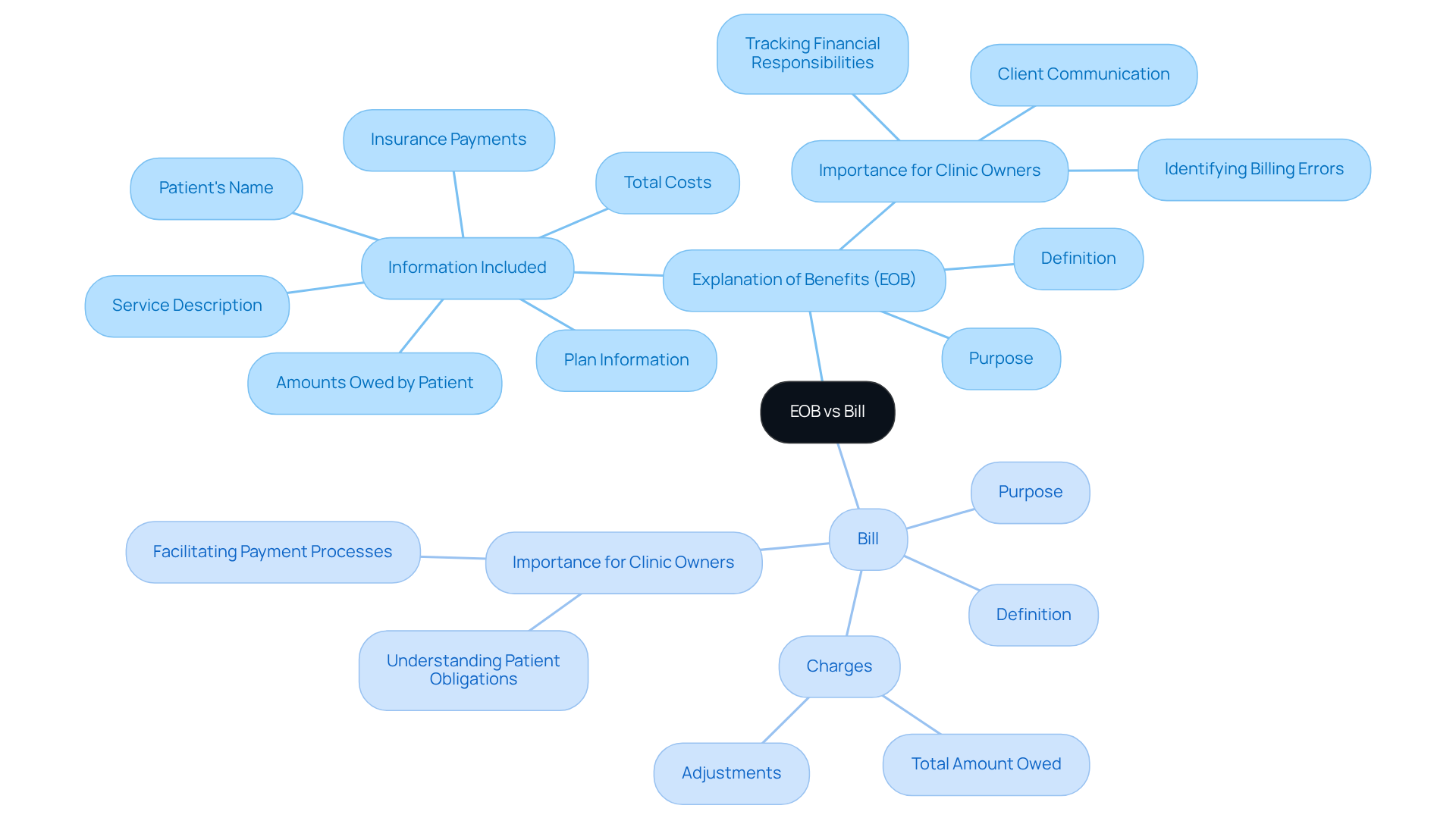
An Explanation of Benefits (EOB) is a critical document that outlines the processing of medical claims by health insurance companies. It contains crucial information such as the services provided, the amount charged by the provider, the insurance coverage applied, and the individual’s financial responsibility. Significantly, when considering EOB vs bill, it’s important to note that an EOB is not an invoice; rather, it serves as a summary of how the insurance company has processed the claim and what expenses are covered.
In contrast, the EOB vs bill refers to a statement sent directly from the healthcare provider to the individual, outlining the services provided and the total amount owed. This document shows the actual charges that the individual is responsible for after insurance adjustments. Understanding these definitions is crucial for mental health clinic owners, as it influences their interactions with clients about financial responsibilities.
Regularly reviewing EOBs helps both clinic owners and individuals keep track of healthcare expenses and identify potential billing errors. For instance, discrepancies that can occur in the comparison of EOB vs bill may arise due to prior balances or multiple service dates, highlighting the importance of clear communication and understanding of these documents. Enhancing understanding of EOB terminology and layout allows clinic owners to engage clients more effectively and ensure they are informed about their financial obligations.
To further optimize administrative solutions, clinic owners are encouraged to schedule a personalized consultation with Healthcare Partners Consulting. This 30-minute call can help map current workflows and identify specific services that effectively address underpayments and aging claims in healthcare billing. Additionally, saving EOBs for future reference can aid in managing financial responsibilities effectively, reinforcing the connection between understanding EOBs and utilizing the services offered by Healthcare Partners Consulting.
Ultimately, a thorough understanding of EOBs can significantly enhance client trust and satisfaction in the financial aspects of healthcare.
Compare Components: What Each Document Contains
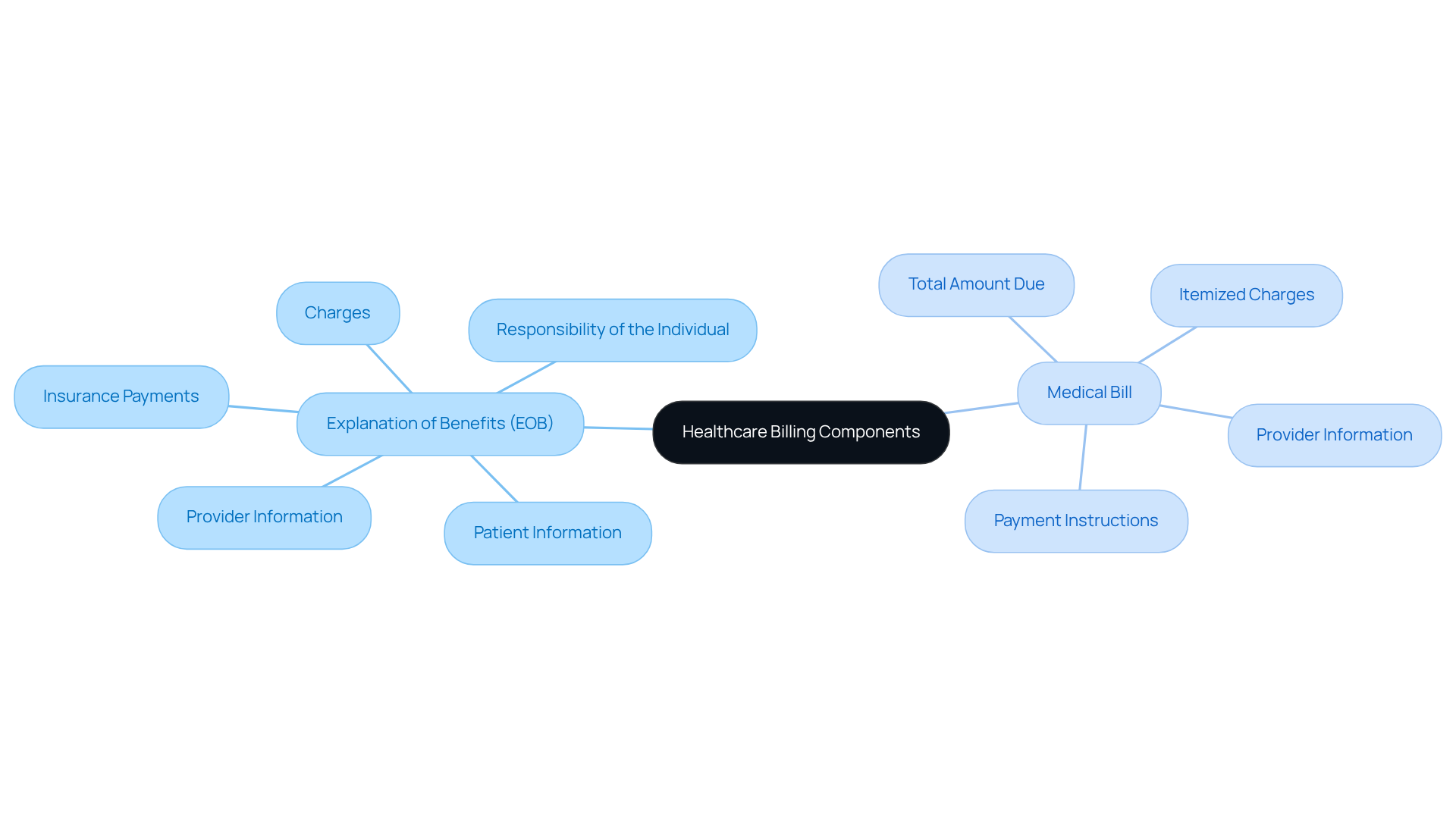
Understanding the components of an Explanation of Benefits (EOB) is crucial for effective healthcare management when considering eob vs bill. The components of an EOB typically include:
- Patient Information: This section contains the patient’s name, insurance details, and claim number.
- Provider Information: It lists the name of the healthcare provider and the services rendered.
- Charges: This reflects the total amount billed by the provider.
- Insurance Payments: It indicates the amount covered by the insurance company.
- Responsibility of the Individual: This indicates the amount the individual is required to pay, including deductibles and copays.
Conversely, a medical bill encompasses:
- Provider Information: Similar to the EOB, detailing who provided the services.
- Itemized Charges: A detailed list of services rendered, including dates and costs.
- Total Amount Due: The total amount owed after insurance adjustments.
- Payment Instructions: Details on how to pay the invoice.
Understanding these components enables clinic owners to ensure clarity in their billing processes, thereby informing individuals of their financial obligations. Failure to grasp these distinctions can lead to significant misunderstandings regarding financial responsibilities in healthcare.
Analyze Implications: Financial Impact on Patients
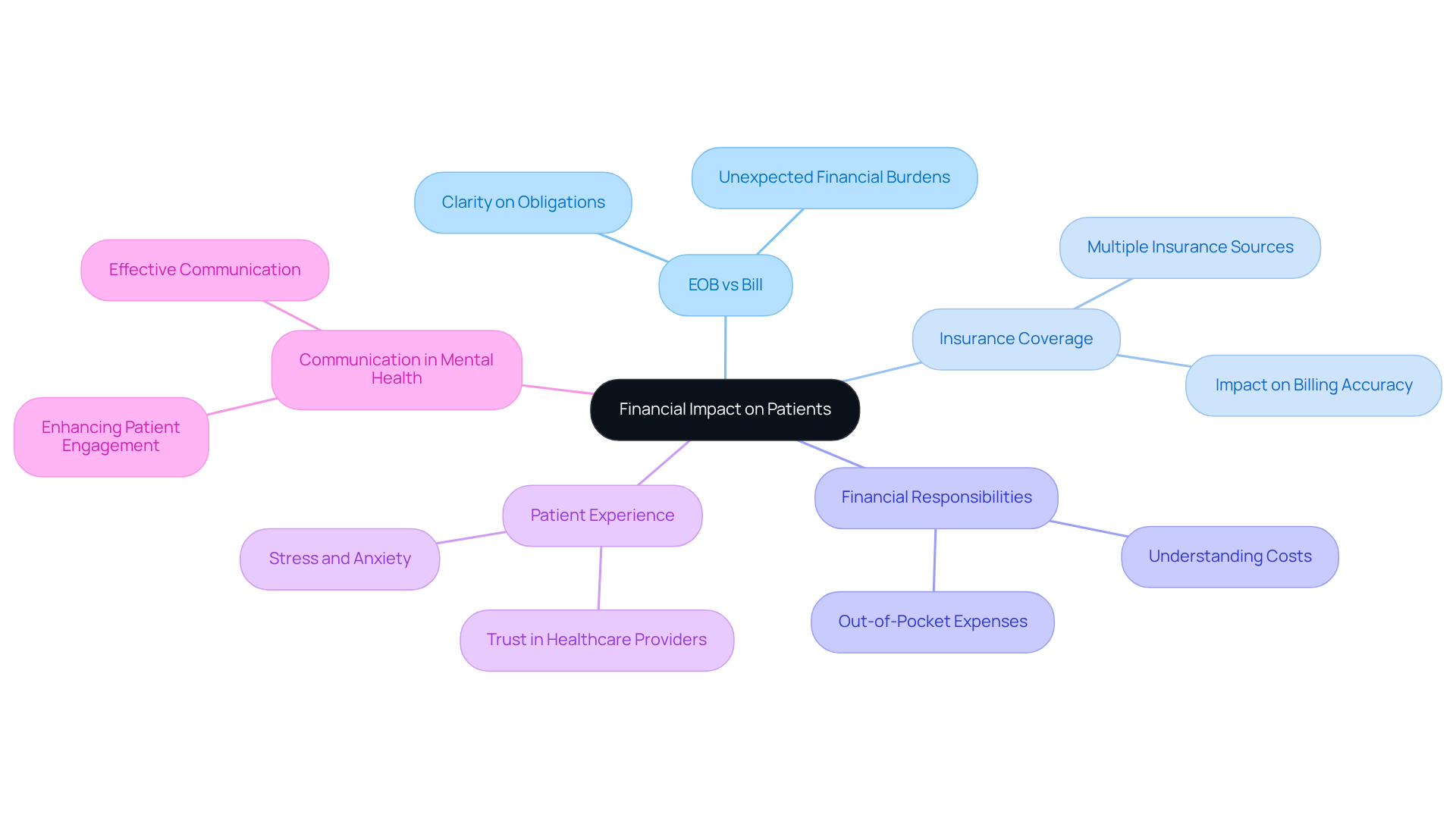
Understanding the monetary implications of EOB vs bill and medical charges is essential for shaping individuals’ perceptions of their healthcare experience. The comparison of EOB vs bill outlines the insurance coverage and the individual’s financial responsibilities, providing clarity on obligations prior to receiving a statement. This transparency can significantly alleviate anxiety and confusion regarding costs, fostering a more positive experience for individuals.
Conversely, a medical invoice reflects the actual amount owed, which may result in unexpected financial burdens if individuals lack clarity on their obligations as outlined when comparing EOB vs bill. For instance, if an individual receives an invoice that exceeds their expectations due to unmet deductibles or copays, it can lead to dissatisfaction and undermine trust in the healthcare provider.
In mental health facilities, where individuals may already be under significant stress, effective communication regarding monetary obligations through both EOBs and statements is essential. Ensuring that individuals fully comprehend their financial responsibilities not only enhances their overall experience but also fosters long-term trust and loyalty to the healthcare provider.
Address Discrepancies: Resolving EOB and Bill Conflicts
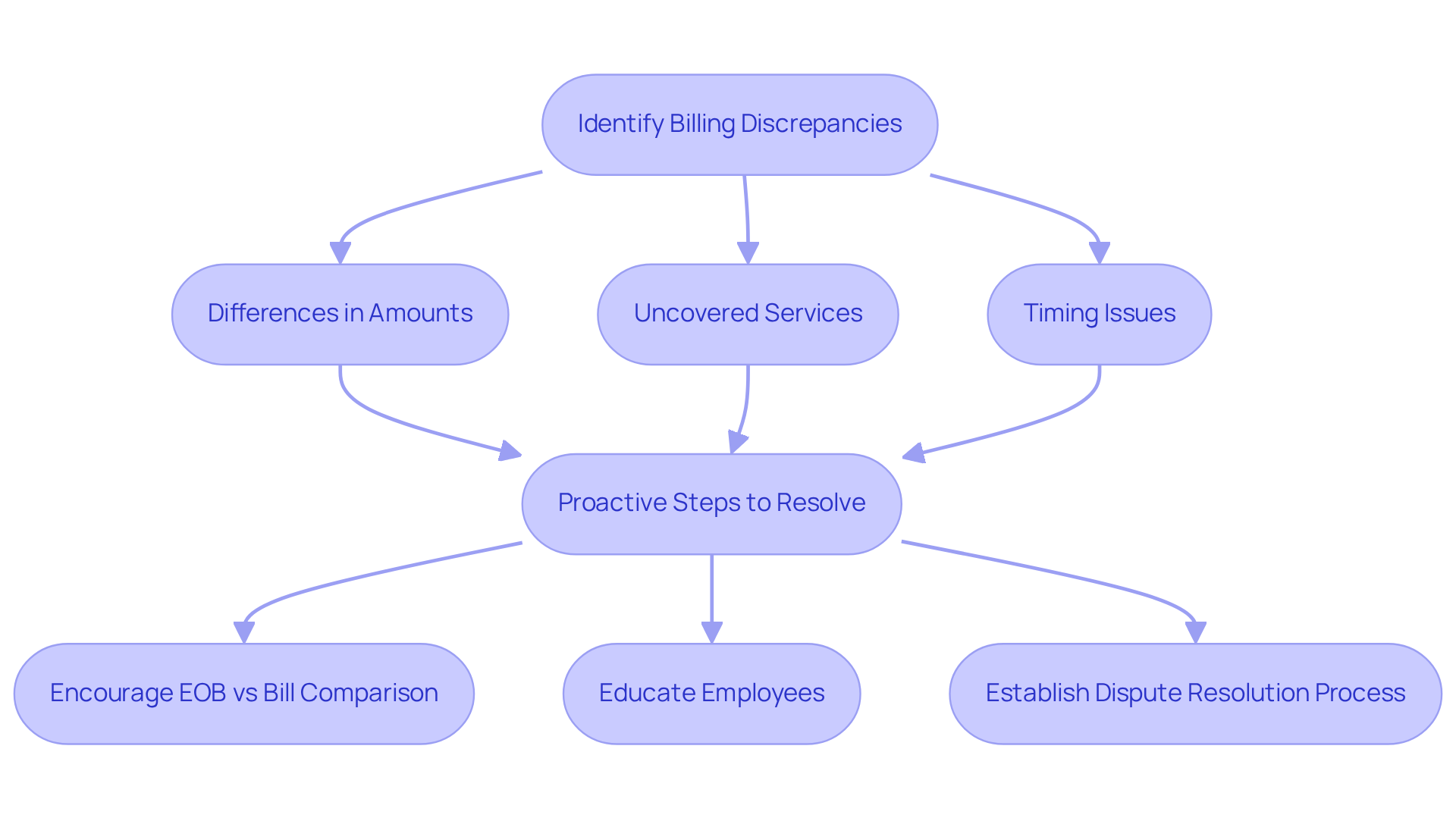
Billing discrepancies can undermine patient trust and complicate financial responsibilities. Discrepancies that occur in the EOB vs bill comparison and medical charges often arise from billing mistakes, incorrect coding, or misunderstandings about coverage. Common conflicts include:
- Differences in Amounts: The billed amount from the provider may not align with the patient responsibility indicated in the EOB.
- Uncovered Services: Services that individuals thought were included may instead show as out-of-pocket costs on their statements.
- Timing Issues: Patients might receive a statement before the EOB, which can lead to misunderstandings regarding their financial obligations.
Clinic owners must take proactive steps to resolve these conflicts:
- Encourage patients to thoroughly compare their EOB vs bill, as this helps identify discrepancies effectively.
- Ensure transparent communication by educating employees to clarify the distinctions between EOB vs bill, assisting individuals in grasping their monetary obligations.
- Establish a Dispute Resolution Process: Implement a clear process for addressing billing disputes, including guidance on how to contact the insurance company for clarification.
Proactively addressing discrepancies can significantly enhance client trust and satisfaction, leading to a smoother billing process. Given that approximately 80% of medical bills contain errors, ensuring clarity in billing practices is essential for maintaining financial stability in mental health clinics. Healthcare Partners Consulting offers personalized consultations to identify optimal administrative solutions, including effective denial management strategies that help clinics streamline operations and recover revenue. As Stacey LaCotti notes, improving customer experience through accurate billing practices is vital for patient retention and satisfaction. In the long run, clarity in billing practices not only safeguards revenue but also fosters patient loyalty.
Conclusion
Navigating the complexities of healthcare billing requires a clear understanding of the differences between an Explanation of Benefits (EOB) and a medical bill. The EOB and the medical bill each have unique roles; the EOB summarizes how insurance claims are processed, while the bill specifies what patients owe. Understanding these differences improves communication with clients and enhances their experience with financial responsibilities.
The article highlights key components of both documents, emphasizing the importance of clarity in billing practices. Confusion over billing can lead to significant misunderstandings for both clinic owners and patients. This erosion of trust can adversely affect patient retention and satisfaction. By encouraging proactive measures – such as educating staff and implementing dispute resolution processes – clinic owners can mitigate conflicts and foster a positive financial relationship with their clients.
Ultimately, understanding EOBs and bills is vital for ensuring transparency and trust in mental health care. Clinic owners are urged to prioritize clear communication and effective billing practices, as these elements significantly impact patient satisfaction and loyalty. Prioritizing clarity in billing practices is not just beneficial; it is essential for fostering lasting patient relationships and ensuring the sustainability of mental health clinics.
Frequently Asked Questions
What is an Explanation of Benefits (EOB)?
An Explanation of Benefits (EOB) is a document from health insurance companies that outlines the processing of medical claims. It includes information about the services provided, the amount charged, the insurance coverage applied, and the individual’s financial responsibility.
How does an EOB differ from a bill?
An EOB is not an invoice; it summarizes how the insurance company has processed a claim and what expenses are covered. In contrast, a bill is a statement from the healthcare provider detailing the actual charges the individual is responsible for after insurance adjustments.
Why is it important for mental health clinic owners to understand EOBs and bills?
Understanding EOBs and bills is crucial for clinic owners as it influences their communication with clients regarding financial responsibilities. It helps them track healthcare expenses and identify potential billing errors.
How can reviewing EOBs help in managing healthcare expenses?
Regularly reviewing EOBs allows clinic owners and individuals to keep track of healthcare expenses and identify discrepancies that may arise, such as prior balances or multiple service dates, which emphasizes the need for clear communication about these documents.
What can clinic owners do to enhance their understanding of EOBs?
Clinic owners can enhance their understanding of EOB terminology and layout to engage clients more effectively and ensure they are informed about their financial obligations. They are also encouraged to schedule consultations with Healthcare Partners Consulting for personalized administrative solutions.
How can saving EOBs be beneficial?
Saving EOBs for future reference can help individuals manage their financial responsibilities effectively and reinforce the importance of understanding EOBs in relation to the services offered by healthcare consulting firms.
What is the potential impact of understanding EOBs on client trust?
A thorough understanding of EOBs can significantly enhance client trust and satisfaction regarding the financial aspects of healthcare.