
Introduction
Mastering the intricacies of place of service (POS) codes is essential for healthcare providers seeking to optimize revenue cycle management. Accurate coding ensures compliance with payer regulations and significantly impacts reimbursement rates, making it vital for clinics’ financial health. This struggle often results in costly errors and claim denials. By addressing these challenges, practices can redirect their efforts towards improving patient outcomes.
Understand Place of Service Codes: Definition and Importance
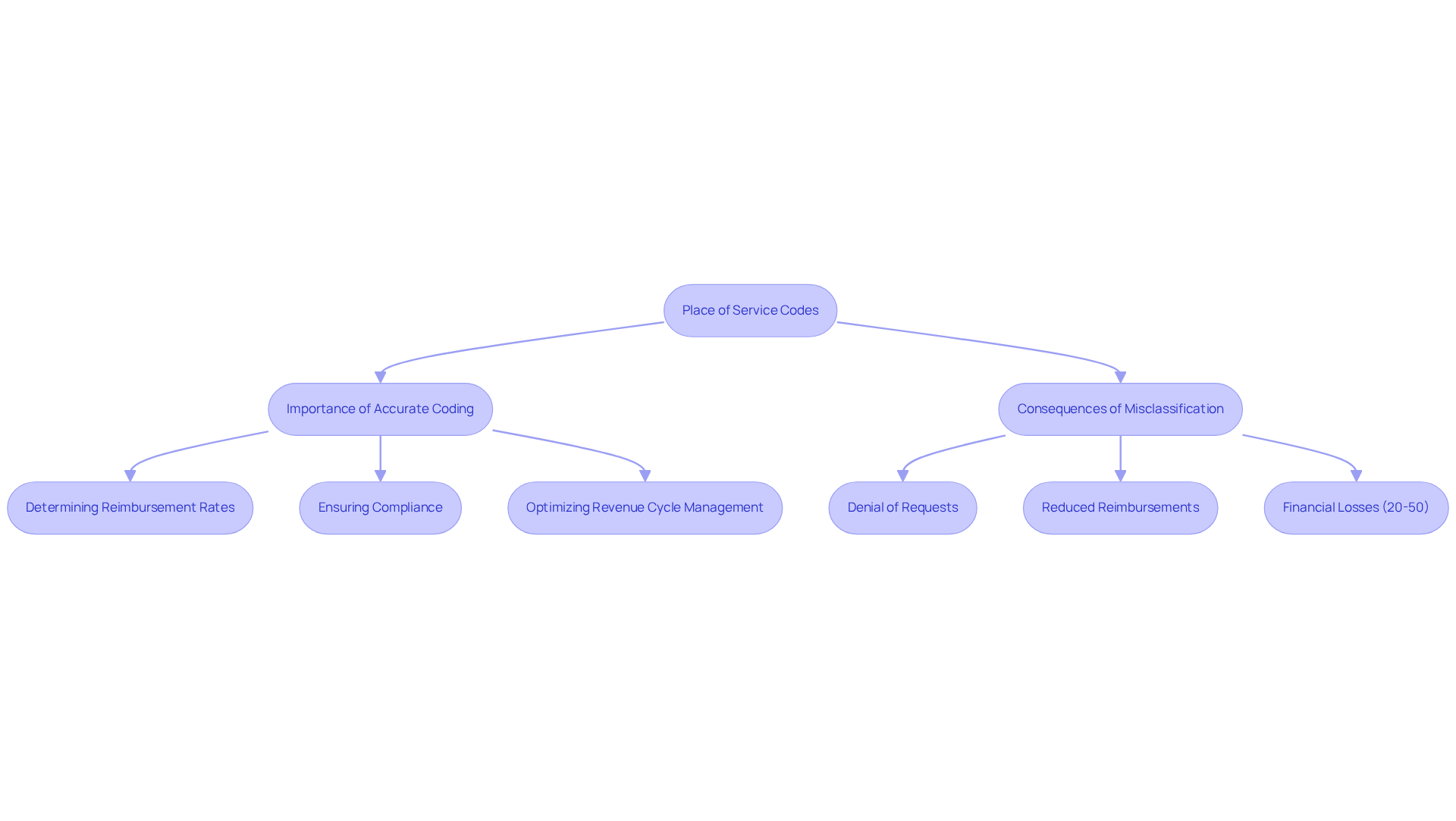
Place of service in medical billing identifiers are essential two-digit markers that indicate the location where healthcare activities are performed. These codes are essential for determining reimbursement rates and ensuring compliance with payer regulations. For instance, care provided in a physician’s office (POS 11) typically receives different reimbursement rates compared to those delivered in a hospital environment (POS 21). Misclassifying these services can lead to significant financial consequences, including denial of requests and reduced reimbursements, with potential losses ranging from 20% to 50%.
Accurate coding of the place of service in medical billing is essential, not just for regulatory compliance, but for optimizing revenue cycle management. Recent statistics reveal that improper coding related to the place of service in medical billing is a primary reason for denial of requests, underscoring the importance for healthcare providers to uphold accurate coding practices. Implementing a comprehensive validation process prior to submission can decrease denial rates by 20-30% and accelerate reimbursements by 15-25% within 30-90 days.
Healthcare Partners Consulting & Billing, LLC (HPC) prioritizes accurate coding of the place of service in medical billing as a critical element of effective revenue cycle management. Our adaptable service plans are customized to the scale of your practice and volume of submissions, ensuring that you receive the support you require. Case studies demonstrate the significance of proper POS usage. For instance, a healthcare practice that adopted a comprehensive coding guide reported a significant decrease in claim denials and improved cash flow. This emphasizes how understanding and utilizing the appropriate place of service in medical billing classifications can enhance billing precision and adherence, ultimately improving the financial well-being of a practice.
As a veteran-owned company with 39 years of experience, HPC is committed to helping practices optimize their billing processes. As of 2026, the Centers for Medicare & Medicaid Services (CMS) continues to emphasize the importance of accurate classification of place of service in medical billing, with updates to the POS set reflecting ongoing changes in healthcare delivery. Providers must remain updated on these changes related to the place of service in medical billing to ensure they are utilizing the correct classifications, as discrepancies can lead to audits and financial setbacks. Prioritizing accurate POS coding not only safeguards revenue cycles but also allows healthcare providers to concentrate on delivering high-quality patient care.
Differentiate Between Facility and Non-Facility POS Codes
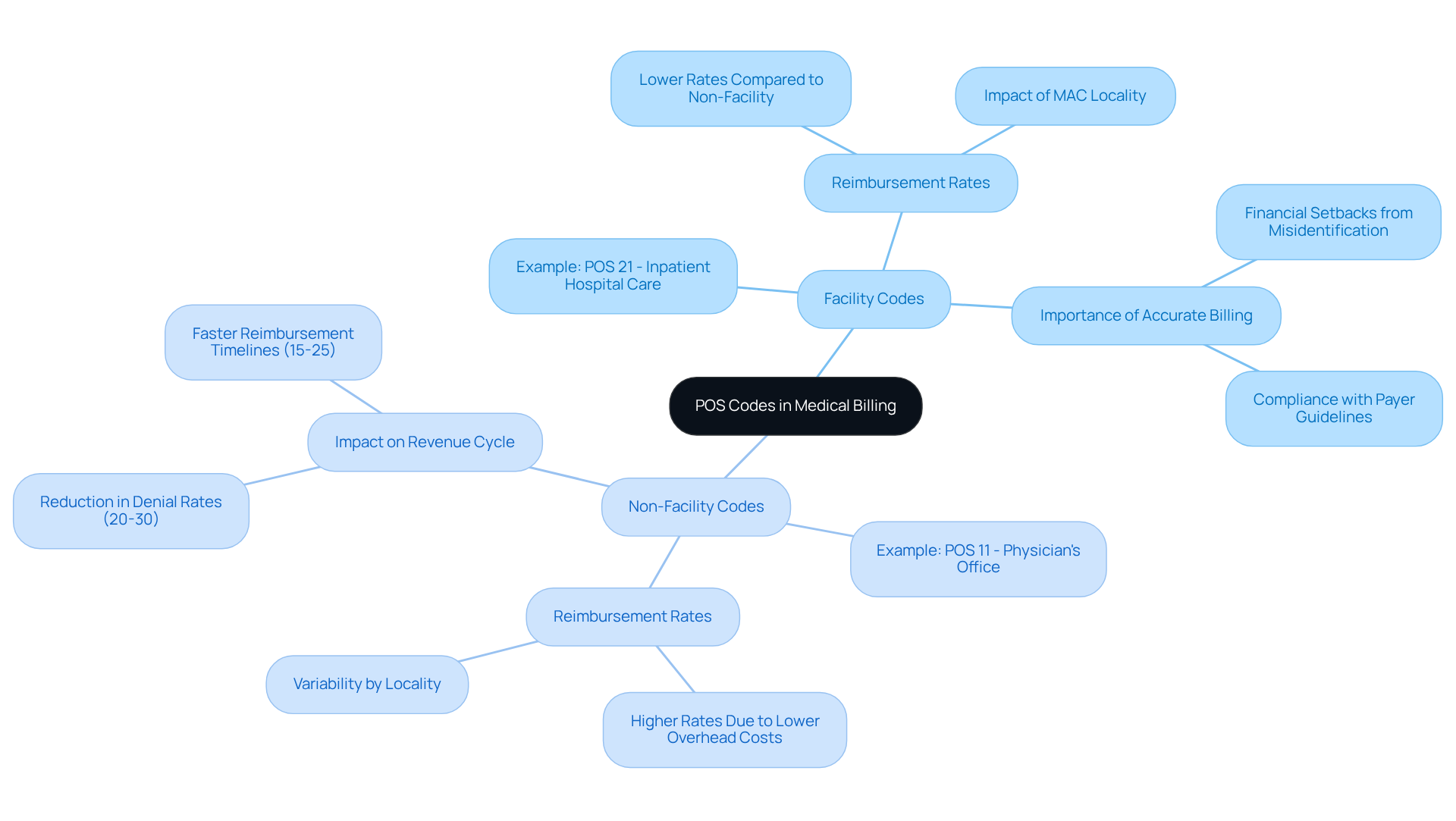
The distinction between facility and non-facility codes is essential for accurate billing, particularly regarding the place of service in medical billing within healthcare settings. Facility POS codes are assigned for care delivered in institutional environments, such as hospitals or skilled nursing facilities, while non-facility codes pertain to assistance offered in independent locations, like a physician’s office or a patient’s home.
For example:
- POS 21 is utilized for inpatient hospital care.
- In contrast, POS 11 is for activities conducted in a physician’s office.
Understanding these distinctions is crucial for determining the place of service in medical billing. Reimbursement rates for facility services are typically lower than those for non-facility services. In fact, the reimbursement for a moderate-complexity office visit (HCPCS reference 99214) in a non-facility setting can be significantly higher than in a facility setting, with rates differing by locality.
It’s vital for providers to use the correct identifiers related to the place of service in medical billing to maximize reimbursement and stay compliant with payer guidelines. Misidentifying the place of service in medical billing can lead to significant financial setbacks for providers, highlighting the need for precise billing practices.
Research has demonstrated that precise utilization of the place of service in medical billing identifiers can enhance accuracy in submissions and potentially lower denial rates by 20-30%. This accuracy not only improves submission success but also safeguards revenue streams, improving overall revenue cycle performance.
As reimbursement structures evolve, particularly with the 2026 updates, the financial impact of correct assignment of place of service in medical billing codes becomes increasingly critical for healthcare providers. Incorporating scorecard-driven adjustments linked to accuracy of submissions, denial rates, and days in accounts receivable can further enhance operational rigor and ensure sustainable financial practices.
Additionally, Healthcare Partners Consulting offers personalized administrative support to help mental health practices streamline their billing processes, address underpayments, and manage aging claims effectively. To assess your practice’s profitability, consider taking our quick quiz. It offers personalized recommendations to enhance efficiency and billing accuracy, ultimately maximizing profitability.
Select the Correct POS Code for Accurate Billing
Selecting the correct place of service in medical billing identifier is critical, as errors can lead to costly claim denials. Providers must assess the place of service in medical billing where care was delivered; for instance, therapy conducted in a clinic should be designated as POS 11, while services in a hospital setting should utilize POS 21. Staying current with CMS guidelines and payer-specific requirements is essential for compliance.
Key Steps for Accurate POS Code Selection:
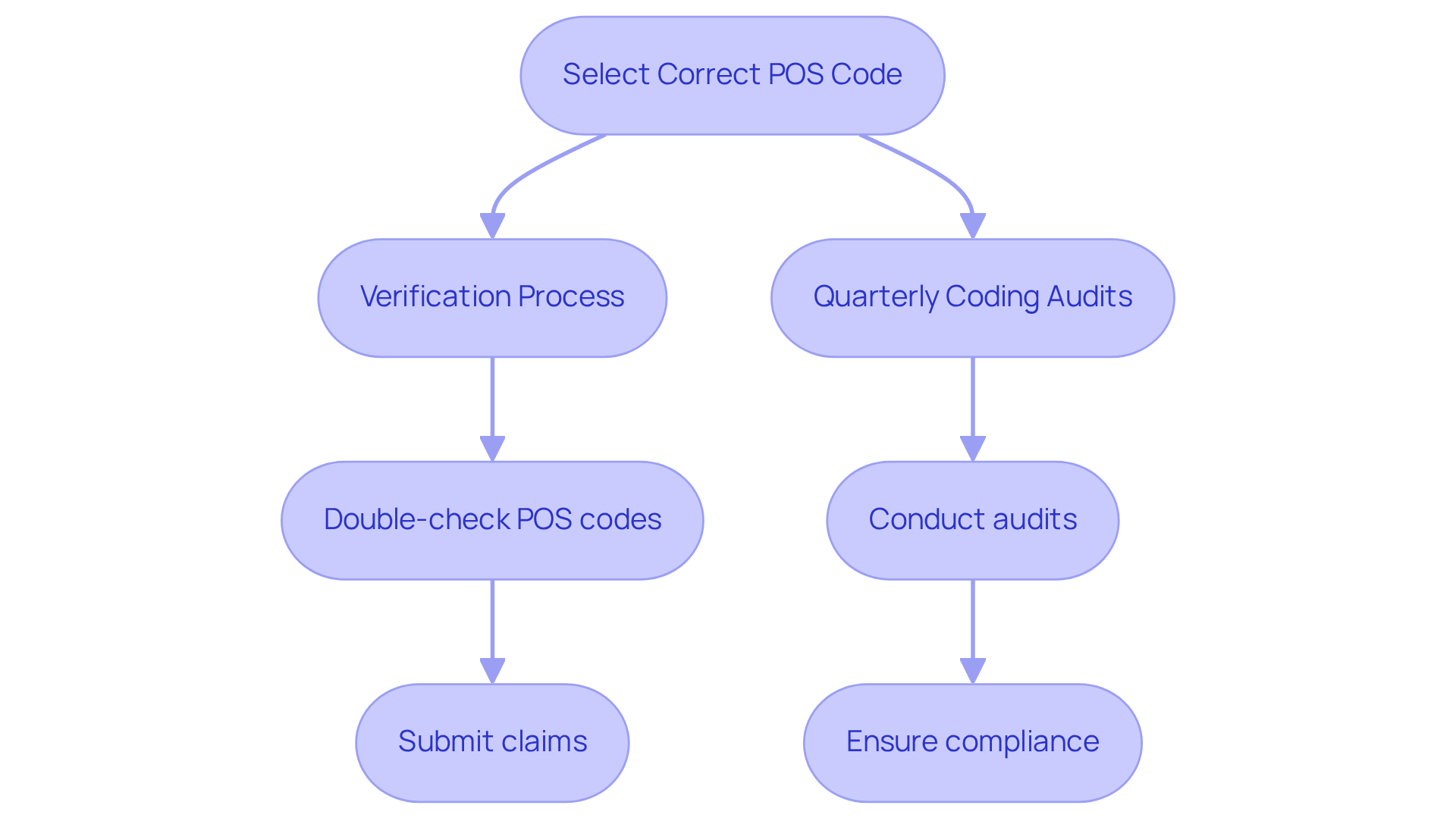
- Implement a verification process within the billing workflow to allow staff to double-check selected POS codes before claim submission. This proactive approach can lead to a 20-30% reduction in denials and facilitate faster reimbursement cycles, typically within 15-25 days, thereby enhancing overall revenue cycle efficiency.
- Conduct quarterly coding audits to ensure ongoing accuracy and compliance, further protecting practices from potential financial implications such as denials and audit risks.
Additionally, optimizing patient statements and addressing underpayments, unprocessed claims, and aging claims are essential for enhancing billing efficiency. Without effective denial management, clinics risk losing revenue that is rightfully theirs, jeopardizing their financial stability.
Avoid Common Mistakes in POS Code Usage
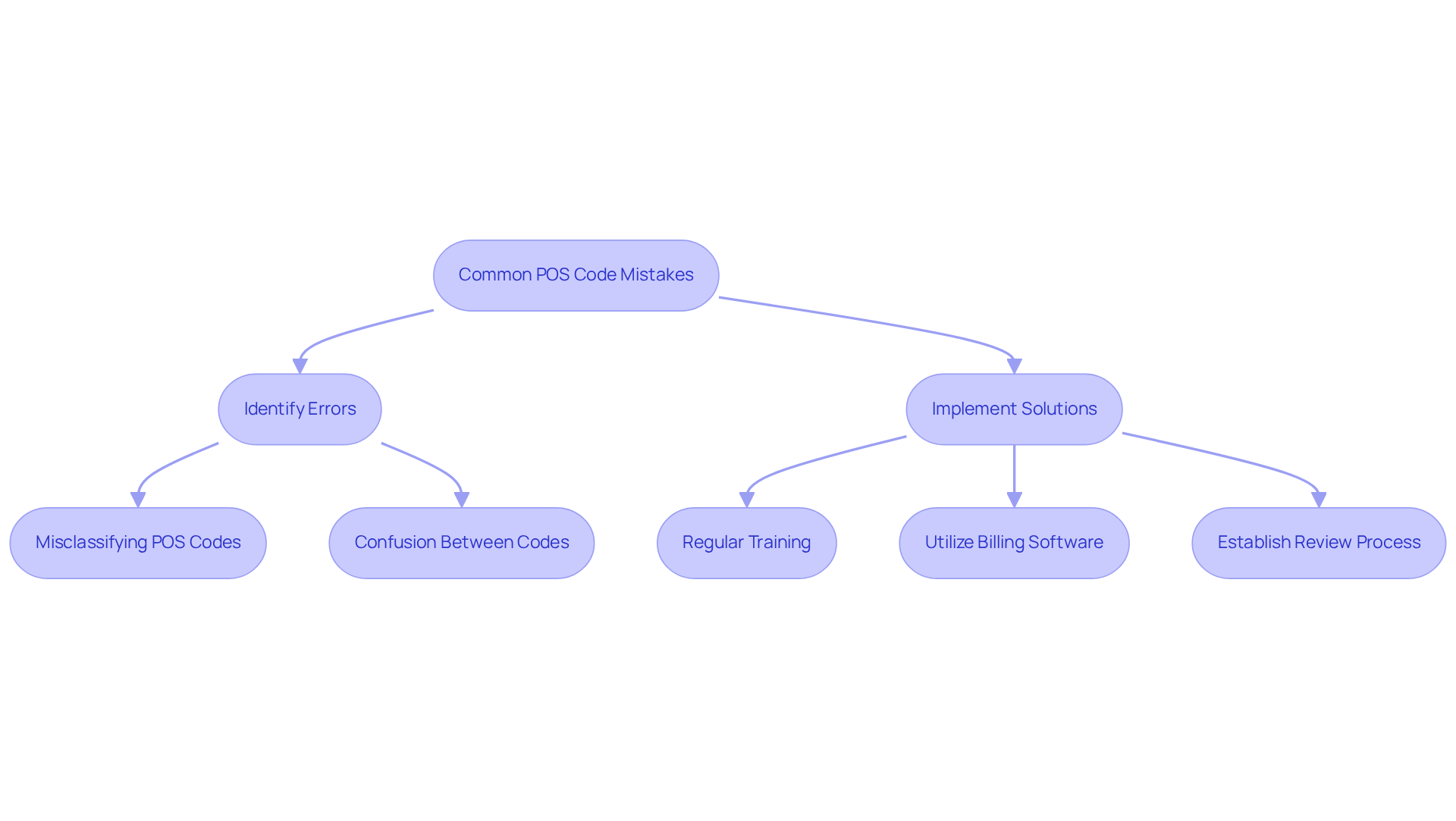
Errors in POS system usage can severely impact a clinic’s financial stability. Misclassifying the place of service in medical billing, such as using POS 02 (telehealth) when the service was actually provided in a non-facility setting, can lead to substantial reimbursement discrepancies. Statistics indicate that 22% of denials stem from misusing the place of service in medical billing designations for telehealth, especially the confusion between POS 02 and POS 10, highlighting the need for precision. Additionally, 18% of denials arise from misclassification of care settings, which often involves confusion about the place of service in medical billing, including POS 11 (Office) and POS 22 (Outpatient Hospital).
To reduce these errors, healthcare providers should conduct regular training sessions for billing staff, ensuring they remain informed about the latest CMS POS updates for 2026. Utilizing billing software that prompts for correct POS codes can further enhance accuracy. Establishing a comprehensive review process for submissions prior to submission is crucial; practices that audit their submissions regularly can lower denial rates by 20-30% and achieve quicker reimbursements of 15-25% within 30-90 days.
Additionally, it’s crucial to optimize patient statements and tackle issues like underpayments and aging invoices to boost billing efficiency. Healthcare Partners Consulting & Billing, LLC (HPC) offers personalized consultations to help identify optimal administrative solutions tailored to your practice’s needs. By mapping your current workflow during a 30-minute call, our experts can guide you toward the services that will move the needle fastest.
Fostering a culture of accuracy and compliance not only minimizes the risk of claim denials but also strengthens overall revenue cycle management. For instance, a Florida physician’s office that corrected its POS coding errors and retrained staff saw a 70% reduction in denial rates within two months, recovering nearly $18,000 in lost revenue. Ultimately, accurate coding of the place of service in medical billing is not just a compliance issue; it is a critical factor in safeguarding a clinic’s financial future.
Conclusion
Accurate place of service coding is not just a regulatory requirement; it is a cornerstone of financial health in healthcare practices. Mastering the correct place of service codes enhances revenue cycle management, enabling providers to secure necessary financial support for patient care while reducing administrative burdens.
This article highlights the importance of:
- Distinguishing between facility and non-facility codes
- Selecting the correct POS codes
- Avoiding common pitfalls that lead to costly errors
Implementing a robust verification process, conducting regular audits, and fostering a culture of compliance are essential strategies for reducing claim denials and optimizing cash flow. This attention to detail in billing directly translates to substantial financial improvements.
In summary, mastering place of service coding is crucial for maintaining financial stability and operational efficiency in healthcare practices. By prioritizing accurate coding, providers can protect their revenue streams and empower themselves to concentrate on delivering exceptional patient care. For expert guidance on optimizing billing processes, consider consulting with Healthcare Partners Consulting & Billing, LLC (HPC) at info@hpcbilling.com or call 888-517-4992.
Frequently Asked Questions
What are place of service codes in medical billing?
Place of service codes are essential two-digit markers that indicate the location where healthcare activities are performed, which are crucial for determining reimbursement rates and ensuring compliance with payer regulations.
Why are place of service codes important?
They are important because they affect reimbursement rates; for example, care provided in a physician’s office (POS 11) typically receives different rates compared to care delivered in a hospital (POS 21). Misclassifying these services can lead to significant financial consequences, including denial of requests and reduced reimbursements.
What are the potential financial consequences of misclassifying place of service codes?
Misclassifying place of service codes can lead to financial losses ranging from 20% to 50%, including denial of requests and reduced reimbursements.
How can accurate coding of place of service improve revenue cycle management?
Accurate coding is essential for regulatory compliance and optimizing revenue cycle management. Implementing a comprehensive validation process prior to submission can decrease denial rates by 20-30% and accelerate reimbursements by 15-25% within 30-90 days.
What role does Healthcare Partners Consulting & Billing, LLC (HPC) play in place of service coding?
HPC prioritizes accurate coding of place of service in medical billing as a critical element of effective revenue cycle management, offering customizable service plans to support practices based on their scale and volume of submissions.
Can you provide an example of the impact of proper place of service coding?
A healthcare practice that adopted a comprehensive coding guide reported a significant decrease in claim denials and improved cash flow, highlighting the importance of proper POS usage.
What is the significance of staying updated on place of service coding changes?
Staying updated is crucial as the Centers for Medicare & Medicaid Services (CMS) emphasizes accurate classification of place of service, with ongoing updates reflecting changes in healthcare delivery. Discrepancies can lead to audits and financial setbacks.
How does accurate place of service coding benefit healthcare providers?
Prioritizing accurate POS coding safeguards revenue cycles and allows healthcare providers to focus on delivering high-quality patient care.