

Introduction
Navigating the complexities of medical billing collection rates is crucial for healthcare practices aiming for financial stability and operational efficiency. As clinics face the challenges of reimbursement processes, mastering these rates empowers providers to prioritize patient care over administrative burdens.
Navigating the complexities of reimbursement processes presents significant challenges for healthcare practices. By implementing effective collection strategies, practices can enhance their financial health and focus on patient care.
This tutorial provides actionable insights and best practices to enhance revenue recovery and improve patient outcomes.
Define Medical Billing Collection Rates and Their Importance
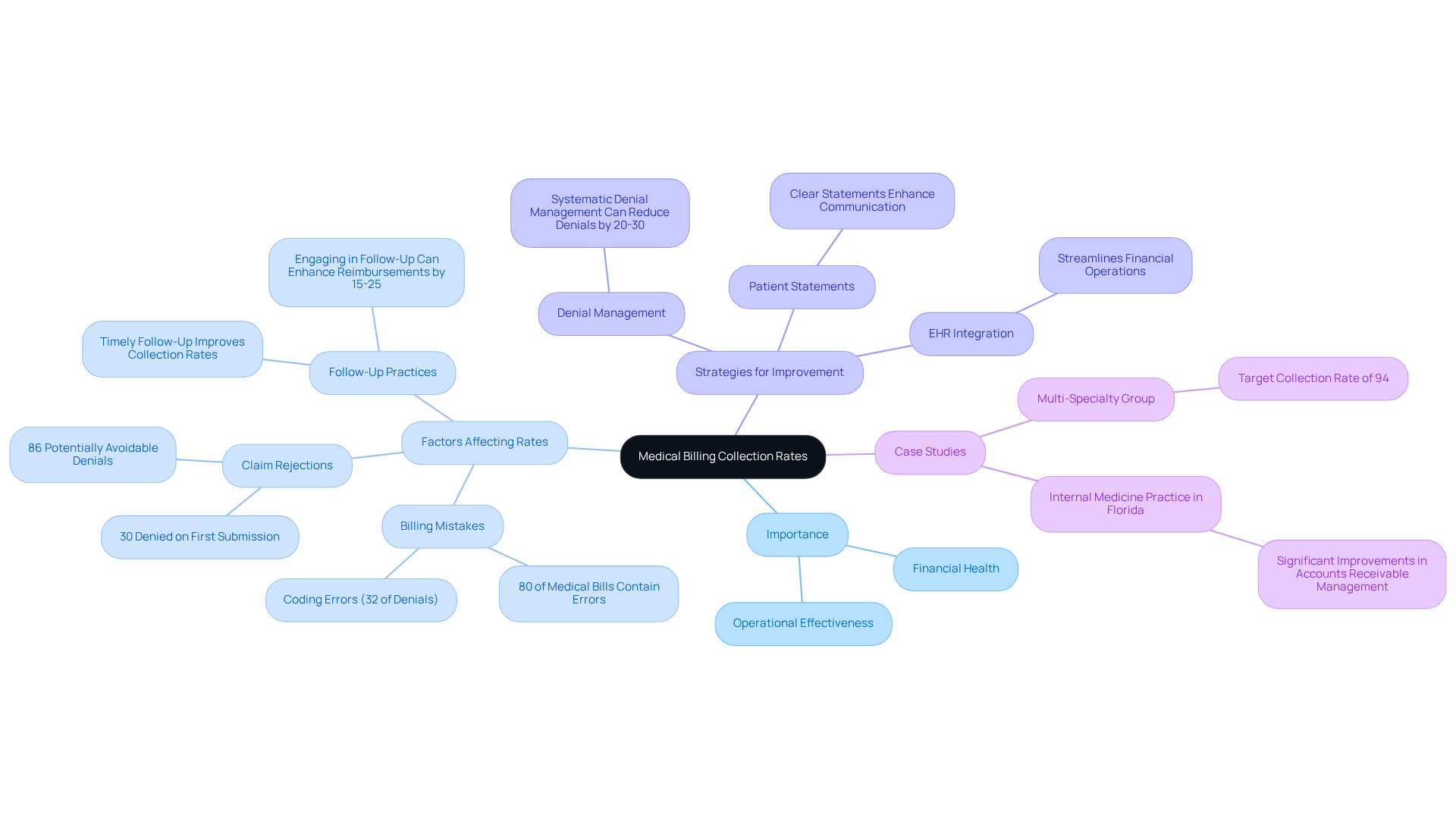
Understanding medical service reimbursement percentages is vital for assessing the financial health of healthcare practices. These percentages indicate the portion of invoiced services that healthcare providers successfully obtain from both patients and insurers, serving as essential indicators of a practice’s financial well-being and operational effectiveness. A higher retrieval percentage reflects effective billing methods and a robust revenue cycle, while lower percentages often signal issues such as billing mistakes, claim rejections, or inadequate follow-up on outstanding payments.
For instance, approaches that implement systematic denial management processes can reduce claim denials by 20-30%, significantly enhancing collection rates. Furthermore, prompt follow-up on unpaid claims is crucial; organizations that engage in this can see quicker reimbursements, with enhancements of 15-25% within 30-90 days.
About 30% of insurance claims are denied on the first submission, and coding errors account for 32% of these denials. This underscores the necessity for mental health clinics to adopt precise coding practices and effective revenue collection processes to mitigate revenue loss. Moreover, an astonishing 80% of medical invoices in the U.S. contain mistakes, highlighting the importance of accuracy in financial documentation to prevent unnecessary monetary challenges.
Effective management of patient statements is crucial in addressing underpayments and aging claims. By focusing on generating clear and concise patient statements, clinics can enhance communication with patients regarding their financial responsibilities. This proactive strategy helps reduce underpayments and ensures timely resolution of unprocessed and aging claims, thereby improving the average medical billing collection rates.
By integrating EHR and management platforms such as TherapyNotes and SimplePractice, clinics can streamline their financial operations effectively. Case studies demonstrate the impact of optimized invoicing methods. For example, a multi-specialty group with annual permitted charges of $8,000,000 aimed for a success percentage of 94%, which could potentially boost their yearly revenue by $560,000. Similarly, an internal medicine facility in Florida reported notable enhancements in accounts receivable management, showcasing the effectiveness of organized invoicing processes.
Ultimately, enhancing revenue recovery processes not only secures financial stability but also elevates the standard of care provided to patients.
Differentiate Between Gross and Net Collection Rates
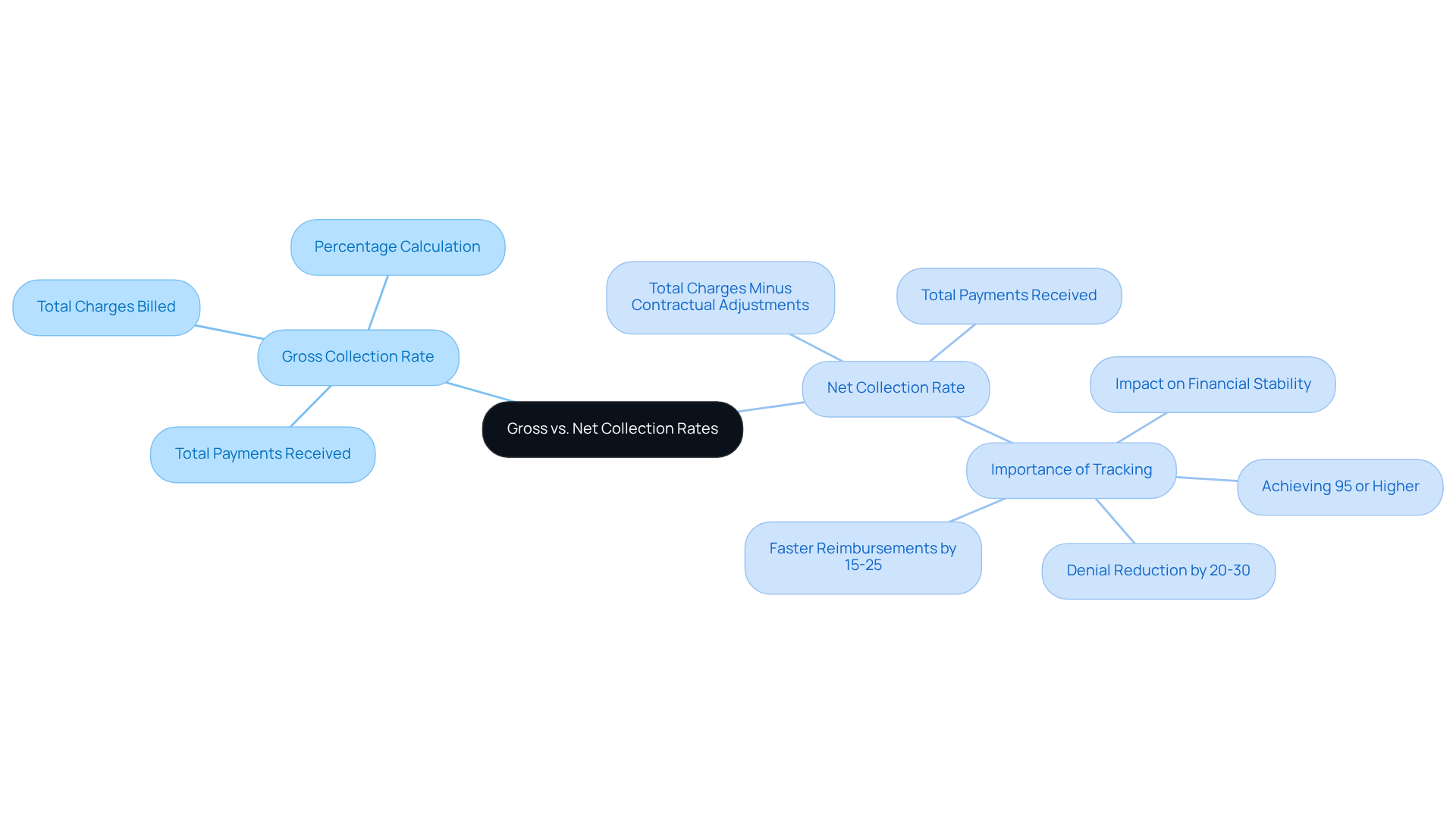
Understanding the distinction between gross performance and net revenue is crucial for healthcare organizations aiming to optimize their financial health. The gross performance figure is determined by dividing total payments received by total charges billed, represented as a percentage. This metric overlooks contractual adjustments and write-offs, which can obscure the true financial landscape. In contrast, the net revenue figure provides a more precise depiction of an organization’s income by incorporating these adjustments. It is calculated by dividing total payments received by total charges minus contractual adjustments. Achieving a net revenue of 95% or higher is generally considered a strong indicator that the organization is capturing most of its expected income.
Grasping these differences is essential for healthcare providers, as low net revenue can lead to financial instability and hinder organizational growth. For instance, organizations that implement robust tracking of net revenue can identify specific inefficiencies, leading to targeted improvements in financial performance. Case studies indicate that enhancing net revenue can decrease denial occurrences by 20-30% and accelerate reimbursements by 15-25% within 30-90 days. By implementing scorecard-driven adjustments focused on claims accuracy and denial rates, practices can showcase operational efficiency and improve their revenue cycle management. Ultimately, a focus on net revenue not only strengthens financial performance but also enhances the overall quality of care provided to patients.
Calculate Your Net Collection Rate: Step-by-Step Guide
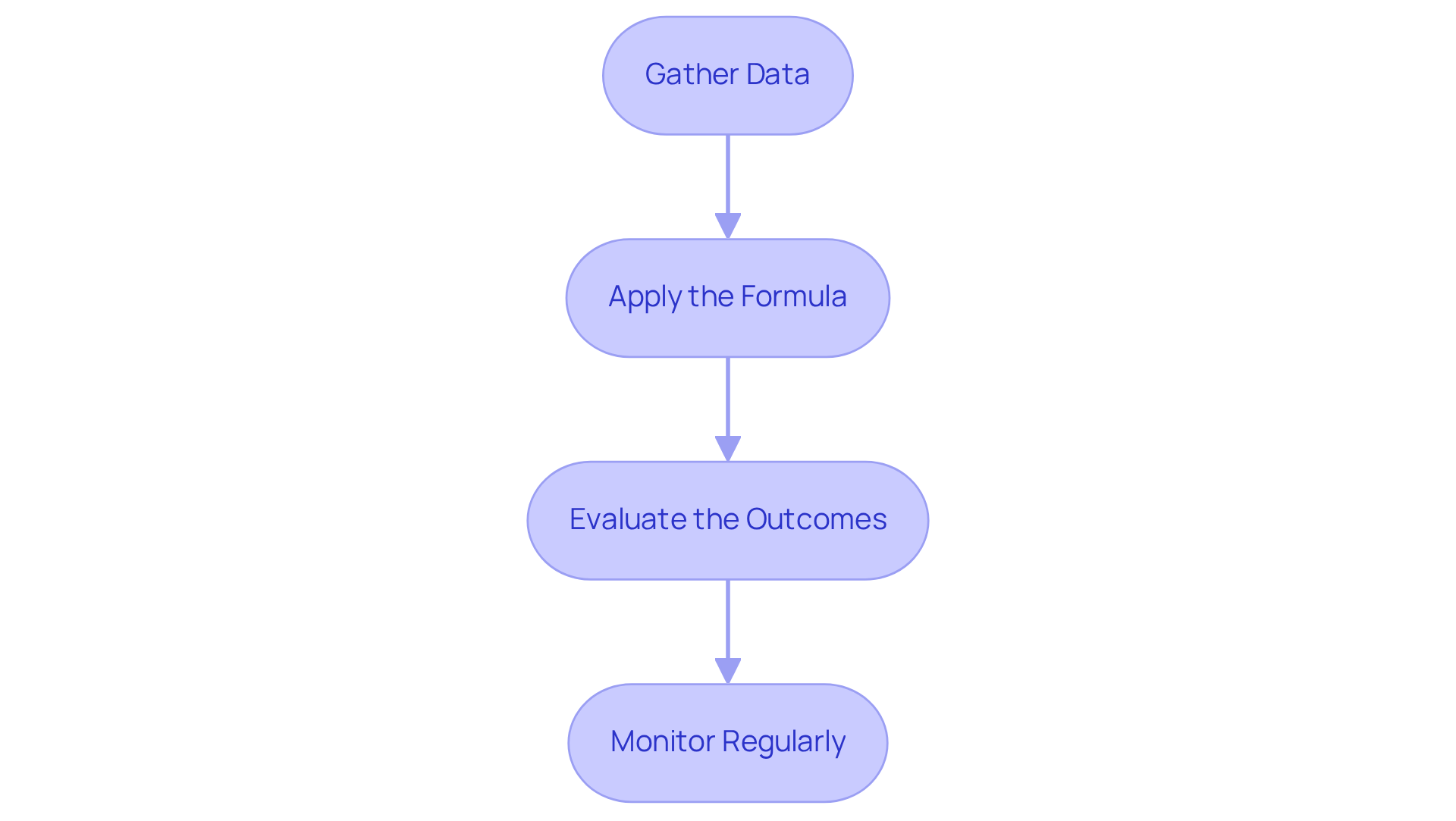
Calculating your net collection rate is essential for identifying financial inefficiencies that could hinder your practice’s profitability. To calculate your net collection rate, follow these steps:
- Gather Data: Collect the total payments received, total charges billed, and total contractual adjustments for a specific time period.
- Apply the Formula: Use the formula:
Net Collection Rate = (Total Payments Received) / (Total Charges Billed – Total Contractual Adjustments) × 100%. - Evaluate the Outcomes: Striving for a net retrieval percentage of 95% or higher is crucial for optimal performance. Should your rate fall below this threshold, it is essential to investigate potential issues like billing errors or claim denials, as these can greatly affect cash flow. For instance, improving your collection rate from 90% to 95% can generate an additional $200,000 in annual revenue.
- Monitor Regularly: Perform this calculation quarterly to track your organization’s financial health. Regular monitoring enables you to recognize trends and make necessary adjustments to your financial processes, ensuring that your practice remains financially stable. By consistently monitoring and improving your net collection rate, you can safeguard your practice’s financial future and enhance overall revenue.
Identify Factors Affecting Medical Billing Collection Rates
Understanding the factors that influence average medical billing collection rates is crucial for mental health clinics. Several key elements can significantly impact these rates:
- Insurance Denials: High denial rates can drastically reduce collection rates. Nearly 15% of all claims submitted to private payers are initially denied, often due to incorrect demographics or missing insurance information. Understanding denial reasons is vital for practices to improve billing processes and revenue efficiency.
- Patient Payments: The financial ability of patients directly influences revenue outcomes. With the rise of high-deductible health plans, many patients face increased out-of-pocket costs, leading to delayed payments. Practices must evaluate patient demographics and adjust payment policies, including flexible plans, to enhance average medical billing collection rates.
- Coding Accuracy: Precise coding is crucial for maximizing revenue. Medical coding errors can lead to claim denials and delayed payments, significantly affecting revenue. A sequential coding system can prevent duplication and ensure accurate billing, thus improving cash flow.
- Payer Mix: The variety of insurance accepted by a practice can influence revenue rates. A diverse payer mix can improve average medical billing collection rates by reducing reliance on a single payer, which strengthens financial stability. Practices should regularly review their payer contracts to optimize revenue potential.
- Administrative Efficiency: Streamlined administrative processes are vital for enhancing collection efforts. Investing in technology, such as automated invoicing systems and real-time eligibility verification, can lead to enhanced financial outcomes. For instance, practices focusing on front-desk training and scorecard-driven improvements in claims accuracy have seen a 20-30% reduction in denials and faster reimbursements of 15-25% within 30-90 days.
Addressing these factors not only enhances average medical billing collection rates but also enables clinics to focus more effectively on patient care.

Implement Strategies to Improve Your Collection Rates
Improving average medical billing collection rates requires a strategic approach that addresses common pitfalls and enhances operational efficiency.
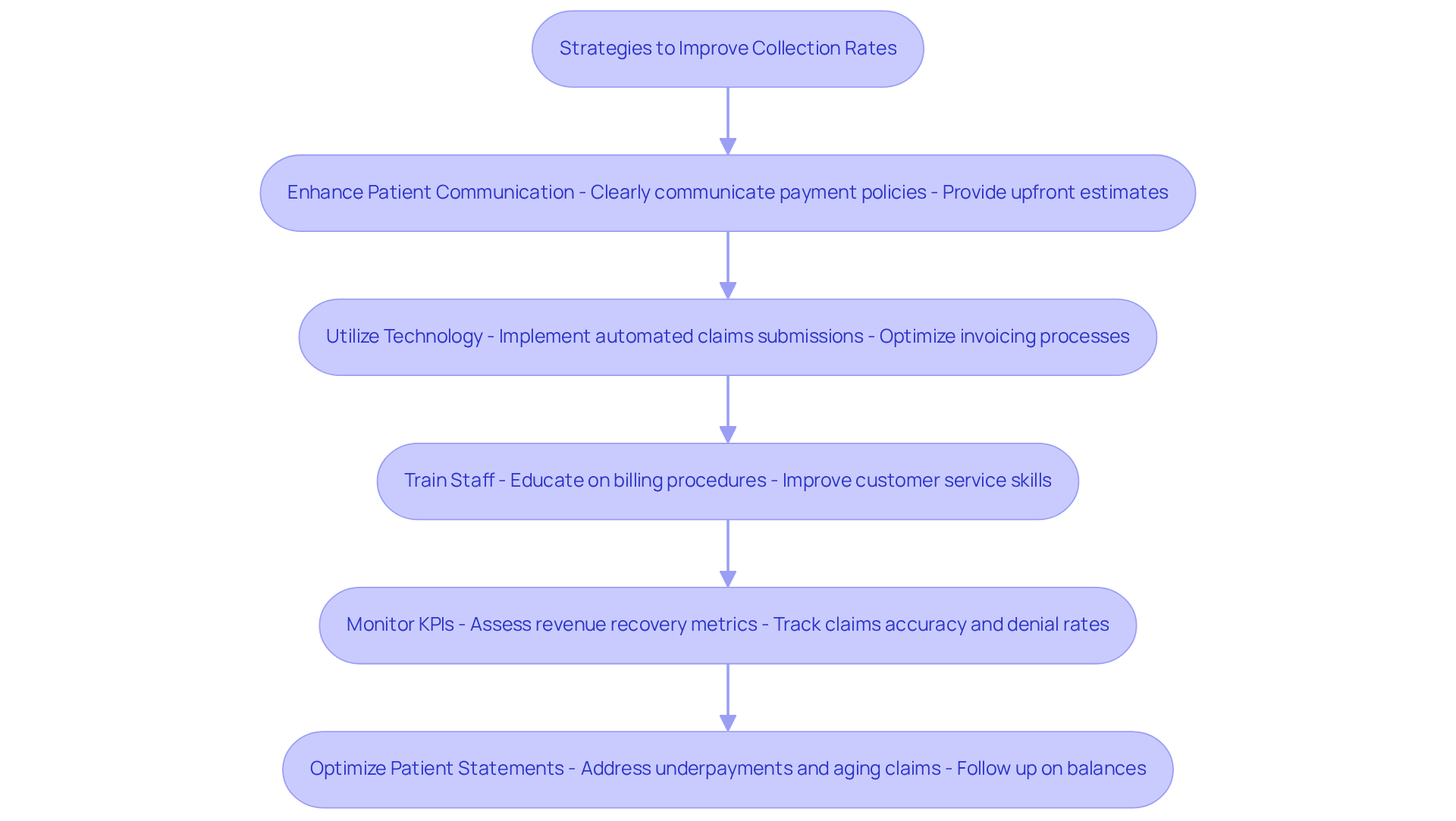
- Enhance Patient Communication: Clearly communicating payment policies and expectations to patients is essential. Providing upfront estimates helps reduce confusion and improves payment compliance. When you communicate effectively, it builds trust and encourages patients to pay on time.
- Utilize Technology: Implementing software that automates claims submissions and tracks payments can minimize mistakes and optimize the invoicing process. Investing in reliable invoicing systems can lead to faster reimbursements, often resulting in an improvement of average medical billing collection rates by 15-25% in just 30-90 days.
- Train Staff: Regularly educating your administrative personnel on billing procedures and customer service skills enhances patient interactions and revenue efforts. Well-trained teams can significantly improve retrieval success and contribute to a more efficient revenue cycle.
- Monitor Key Performance Indicators (KPIs): Regularly assessing your revenue recovery metrics, denial statistics, and days in accounts receivable helps identify trends and areas for enhancement. Using scorecards to track claims accuracy and denial rates can demonstrate operational strength and reduce denials by 20-30%.
- Optimize Patient Statements: Addressing underpayments, unprocessed claims, and aging claims is crucial for maintaining cash flow. Implementing a robust system for generating patient statements and following up on balances can significantly improve your collection rates.
Ultimately, the implementation of these strategies can transform your billing process, resulting in significant improvements in average medical billing collection rates and overall financial health.
Conclusion
Mastering medical billing collection rates is crucial for healthcare practices striving for financial health and operational efficiency. Focusing on gross and net collection rates enables clinics to pinpoint improvement areas and implement strategies that allow healthcare providers to prioritize patient care over administrative tasks.
Key insights from the article highlight the importance of:
- Accurate coding
- Effective patient communication
- Utilization of technology to streamline billing processes
Addressing factors such as:
- Insurance denials
- Patient payment capabilities
- Administrative efficiency
can significantly enhance collection rates. The step-by-step guide for calculating net collection rates serves as a practical tool for clinics to monitor their financial performance and make informed adjustments.
Mastering average medical billing collection rates is significant not just for financial metrics; it also directly influences the quality of patient care. By adopting a compliance-first approach and leveraging the expertise of Healthcare Partners Consulting & Billing, LLC (HPC), healthcare providers can enhance their revenue cycle management, ensuring they remain focused on delivering exceptional patient care while achieving financial stability. Engaging with HPC can be a pivotal step in navigating the complexities of revenue cycle management, ultimately enhancing patient care.
Frequently Asked Questions
What are medical billing collection rates and why are they important?
Medical billing collection rates indicate the percentage of invoiced services that healthcare providers successfully obtain from patients and insurers. They are essential for assessing a practice’s financial health and operational effectiveness, with higher rates reflecting effective billing methods and a robust revenue cycle.
How can healthcare practices improve their collection rates?
Practices can improve collection rates by implementing systematic denial management processes, which can reduce claim denials by 20-30%, and by promptly following up on unpaid claims, potentially enhancing reimbursements by 15-25% within 30-90 days.
What are common issues that lead to lower collection rates?
Common issues include billing mistakes, claim rejections, and inadequate follow-up on outstanding payments. Approximately 30% of insurance claims are denied on the first submission, with coding errors accounting for 32% of these denials.
Why is accuracy in financial documentation important in medical billing?
Accuracy is crucial because about 80% of medical invoices in the U.S. contain mistakes. Ensuring precise coding practices and effective revenue collection processes helps mitigate revenue loss and prevents unnecessary monetary challenges.
How can patient statements impact collection rates?
Effective management of patient statements enhances communication regarding financial responsibilities, helping to reduce underpayments and ensuring timely resolution of unprocessed and aging claims, which improves average medical billing collection rates.
What role do EHR and management platforms play in financial operations?
Integrating EHR and management platforms, such as TherapyNotes and SimplePractice, can streamline financial operations, leading to optimized invoicing methods and improved accounts receivable management.
What is the difference between gross and net collection rates?
Gross collection rates are calculated by dividing total payments received by total charges billed, ignoring contractual adjustments and write-offs. In contrast, net collection rates account for these adjustments, providing a more accurate depiction of an organization’s income.
What is considered a strong net revenue figure for healthcare organizations?
A net revenue of 95% or higher is generally considered a strong indicator that an organization is capturing most of its expected income.
How can tracking net revenue benefit healthcare organizations?
Tracking net revenue helps identify specific inefficiencies, leading to targeted improvements in financial performance. Enhancing net revenue can decrease denial occurrences by 20-30% and accelerate reimbursements by 15-25% within 30-90 days.
What is the overall impact of focusing on net revenue for healthcare practices?
Focusing on net revenue strengthens financial performance and enhances the overall quality of care provided to patients.