

Introduction
California’s mental health clinics are grappling with significant operational challenges that jeopardize their capacity to provide quality care. High administrative burdens and complex billing processes overwhelm these facilities, diverting essential time and resources from patient interactions. This article examines the critical need for medical billing companies, detailing how strategic partnerships can alleviate these burdens, enhance operational efficiency, and empower healthcare providers to concentrate on patient care. Neglecting this vital support poses significant risks, and clinics must adopt strategies to remain competitive in an increasingly demanding landscape.
Identify Key Challenges Facing Mental Health Clinics in California
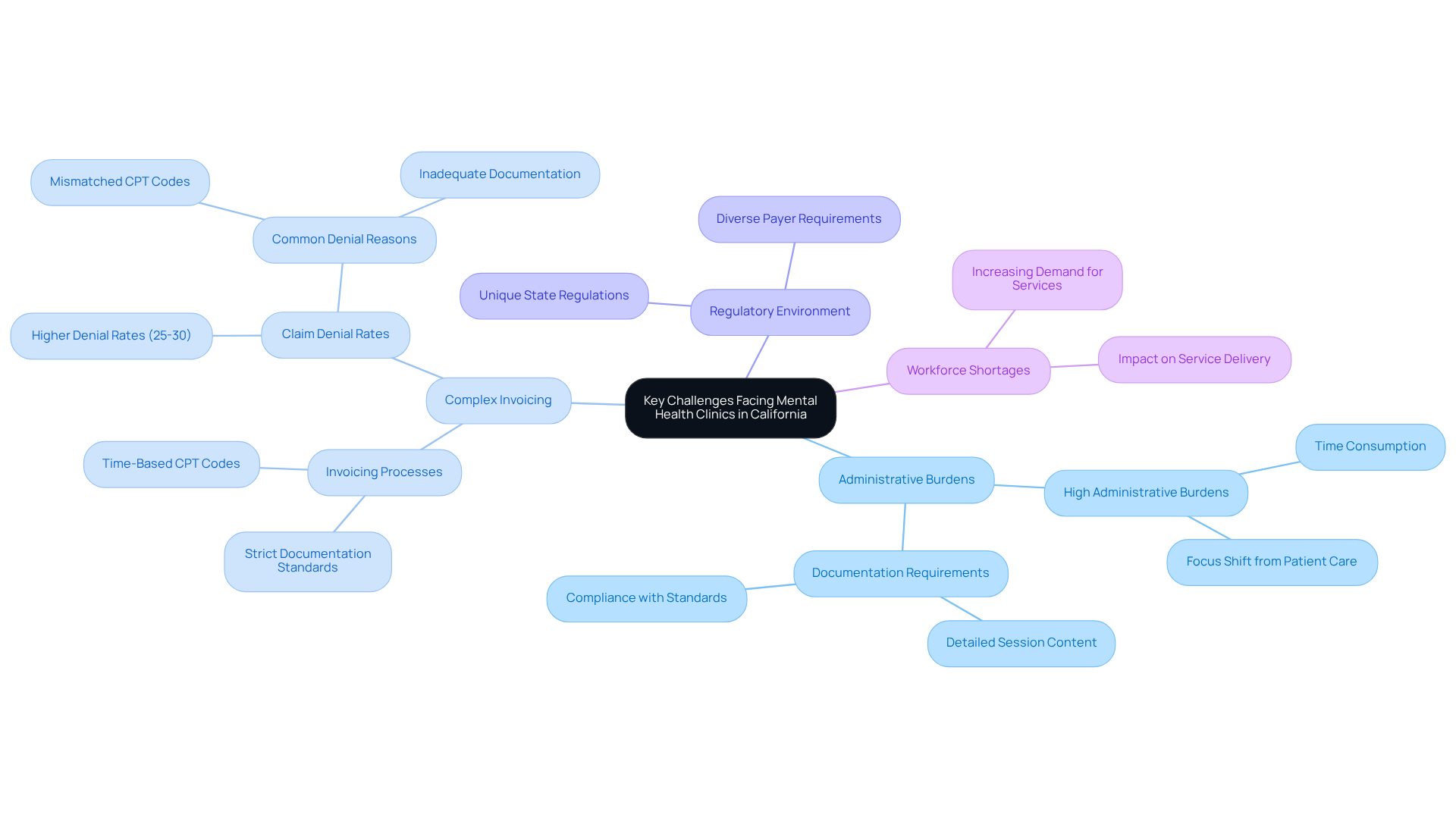
California’s mental health clinics are grappling with operational challenges that threaten their ability to provide quality care. High administrative burdens, complex invoicing processes, and limited resources create a significant barrier to effective patient care. Documentation, coding, and insurance verification consume substantial time. This detracts from the primary focus on patient care. The state’s unique regulatory environment and diverse payer requirements further complicate payment practices.
For instance, mental wellness billing frequently entails time-based CPT codes and strict documentation standards that vary from general medical billing. This complexity can result in higher claim denials, with behavioral claims facing denial rates of 25-30%, in contrast to 8-12% in general medicine. Such issues can postpone reimbursements, straining the financial stability of medical facilities.
Furthermore, the persistent crisis regarding psychological well-being in California, worsened by workforce shortages and increasing demand for services, heightens the pressure on facilities to function effectively while ensuring high-quality care. Consequently, healthcare facilities are actively seeking ways to streamline administrative processes and improve operational efficiency.
Healthcare Partners Consulting is here to help you navigate these challenges with tailored consultations that pinpoint the best administrative solutions for your practice. Addressing these challenges is not just beneficial; it is imperative for the future of mental health services in California.
Explore Benefits of Partnering with Medical Billing Companies
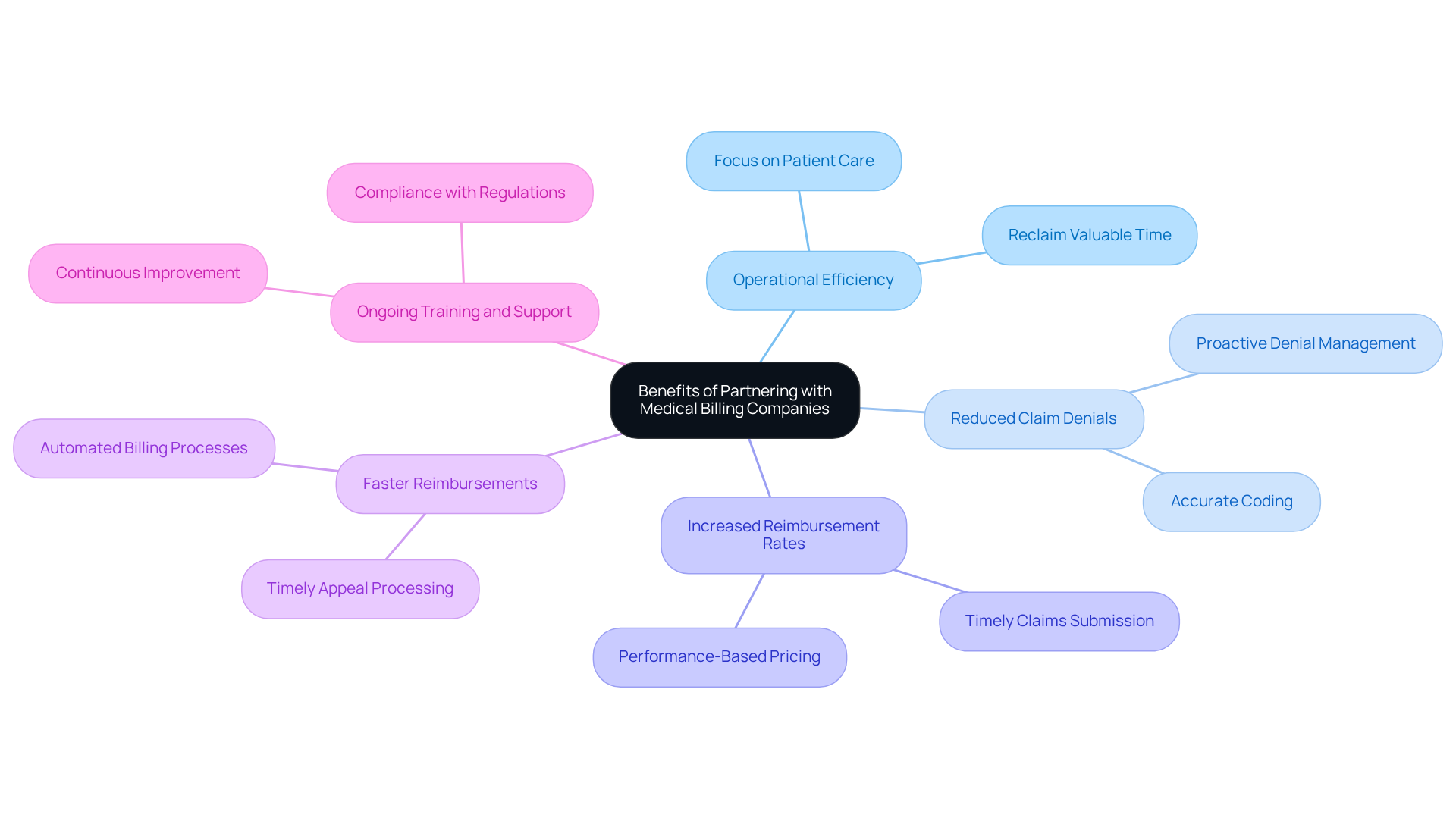
Collaborating with a medical billing company California, like Healthcare Partners Consulting & Billing, LLC (HPC), can significantly transform the operational efficiency of psychological clinics in the state. HPC specializes in navigating the complexities of mental health claims, significantly reducing claim denials and increasing reimbursement rates. Clinics that outsource financial tasks to a medical billing company California can reclaim valuable time. This allows healthcare providers to focus on delivering quality patient care instead of managing administrative duties.
Additionally, HPC employs cutting-edge technology and proven methodologies to improve the accuracy and efficiency of billing processes. Their denial management services ensure that appropriate denials are swiftly appealed, recovering revenue that healthcare facilities have earned. This proactive strategy significantly accelerates reimbursement cycles and improves cash flow, which is vital for the financial well-being of psychological practices. Clinics adopting these services frequently see faster reimbursements thanks to timely appeal processing and remittance reconciliation.
Moreover, these collaborations offer ongoing training and support, helping healthcare facilities stay compliant with the ever-changing healthcare regulations and payer requirements. By leveraging HPC’s expertise, clinics can not only enhance their financial performance but also ensure a greater focus on patient care.
Examine Strategic Advantages of Outsourcing Billing Services
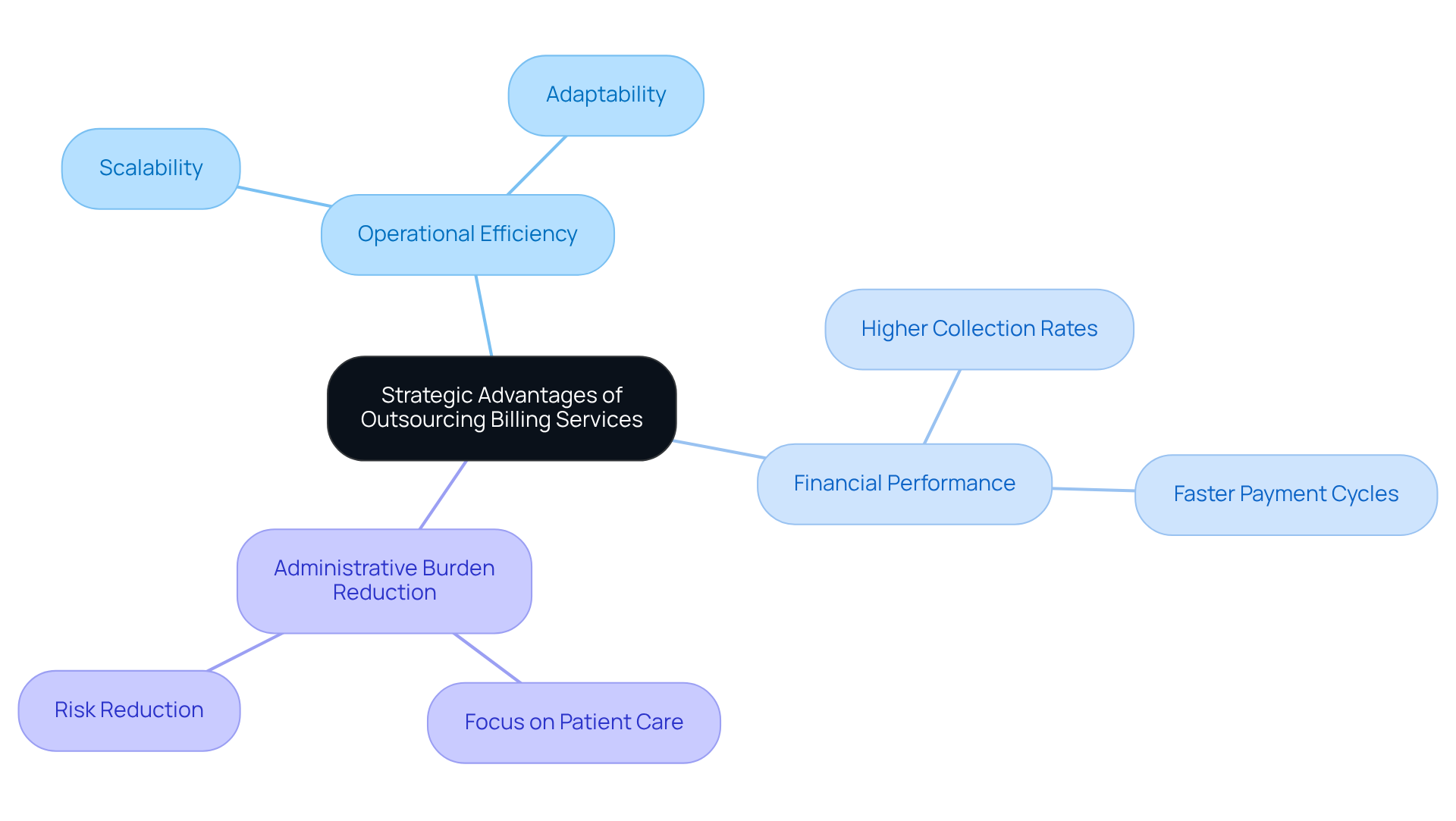
Outsourcing invoicing services can significantly enhance the operational efficiency of mental health practices. One of the primary benefits is the ability to scale operations without incurring the costs and time associated with hiring additional in-house staff. This scalability enables clinics to better manage fluctuating patient volumes and adapt to changing regulatory environments. Furthermore, specialized revenue cycle management companies like Healthcare Partners Consulting & Billing, LLC (HPC) often achieve higher collection rates and faster payment cycles compared to in-house teams, leading to improved financial performance. For example, practices that shifted to outsourced financial management reported an increase in net collections from 75-85% to 92-98%, which can lead to significant revenue growth.
Additionally, outsourcing reduces the administrative burden on clinical staff, enabling them to focus more on patient interactions rather than paperwork. With the expertise of financial professionals at HPC, clinics can navigate complex regulations and reduce the risk of audits and penalties. For example, practices that faced denial rates above 12% saw significant improvements after outsourcing, with denial rates dropping to as low as 2-8%.
Moreover, the transition to outsourced financial management can be structured to maintain cash flow, with many practices experiencing collections improvement by the second month and stabilization by the third month. HPC, a veteran-owned firm with 39 years of expertise, also provides a swift quiz to evaluate your practice’s profitability, offering tailored suggestions to improve efficiency and invoicing precision. This structured approach not only enhances operational efficiency but also supports the overall goal of providing high-quality patient care. Ultimately, these advantages position behavioral practices for sustained growth and success in a competitive landscape.
Assess Risks of Not Partnering with a Medical Billing Company
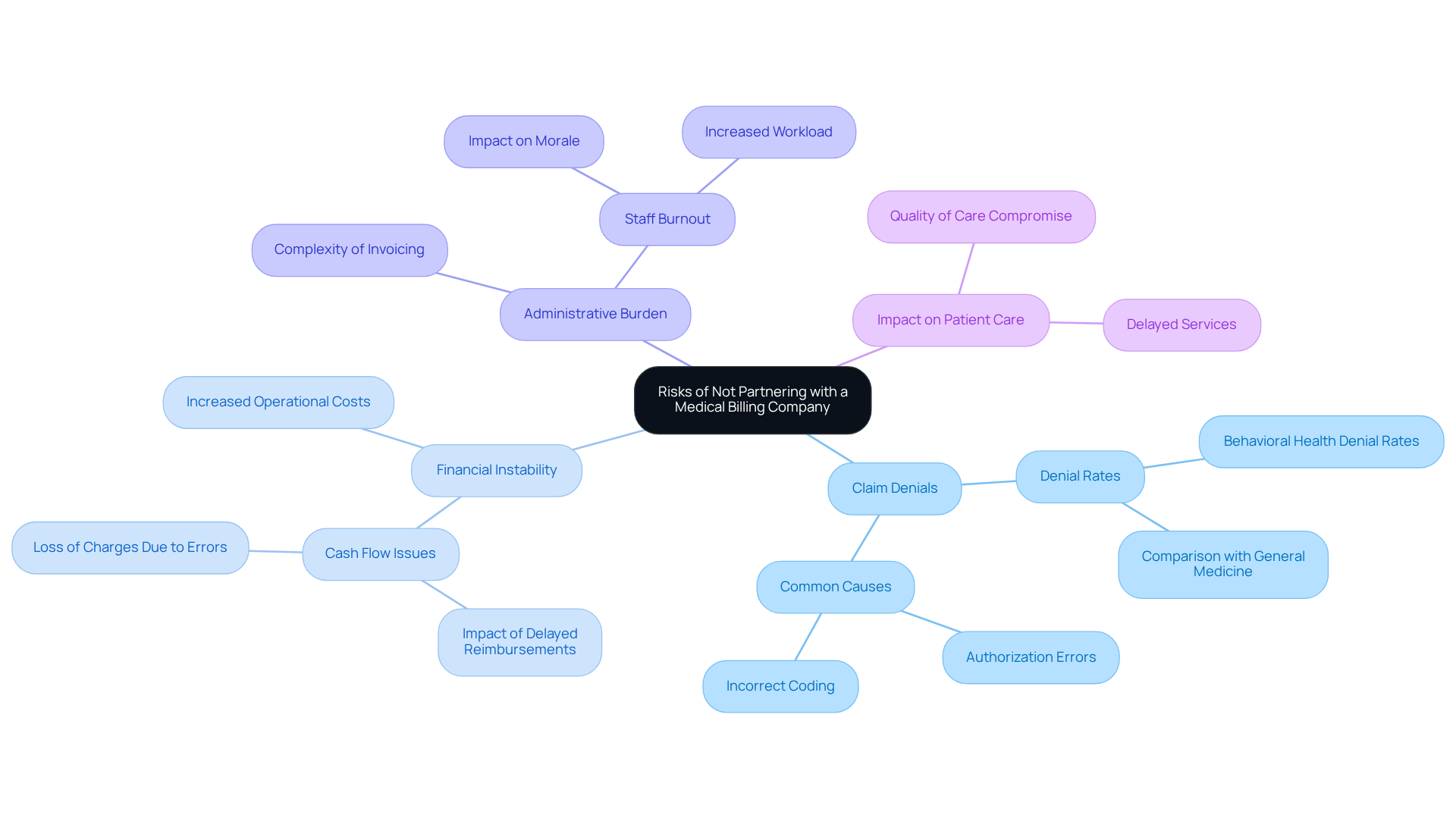
The absence of collaboration with a medical invoicing firm exposes psychological care clinics to substantial risks that threaten their operational viability. A primary concern is the increased risk of claim denials and delayed reimbursements, leading to cash flow issues and financial instability. Clinics managing invoicing internally often lack the expertise needed to navigate mental wellness invoicing complexities, resulting in mistakes that can trigger audits and compliance issues. For instance, behavioral health claims face denial rates of 15 to 25 percent, compared to 8 to 12 percent in general medicine, largely due to subjective medical necessity and strict prior authorization requirements.
Additionally, the administrative burden of invoicing can cause staff burnout and lower morale, compromising patient care. A case study showed that a 32-bed residential substance use disorder facility in Ohio lost 18 percent of charges due to preventable invoicing errors, highlighting the financial consequences of poor practices. In a landscape of rising demand for mental health services, clinics that do not streamline payment processes risk falling behind, unable to provide timely and effective care. Moreover, timely submission deadlines for claims range from 90 to 180 days from the date of service, emphasizing the need for effective practices.
Therefore, partnering with a specialized medical billing company in California, such as Healthcare Partners Consulting & Billing, LLC (HPC), is crucial for maintaining quality care and operational efficiency. HPC provides personalized consultations to help clinics find the best administrative solutions for their needs, allowing them to focus on delivering quality patient care. To learn how HPC can assist your practice, schedule a meeting by calling 888-517-4992 or emailing info@hpcbilling.com.
Conclusion
Mental health clinics in California are increasingly challenged by administrative burdens that detract from patient care. The complexities of billing, coupled with high administrative burdens, divert attention from what truly matters: the well-being of patients. Partnering with a specialized medical billing company, such as Healthcare Partners Consulting & Billing, LLC (HPC), allows clinics to alleviate these pressures, enabling healthcare providers to focus on delivering quality care while ensuring compliance with the intricate regulations governing mental health services.
The article highlights several key benefits of outsourcing billing services, including:
- Improved operational efficiency
- Reduced claim denials
- Enhanced cash flow
With HPC’s expertise, clinics can effectively navigate the complexities of mental health billing, ultimately leading to faster reimbursements and a more streamlined administrative process. This partnership not only supports financial stability but also empowers healthcare providers to prioritize patient interactions over paperwork, fostering a more effective care environment.
In conclusion, the role of effective medical billing in supporting mental health clinics in California is critical. As the demand for mental health services continues to rise, clinics must adapt by embracing solutions that enhance operational efficiency and compliance. By collaborating with a trusted medical billing partner, such as HPC, mental health practices can position themselves for success, ensuring they remain focused on their mission to provide high-quality care. Engaging with HPC may not just enhance billing efficiency; it could redefine the quality of care clinics provide.
Frequently Asked Questions
What are the main challenges facing mental health clinics in California?
Mental health clinics in California face high administrative burdens, complex invoicing processes, limited resources, and a unique regulatory environment that complicates payment practices.
How do administrative tasks impact patient care in mental health clinics?
Administrative tasks such as documentation, coding, and insurance verification consume substantial time, detracting from the primary focus on patient care.
What is the difference in claim denial rates between behavioral health and general medicine?
Behavioral health claims face denial rates of 25-30%, while general medicine claims have denial rates of 8-12%.
How do complex billing processes affect financial stability for mental health facilities?
The complexity of billing processes can lead to higher claim denials, which may postpone reimbursements and strain the financial stability of medical facilities.
What factors are contributing to the crisis in psychological well-being in California?
Workforce shortages and increasing demand for mental health services are contributing to the crisis in psychological well-being in California.
What solutions are healthcare facilities seeking to address these challenges?
Healthcare facilities are actively seeking ways to streamline administrative processes and improve operational efficiency to better manage the challenges they face.
How can Healthcare Partners Consulting assist mental health clinics?
Healthcare Partners Consulting offers tailored consultations to help clinics navigate challenges and identify the best administrative solutions for their practices.