

Introduction
Patient account aging reports serve as essential instruments for healthcare providers, enabling effective management of overdue invoices and fostering financial stability. By leveraging practice management software to generate these reports, providers can gain critical insights into their revenue cycle, allowing them to prioritize collections and enhance cash flow. This complexity often leads to inefficiencies in managing patient accounts, prompting the need for healthcare providers to streamline processes to prioritize patient care. Streamlining this process is crucial for maintaining a focus on patient care amidst growing administrative demands.
Understand Patient Account Aging Reports
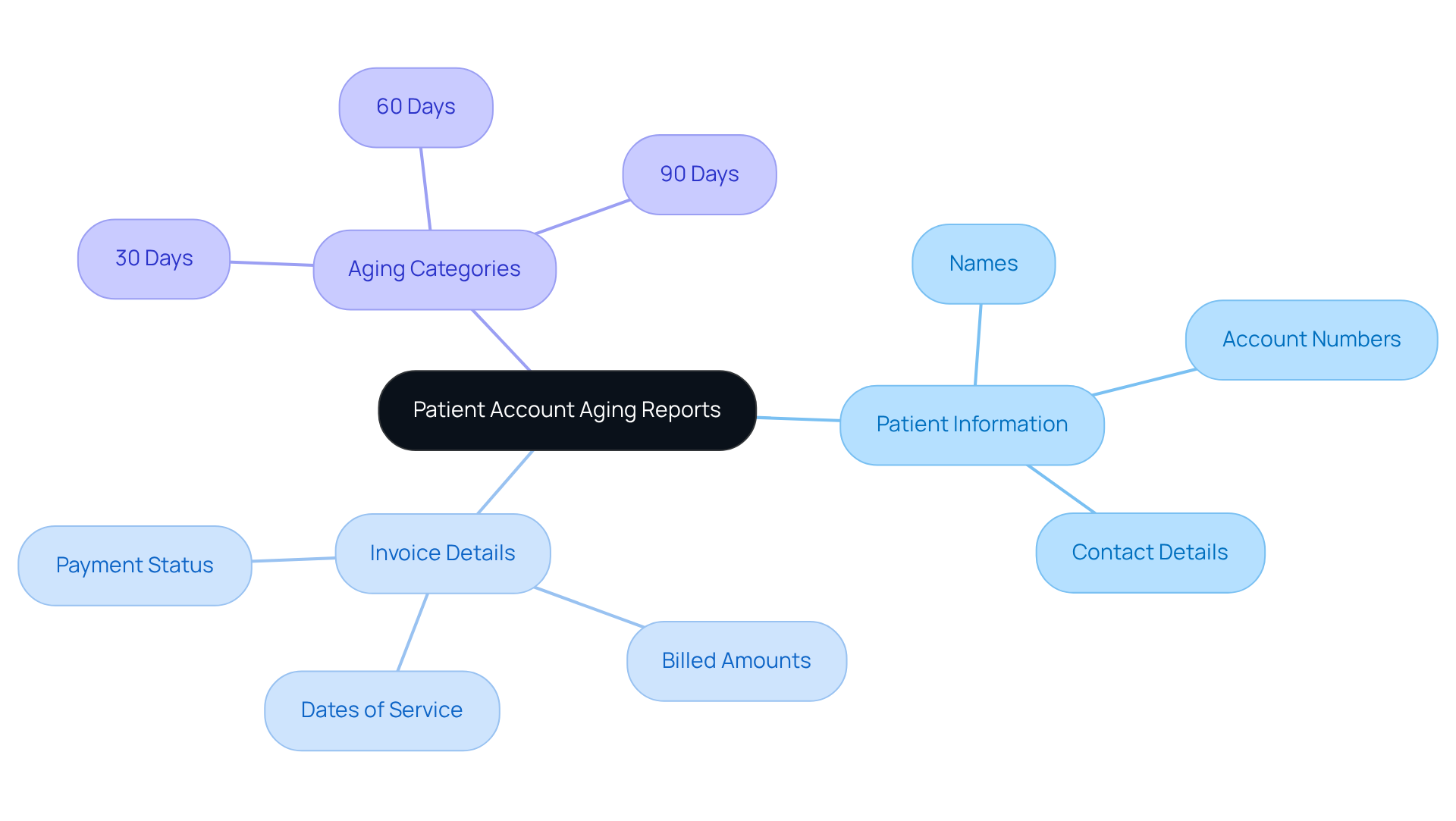
Patient financial aging documents serve as essential tools for healthcare providers, categorizing overdue invoices by their duration. Typically, these documents classify overdue payments into segments such as 30, 60, and 90 days, enabling healthcare providers to prioritize collections efficiently. Comprehending these documents assists practices in identifying overdue payments, evaluating collection efforts, and managing cash flow more effectively, especially in addressing underpayments and unprocessed claims.
Key components of an aging report include:
- Patient Information: Names, account numbers, and contact details.
- Invoice Details: Dates of service, billed amounts, and payment status.
- Aging Categories: Segmentation of records based on how long they have been overdue.
By consistently reviewing overdue financial summaries, healthcare providers can manage outstanding balances effectively, preserving fiscal health and streamlining administrative tasks. Focusing on optimizing patient statements and claims management enhances revenue cycle efficiency, allowing healthcare providers to prioritize patient care.
Prepare Your Practice Management Software
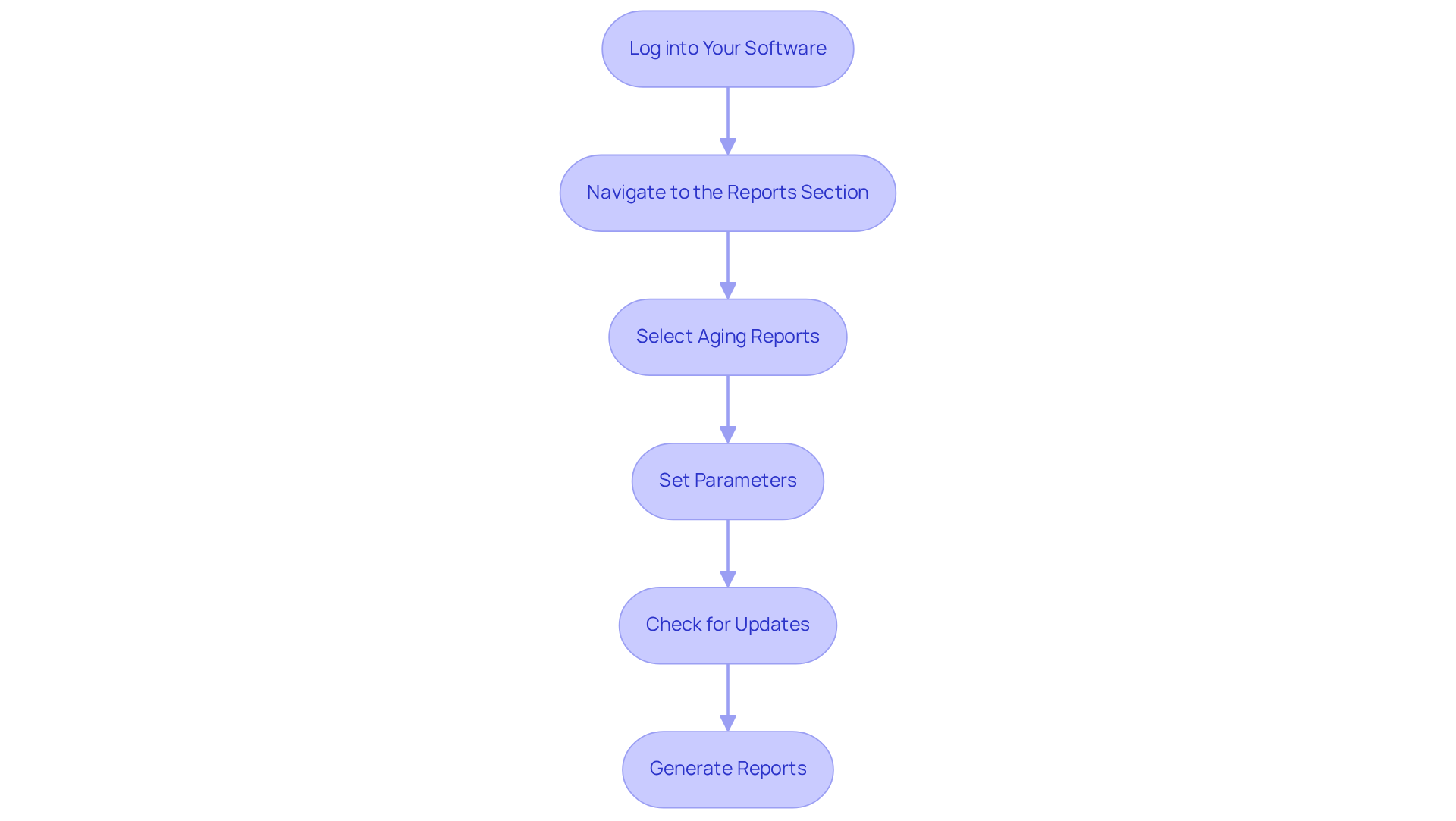
If your practice management software is not configured correctly, patient account aging reports can be generated through practice management software, making it a complex task. To generate these reports effectively, ensure your practice management software is set up properly by following these steps:
- Log into Your Software: Access your practice management system using your credentials.
- Navigate to the Reports Section: Locate the menu labeled ‘Reports’ or ‘Analytics’ on your dashboard.
- Select Aging Reports: Choose the option for ‘Aging Reports’ or ‘Accounts Receivable Reports,’ typically found under ‘Financial Reports’ or ‘Operational Reports.’
- Set Parameters: Configure the settings, including date ranges and specific patient accounts as needed. Selecting the appropriate filters is crucial to capture all relevant data accurately.
- Check for Updates: Ensure your software is current to prevent technical issues during document generation. This may involve checking for software updates or patches.
When you prepare your software correctly, you will find that patient account aging reports can be generated through practice management software, making it a seamless process that allows you to concentrate on analyzing the data rather than troubleshooting technical issues. Implementing these optimal approaches can lead to enhanced revenue cycle performance, reducing claim denials by 20-30% and accelerating reimbursements by 15-25% within 30-90 days. Furthermore, maintaining robust cybersecurity measures within your management software is essential to protect sensitive patient information and ensure compliance with healthcare regulations.
For further optimization, consider scheduling a personalized consultation with Healthcare Partners Consulting & Billing, LLC (HPC) to identify the best administrative solutions tailored to your organization’s needs. This approach helps resolve underpayments, unprocessed claims, and overdue claims efficiently, ensuring your billing processes are streamlined and effective. Integrating with platforms like TherapyNotes or SimplePractice can further enhance your management capabilities. By addressing these issues, your organization can significantly enhance its billing efficiency and financial health.
Generate the Aging Report
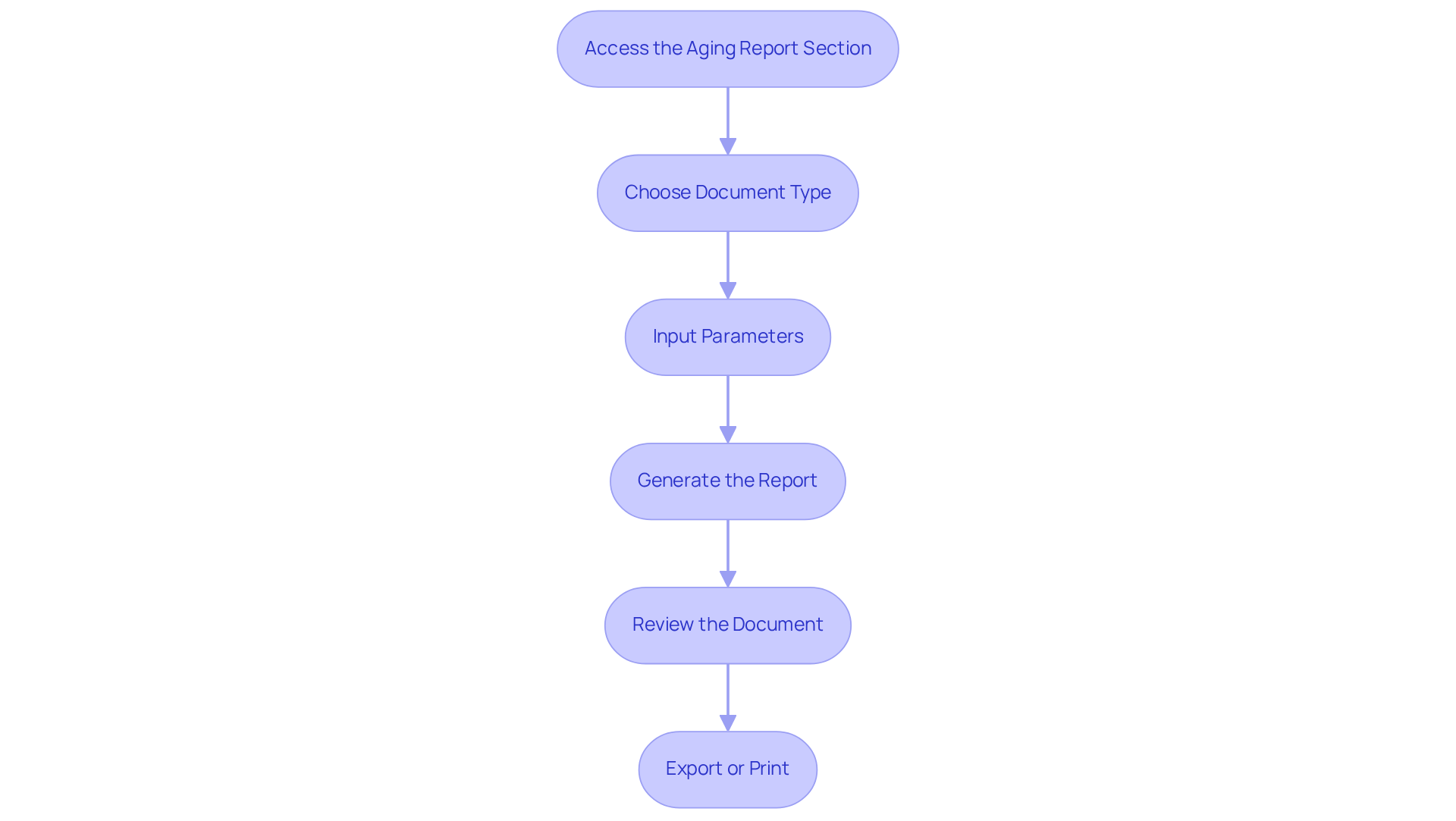
Without a clear financial overview, practices risk falling behind in revenue management and operational efficiency. To generate an aging report using your practice management software, follow these steps:
- Access the Aging Report Section: Navigate to the ‘Reports’ menu and select ‘Aging Reports.’
- Choose Document Type: Depending on your software, you may have options for summary or detailed formats. Select the type that best suits your needs.
- Input Parameters: Enter the necessary parameters, such as the date range for the analysis and any specific filters for patient accounts.
- Generate the Report: Click on the ‘Generate’ or ‘Run Report’ button and wait for the system to compile the data.
- Review the Document: Once generated, examine the document for accuracy, checking for any discrepancies or missing data that may need to be addressed.
- Export or Print: If necessary, export the document to a preferred format (PDF, Excel, etc.) or print it for your records.
Following these steps creates a financial overview, allowing for the generation of patient account aging reports through practice management software, which provides valuable insights into your organization’s economic health. Consistently evaluating these documents can enhance revenue cycle performance, with organizations experiencing quicker reimbursement rates of 15-25% within 30-90 days and a decrease in denial rates by 20-30% due to prompt follow-ups based on accounts receivable summaries.
For example, one practice adopted a systematic method for generating financial summaries, organizing them by payer class. This method resulted in a 20% reduction in the average days in accounts receivable, allowing staff to prioritize follow-ups on the most significant balances first. Additionally, establishing a routine of monthly reviews of aging reports contributed to a 15% improvement in claims accuracy, as staff became more familiar with outstanding balances and could address issues proactively.
These approaches streamline operations and enhance collection management, ensuring that your clinic remains financially sustainable while concentrating on delivering quality patient care. Furthermore, Healthcare Partners Consulting & Billing, LLC (HPC) offers customized administrative support services to help you optimize your billing processes and improve overall profitability. Consider taking HPC’s quick quiz to assess your mental health practice’s profitability and receive personalized recommendations for enhancing efficiency and billing accuracy. Neglecting these practices could hinder your clinic’s financial health and patient care quality.
Analyze and Utilize Aging Report Insights
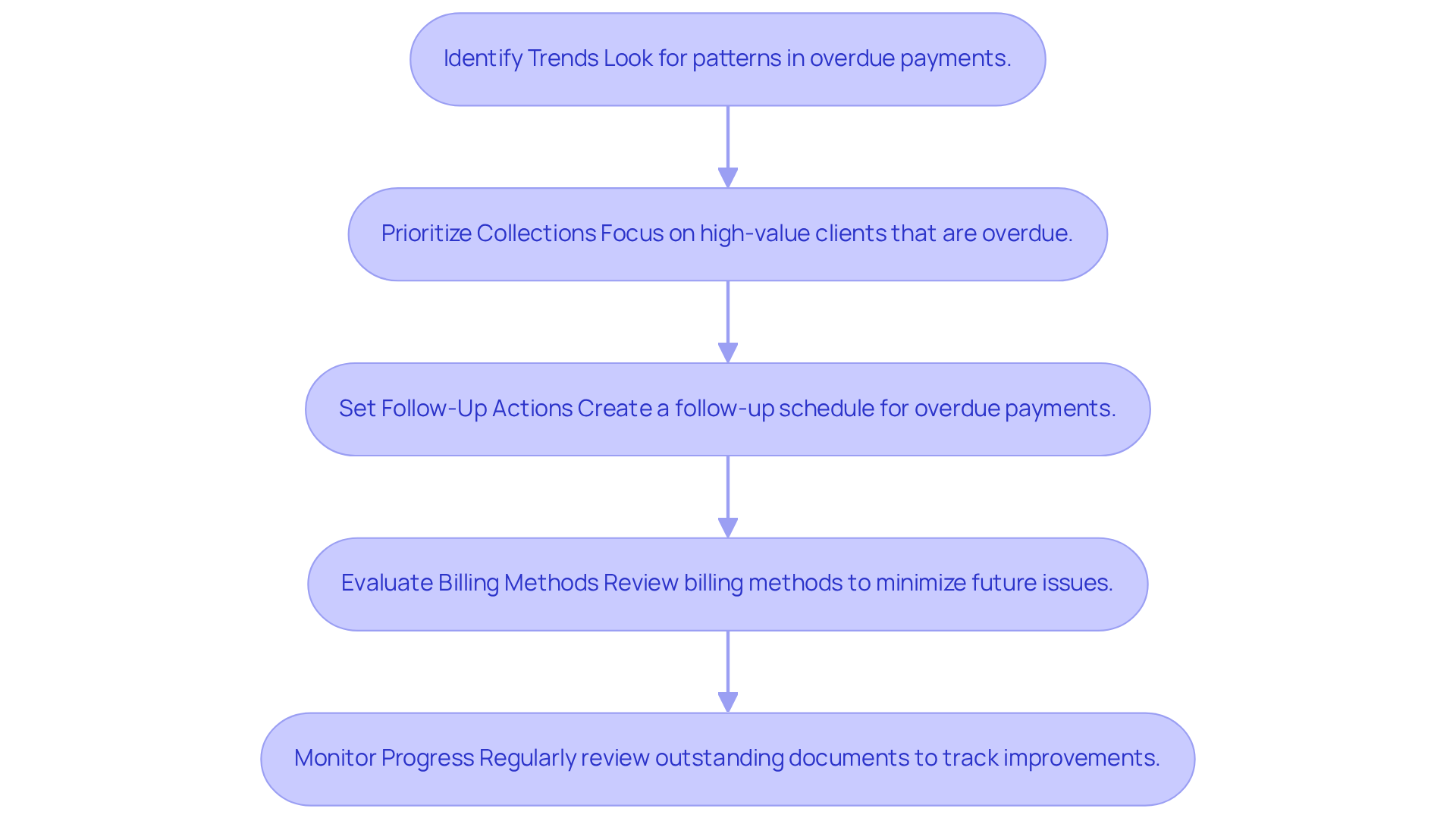
Analyzing the aging report is crucial for effective financial management in healthcare practices. After generating the aging report, the next step is to analyze the data and utilize the insights effectively, particularly in the context of patient statements and balance follow-up. Here’s how to do it:
- Identify Trends: Look for patterns in overdue payments. Are there specific patients or insurance companies that consistently have overdue balances? Understanding these trends can help you tailor your follow-up strategies, especially in addressing underpayments and unprocessed claims that may be contributing to these overdue balances.
- Prioritize Collections: Focus on high-value clients that are overdue. These accounts can significantly impact your cash flow if collected. As receivables age, the likelihood of successful collection diminishes significantly. By addressing overdue claims proactively, you enhance your collection rates.
- Set Follow-Up Actions: Based on the outstanding balance overview, create a follow-up schedule for reaching out to patients with overdue payments. This could include sending reminders or setting up payment plans. You might find that regular follow-ups can boost your collection rates significantly, by as much as 25% within 30 to 90 days, particularly when addressing underpayments and unprocessed claims.
- Evaluate Billing Methods: Utilize insights from the analysis to review your billing methods. Are there common reasons for delays in payments? Adjust your processes accordingly to minimize future issues. For instance, implementing scorecard-driven adjustments tied to claims accuracy and denial rates can enhance operational rigor and reduce denials by 20% to 30%, ensuring that underpayments are addressed effectively.
- Monitor Progress: Regularly review outstanding documents to track improvements in collections and cash flow. This ongoing analysis will help you refine your strategies and ensure financial health. Neglecting overdue claims jeopardizes your practice’s financial stability. Organizations that implement optimal strategies in accounts receivable management can experience enhanced cash flow and a stronger financial foundation.
By effectively analyzing and utilizing the insights from your aging report, particularly in relation to patient statements and balance follow-up, you can enhance your practice’s financial management, reduce administrative burdens, and ultimately focus more on delivering exceptional patient care, especially since patient account aging reports can be generated through practice management software. This proactive approach not only safeguards your financial health but also allows you to prioritize patient care.
Conclusion
Effective management of patient account aging reports is crucial for the financial stability of healthcare practices. These reports serve as vital tools that categorize overdue payments and empower practices to prioritize collections and streamline administrative tasks. This focus on financial clarity enables healthcare providers to allocate more time to patient care, reinforcing the core mission of delivering quality healthcare.
Throughout the article, key steps were outlined for effectively generating aging reports using practice management software. From preparing the software to analyzing the insights gained from the reports, each stage is crucial for optimizing revenue cycle management. The importance of identifying trends, prioritizing collections, and implementing follow-up actions cannot be overstated, as these practices lead to improved cash flow and reduced administrative burdens.
In conclusion, the proactive management of patient account aging reports is essential for maintaining the financial health of healthcare practices. Without effective management of aging reports, healthcare practices risk financial instability. By utilizing insights from these reports, providers can enhance their operational efficiency and ensure compliance and transparency in their billing processes. Embracing these best practices, particularly with the support of expert services like those offered by Healthcare Partners Consulting & Billing, LLC (HPC), can transform your practice into a financially stable entity that excels in patient care. For further assistance, consider reaching out to HPC at info@hpcbilling.com or call 888-517-4992 to explore tailored solutions that empower your practice.
Frequently Asked Questions
What are patient account aging reports?
Patient account aging reports are financial documents used by healthcare providers to categorize overdue invoices based on their duration, typically segmented into 30, 60, and 90 days.
Why are aging reports important for healthcare providers?
Aging reports help healthcare providers prioritize collections, identify overdue payments, evaluate collection efforts, and manage cash flow more effectively, particularly in addressing underpayments and unprocessed claims.
What key components are included in an aging report?
Key components of an aging report include patient information (names, account numbers, and contact details), invoice details (dates of service, billed amounts, and payment status), and aging categories that segment records based on how long they have been overdue.
How can healthcare providers benefit from consistently reviewing aging reports?
By consistently reviewing aging reports, healthcare providers can manage outstanding balances effectively, preserve fiscal health, streamline administrative tasks, and enhance revenue cycle efficiency, allowing them to focus more on patient care.