
Introduction
Navigating the complexities of mental health billing, particularly with add-on psychotherapy codes, presents significant challenges for clinics. These essential CPT identifiers, such as 90833, 90836, and 90838, facilitate accurate reimbursement for additional services rendered during evaluation and management sessions. They also play a pivotal role in enhancing the overall financial health of clinics.
To address these challenges, practices must implement strategic best practices that ensure compliance and maximize revenue. By mastering these coding requirements, clinics can enhance their financial stability and prioritize high-quality patient care.
Define Add-On Psychotherapy Codes and Their Importance
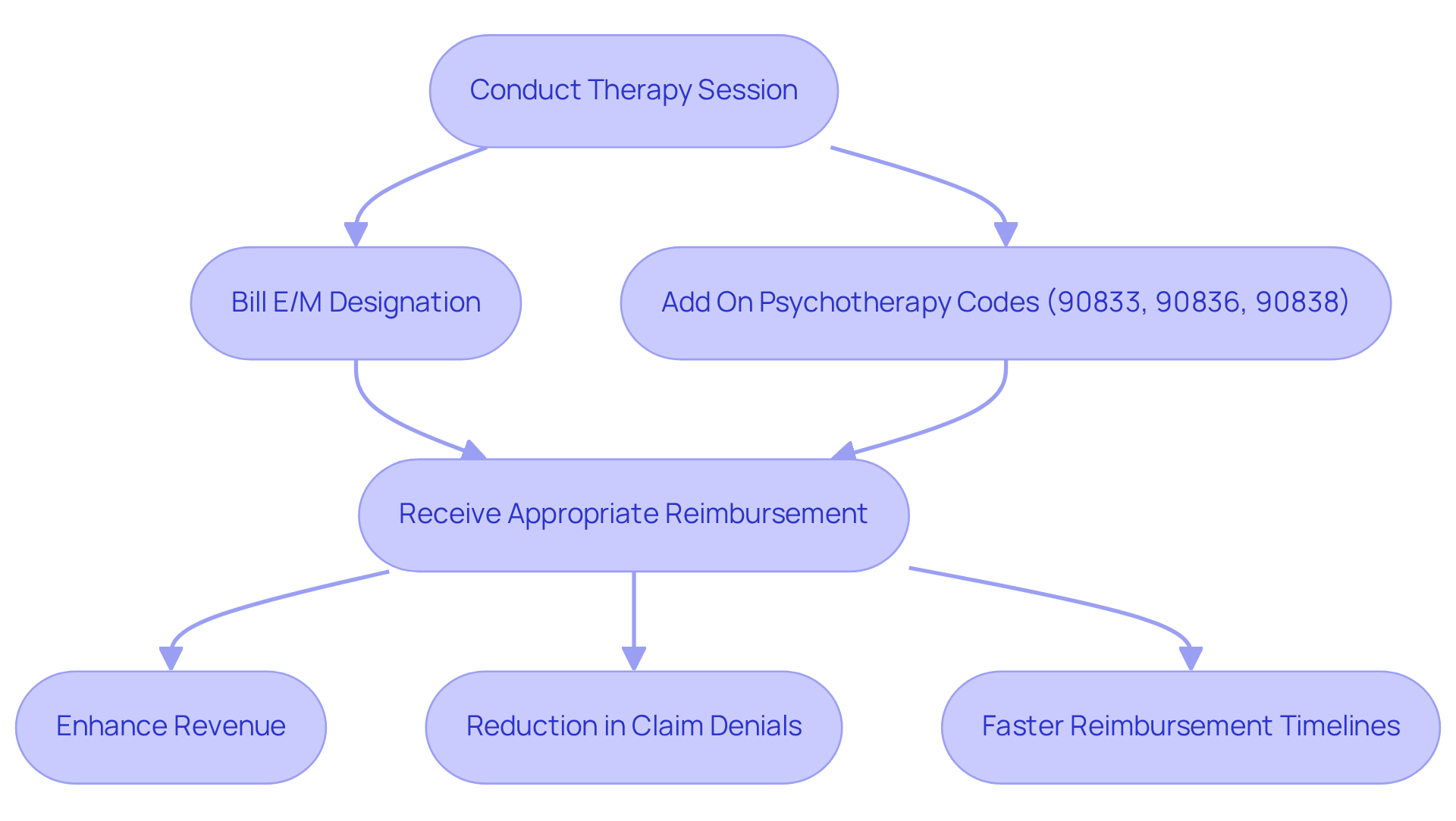
The psychotherapy codes add on psychotherapy codes, 90833, 90836, and 90838, are critical CPT identifiers enabling mental health practitioners to bill for additional psychotherapy services during E/M sessions. These identifiers ensure clinicians receive appropriate reimbursement for the comprehensive care provided. When a therapist conducts a therapy session alongside a medical evaluation, they can bill both the E/M designation and the add on psychotherapy codes, accurately reflecting the full scope of services rendered. This dual invoicing enhances revenue and supports high-quality patient care without financial constraints.
Clinics that effectively add on psychotherapy codes have reported a 20-30% reduction in claim denials and faster reimbursement timelines of 15-25% within 30-90 days, demonstrating the significant impact of proper coding practices on revenue cycle performance. Additionally, tackling underpayments, unprocessed claims, and aging claims through effective management of patient statements is crucial for enhancing financial processes.
Personalized consultations with Healthcare Partners Consulting & Billing, LLC (HPC) can help identify optimal administrative solutions tailored to your practice’s needs. Conducting quarterly internal audits is also advised to ensure compliance and optimization in financial practices.
Failure to add on psychotherapy codes and utilize supplementary classifications while adhering to updated regulations may jeopardize invoicing processes and long-term financial stability for practices.
Implement Effective Strategies for Add-On Code Utilization
To maximize the benefits of add-on psychotherapy codes, clinics must adopt strategic best practices that enhance billing accuracy and compliance:
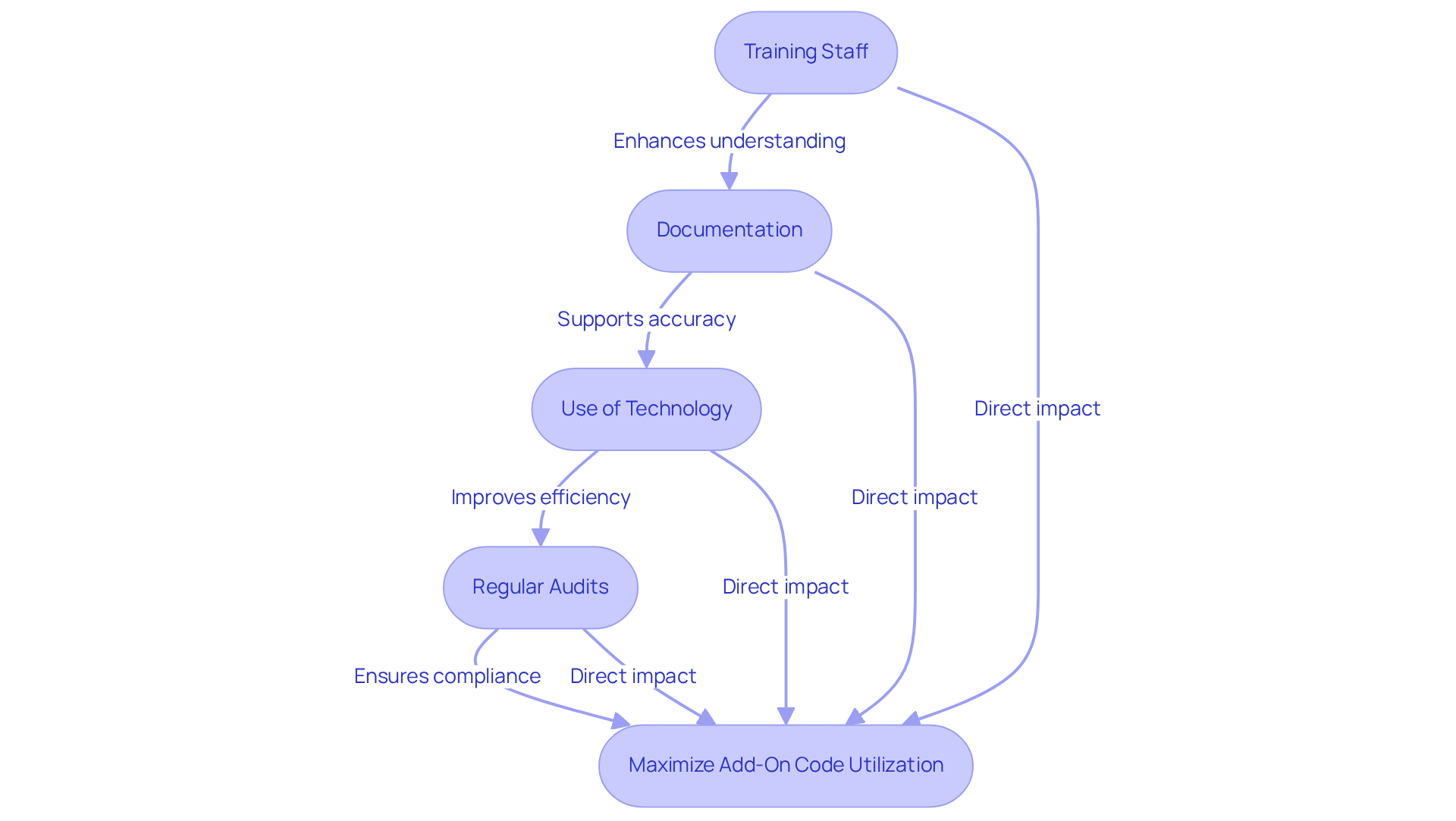
- Training staff: Ensure that billing staff comprehend the nuances of add-on psychotherapy codes and their appropriate use. Regular training sessions can keep the team updated on coding changes and compliance requirements. Clinics that provide ongoing education on CPT coding report a 20-30% reduction in claim denials. Additionally, they experience faster reimbursement cycles, improving by 15-25% within 30-90 days.
- Documentation: Maintain meticulous records that clearly outline the offerings provided during each session. This includes documenting the time spent on psychotherapy and the nature of the E/M activity. Effective documentation practices are crucial for supporting medical necessity and compliance, significantly reducing denial rates.
- Use of Technology: Implement invoicing software that can automatically identify potential additional service opportunities based on the services provided. This proactive approach helps avoid missed invoicing opportunities and enhances overall operational efficiency.
- Regular audits: Conduct periodic evaluations of payment practices to identify any discrepancies or missed add-on psychotherapy codes. This strategy not only recovers lost revenue but also improves compliance with payer requirements. Clinics that regularly audit their financial processes have seen improvements in claims accuracy and a reduction in days in accounts receivable.
Ultimately, these practices not only safeguard revenue but also reinforce the clinic’s commitment to delivering high-quality care.
Ensure Compliance and Documentation Standards for Billing
To navigate the complexities of billing for add-on psychotherapy codes, clinics must implement specific compliance measures:
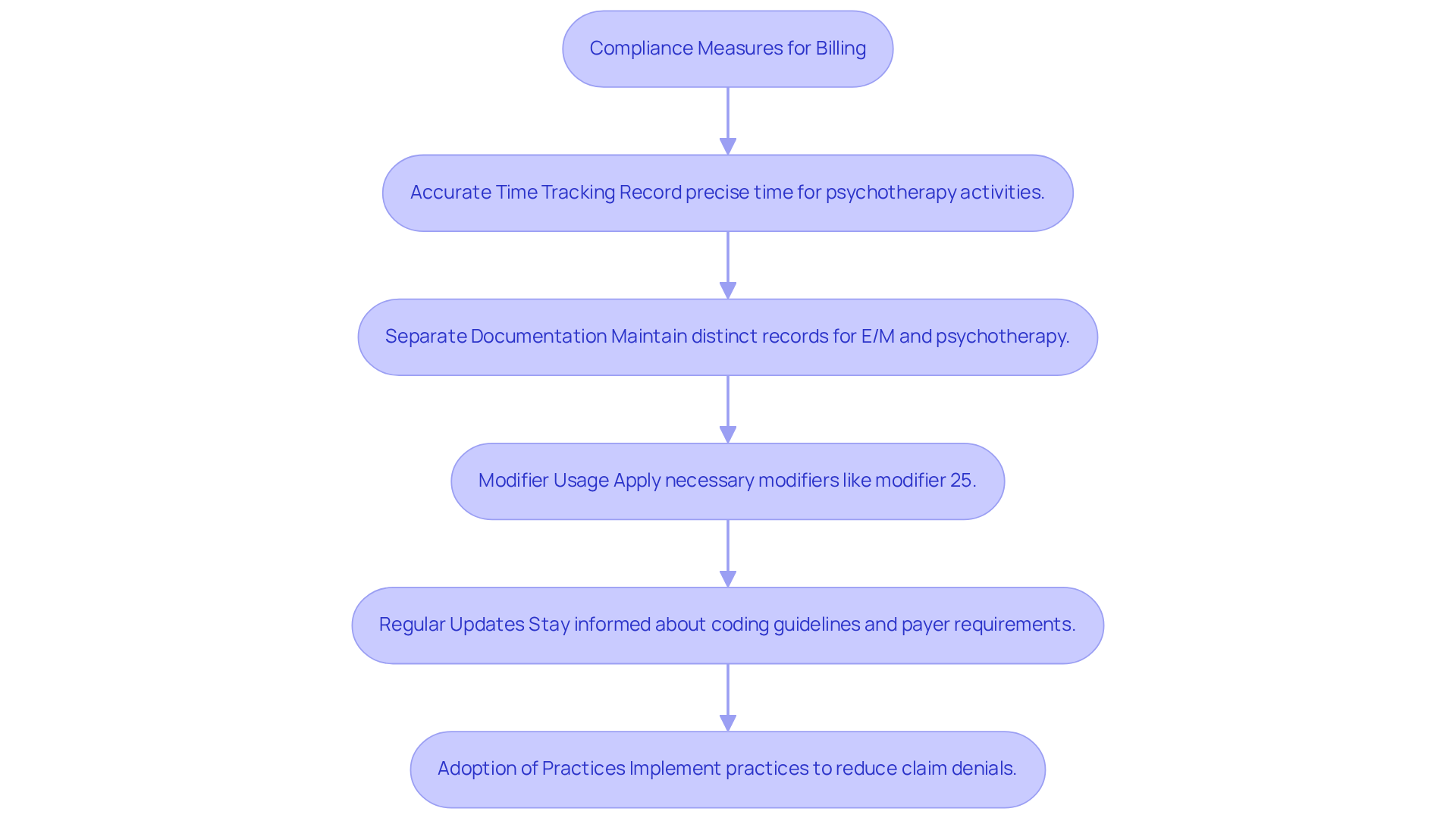
- Accurate Time Tracking: Record the precise time dedicated to psychotherapy activities, as many additional elements are time-based. For instance, 90833 requires a minimum of 30 minutes of psychotherapy, specifically between 16 to 37 minutes of face-to-face interaction.
- Separate Documentation: Maintain distinct records for evaluation and management (E/M) processes and psychotherapy sessions. This clarity is crucial for justifying the use of add-on psychotherapy codes during audits, as it helps to demonstrate that both tasks were performed independently.
- Modifier Usage: Be aware of necessary modifiers, such as modifier 25, which indicates that the E/M activity was significant and separately identifiable from the psychotherapy treatment. Proper application of modifiers can enhance financial accuracy and compliance, reducing the likelihood of claim denials.
- Regular Updates: Stay informed about changes in coding guidelines and payer requirements. Regularly reviewing updates from organizations like the American Medical Association (AMA) ensures compliance and helps clinics adapt to evolving standards.
Adopting these practices can significantly reduce the likelihood of claim denials, which can be decreased by 20-30% with effective revenue cycle management tools. Additionally, accurate time tracking supports compliance and boosts operational efficiency, leading to faster reimbursement cycles of 15-25% within 30-90 days. Failure to adhere to these guidelines may result in significant financial losses and operational inefficiencies.
Identify and Avoid Common Pitfalls in Add-On Code Billing
Billing for add on psychotherapy codes presents several challenges that can impact a clinic’s financial stability. Common pitfalls include:
- Incorrect Pairing: Failing to match supplementary numbers with the appropriate E/M function can lead to claim denials. Always ensure that the supplementary billing is processed alongside a valid E/M entry. For example, utilizing add on psychotherapy codes such as +90833 necessitates pairing it with a corresponding E/M procedure to prevent denials.
- Inadequate Documentation: Insufficient records of the offerings provided can lead to compliance issues. Ensure that all sessions are thoroughly documented, including the exact start and stop times, the nature of the services rendered, and the patient’s diagnosis and treatment goals. Clear documentation supports proper reimbursement and helps maintain compliance.
- Misunderstanding Time Requirements: Each add-on element has specific time stipulations that must be fulfilled. For example, code +90836 requires at least 45 minutes of psychotherapy. Failing to meet these requirements can result in denials, as payers may assume the assistance was not adequately provided.
- Neglecting Modifiers: Not using the appropriate modifiers can result in claims being rejected. For example, modifier 25 should be used to indicate that the E/M service was separate from the psychotherapy service. Proper use of modifiers is crucial for ensuring that claims are processed correctly.
Clinics can significantly improve their billing practices by recognizing these pitfalls and adopting effective strategies that include how to add on psychotherapy codes to mitigate them. Accurate coding and documentation can lead to a reduction in claim denials by 20-30% and faster reimbursement timelines of 15-25% within 30-90 days, ultimately improving the financial health of the practice. Addressing these billing challenges can lead to improved financial outcomes, enabling clinics to prioritize patient care more effectively.

Conclusion
Implementing add-on psychotherapy codes is essential for clinics aiming to enhance their billing practices and ensure accurate reimbursement for the comprehensive care they provide. Mental health practitioners can navigate billing complexities more effectively by utilizing these codes, ensuring a focus on high-quality patient care. The integration of add-on psychotherapy codes not only supports financial stability but also empowers clinicians to prioritize their patients without the burden of administrative inefficiencies.
Key strategies discussed include:
- Staff training
- Meticulous documentation
- The use of technology to streamline billing processes
Regular audits and compliance measures further contribute to reducing claim denials and improving reimbursement timelines. Clinics often struggle with revenue cycle management due to common pitfalls in billing practices. By recognizing these pitfalls and implementing best practices, clinics can significantly enhance their revenue cycle management, ultimately leading to better financial outcomes and improved patient experiences. Failure to adapt to evolving billing practices may jeopardize financial stability and patient care quality.
In summary, mastering add-on psychotherapy codes is essential for clinics navigating the evolving landscape of mental health billing. Embracing these strategies not only safeguards revenue but also reinforces a commitment to patient care. For clinics seeking tailored solutions, personalized consultations with Healthcare Partners Consulting & Billing, LLC (HPC) can provide the expertise needed to optimize billing practices and enhance overall operational efficiency.
Frequently Asked Questions
What are add-on psychotherapy codes?
Add-on psychotherapy codes, specifically 90833, 90836, and 90838, are critical CPT identifiers that allow mental health practitioners to bill for additional psychotherapy services during Evaluation and Management (E/M) sessions.
Why are add-on psychotherapy codes important?
These codes ensure that clinicians receive appropriate reimbursement for the comprehensive care they provide, accurately reflecting the full scope of services rendered during therapy sessions conducted alongside medical evaluations.
How do add-on psychotherapy codes impact revenue for clinics?
Clinics that effectively utilize add-on psychotherapy codes have reported a 20-30% reduction in claim denials and faster reimbursement timelines of 15-25% within 30-90 days, significantly enhancing their revenue cycle performance.
What are the consequences of not using add-on psychotherapy codes?
Failure to use these codes and adhere to updated regulations may jeopardize invoicing processes and threaten the long-term financial stability of practices.
What strategies can improve the management of billing practices?
Conducting personalized consultations to identify optimal administrative solutions and performing quarterly internal audits can help ensure compliance and optimize financial practices.
How do add-on psychotherapy codes affect patient care?
By enabling dual invoicing for therapy sessions and medical evaluations, these codes support high-quality patient care without financial constraints, allowing practitioners to focus on comprehensive treatment.