

Introduction
In the healthcare sector, financial performance directly impacts patient care quality, making the mastery of key performance indicators (KPIs) for revenue cycle management essential. These quantifiable metrics serve as vital benchmarks that empower healthcare organizations to assess their financial health and operational efficiency. Providers often struggle to effectively track and analyze these KPIs to enhance their revenue cycle while ensuring compliance and sustainability. By examining essential KPIs and strategic practices, healthcare organizations can uncover effective pathways to success in managing their revenue cycles.
Define Key Performance Indicators in Healthcare Revenue Cycle Management
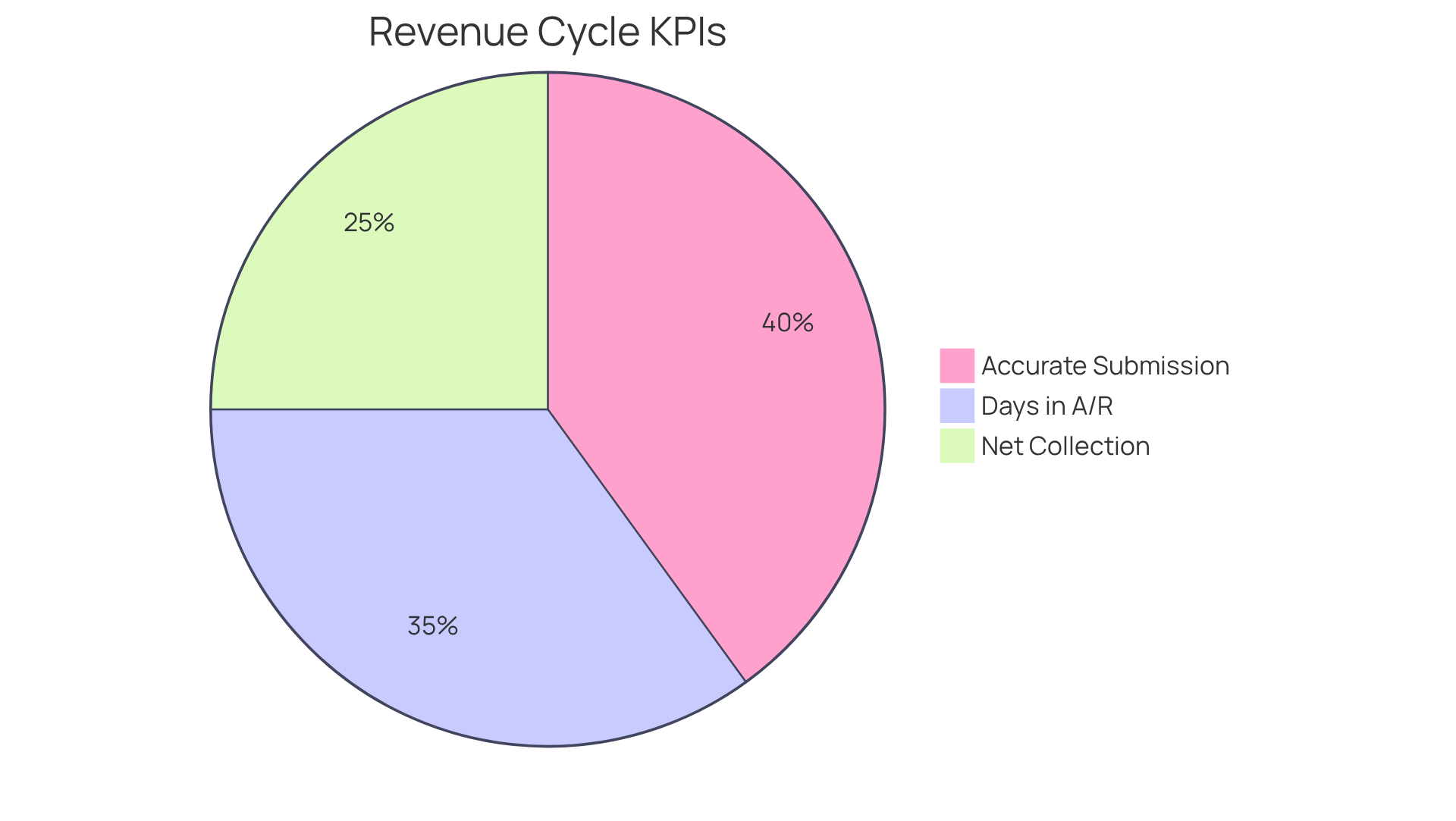
In an era where financial performance directly impacts patient care, understanding key performance indicators for healthcare revenue cycle is essential for healthcare organizations. Key performance indicators for healthcare revenue cycle are crucial quantifiable metrics that healthcare organizations utilize to assess their performance against specific goals, especially in revenue cycle management. These indicators are essential benchmarks that help practices evaluate their financial health and operational efficiency. Widely utilized performance indicators in healthcare include the accurate submission percentage, days in accounts receivable (A/R), and net collection percentage. For instance, a clean claims rate of over 98% is ideal, as it correlates with reduced denials and improved cash flow.
The significance of key performance indicators for healthcare revenue cycle in revenue cycle management cannot be overstated. They provide healthcare providers with insights into their revenue cycle processes, allowing for the identification of areas needing improvement. Organizations that apply scorecard-driven adjustments linked to accuracy of submissions and denial rates can attain denial reductions of 20-30% and quicker reimbursements of 15-25% within 30-90 days. This operational rigor is crucial for maintaining financial integrity and ensuring that practices can focus on delivering quality patient care.
At Healthcare Partners Consulting & Billing, LLC (HPC), we recognize the common challenges practices face, such as underpayments and unprocessed claims. Our personalized consultations help identify optimal administrative solutions tailored to your practice’s needs, ensuring streamlined patient statement management and enhanced billing efficiency. Recent trends indicate a growing emphasis on segmenting metrics by payer and location to uncover targeted opportunities for improvement. As patient financial responsibility increases from 6.8% to 7.3%, monitoring key performance indicators for healthcare revenue cycle, such as the net collection rate – aiming for 75% or higher – becomes progressively essential. By consistently monitoring these indicators, healthcare organizations can proactively tackle potential challenges in the financial cycle, ensuring sustainable performance and operational success. Neglecting these vital metrics could lead to significant financial setbacks and hinder the ability to provide quality care.
Identify Essential KPIs for Effective Revenue Cycle Management
To optimize revenue cycle management, healthcare providers must prioritize key performance indicators for healthcare revenue cycle that drive financial efficiency. These essential KPIs include:
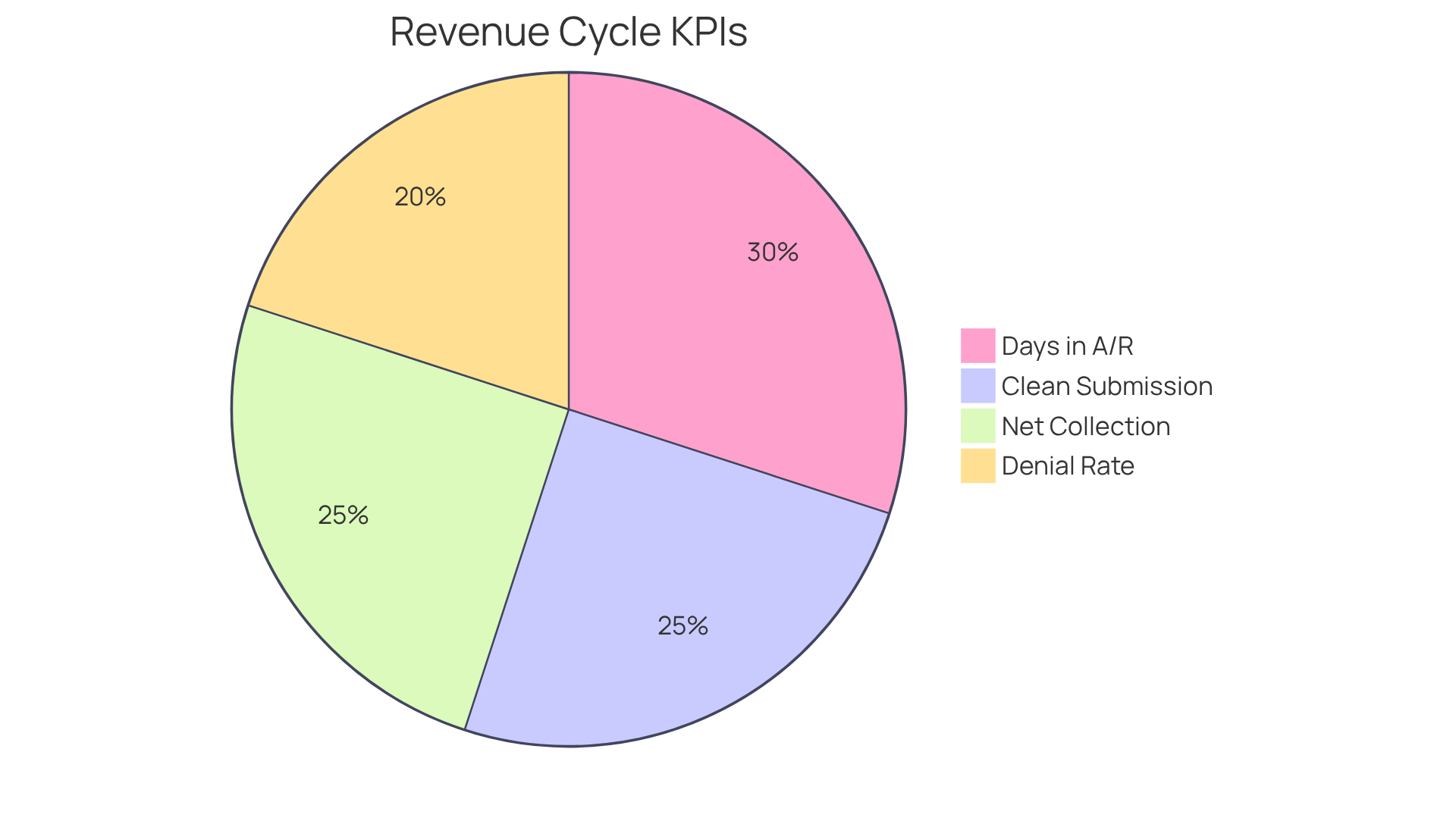
- Days in Accounts Receivable (A/R): This metric measures the average number of days it takes to collect payment after a service is rendered. High-performing organizations maintain A/R around 25 days, while those exceeding 30 days may face cash flow challenges that hinder operational efficiency. A lower A/R indicates efficient billing and collections processes, which can significantly enhance cash flow management.
- Clean Submission Rate: This KPI monitors the percentage of submissions made without errors. An ideal clean performance is above 95%, as a high figure minimizes the time and resources dedicated to revisions and denials. Organizations achieving a clean claim success of 98% or higher demonstrate effective front-end operations, minimizing the likelihood of denials and expediting reimbursement.
- Net Collection Rate: This measures the percentage of collectible revenue that is actually collected. A net collection percentage of over 90% is deemed acceptable, while figures above 95% are excellent. This metric reflects the effectiveness of the billing process and the practice’s ability to collect payments, directly impacting financial sustainability.
- Denial Rate: This KPI indicates the percentage of requests rejected by payers. The national average for initial denial occurrences is approximately 12%, with common reasons including registration failures and missing claim data. By keeping an eye on this measure, organizations can pinpoint billing process issues that require attention, as decreasing denial occurrences by 20-30% can lead to enhanced financial cycle performance.
By concentrating on key performance indicators for healthcare revenue cycle, healthcare providers can obtain valuable insights into their revenue cycle effectiveness and make data-informed decisions to improve their operations. Ultimately, a focused approach to the key performance indicators for healthcare revenue cycle can transform revenue cycle management into a strategic advantage for healthcare organizations.
Implement Strategies for Tracking and Analyzing KPIs
Healthcare providers face challenges in tracking and analyzing key performance indicators (KPIs), but several strategies can help address these issues:
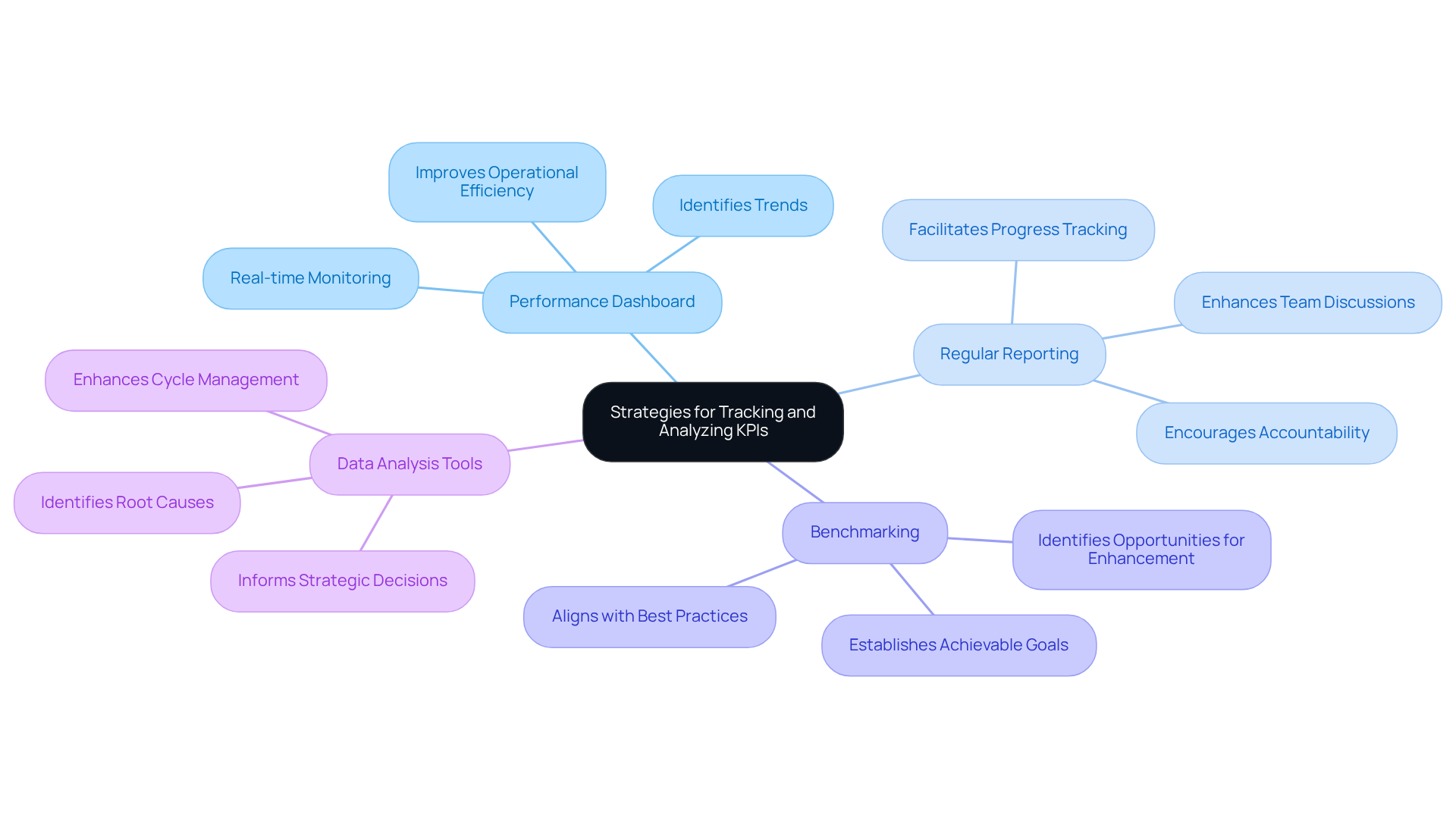
- Utilize a performance dashboard to enable real-time monitoring of key performance indicators for healthcare revenue cycle. This tool quickly identifies trends and areas needing attention, improving operational efficiency and aligning with the services offered by Healthcare Partners Consulting.
- Regular Reporting: Establishing a routine for generating reports on key performance indicators for healthcare revenue cycle, whether weekly or monthly, facilitates tracking progress over time and encourages discussions during team meetings. This practice promotes accountability and continuous improvement, enhancing the follow-up services provided by Healthcare Partners Consulting.
- Benchmarking: Comparing performance indicators against industry standards or similar practices provides insights into your practice’s effectiveness. Benchmarking reveals opportunities for enhancement and aids in establishing achievable goals, ensuring alignment with top practices in the field, which is a focus of Healthcare Partners Consulting’s comprehensive management of key performance indicators for healthcare revenue cycle.
- Data Analysis Tools: Leveraging data analytics software allows for in-depth analysis of trends and patterns in key performance indicators for healthcare revenue cycle. These tools can identify root causes of issues, informing strategic decisions that enhance cycle management, further supported by the clear reporting services of Healthcare Partners Consulting.
Implementing these strategies can significantly enhance financial cycle performance, leading to denial reductions of 20-30% and quicker reimbursement figures of 15-25% within 30-90 days. Ultimately, the implementation of these strategies can lead to a more robust financial cycle, significantly impacting overall operational success.
Enhance Revenue Cycle Management Through Continuous KPI Improvement
In an ever-evolving healthcare landscape, the failure to adapt key performance indicators can lead to significant financial setbacks for providers. To enhance revenue cycle management through continuous KPI improvement, healthcare providers should consider the following practices:
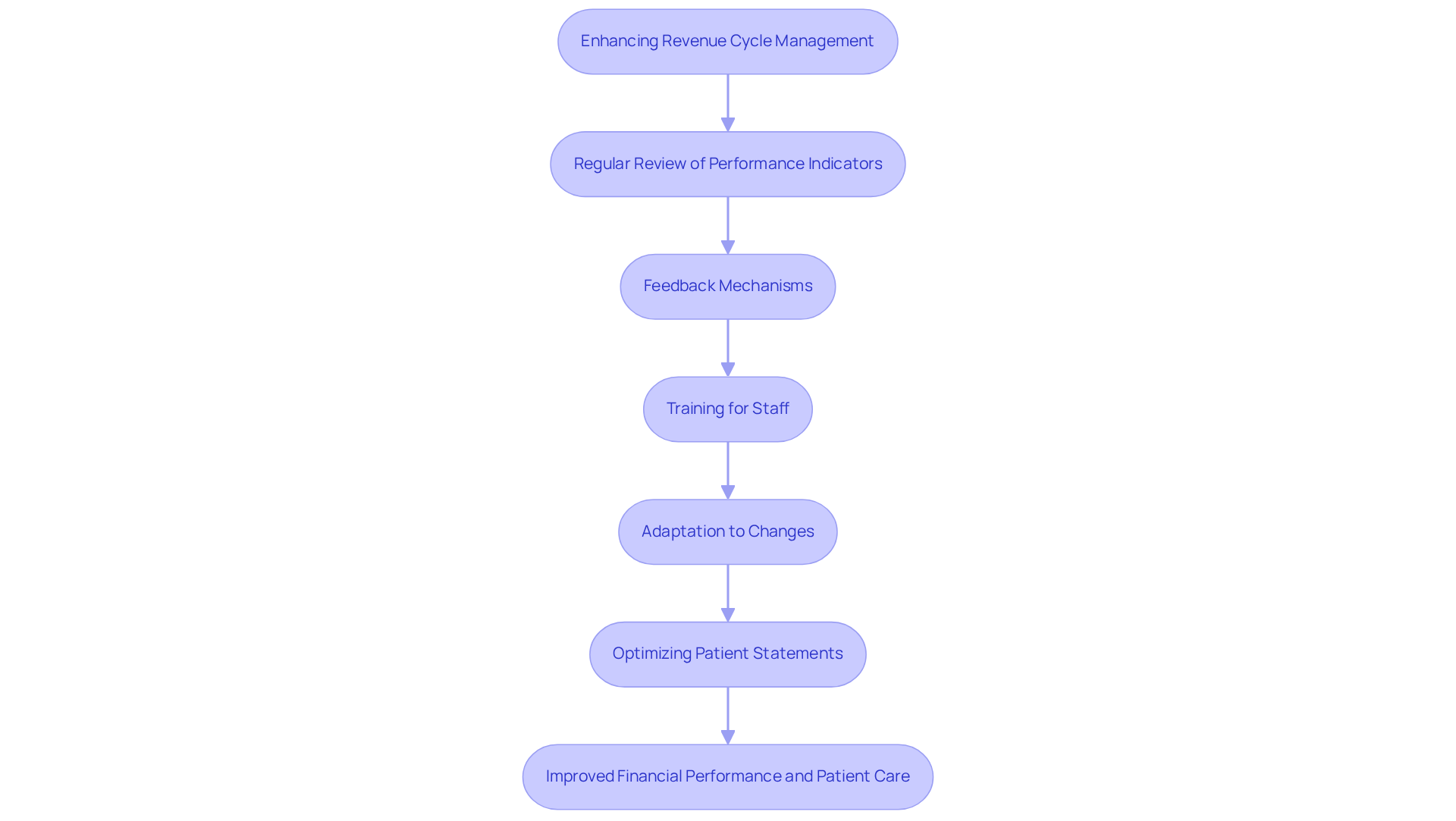
- Regular Review of Performance Indicators: Schedule periodic assessments of your metrics to evaluate their relevance and effectiveness. As the healthcare landscape evolves, it is essential to adjust or replace performance indicators to reflect current operational realities. This adaptability can lead to a reduction in denials by 20-30% and enhance reimbursement timelines by 15-25% within 30-90 days.
- Feedback Mechanisms: Establish channels for staff to provide feedback on the KPI tracking process. When team members are engaged, they can provide valuable insights that foster a culture of continuous improvement and enhance operational efficiency.
- Training for Staff: Invest in training for staff on the significance of key performance indicators and how to effectively track and analyze them. Since labor makes up 56% of hospital spending, effective training can really make a difference in cost management and lead to better performance and accountability, which is crucial for achieving financial sustainability.
- Adaptation to Changes: Stay informed about changes in healthcare regulations, payer requirements, and industry best practices. Adjusting your KPIs to reflect these modifications guarantees that your financial cycle management remains compliant and effective. Failure to adapt to these changes can lead to compliance issues and financial losses.
- Optimizing Patient Statements: Focus on the generation and management of patient statements to effectively address underpayments, unprocessed claims, and aging claims. Streamlining this process, including integrations with EHR and practice management platforms like TherapyNotes, SimplePractice, and AdvancedMD, can enhance billing efficiency and ensure timely payments, which is essential for maintaining financial health.
Ultimately, neglecting these practices may jeopardize not only financial performance but also the quality of patient care delivered.
Conclusion
Mastering key performance indicators (KPIs) in healthcare revenue cycle management is critical for ensuring financial stability and operational excellence. These metrics serve as vital benchmarks, providing insights that empower providers to optimize their revenue cycle processes and ultimately enhance patient care. Focusing on KPIs like days in accounts receivable and clean submission rates enables organizations to pinpoint improvement areas and develop effective strategies for enhanced performance.
Healthcare providers need to keep a close eye on essential KPIs to ensure they are financially efficient. This includes tracking the average time it takes to collect payments, ensuring high rates of clean submissions, and minimizing denial rates. By leveraging tools like performance dashboards and regular reporting, practices can maintain a proactive approach to managing their revenue cycle. Continuous improvement through staff training and adaptation to industry changes further reinforces the importance of these metrics in achieving long-term success.
Organizations that embrace these practices will not only enhance their financial performance but also significantly improve patient outcomes. As the healthcare landscape continues to evolve, organizations must commit to a culture of continuous improvement and adaptation. Engaging with experts like Healthcare Partners Consulting & Billing, LLC (HPC) can provide tailored solutions to streamline these processes, ensuring that healthcare practices thrive in an increasingly complex environment. For more information, contact HPC at info@hpcbilling.com or call 888-517-4992.
Frequently Asked Questions
What are key performance indicators (KPIs) in healthcare revenue cycle management?
Key performance indicators in healthcare revenue cycle management are quantifiable metrics that healthcare organizations use to assess their performance against specific goals, particularly in revenue cycle management.
Why are KPIs important for healthcare organizations?
KPIs are essential benchmarks that help practices evaluate their financial health and operational efficiency, providing insights into revenue cycle processes and identifying areas needing improvement.
What are some widely utilized performance indicators in healthcare?
Common performance indicators include the accurate submission percentage, days in accounts receivable (A/R), net collection percentage, and a clean claims rate, with an ideal rate being over 98%.
How can healthcare organizations benefit from monitoring KPIs?
By applying scorecard-driven adjustments linked to submission accuracy and denial rates, organizations can achieve denial reductions of 20-30% and quicker reimbursements of 15-25% within 30-90 days.
What challenges do healthcare practices commonly face regarding revenue cycle management?
Common challenges include underpayments and unprocessed claims, which can hinder financial performance.
How can personalized consultations help healthcare practices?
Personalized consultations can identify optimal administrative solutions tailored to a practice’s needs, ensuring streamlined patient statement management and enhanced billing efficiency.
What recent trends are impacting the monitoring of KPIs in healthcare?
There is a growing emphasis on segmenting metrics by payer and location to uncover targeted opportunities for improvement, especially as patient financial responsibility increases.
What is the target net collection rate for healthcare organizations?
The target net collection rate for healthcare organizations is 75% or higher.
What are the consequences of neglecting KPIs in healthcare revenue cycle management?
Neglecting these vital metrics can lead to significant financial setbacks and hinder a healthcare organization’s ability to provide quality care.